The Atmospheric Physics of Vacuum Excavation
In the world of high-precision utility work, atmospheric pressure is the invisible hand that dictates the success of every lift. At sea level, a vacuum pump operates against a standard atmospheric pressure of approximately 14.7 psi (29.92 inHg). However, as a crew moves into higher elevations for vacuum excavation or borehole projects, the air density drops precipitously. This environmental shift fundamentally alters the pressure differential that hydrovac systems rely on to move material. Since a vacuum is not a force in itself but rather a space of lower pressure that allows the atmosphere to push debris into the hose, a thinner atmosphere at 5,000 or 10,000 feet means there is simply less ‘push’ available. Professionals mastering vacuum excavation must account for this decline in potential energy before arriving at a mountain-side job site.
Why Thinner Air Smashes Your Volumetric Efficiency
The primary technical hurdle at altitude is the reduction in mass flow rate. Even if your blower is spinning at the exact same RPM as it does at sea level, the actual mass of the air it moves is significantly lower because the air is less dense. This leads to a noticeable drop in trenching speed and debris lift capacity. For many operators, this manifests as a mysterious ‘weakness’ in the system, even when the gauges appear to show a high vacuum level. According to technical documentation from The Engineering Toolbox, atmospheric pressure at 10,000 feet is nearly 30% lower than at sea level. This isn’t just a minor inconvenience; it is a mechanical ceiling that explains why your vacuum truck is losing power at high altitudes. Without adjusting the volumetric expectations, your project timelines will inevitably slip.
Why Does Your Slurry Vaporize Faster in High-Altitude Boreholes?
A frequently overlooked phenomenon in alpine hydro-excavation is the change in the boiling point of liquids. At higher altitudes, the decreased ambient pressure lowers the temperature at which water turns to vapor. When you apply a deep vacuum to a slurry in these conditions, the water may actually reach its boiling point inside the hose or tank at ambient temperatures. This ‘flash’ vaporization creates a volume of steam that displaces the air, further reducing the effective suction power of the unit. If you find yourself struggling with cavitation or erratic performance, you might need to implement fixes for vacuum trucks that lose suction at depth to stabilize the pressure-temperature balance.
Strategic Adjustments for High-Elevation Trenching
Compensating for thin air requires a shift in both hardware and operational strategy. Many expert contractors utilize larger-diameter hoses to reduce friction loss, attempting to maximize the limited atmospheric ‘push’ available. Others recalibrate their blower speeds or look into specialized hydrovac innovations for 2025 that feature multi-stage blowers designed for variable atmospheric conditions. It is also critical to minimize any potential leaks, as a small seal failure that might be negligible at sea level becomes catastrophic when the pressure margin is already razor-thin. To learn more about optimizing your fleet for extreme environments, feel free to contribute your field observations to our professional forum or explore our latest technical breakdowns.
Stop Your Engines from Choking on Thin Mountain Air
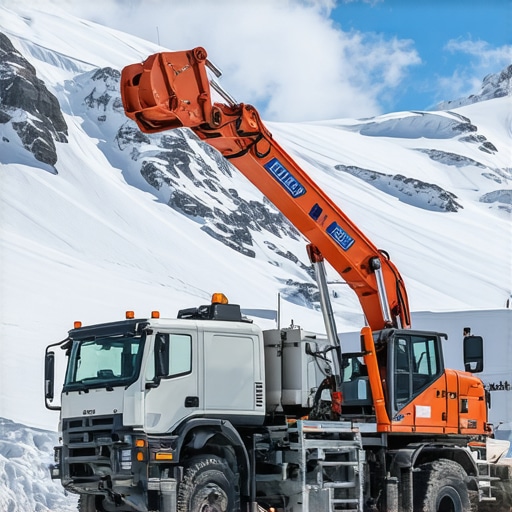
At high elevations, the internal combustion engines powering your vacuum system face a dual threat: less oxygen for the fuel-air mixture and reduced convective cooling. Because air is the primary medium for heat transfer in radiators and oil coolers, the lower density at 8,000 feet makes it significantly harder to shed the heat generated by the high-torque demands of the blower. This leads to frequent derating or, worse, thermal shutdowns. Operators often mistake this loss of engine torque for a hydraulic issue, but it is often just the machine’s ECU trying to prevent a meltdown. Understanding why cold weather makes your vacuum pump seals fail is equally vital, as high-altitude environments often pair thin air with extreme temperature swings that stress elastomeric components.
Is Your Hydrovac Pump Actually Failing, or Just Gas-Locked?
In the fluid dynamics of hydrovac, the Net Positive Suction Head (NPSH) required by the pump is a non-negotiable value. As the available atmospheric pressure drops, the margin between the liquid state and the vapor state of your slurry narrows. This isn’t just about maintaining suction power while pulling heavy slurry; it’s about preventing the physical ‘gas-locking’ of the pump. According to Pumps & Systems Magazine, as altitude increases, the absolute pressure on the fluid surface decreases, making it easier for bubbles to form in the eye of the impeller or the suction side of the blower. This cavitation erodes components from the inside out and can lead to a total loss of lift, even if your hose is perfectly clear. If you are struggling with saturated materials, you might need to reconsider how to manage saturated slurry on tight urban jobsites by modifying the intake angle to prevent premature air entrainment and maintain a steady vacuum flow.
Maintain Seal Integrity When Pressure Differentials Tighten
A common field error in alpine excavation is ignoring the ‘small’ air leaks that would be ignored at sea level. Because the pressure differential is lower, any turbulence created by a worn gasket or a loose coupling has a disproportionate effect on the laminar flow within the hose. This often results in that characteristic high-pitched sound; understanding why your vacuum hose whistles and how to stop it is crucial because that whistle represents a massive loss in kinetic energy. Implementing 4 fixes for leaking vacuum seals on the job site ensures that you are utilizing every possible ounce of the limited atmospheric push available. By tightening the system to an airtight standard, you can effectively counteract the volumetric efficiency losses inherent to the elevation. Have you encountered a specific altitude threshold where your standard equipment simply wouldn’t perform? Share your findings with our technical team in the comments below so we can continue building a database for high-elevation utility standards.
Pushing the Limits of Air Velocity in Deep Boreholes
The relationship between air velocity and material suspension is the heartbeat of a successful borehole operation. In high-altitude environments, where the air mass is reduced, the ‘carrying capacity’ of the vacuum stream diminishes. It is a common misconception that simply cranking the blower to max RPM solves the problem. In reality, you are often chasing a moving target: the saltation velocity. This is the minimum speed required to keep solid particles airborne within the pipe. If your vacuum excavation setup fails to maintain this velocity, the debris will drop out of the air stream, leading to ‘slugging’—where heavy plugs of mud block the hose entirely. To prevent this, seasoned operators often reduce the hose diameter slightly at the intake to artificially increase the local velocity, a counterintuitive move that relies on the Venturi effect to ensure the hydrovac remains productive even when the atmosphere isn’t cooperating.
How Does Humidity Turn Your Vacuum Filter into a Concrete Slab?
High-altitude projects often involve rapid temperature fluctuations that cause moisture to condense within the filtration system. When dry dust from a trenching site hits a damp filter bag, it creates a ‘blinding’ effect, essentially plastering the fabric with a layer of impermeable mud. This isn’t just about cleaning a filter; it’s about the physics of the pressure drop across the media. According to the ASME technical standards for air filtration, a saturated filter can increase the work required by the blower by over 40% while simultaneously reducing actual suction at the nozzle to near-zero. This is where high-efficiency moisture separators become mandatory, acting as a first line of defense to ensure the air reaching the final stage filters is as dry as possible.
Counteract Gravity with Kinetic Material Flow
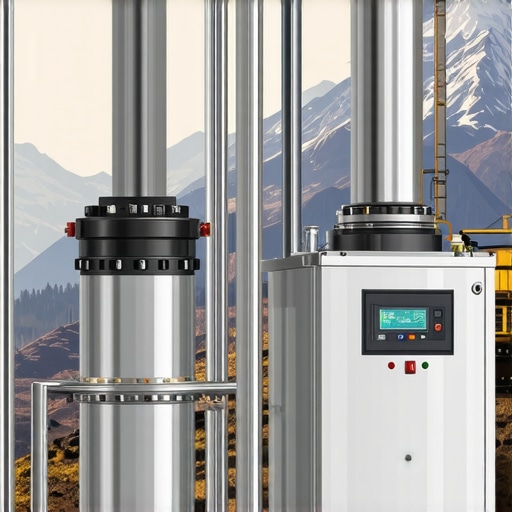
Working on an incline adds a vertical vector to your material transport that the vacuum must overcome. When you are lifting heavy slurry from a deep trench at 9,000 feet, you aren’t just fighting the mountain’s thin air; you are fighting the weight of the water itself. To manage this, the strategy must shift from static suction to kinetic transport. This involves ‘slugging’ the intake—purposefully allowing small amounts of air to enter the nozzle alongside the liquid. This air-to-liquid ratio is critical. If there is too much air, the vacuum breaks; too little, and the column of water becomes too heavy for the thin air to lift. Refined hydrovac techniques involve a rhythmic ‘bouncing’ of the nozzle to create a pulsed flow, utilizing the momentum of the moving air to carry the weight of the slurry upward in manageable segments.
Match Your Blower to the Mountain’s Oxygen Deficit
The mechanical synergy between the truck’s engine and the vacuum blower is often the first thing to fail at high elevations. Because many modern Tier 4 engines rely on precise turbocharger maps to compensate for altitude, there is a delay in power delivery that can lead to ‘surging’ in the blower. This surging creates pressure waves that can damage the internal lobes of the vacuum unit. Advanced technicians often utilize telematics to monitor the exhaust gas temperatures (EGTs) in real-time. If the EGTs spike, it’s a sign that the engine is over-fueling to compensate for the thin air, which can lead to long-term catalytic damage. Curious about how your specific rig handles the thin air? Reach out to our technical consultants to discuss custom tuning for high-altitude utility contracts.
Can You Outrun Cavitation with Variable Frequency Drives?
While VFDs are more common in stationary industrial settings, we are seeing a shift toward mobile hydrovac units incorporating frequency-controlled motors for the pump systems. By slowing down the impeller speed during the initial lift and gradually ramping up as the vacuum stabilizes, you can effectively stay under the vapor pressure threshold that triggers cavitation. This is a game-changer for deep-hole borehole projects where the risk of gas-locking is at its peak. It allows the system to adapt to the specific atmospheric density of the day, rather than relying on a sea-level factory setting.
Break the Bond Between Clay and Vacuum
While mechanical suction serves as the primary mover, the geophysics of the borehole site often dictate the actual material yield. In tight, cohesive soils such as over-consolidated clay, the vacuum must overcome not just the weight of the slurry but the molecular tension of the substrate itself. This internal cohesion creates a ‘vacuum seal’ within the soil matrix, where the earth resists being pulled into the nozzle. To bypass this, expert operators employ a high-pressure water stream to create a localized zone of liquefaction, effectively shearing the soil’s structural integrity before the vacuum air stream attempts to transport it. This process, known as thixotropic agitation, is essential for maintaining production rates in challenging geological formations. Failing to account for soil shear strength can lead to excessive ‘dry-pulling,’ which overheats the blower and wastes fuel without moving significant volume.
How Do High-Suction Loads Alter Subsurface Soil Stability?
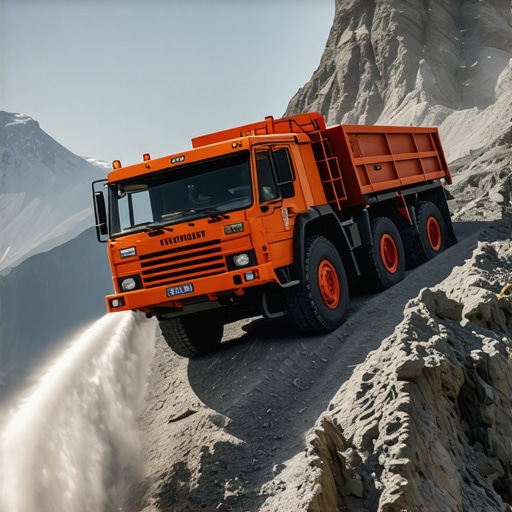
A sophisticated concern during deep-trenching or borehole operations is the potential for localized soil failure caused by the vacuum itself. When a powerful hydrovac system operates at high vacuum levels—specifically in sandy or non-cohesive soils—it can inadvertently draw air through the surrounding ground. This ‘secondary aeration’ can destabilize the walls of the trench, leading to sloughing or even a catastrophic cave-in. According to the ASCE Standard 38-22, maintaining the integrity of the surrounding soil matrix is a primary safety requirement for non-destructive excavation. Operators must find the ‘equilibrium point’ where the suction is strong enough to remove the target material but not so intense that it creates a pressure gradient capable of collapsing the borehole architecture from the outside in.
Keep Your Hydraulics from Cooking in the Trench
Heat dissipation is often the silent killer of vacuum efficiency, particularly when working in the restricted airflows of high-altitude or urban environments. The hydraulic systems that drive the blowers and water pumps generate immense thermal energy. In sea-level conditions, the air is dense enough to facilitate efficient convective cooling through the truck’s heat exchangers. However, as the air thins at elevation, the thermal conductivity of the atmosphere drops. This leads to a dangerous spike in hydraulic fluid temperatures, which can thin the oil beyond its protective viscosity range. If you notice your system’s cycle times slowing down as the day progresses, you are likely witnessing ‘thermal derating.’ Utilizing high-viscosity index (HVI) fluids and ensuring that your cooling fans are optimized for lower-density air is the only way to prevent your equipment from cooking itself during a long shift.
Stop Treating Your Blower Like a Dumb Pump
Modern vacuum excavation requires an understanding of isentropic efficiency—the ratio of actual work performed to the ideal work of a compression process. Many crews operate under the assumption that a higher vacuum gauge reading always equals better performance. In reality, a blower reaching its ‘dead-head’ limit is actually doing zero work; it is simply fighting its own internal slip. Volumetric efficiency (VE) is the true metric of success. To maximize VE, you must manage the boundary layer of air within the vacuum hose. Any internal ridges, sharp bends, or debris build-ups create turbulence that increases the Reynolds number of the flow, leading to massive energy losses. By streamlining the intake path and using smooth-bore hoses, you can effectively increase your material throughput without asking more from your engine or blower. Are you seeing a recurring bottleneck in your deep-lift cycles? Contact our engineering leads to audit your rig’s performance mapping for your next high-consequence project.
Don’t Fly Blind When the Vacuum Load Peaks
The integration of digital telemetry into the vacuum stream is no longer a luxury—it is a technical necessity for high-precision utility work. Real-time monitoring of the pressure differential across the final stage filters can alert an operator to ‘filter blinding’ before it triggers a system shutdown. Advanced sensors can now detect the specific acoustic signature of cavitation within the water pump, allowing for immediate adjustment of the flow rate to protect the impeller. By correlating this data with the depth of the borehole and the current atmospheric pressure, contractors can build a predictive model of their fleet’s capabilities. This data-driven approach removes the guesswork from bidding on high-altitude or deep-excavation contracts, ensuring that your profit margins aren’t swallowed by unexpected equipment failures or slowed production speeds.
Expert Insights and Advanced Considerations
Stop Chasing Pressure Gauges in Thin Air
Operators frequently over-rely on the vacuum gauge as a proxy for performance, but at high elevations, the gauge is a deceptive metric. Because the baseline atmospheric pressure is lower, a reading of 20 inHg at 10,000 feet requires significantly more mechanical work than the same reading at sea level. Experts focus instead on the flow-to-lift ratio. If you find your equipment struggling, you may need to learn how to manage suction loss in deep vertical digs by adjusting your air-to-material intake ratio, rather than simply red-lining the blower. Success in these environments is about airflow volume, not just static pressure.
Liquid Vaporization is Your Real Enemy at 9,000 Feet
As discussed, the physical boiling point of water drops as you climb. In a deep borehole, the localized vacuum can induce boiling at ambient temperatures, creating a vapor lock that effectively kills your lift. This is a primary reason why your hydrovac efficiency is dropping at depth in alpine regions. To counteract this, professionals often utilize cooled water tanks or chemical additives that increase the surface tension and boiling threshold of the slurry, ensuring the material remains in a liquid state long enough to reach the debris tank.
Why Your Seals Decide Your Daily Profit
In the thin air of mountain projects, the margin for error in your vacuum system is non-existent. A seal that is ‘good enough’ for trenching in the valley will cause a total system failure on the ridge. This is because the pressure differential between the atmosphere and the internal vacuum is smaller, making any leak a massive percentage of your total energy. Implementing 4 fixes for leaking vacuum seals on the job site should be your first step before mobilizing to high-elevation sites. A perfectly sealed system is the only way to recover the 20-30% loss in volumetric efficiency caused by the altitude.
Curated Expert Resources
ASCE Standard 38-22: The definitive guide for utility engineering and non-destructive excavation, providing the theoretical framework for safe hydrovac operations near sensitive infrastructure.
OSHA Technical Manual (Section V, Chapter 2): An essential resource for understanding the geotechnical stability of trenching walls, particularly when atmospheric conditions alter soil moisture and suction profiles.
The Engineering Toolbox (Air Density & Pressure): A critical technical reference for calculating the specific volumetric adjustments required when moving vacuum excavation equipment across different elevation tiers.
Final Expert Perspective
Operating a high-performance vacuum excavation fleet at high altitudes is not merely a matter of engine power; it is an exercise in atmospheric physics. From managing the shift in vapor pressure to compensating for reduced air mass flow, the technical demands require a shift in both hardware and operator intuition. By integrating real-time telemetry and prioritizing system integrity, you can maintain productivity in the most challenging environments. Choosing the right borehole drilling strategies and vacuum excavation methods ensures your team remains safe and efficient regardless of the elevation. Do you have a specific technical challenge from your latest high-altitude project? Join our professional community and share your data to help us refine the standards for extreme utility work.