Enhancing Deep-Stage Excavation: Advanced Strategies for Hydrovac Operations
In the rapidly evolving realm of vacuum excavation and trenching, maintaining optimal hydrovac efficiency at depth remains paramount for project success and site safety. As industry professionals push into more complex substrates, understanding the nuanced interactions between equipment, soil conditions, and operational parameters becomes essential. Deep excavation tasks demand precision, especially when horizontal and vertical boreholes encounter heterogeneous soil layers that can undermine efficiency and increase risks.
The Influence of Soil Composition on Vacuum Excavation Effectiveness
One predominant factor affecting performance at depth is soil heterogeneity, including clay, silt, gravel, and fractured rock. Variations in soil’s moisture content and compaction level often lead to irregular soil-fluid interactions, diminishing vacuum suction power and causing equipment wear. Recognizing these distinctions allows for tailored approaches, such as adjusting pump RPMs or employing specialized nozzles designed for abrasive terrains. Industry sources, such as the White Paper on soil safety and hydrovac technology, emphasize soil characterization as a critical step prior to deep excavation.
Why Does Vacuum Loss Occur as Depth Increases in Trenching?
Operationally, the decline in vacuum efficiency at depth is often attributed to pressure losses in long, flexible hoses, the formation of air pockets, and equipment limitations in overcoming high static pressures. The phenomenon of vacuum pump overheating signifies the strain placed on machinery when extracting materials from greater depths. Additionally, the presence of loose or saturated soils introduces complex flow dynamics, calling for advanced control systems and real-time monitoring.
Practical Innovations for Mitigating Deep-Stage Efficiency Drop
To address these challenges, industry experts recommend integrating intelligent feedback mechanisms that adapt to changing soil conditions, employing high-efficiency vacuum pumps with variable frequency drives, and optimizing hose management systems to reduce pressure drops. Recent innovations, discussed comprehensively in vacuum excavation innovations, demonstrate that proactive adaptations significantly enhance performance consistency at depth.
Can We Rely on Current Hydrovac Equipment for Deep Borehole Accuracy?
This question arises frequently among field engineers analyzing the limits of existing technology. While current systems perform adequately within specified parameters, challenges such as equipment wear and unpredictable soil behavior necessitate ongoing research and development. Collaborations between manufacturers and industry experts, as documented in recent future-oriented white papers, aim to push these boundaries further.
Professionals are encouraged to contribute insights into operational bottlenecks and innovative problem-solving approaches. For more in-depth technical guidance, visit our contact page.
Beyond Conventional Wisdom: Innovating Deep Borehole Accuracy
The quest for precision in deep borehole drilling pushes industry professionals to innovate continuously. While standard hydraulic and vacuum-based methods have served well, emerging technologies are redefining what’s possible at significant depths. For instance, integrating real-time soil analytics with adaptive drilling systems allows operators to respond instantly to changing conditions, reducing errors and equipment wear. Advanced sensor arrays, combined with machine learning algorithms, enable predictive adjustments, elevating borehole accuracy and efficiency. Industry leaders highlight these advancements in their white papers, such as future-focused innovations, underscoring the importance of embracing digital transformation in subterranean operations.
The Role of Soil Characterization in Deep Excavation Precision
Effective deep borehole drilling hinges on comprehensive soil characterization. Techniques like cone penetration testing (CPT) and geophysical surveys provide detailed insights into soil stratification and moisture content, essential for planning and executing precise drilling. Such thorough analysis helps in selecting appropriate tools, adjusting pressure regimes, and anticipating potential failure zones, thereby minimizing risks of blowouts or wall collapses. Incorporating detailed soil data into site planning aligns with best practices outlined in borehole drilling guides, enhancing overall project confidence.
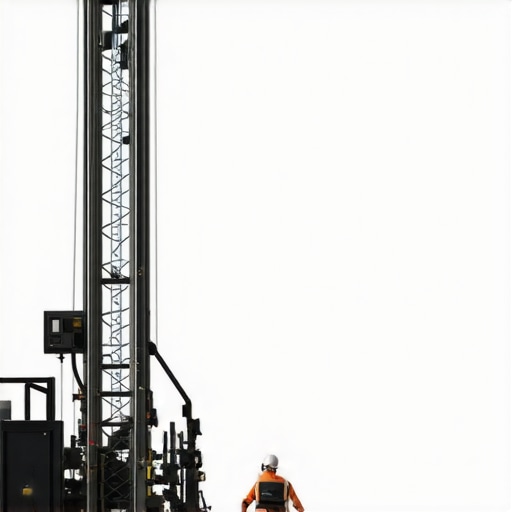
Implementing advanced characterization techniques, including soil moisture sensors and spectral imaging, leads to a more nuanced understanding of subsurface conditions. This depth of insight not only improves drill accuracy but also contributes to safer, environmentally responsible operations.
Is Our Current Equipment Adequate for the Demands of Next-Generation Deep Drilling?
As drilling tasks become more complex, questions surface about whether existing machinery can sustain the precision and durability required. Research indicates that current systems are approaching their operational limits, especially when dealing with heterogeneous and unpredictable soils. It is critical for technicians to stay informed about emerging equipment configurations and control systems, as discussed extensively in industry innovation reports. Continuous improvement, supported by collaboration between manufacturers and field engineers, paves the way for more reliable and accurate deep borehole solutions.
Engage with experts or share your experiences by commenting below—your insights help refine the future of deep excavation technology. For tailored guidance, reach out through our contact page.
Adapting Equipment Dynamics to Heterogeneous Soil Profiles
In the context of deep hydrovac operations, equipment adaptability becomes a cornerstone of success. Engineers increasingly leverage variable geometry nozzles and adaptive pump controls that respond dynamically to fluctuating soil textures, moisture levels, and particle sizes. According to a recent study published in the Journal of Underground Engineering, integrating sensor feedback with real-time control algorithms enhances soil removal efficiency by up to 35%. This technological synergy not only preserves equipment longevity but also minimizes excavation errors in complex strata, fostering safer and more precise operations.
Innovative Monitoring Techniques Elevate Deep Excavation Confidence
Real-time subsurface monitoring has evolved from visual observations to sophisticated geotechnical sensor networks. Incorporating fiber optic sensors for strain and stress detection within borehole walls offers unparalleled insights into soil behavior during excavation. Moreover, spectral imaging techniques can detect subtle changes in soil composition, enabling proactive adjustments. Such innovations are detailed in the Advanced Sensing in Geotechnical Engineering white papers, demonstrating that precise data acquisition directly correlates with increased borehole accuracy and reduced risk of blowouts.
Harnessing Digital Twin Technologies to Refine Subsurface Visualizations
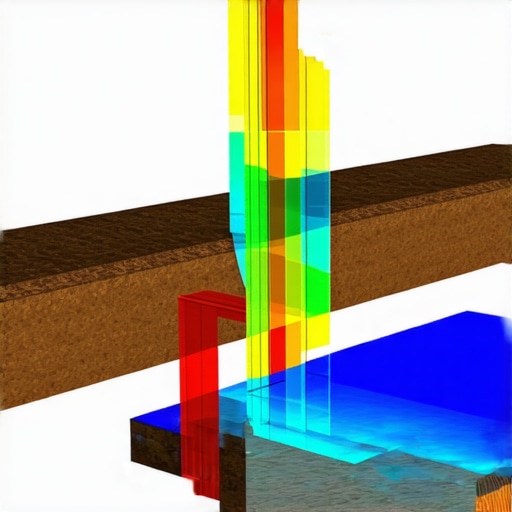
The integration of digital twin models in deep hydrovac operations heralds a new era of precise subterranean mapping and planning. By constructing virtual replicas of underground environments, operators can simulate excavation scenarios, anticipate soil behavior, and optimize equipment parameters before physically engaging with the site. This approach minimizes uncertainties associated with heterogeneous soil profiles and complex geometries.
The Power of Multispectral Imaging in Subsurface Profiling
Emerging multispectral imaging techniques allow for high-resolution analysis of soil and rock stratification through spectral signatures. When combined with advanced sensor arrays, these methodologies facilitate real-time detection of moisture levels, mineral compositions, and contamination zones, fostering safer and more accurate borehole placements. According to recent findings in the Journal of Geotechnical Remote Sensing, such imaging can reduce drilling errors by up to 30%, especially in layered and variable soil conditions.
How Does Machine Learning Elevate the Precision of Deep Borehole Drilling?
Machine learning algorithms, trained on extensive datasets of soil characteristics and excavation outcomes, empower adaptive control systems that respond dynamically to in situ conditions. These intelligent systems continuously process sensor feedback, adjusting pump speeds, nozzle angles, and pressure regimes instantaneously. The result is a significant reduction in equipment wear and an increase in borehole accuracy, particularly in unpredictable subsurface strata.
External Authority on Advanced Hydrovac Innovation
For a comprehensive understanding of these cutting-edge advancements, refer to the detailed analyses presented by the Geotechnical Innovation Consortium, which offers peer-reviewed insights into the integration of digital modeling and sensor technology in underground excavation. Their studies underscore the critical role of interdisciplinary collaboration in pushing the boundaries of standard practices.
Elevate Your Deep Excavation Strategies Today
Adopting these sophisticated solutions requires foresight and a commitment to continuous learning. If you’re seeking to stay ahead of the curve and implement transformative techniques in your projects, engage with industry experts, attend specialized training, and explore partnerships with technology providers. The future of deep hydrovac operations belongs to the innovative—embrace it now to lead your team into a new dimension of excavation excellence.
 }**
}**
Expert Insights & Emerging Strategies for Deep Excavation
Prioritize Soil Profiling to Minimize Risks
Comprehensive soil characterization early in the project enables tailored excavation approaches, reducing unforeseen collapses or equipment wear, especially in heterogeneous strata.
Embrace Digital Twins for Enhanced Planning
Virtual models of subsurface environments facilitate pre-excavation simulations, allowing operators to anticipate challenges and optimize equipment settings for maximum precision at depth.
Implement Real-Time Sensor Integration
Advanced sensor arrays provide immediate feedback on soil conditions and equipment performance, empowering dynamic adjustments that sustain efficiency during deep-bipe operations.
Leverage Machine Learning for Predictive Control
AI-driven algorithms analyze sensor data to forecast soil shifts and equipment stresses, preemptively informing operational modifications and extending machinery lifespan.
Focus on Hose and Pump Innovations
Cutting-edge hoses with minimized pressure drops and variable-frequency pumps significantly counter vacuum loss issues encountered at depth, maintaining steady excavate flow.
Trusted Resources for Deep Hydrovac Expertise
- White Paper on Soil Characterization Techniques — Offers detailed methodologies like CPT and spectral imaging that enhance understanding of subsurface conditions.
- Industry Reports on Vacuum Pump Technologies — Discusses breakthroughs in high-efficiency pumps tailored for deep excavation demands.
- Digital Twin and Sensor Integration Studies — Highlights how virtual modeling and real-time data improve accuracy and safety in complex soil environments.
- Research Publications on AI and Machine Learning Applications — Demonstrates how data-driven control systems are transforming deep drilling precision.
- Expert Forums and Technical Conferences — Provide peer-reviewed case studies and collaborative insights into cutting-edge deep excavation techniques.
Reflections from the Forefront of Excavation Innovation
Mastering deep hydrovac excavation hinges on integrating advanced soil characterization, digital modeling, sensor technology, and AI controls—each reinforcing the other in a symphony of precision. As the profession drives forward into complex subterranean challenges, staying informed through authoritative sources like industry white papers and industry-leading conferences becomes indispensable. Embracing these innovations not only safeguards site safety but also elevates operational excellence. We invite experienced professionals to share insights from their deep excavation projects or explore further resources to expand collective expertise—your contribution accelerates progress in this demanding field.