Enhancing Deep Excavation Efficiency Through Precise Hydrovac Operations
In the realm of underground utility installation and maintenance, vacuum excavation, particularly hydrovac technology, has revolutionized our capacity for precise and safe trenching. Implementing sophisticated techniques to manage challenges such as suction loss in deep vertical digs is essential for optimizing productivity and minimizing risks. This article delves into advanced methodologies, exploring how expertise in hydrovac innovation can address complex issues encountered during deep borehole excavations.
Deciphering the Complex Dynamics of Suction Loss in Deep Vertical Hydrovacs
High-depth hydrovac operations are susceptible to suction deterioration caused by factors like soil heterogeneity, equipment limitations, and atmospheric pressures. Understanding the fluid mechanics involved is vital; as depth increases, the hydrostatic pressure gradients and soil cohesion properties influence the vacuum efficiency. Expert operators leverage empirical data and dynamic pressure monitoring to preemptively adjust system parameters, ensuring sustained suction power. Regular maintenance of vacuum pumps and filters, combined with real-time diagnostics, forms the backbone of reliable deep digging practices.
Innovative Approaches to Mitigate Suction Challenges During Borehole Drilling
Integrating cutting-edge solutions such as variable frequency drives (VFDs) for vacuum pumps allows for adaptable control, accommodating soil variability and depth-related pressure fluctuations. Additionally, implementing advanced soil conditioning agents can enhance soil flowability and reduce the likelihood of cavity collapse. Employing electromagnetic sensors and acoustic technologies for real-time soil assessment informs strategic adjustments to excavation parameters. These innovations advance the field from mere reaction to proactive management, illustrating how field-tested expertise elevates operational standards.
What Are the Best Practices for Maintaining Suction Power in High-Vertical Boreholes?
Strategies for Extending Vacuum Efficiency at Increasing Depths
Addressing suction loss necessitates a comprehensive approach, including optimizing hose design to minimize air leaks, utilizing high-quality seals, and ensuring proper hose routing to prevent kinks that trap air. Periodic system audits, complemented by adaptive pressure regulation, can significantly enhance performance. Additionally, the use of sealed, high-strength vacuum tanks prevents pressure drops and sustains suction during extended operations. Training operators to recognize early signs of pressure decline and to execute timely interventions is critical for long-term success.
For practical insights on safeguarding personnel and equipment during such demanding work, consult expert safety protocols outlined in vacuum excavation safety best practices. Recognizing the subtle indicators of suction inefficiency allows for prompt adjustments, preserving operational integrity and safety.
Harnessing Emerging Hydrovac Innovations to Revolutionize Deep Trenching
Emerging innovations, including autonomous control systems and AI-driven soil analysis, promise to reshape deep vertical excavation methodologies. These advancements facilitate real-time adaptation to variable soil conditions, dramatically reducing manual oversight and enhancing safety margins. Staying abreast of such technologies and integrating them into field operations underscores the importance of continuous expertise development within this niche of trenching technology. To explore future-focused solutions, visit hydrovac innovations.
As the industry pushes the boundaries of depth and precision, the mastery of vacuum extraction systems in complex soil environments remains a professional priority. Sharing insights and experiences among field experts will fuel continuous improvement and safety advancements.
Harnessing Technology for Unmatched Depth and Precision
While traditional hydrovac methods have proven effective, integrating emerging technologies can dramatically elevate the success rate of deep borehole projects. Automated control systems, driven by artificial intelligence, now enable real-time soil analysis and system adjustments, minimizing human error and enhancing safety. Implementing remote monitoring solutions allows operators to oversee multiple operations simultaneously, ensuring consistent performance even in the most challenging conditions. Discover how these innovations are shaping the future of precise trenching at hydrovac technological advancements.
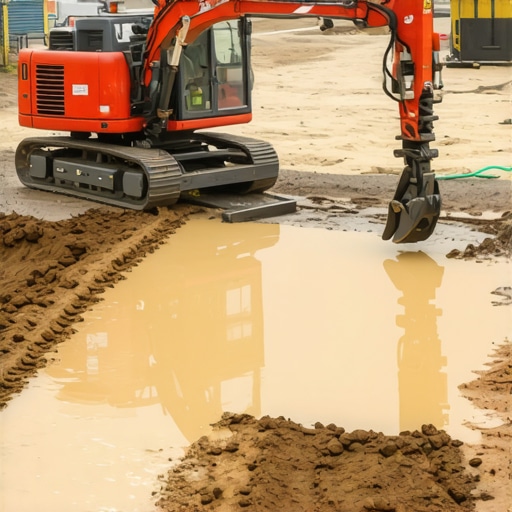
Can Equipment Adaptation Overcome Soil Variability at Extreme Depths?
One of the persistent misconceptions in deep hydrovac operations is that a single system configuration suffices across diverse soil types and depths. In reality, expert operators recognize the necessity for dynamic adaptation—adjusting vacuum levels, employing specialized soil conditioning agents, and incorporating soil stabilization techniques. For example, variable frequency drives (VFDs) on vacuum pumps provide the flexibility to modulate power output according to real-time feedback, ensuring consistent suction even as soil conditions shift unpredictably. Comprehensive training programs that emphasize these adaptive skills are essential for teams aiming to push the boundaries of depth safely and efficiently.
Efficient borehole dewatering, especially at significant depths, often hinges on understanding soil moisture dynamics and implementing solutions such as dewatering classifiers or infiltration barriers. Effective management of soil moisture not only preserves vacuum efficiency but also prevents collapse or subsidence risks. For detailed strategies, refer to ground moisture considerations in borehole accuracy.
What Role Does Soil Composition Play in Vacuum System Optimization?
Soil composition profoundly influences vacuum dynamics, dictating equipment choice, pressure regulation protocols, and safety procedures. Sandy soils, for instance, demand higher suction thresholds, while clay-rich soils require enhanced sealing solutions to prevent air leaks. Recognizing these nuances allows operators to tailor their approach, employing specialized seals, hoses, or soil conditioning agents to maintain optimal performance. Regular soil testing, combined with advanced mapping techniques like electromagnetic survey tools, empowers crews to anticipate challenges and adapt preemptively. Embracing a nuanced understanding of soil properties is vital for evolving from reactive troubleshooting to proactive excellence in deep trenching operations.
For a comprehensive perspective on soil assessment technologies, explore electromagnetic soil mapping innovations.
If you’re interested in staying at the cutting edge of trenching technology and safety best practices, consider sharing your insights or reading more about advances in vacuum excavation techniques within our professional community.
,
Innovative Equipment Calibration to Tackle Variable Soil Conditions
When deep hydrovac operations confront heterogeneous soils, static equipment settings often fall short. Advanced calibration, involving real-time feedback mechanisms, enables operators to dynamically adjust vacuum pressures and flow rates. For instance, integrating adaptive control algorithms within the system can detect subtle shifts in soil resistance, prompting immediate parameter modifications. This proactive approach minimizes equipment stress, prevents soil cavity collapse, and sustains optimal excavation velocity. Emphasizing this calibration process ensures a seamless balance between power and precision, especially in complex underground environments.
Are Custom Soil Conditioning Agents the Key to Enhancing Deep Excavation Stability?
Soil conditioning isn’t a one-size-fits-all solution but a tailored strategy that enhances flowability and reduces cohesion in problematic soils. The development of specific chemical agents, designed based on comprehensive soil analysis, can significantly improve vacuum efficiency. For moisture-rich clay soils, for example, polymer-based conditioners can disrupt cohesive bonds, facilitating smoother removal and cavity maintenance. An expert-level understanding of these chemical interactions, coupled with application timing and concentration control, elevates trenching reliability at extreme depths.
Expert operators should also consider environmental implications and regulatory standards when employing these agents to ensure sustainable and compliant excavation practices.
What Are the Dynamic Risks of Soil Instability During Deep Excavation, and How Can They Be Managed?
Addressing the Complexity of Soil Collapse Risks
Deep boreholes are inherently susceptible to soil instability, which can jeopardize both personnel safety and project timelines. The complex interplay of soil moisture, stratification, and structural integrity necessitates a multi-layered risk management approach. Utilizing geotechnical sensors combined with machine learning algorithms offers predictive insights into instability zones, enabling preemptive reinforcement or modification of excavation parameters. Moreover, strategic deployment of invert or support structures within the borehole can provide immediate stability gains, guiding the operation away from potential collapse scenarios.
Implementing these proactive measures requires a deep integration of geotechnical expertise and real-time data analytics—hallmarks of high-level hydrovac operation mastery.
How Do Cutting-Edge Monitoring Technologies Transform Deep Trenching Safety?
Advanced monitoring solutions include seismic sensors, laser scanning, and innovative acoustic emission detectors, which collectively offer a granular view of subterranean conditions. These technologies facilitate early detection of soil movements, pressure variations, and cavity deformations. Integrating IoT platforms with centralized data dashboards enables operators to receive instant alerts, fostering rapid decision-making and response. This technological convergence not only improves safety outcomes but also enhances operational efficiency and data-driven strategic planning.
For organizations aiming to elevate their deep trenching safety protocols, investing in these emerging technologies paired with staff training constitutes a critical step toward operational excellence.
Embracing AI-Driven Soil Analysis for Next-Level Deep Excavation Precision
The frontier of hydrovac extends into artificial intelligence, where machine learning models analyze vast data sets from soil samples, historical operations, and sensor outputs. These intelligent systems predict optimal excavation parameters tailored to specific soil compositions and depth requirements, reducing trial-and-error approaches. By continuously learning from each project, AI algorithms refine their recommendations, leading to smarter, safer, and more efficient borehole drilling practices. Collaborations with GIS specialists and geotechnical engineers are instrumental in developing and deploying these sophisticated models.
If you’re committed to pushing the boundaries of excavational technology and safety, engaging with multidisciplinary teams and continuous training will keep your skills at the cutting edge. For insights into integrating AI into your workflows, explore our upcoming webinars and publications on soil analytics and automated control systems.
Push Limits with Adaptive Hydraulic Control for Complex Subsurface Conditions
Innovative hydraulic system modulation stands at the forefront of deep hydrovac excavation, where static settings are inadequate for unpredictable soil environments. Implementing real-time sensor feedback and adaptive algorithms allows operators to fine-tune vacuum pressures dynamically, maintaining optimal performance amidst heterogenous and layered soils. This technological finesse minimizes equipment wear and prevents cavity instabilities, ensuring a more efficient, safer excavation process at considerable depths.
Deep Soil Profiles and Rock Interactions: A Geotechnical Perspective
Assessing the geological heterogeneity encountered during prolonged boreholes is paramount. High-resolution seismic surveys and downhole geophysical tools facilitate precise soil stratification mapping, revealing zones prone to caving or unexpected resistance. Recognizing these geological nuances arms operators with stratified strategies, such as adjusting pressure differentials or employing specialized soil conditioning agents tailored to specific rock and soil combinations—events that demand a nuanced, expert approach to prevent failure and optimize throughput.
How Can Sensor Fusion Revolutionize Subsurface Monitoring in Deep Excavations?
Combining data streams from acoustic emission detectors, electromagnetic sensors, and laser scanners through sensor fusion techniques yields a comprehensive subterranean picture. This integrated data environment enables the ongoing tracking of cavity stability, soil moisture levels, and vibration signatures, empowering operators with predictive insights. Anticipating instability or cavity collapse before it manifests transforms safety protocols and allows for preemptive adjustments, exemplifying how sophisticated data analytics elevates conventional practices into intelligent, proactive operations.
What Emerging Materials Are Redefining Soil Stabilization at Extreme Depths?
The advent of nano-engineered grout composites and biodegradable soil stabilizers presents promising avenues for enhancing borehole integrity. These materials can be injected into problematic zones, creating a reinforcement barrier that resists collapse without compromising environmental standards. Investment in research and field trials of these novel compounds demonstrates a forward-thinking approach—crucial for environmental compliance and operational resilience in demanding soil conditions.
Integrating Machine Learning for Precise Soil Characterization and Excavation Planning
Leveraging machine learning models trained on vast datasets—including soil samples, historical excavation results, and sensor feedback—enables highly accurate anticipation of soil behavior at various depths. These predictive insights inform strategic planning, equipment calibration, and risk mitigation measures, reducing trial-and-error and downtime. Cultivating collaboration between geotechnical data scientists and field practitioners is essential to harness the full potential of AI in deep excavation projects, setting a new standard for precision and safety.
Beyond the Surface: Innovations in Soil Augmentation and Ground Improvement Techniques
Techniques such as jet grouting, soil mixing, and vibrocompaction, when integrated with hydrovac operations, can significantly enhance stability in challenging underground environments. These ground improvement methods are often synchronized with excavation schedules to optimize cavity support and reduce subsidence risks. Understanding the interaction of these methods with existing soil and rock formations requires sophisticated site-specific assessments, positioning expertise at the core of successful implementation.
Is Remote Monitoring a Game-Changer for Deep Borehole Safety and Efficiency?
The deployment of remote monitoring systems—utilizing IoT devices, wireless sensors, and cloud-based analytics—transforms traditional oversight into continuous, real-time supervision. Facilitating instant data access for project managers and safety personnel reduces response times to emerging hazards, improving decision-making. This technological leap ensures that even in the most constrained or hazardous environments, operations remain under vigilant, expert supervision—drastically improving safety and productivity metrics.
Crafting a Future-Ready Deep Excavation Strategy with Eco-Conscious Practices
Environmental considerations increasingly influence deep hydrovac methodologies. Utilizing eco-friendly soil conditioning agents, minimizing energy consumption via optimized system control, and adopting biodegradable stabilization materials demonstrate a commitment to sustainability. Experts must stay abreast of evolving regulations and innovative environmentally responsible solutions, integrating these principles seamlessly into deep excavation plans to ensure compliance and community support while maintaining operational excellence.
Expert Insights & Advanced Considerations
Adaptive Equipment Enables Complex Soil Navigations
Precision in deep hydrovac excavation demands equipment that responds dynamically to soil variability; integrating real-time sensor feedback and adaptive controls allows operators to fine-tune vacuum pressures instantaneously, ensuring cavity stability and minimal soil disturbance. This agility reduces downtime and mitigates risks associated with unpredictable underground conditions.
Soil Composition Dictates Custom Strategies
Thorough analysis of soil types at operational depths guides the selection of appropriate conditioning agents and sealing systems. Understanding whether soils are sandy, clay-rich, or mixed informs the use of specialized seals and chemical stabilizers, optimizing vacuum efficiency and preventing cavity collapse during demanding digs.
Implementing Cutting-Edge Monitoring Transforms Safety Protocols
The adoption of sensor fusion technologies, combining acoustic, electromagnetic, and laser data, provides a comprehensive subterranean map. This real-time insight anticipates instability zones, allowing preemptive adjustments that safeguard personnel and equipment in complex excavation scenarios.
Leverage AI to Evolve Excavation Planning
Machine learning models analyze vast soil and operation datasets, offering predictive insights that refine excavation parameters proactively. These tools reduce manual guesswork, improve safety margins, and adapt strategies to diverse underground environments, leading to smarter trenching practices.
Explore Expertise with Trusted Resources
- Hydrovac Innovations Journal: Provides cutting-edge research and case studies on deep excavation technologies.
- Occupational Safety in Trenching: Offers comprehensive safety protocols tailored for complex hydrovac operations.
- Soil Analysis and Mapping: Features advanced geotechnical survey techniques crucial for deep borehole planning.
Final Perspective
Deep hydrovac projects present intricate challenges that demand a synthesis of advanced technology, expert intuition, and meticulous planning. Mastery in this niche not only elevates efficiency but also enhances safety and environmental stewardship. As the field evolves, continuous learning and adaptation remain paramount. Engage regularly with industry-leading resources and collaborate with multidisciplinary teams to stay at the forefront of this specialized domain. For proactive consultation or industry updates, visit our contact page and share your insights to foster collective expertise in deep excavations.