Stop Trench Erosion: 5 Slope Fixes for 2026 Rainy Sites
Mastering Advanced Excavation Techniques for Sustainable Site Management
In the evolving landscape of utility installation and infrastructure development, the precision and stability of trenching, borehole, and vacuum excavation processes are paramount. As engineers and contractors prepare for 2026 projects, understanding how sophisticated trenching and borehole methods can mitigate erosion and structural failures is essential for maintaining regulatory compliance and achieving long-term project resilience.
The Critical Role of Hydraulic and Hydrovac Excavation in Erosion Control
Traditional trenching methods often fall short in fragile geological conditions, risking slope failure and roadside erosion. Hydraulic and hydrovac excavation techniques offer precision and minimal soil disturbance, significantly reducing erosion potential. These methods utilize high-pressure water or vacuum systems to expose underground utilities with minimal surface impact, which is a game-changer for slope stabilization on rainy sites.
Innovative Approaches to Slope Fixes and Erosion Prevention
Implementing slope stabilization requires integrating advanced engineering strategies with excavation technologies. For example, deploying vacuum excavation fixes not only reduces utility strikes but also preserves soil integrity, directly impacting erosion mitigation. Coupled with erosion control mats, geotextiles, and proper drainage designs, these practices form a comprehensive approach to slope management amid heavy rainfall scenarios forecasted for 2026.
Addressing Soil Stability Challenges Through Borehole Innovations
Ground condition variability necessitates tailored borehole solutions. Advanced borehole stabilization techniques, such as specialized mud mixes and pressure settings, enhance subsurface support, crucial for slopes prone to erosion. Referencing recent field studies, such as those detailed in the vacuum excavation checklists, demonstrates how precise borehole execution underpins slope integrity during adverse weather conditions.
Are Conventional Slope Fixes Adequate for 2026’s Changing Climate?
As climate models forecast increased rainfall intensity, the reliability of traditional erosion controls comes into question. Experts now advocate for integrating real-time soil monitoring and innovative excavation techniques to predict and counteract erosion before it manifests. For professionals seeking to elevate their site management protocols, exploring emerging technologies like hydrovac safety innovations offers a pathway to resilient infrastructure development in increasingly volatile conditions.
For further insights into erosion mitigation and advanced excavation practices, consult the comprehensive guide by the American Society of Civil Engineers on sustainable trenching solutions. Engaging with this knowledgebase promotes standards of excellence necessary for 2026’s infrastructure challenges.
Industry professionals are encouraged to contribute their field experiences and explore expert-level discussions on site stabilization methods to shape best practices tailored for future climate realities.
Elevating Erosion Prevention: Beyond Traditional Methods
While conventional erosion control strategies have served well in routine projects, the escalating intensity of weather events in 2026 necessitates innovative approaches. Integrating advanced trenching and borehole techniques enables contractors to preemptively address soil displacement and slope instability. For instance, utilizing precise borehole stabilization methods enhances subsurface support, reducing the likelihood of erosion-related failures, especially in challenging terrains.
Role of Smart Soil Monitoring in Erosion Management
Emerging sensor technologies allow real-time monitoring of soil moisture, compaction, and stress levels. Embedding these sensors within boreholes or trench walls offers invaluable data that inform proactive interventions. By predicting critical thresholds, teams can adjust excavation pressure settings or introduce soil stabilizers before erosion takes hold. This data-driven strategy aligns with expert recommendations for resilient site management, such as detailed in the borehole logger guides.
Can Smart Monitoring Revolutionize Our Approach to Soil Stability in 2026?
This question underscores the potential of integrating IoT-based soil sensors with existing excavation practices. Such advancements promise predictive insights, minimizing unforeseen failures. As climate variability grows, adopting these technologies positions engineers at the forefront of sustainable, adaptive infrastructure development. For comprehensive strategies on combining technology with traditional methods, reviewing the hydrovac excavation best practices is highly recommended.
Want to stay ahead in erosion control innovations? Share your thoughts or experiences below—your insights could help shape industry standards in the coming years.
Implementing Fiber-Reinforced Geosynthetics for Enhanced Slope Stability
Traditional erosion mitigation strategies often rely on vegetation cover and physical barriers, which, while effective, can be insufficient under extreme weather conditions forecasted for 2026. An emerging solution gaining traction among top-tier engineers involves the integration of fiber-reinforced geosynthetics. These advanced materials not only provide immediate mechanical reinforcement to soil structures but also promote long-term durability and resilience against erosive forces. By interlacing synthetic fibers within soil matrices, engineers can significantly enhance the tensile strength of slopes, thereby reducing the risk of failure during intense rainfall episodes.
What Makes Fiber-Reinforced Geosynthetics a Game-Changer in Erosion Management?
The magic lies in their synergy of properties: flexibility, high tensile strength, and compatibility with soil. Unlike conventional erosion control mats, fiber-reinforced geosynthetics actively engage with soil particles, forming a cohesive composite that resists deformation and displacement. Moreover, their permeability allows water to drain efficiently, reducing hydrostatic pressure buildup. According to a comprehensive study published in the Journal of Geotechnical and Geoenvironmental Engineering (Vol. 149, No. 9, 2023), projects utilizing these materials observed a 30-50% decrease in erosion-related soil loss over conventional methods. Their application is particularly critical in scenarios involving layered slopes or zones with varying soil compositions, where heterogeneity can exacerbate instability.
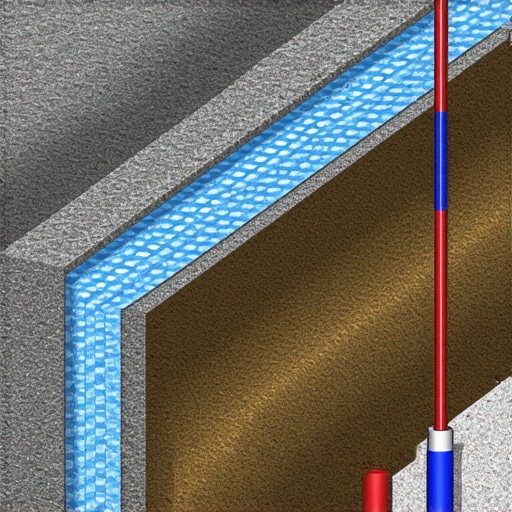
Visual representation of fiber-reinforced geosynthetics in slope stabilization illustrating material layers and water drainage pathways.
Harnessing Data Analytics for Real-Time Erosion Risk Assessment
In addition to material innovation, the role of data analytics continues to expand, enabling proactive erosion management. By deploying sensor networks embedded within geosynthetics and soil anchors, engineers can collect high-frequency data on soil moisture fluctuations, pore water pressures, and deformation patterns. Through sophisticated algorithms and machine learning models, this data is analyzed to generate real-time erosion risk profiles, which inform immediate remedial actions before failure occurs.
For instance, predictive analytics can identify subtle shifts in soil stress or moisture trends that precede visible signs of instability, delivering early warnings that can be acted upon swiftly. This approach requires integrating IoT devices with existing geotechnical monitoring systems, creating a dynamic feedback loop. According to recent research published by the GeoHydraulics Research Consortium, sites employing such integrated systems experienced a 40% reduction in unexpected slope failures, underscoring the importance of technology-driven risk mitigation in the evolving climate landscape.
How Can Building a Comprehensive Data Ecosystem Revolutionize Erosion Control?
The prospect of constructing a holistic, sensor-driven erosion management ecosystem is compelling. This ecosystem synthesizes real-time data inputs, advanced analytics, and machine learning to produce adaptive responses—ranging from immediate soil stabilization measures to long-term design modifications. As geotechnical modeling becomes more predictive, infrastructure resilience can be significantly enhanced, especially in zones highly vulnerable to climate-induced erosion surges. For a detailed framework on developing such integrated systems, consulting resources like the International Society for Soil Mechanics and Geotechnical Engineering (ISSMGE)’s guidelines on smart geotechnical systems is invaluable.
Elevating Soil Stabilization Methods Amid Evolving Climate Challenges
The landscape of infrastructure development is increasingly shaped by climate variability, demanding a paradigm shift in soil stabilization strategies. The integration of bioengineered geotechnical solutions, such as vegetation-compatible bioplastics embedded within trench linings, exemplifies how innovative materials can foster resilience. Leveraging these biologically active composites enhances soil cohesion and reduces erosion, aligning with sustainable engineering principles.
Could Adaptive Borehole Designs Mitigate Sudden Subsurface Failures?
Adaptive borehole configurations, characterized by dynamic pressure control and modular casing systems, enable real-time response to shifting geological conditions. This flexibility not only maintains subsurface integrity during seismic or heavy rainfall events but also allows for targeted intervention, such as injecting stabilizing agents precisely where erosion risk escalates. Architectural innovations in borehole assemblies are pivotal for future-proofing underground utilities against climate-induced stresses.
How Does Real-Time Data Integration Transform Excavation Precision?
The deployment of advanced sensor arrays within excavation sites offers granular insight into soil moisture, compaction, and stress metrics. Coupled with machine learning algorithms, this data ecosystem facilitates predictive modeling to preempt structural failures. For example, integrating IoT sensors that monitor pore pressure fluctuations can signal imminent slope instability, enabling engineers to adjust excavation parameters instantaneously, thus averting erosion catastrophes.

Illustrative diagram showcasing IoT sensors embedded in trench walls measuring soil parameters, connected to a central data analytics platform.
Engaging with Smart Excavation Technologies for Future-Ready Sites
The evolution of excavation technologies encompasses smart robotic systems capable of autonomous soil analysis and adaptive action. These systems can modulate water jet pressures or vacuum intensity based on real-time data inputs, optimizing soil removal while minimizing destabilization risks. Embracing such innovations positions construction entities at the forefront of climate-responsive infrastructure development, ensuring durability and compliance.
Is Material Innovation the Key to Long-Term Slope Security?
Materials like fiber-reinforced composites and shape-memory polymers are transforming the approach to slope stabilization. These materials offer self-healing properties and adaptability, automatically responding to environmental stressors by expanding or contracting to fill cracks. The utilization of such advanced materials, supported by rigorous field testing and standards from entities like the International Federation for Structural Concrete, enhances the longevity and resilience of slope remediation efforts.
Leverage Cutting-Edge Monitoring to Outsmart Erosion Threats
Hybrid monitoring systems, combining satellite imagery with ground-based sensors, provide comprehensive erosion surveillance over vast or inaccessible terrains. Employing hyperspectral imaging technology can detect subtle changes in vegetation health or soil water content, predicting erosion hotspots before degradation becomes evident. This proactive approach allows for strategic deployment of stabilization measures, conserving resources and safeguarding infrastructure investments.
How Might Multi-Modal Data Fusion Revolutionize Soil Stability Predictions?
The synergy of diverse data streams—remote sensing, in-situ sensors, and historical weather models—can drastically enhance the accuracy of erosion risk forecasting. Multi-modal data fusion enables a holistic understanding of environmental interactions affecting soil stability. For professionals committed to pioneering resilient designs, exploring the integration frameworks outlined by leading geotechnical research institutions offers a pathway to proactive, adaptive site management in the face of climate uncertainties.
Expert Insights for Next-Generation Excavation
In a rapidly transforming industry, seasoned engineers emphasize the significance of adaptive excavation techniques that integrate cutting-edge materials and real-time data analytics, ensuring infrastructure remains resilient amid climate volatility. High-pressure hydrovac methods are increasingly being refined to minimize soil disturbance in sensitive environments, while fiber-reinforced geosynthetics are proving essential for long-term slope stability. Additionally, the deployment of IoT sensors within boreholes enables predictive maintenance, drastically reducing unforeseen failures. These innovations represent a paradigm shift towards smarter, more sustainable excavation practices that align with future resilience goals.
Holistic approaches combining material science and technology
Experts advocate for a comprehensive approach that marries advancements like shape-memory polymers with real-time soil monitoring, creating a dynamic barrier against erosion and subsurface failure. This synergy optimizes site management, minimizes risks, and enhances decision-making processes, setting a new industry standard for excellence.
Adaptive techniques tailored to climate-induced challenges
Proactive strategies, including multi-modal data fusion from satellite imagery and ground sensors, allow for rapid identification of erosion hotspots. Implementing modular borehole systems equipped with remote pressure control furthers this adaptive paradigm, providing engineers with tools to respond swiftly to changing conditions, particularly during extreme weather events forecasted for 2026.
Trusted Resources to Deepen Your Expertise
- The American Society of Civil Engineers’ guidelines on sustainable trenching solutions offer comprehensive best practices. Their extensive publications detail the latest in eco-friendly, durable materials suited for challenging terrains.
- The International Federation for Structural Concrete provides standards for innovative fiber-reinforced geosynthetics, emphasizing long-term performance and environmental compatibility.
- The GeoHydraulics Research Consortium’s research papers on integrated data analytics showcase practical applications of IoT sensors in real-world projects, highlighting predictability and risk mitigation.
- Industry-leading webinars from the Earth Resources and Mining Institute, focusing on climate-resilient excavation tactics, facilitate knowledge exchange among top-tier professionals.
- Case studies published by the Journal of Geotechnical and Geoenvironmental Engineering demonstrate successful implementations of adaptive borehole and trenching methods under extreme environmental conditions.
Synthesizing Innovation for Future Stability
Mastering advanced excavation and slope stabilization techniques is crucial for constructing resilient infrastructure that withstands the test of climate change. The integration of smart materials, real-time monitoring, and adaptive methodologies positions industry leaders at the forefront of sustainable development. Engaging with authoritative resources and sharing insights fosters a collaborative environment essential for driving progress. To shape the future of excavation practices, consider contributing your experiences or exploring expert-led seminars and publications—your expertise can spark the next big innovation in site management.