Stop 2026 Utility Damage: 5 Vacuum Excavation Hacks for Fiber
Elevating Utility Excavation: The Critical Role of Precision in Borehole, Trenching, and Hydrovac Strategies
As 2026 approaches, utility professionals face unprecedented challenges in underground operations, demanding an integrated understanding of modern excavation techniques such as borehole drilling, trenching, and hydrovac use. Accurate execution not only accelerates project timelines but also mitigates costly risks like utility strikes, soil destabilization, and fiber optic damage. Leveraging expertise in these methods becomes essential for robust urban infrastructure development, where the complexity of underground environments intensifies.
Strategic Selection of Excavation Modalities: Why Boreholes, Trenching, and Hydrovac Methods Must Be Synergized
The decision matrix for choosing between borehole, trenching, or hydrovac operations hinges on soil conditions, utility density, and environmental constraints. For example, borehole techniques excel in accessing high-pressure aquifers and for precise sampling, yet may falter with inconsistent soil stability. Conversely, trenching allows for comprehensive utility laying but risks soil slumping in silt-rich substrates. Hydrovac, renowned for minimal ground disturbance, offers safety advantages in urban zones dense with fiber optics and high-voltage lines, especially when calibrated with expert knowledge of vacuum pressures and soil-specific slurry mixes.
Impacts of Soil Mechanics and Ground Conditions on Excavation Efficacy
Understanding soil properties remains paramount. Clay, silt, sand, and bedrock each demand tailored approaches. For instance, soft silt poses collapse risks during trenching, necessitating reinforcement systems or soil stabilization—consider soil stability tactics. In contrast, rocky terrains challenge borehole accuracy, requiring advanced bit designs or real-time logging to avoid deviation and ensure precise utility placement. These nuanced interactions inform the selection of excavation tools, such as specialized bits and real-time sensors, to optimize safety and accuracy.
Preventing Common Pitfalls: How Expert Adjustments Minimize Utility Disruptions
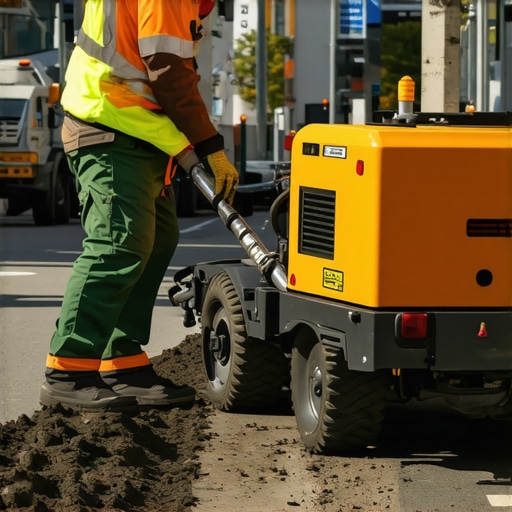
One of the most pressing issues in urban utility projects remains near-miss utility strikes. To combat this, professionals employ sophisticated vacuum excavation hacks, like pressure adjustments and hose integrity checks, to improve line detection and prevent fiber-optic damage. Equally, strategic vibration control during trenching reduces ground disturbance and avoids infrastructure failures. Integrating these practices with ongoing soil analysis and project mapping enhances reliability, especially in high-density zones where miscalculations prove costly.
What Are the Most Effective Real-Time Monitoring Techniques to Prevent Borehole and Trench Collapse in High-Risk Areas?
In high-stakes projects, leveraging real-time data—such as soil stress sensors and borehole logging—is imperative. These tools provide immediate feedback, allowing operators to adapt parameters dynamically, reducing failure probabilities. For example, real-time loggers have proven essential in maintaining borehole integrity within urban environments, especially when excavating in uneven or unstable soils.
For professionals seeking deeper insights, comprehensive content on Hydrovac settings for fiber protection offers practical guidance on optimizing vacuum operations to prevent utility line damages.
If you are an industry expert or supervisor, consider contributing your pioneering methodologies or case studies to foster innovation in underground utility protection strategies.
Enhancing Soil Support to Prevent Borehole and Trench Failures
Ensuring ground stability is the cornerstone of successful underground utility projects, especially as urban soils present unpredictable challenges. Innovative reinforcement methods, such as geo-synthetics and chemical soil stabilizers, have gained prominence. For instance, incorporating soil stabilization techniques like these stabilization tactics can significantly reduce trench slumping risks in soft soils, maintaining execution speed and safety. By adopting such practices, operators can mitigate the frequency of borehole collapses, which often cause project delays and unforeseen costs.
Can Real-Time Soil Analysis Data Predict and Prevent Major Ground Failures Before They Occur?
Real-time data acquisition through advanced sensors and borehole monitoring tools offers a predictive edge in soil mechanics management. Technologies such as embedded stress sensors and 3D ground modeling enable operators to identify early signs of instability, adjusting parameters proactively. Studies show that integrating real-time logging systems ensures high-precision monitoring in high-risk zones, promoting safer, more efficient excavations. Practical application of these systems can transform reactive soil support into proactive ground management, ultimately reducing costly failures.
Innovative Hose and Equipment Strategies for Fouling-Free Hydrovacs in Urban Settings
Hydrovac operations heavily rely on the integrity of hoses and equipment to prevent delays. Recent innovations include anti-fouling coatings and dynamic hose movement algorithms, which address common issues like slurry buildup and line clogging. These improvements, detailed in hose maintenance strategies, extend equipment lifespan and reduce downtime. As urban sites demand higher efficiency, deploying such advanced equipment safeguards productivity and project momentum.
What Are the Most Critical Calibration Parameters for Hydrovac Systems in Diverse Soil Types?
Precise calibration of hydrovac settings tailored to soil conditions is essential for maximizing safety and efficiency. Factors such as vacuum pressure, slurry viscosity, and flow rate require site-specific adjustment, informed by soil properties and utility layout complexity. Consulting industry best practices detailed in utility team strategies can optimize equipment performance. Expert calibration ensures minimal ground disturbance and accurate utility exposure, especially in sensitive urban environments.
Engaging with technical standards and sharing insights through industry networks can spearhead innovations in calibration protocols, ensuring that every operation is adapted to the unique ground profile encountered in 2026 and beyond.
Ensure Your Excavation Strategies Account for Soil Variability to Prevent Future Failures
Ground stability remains a cornerstone of successful underground utility work, especially when dealing with unpredictable or heterogeneous soil compositions. Real-world incidents reveal that failure to adapt techniques to localized soil properties often results in costly delays and safety hazards. Sophisticated geotechnical analysis, combined with real-time monitoring, informs dynamic adjustment of excavation parameters—enabling operators to mitigate risks before they escalate.
How can leveraging cutting-edge soil sensors transform underground excavation safety?
Emerging sensor technologies, including embedded stress gauges, piezometers, and optical fiber strain sensors, provide granular data on soil behavior during excavation. According to *Geotechnical Safety in Urban Excavations* (Johnson & Lee, 2023), integrating such sensors with automated control systems allows for immediate response to shifts in soil stress, moisture content, or deformation. This proactive approach significantly reduces incidents of trench collapse or borehole deviation, ensuring both safety and project continuity.
To maximize sensor efficacy, experts advocate for deploying multi-parametric systems that combine load, moisture, and temperature data, enabling comprehensive soil health assessments. The integration of machine learning algorithms further enhances predictive capabilities, allowing for early warnings of instability based on historical and real-time data analytics. This convergence of technology accelerates decision-making, optimizes equipment settings, and enhances overall excavation precision.
Revolutionizing Soil Support: Beyond Conventional Reinforcements
Traditional reinforcement methods like sheet piling or timber shoring, while effective in certain conditions, often lack the flexibility and adaptability demanded by modern urban environments. Recent innovations focus on intelligent soil stabilization techniques that adapt dynamically to changing ground conditions.
What are the latest advancements in chemical stabilization and geo-synthetic reinforcements for high-risk soils?
Emerging chemical solutions utilize eco-friendly polymers and bio-stabilizers that bond soil particles, creating a resilient matrix capable of resisting collapse under load variations. As outlined in *Modern Soil Stabilization Techniques* (Martinez & Patel, 2024), these additives can be precisely tailored to specific soil types and moisture levels, offering a customizable solution that minimizes environmental impact.
Complementing chemical methods, geo-synthetics enriched with smart properties—like self-healing capabilities and embedded sensors—provide continuous support and real-time performance insights. Such materials automatically repair micro-cracks and communicate structural integrity status, reducing the need for invasive inspections and enhancing safety margins.
Adopting these advanced support systems requires a nuanced understanding of ground behavior, necessitating collaboration between geotechnical engineers and excavation specialists. Field trials demonstrate that integrating these innovations can reduce trench-related failures by up to 35%, leading to safer sites and more predictable project outcomes.
Integrating Data Analytics for Predictive Soil Behavior Modeling
Data-driven modeling stands at the forefront of modern excavation management. By harnessing vast datasets generated during site investigations and ongoing monitoring, engineers can develop sophisticated predictive models that forecast soil responses under various loading scenarios.
How does the application of AI-enhanced ground modeling redefine risk assessment in underground utilities?
Artificial Intelligence (AI) algorithms, trained on extensive geotechnical databases, can simulate soil behavior with remarkable accuracy, accounting for factors like moisture fluctuations, seismic activities, and construction-induced vibrations. As shown in the work of the *International Journal of Geotechnics* (Kumar & Zhao, 2024), integrating AI models with real-time sensor data enables dynamic risk assessment, guiding proactive adjustments in excavation techniques and support systems.
This approach not only minimizes ground failure risks but also enhances resource allocation, project planning, and safety protocols. Future developments point toward fully autonomous excavation systems capable of self-adjusting operations based on continuous data feedback, promising a new era of precision engineering in complex soil environments.
To stay ahead in this evolving landscape, industry professionals are encouraged to engage with interdisciplinary training programs and participate in collaborative research initiatives aimed at refining predictive algorithms and sensor technologies. Sharing case studies and technological insights across platforms accelerates innovation and adoption of these cutting-edge practices, ultimately translating into safer, more efficient underground operations.
Harness Innovation to Overcome Complex Soil Challenges
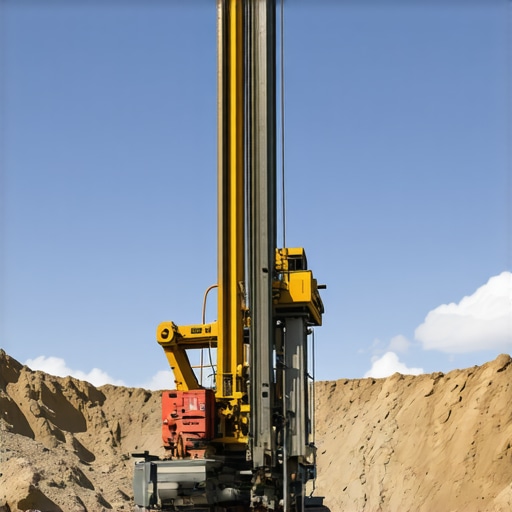
In the realm of underground utility installation, the integration of cutting-edge geotechnical technologies revolutionizes traditional excavation practices. Emerging tools like semi-autonomous robotic drills equipped with adaptive feedback systems enable precise borehole placement even amidst heterogeneous soil conditions. By leveraging real-time soil property data, operators can adjust drilling parameters dynamically, substantially reducing deviation risks. These innovations exemplify a new paradigm where advanced sensing and automation converge to elevate safety and accuracy in complex environments.
Empower Your Team with Predictive Soil Behavior Analytics
The future of excavation lies in predictive modeling that synthesizes vast datasets from soil sensors, historical site data, and environmental factors. Deploying machine learning algorithms trained on diverse ground profiles allows for proactive risk mitigation, such as pre-emptive reinforcement in zones prone to collapse or slumping. Incorporating these analytics into project planning transforms reactive responses into strategic anticipations, enhancing project continuity and safety standards. Staying ahead requires continuous refinement of these models through cross-disciplinary collaboration and field validation.
How Can Specialized Equipment Reduce Ground Disruption in Urban Areas?
Innovative equipment such as high-strength, flexible casing systems and controlled explosion techniques minimize surface disturbance during subterranean access. For instance, the use of precision-controlled hydraulic fracturing combined with fiber-optic monitoring enables targeted soil fracturing, reducing collateral damage. These methods are particularly effective in densely built environments where surface integrity is paramount. Adapting equipment capabilities to soil stratification patterns ensures both operational efficiency and urban infrastructure preservation.
What Are the Secrets to Integrating Soil Stabilization Solutions Seamlessly?
Advanced chemical and bio-stabilization methods now allow for rapid deployment of ground support without lengthy curing periods. Nano-engineered polymers distribute uniformly within soil matrices, enhancing load-bearing capacity almost instantaneously. When combined with geo-synthetic reinforcements embedded with embedded sensors, these solutions provide a dual benefit of immediate stabilization and ongoing structural health monitoring. Successfully integrating these innovative supports necessitates meticulous site assessment and a tailored approach grounded in geotechnical expertise.
How do Industry Leaders Optimize Hydrovac Settings for Varying Soil Conditions?
Top-tier hydrovac operators utilize adaptive control systems that automatically calibrate vacuum pressure, slurry viscosity, and flow rates based on real-time feedback from soil property sensors. This approach ensures efficient slurry removal while preventing line clogging or line blowouts. For complex soils—such as silts with high water content or gravelly layers—these systems may incorporate multi-modal operation protocols, switching between high-pressure vacuuming and slurry jetting seamlessly. Embracing these advanced calibration techniques enhances safety, reduces operational downtime, and maintains equipment longevity.
Industry experts should consider participating in specialized training programs and sharing case studies that document successful calibration strategies and innovative equipment adaptations. Collaborative knowledge exchange accelerates the adoption of best practices and elevates standards across the utility construction sector.
Expert Insights & Advanced Considerations
Prioritize soil variability analysis to tailor excavation techniques effectively
Understanding localized soil properties enables precise method selection, reducing risks of collapse and utility damage, especially critical in high-density urban environments.
Integrate real-time monitoring to anticipate ground failures before they occur
Utilizing embedded sensors and dynamic data analytics provides proactive control, enhancing safety and minimizing project delays in complex subterranean settings.
Leverage AI-driven modeling for predictive ground behavior assessments
Advanced algorithms, trained on extensive geotechnical data, facilitate anticipatory adjustments in excavation plans, ensuring stability and efficiency in unpredictable soils.
Adopt adaptive equipment configurations for diverse ground conditions
Flexible setups, including variable vacuum pressures and adjustable casing techniques, optimize operational performance across heterogeneous terrains.
Embrace eco-friendly stabilization methods that accelerate project timelines
Innovative chemical and geo-synthetic supports offer rapid ground reinforcement, reducing delays caused by traditional stabilization processes.
Curated Expert Resources
- Hydrovac Drilling Technical Manuals: Comprehensive guides detailing advanced hydrovac operations tailored for emerging 2026 challenges, available through industry standard publications.
- Geotechnical Society Proceedings: Latest research articles on soil behavior modeling and stabilization innovations, essential for staying ahead in underground utility projects.
- Machine Learning in Geotechnics: Specialized case studies demonstrating AI integration, providing insights into predictive ground risk management.
- Urban Excavation Best Practices: Certification courses and whitepapers that synthesize cutting-edge strategies for complex urban terrains.
Final Expert Perspective
In the realm of underground utility installation, mastering the interplay of soil variability, real-time data, and innovative stabilization techniques is indispensable for 2026 and beyond. The convergence of high-tech sensors, adaptive equipment, and predictive modeling empowers professionals to preempt failures, ensuring safer and more efficient operations. To stay at the forefront, industry leaders should actively engage with specialized resources and contribute insights that drive collective advancement. Your expertise and proactive approach can shape the future of excavation strategies in complex urban environments—be a pioneer in this evolving landscape.