
The Secret to Digging in Frozen Ground Without Blowing a Seal
Innovative Techniques for Reliable Trenching and Vacuum Excavation in Frozen Ground Conditions
In the realm of underground utility installation and maintenance, the challenges posed by frozen ground necessitate a sophisticated approach rooted in engineering excellence and practical expertise. Trenching operations and vacuum excavation, when executed with precision, can mitigate risks associated with thermal stress, soil stabilization, and substrate variability, especially in climates where frost depths exceed standard excavation parameters.
Optimizing Hydrovac Systems for Cold-Weather Efficiency
Hydrovac excavation, a non-destructive method employing high-pressure water and vacuum suction, offers unparalleled safety and accuracy, particularly when reinforced with reinforcement strategies like dynamic flow adjustments and advanced nozzle design. These innovations prevent equipment freezing, reduce cavitation issues, and enhance soil removal efficiency. For instance, adjusting water pressure settings based on real-time soil density measurements ensures minimal disturbance to surrounding infrastructure and preserves soil integrity.
The Role of Borehole Design in Enhancing Ground Stability During Freezing
Engineered borehole configurations, incorporating variable casing and strategic grout placement, can significantly influence borehole stability amidst freezing cycles. Techniques such as thermal insulation of borehole casings or utilizing phase-change materials help maintain drilling fluid consistency and prevent borehole collapse. Developers often employ real-time monitoring systems to adapt borehole parameters dynamically, ensuring sustained structural integrity despite the stresses introduced by temperature fluctuations.
How Can Vacuum Excavation Minimize Utility Damage in Frost-affected Sites?
Advanced vacuum excavation practices, including the integration of sonic sensors and remote imaging, empower operators to detect hidden utilities situated in frost-locked soils. Selecting optimal debris tank configurations and implementing debris management protocols aid in maintaining suction capacity during prolonged cold spells. This proactive approach not only safeguards existing infrastructure but also enhances operational safety through precise utility mapping in challenging winter conditions.
Utilizing Material and Soil Behavior Insights for Enhanced Trenching Outcomes in Cold Climates
Understanding the thermomechanical properties of soils impacted by seasonal freezing is crucial. Materials like loam and clay exhibit varied expansion and contraction behaviors, which influence trench stability. Deploying geotechnical analysis and predictive modeling enables engineers to design trenches resilient to frost heaving and soil liquefaction. Such insights inform the choice of trench shoring, backfill materials, and moisture control strategies, ultimately ensuring durable and sustainable installations.
What are the most effective methods for preventing groundwater infiltration during winter trenching?
Addressing this issue requires a comprehensive understanding of frost barriers, seepage control, and the integration of thermal insulation in trench designs. High-density compacted backfill combined with geosynthetic barriers often provides the necessary defense against groundwater ingress, especially in areas with fluctuating water tables. For more insights, consult industry white papers like those published by the Geosynthetica Journal.
If you’re seeking to elevate your trenching and vacuum excavation operations under freezing conditions, exploring field-tested tactics and the latest technical innovations is imperative. Engage with professional networks or contribute your insights to advance collective knowledge on best practices in cold-weather underground work.
Enhancing Ground Stabilization Techniques to Combat Frost Heave
One of the most critical issues in winter trenching is frost heave, which can compromise the stability of underground utilities and structures. Implementing innovative ground stabilization methods, such as thermal soil modification and the use of geosynthetics, can significantly mitigate these risks. Employing insulation blankets over newly excavated areas, combined with soil stabilization additives like phase-change materials, creates a controlled environment that prevents detrimental soil movement during freeze-thaw cycles. These techniques not only preserve trench integrity but also minimize post-construction maintenance costs.
Leveraging Real-Time Monitoring for Dynamic Borehole Management
Incorporating advanced sensor technologies into borehole drilling systems provides real-time data on soil temperature, moisture content, and borehole deformation. This continuous monitoring allows operators to adjust drilling parameters proactively, such as water pressure and rotation speed, to accommodate changing ground conditions. Emerging IoT-enabled solutions facilitate remote oversight and data analytics, enabling precise control that respects the complex thermomechanical behaviors of frozen soils. For instance, adaptive borehole casing strategies can be employed to respond to soil shifts detected by sensor arrays, ensuring ongoing structural stability.
What Innovations Are Transforming Winter Utility Detection and Mapping?
Emerging technological advances are redefining how underground utilities are located and mapped in frost-affected environments. Non-invasive methods like ground-penetrating radar (GPR) combined with machine learning algorithms enhance accuracy in identifying the position and depth of utilities buried beneath frozen soils. Additionally, integrating drone-based aerial surveys with subsurface imaging supports comprehensive site assessment. These methods reduce the risk of accidental utility strikes, align with safety standards, and streamline project planning, especially in complex urban settings where frost depths are unpredictable.
For a deeper dive into best practices, consult expert analyses such as those found in the Geosynthetica Journal, which explores cutting-edge solutions for frost-related geotechnical challenges.
If you’re eager to refine your expertise in winter excavation safety and efficiency, consider sharing your experiences or exploring advanced training modules that focus on cold-weather site management.
Rethinking Soil Stabilization Tactics to Combat Frost Action
Advanced ground stabilization in freezing conditions integrates the latest geotechnical innovations to prevent frost heave and soil liquefaction. Methods such as the application of phased soil amendments—incorporating materials like bentonite clay, silica fume, or chemical stabilizers—alter soil composition dynamically, enhancing resistance to thermal cycling. Furthermore, the deployment of thermally conductive geosynthetics facilitates heat transfer away from critical zones, thereby reducing freezing potential. Recent research published in the Geosynthetica Journal illustrates how these approaches lengthen the lifespan of underground infrastructure in winter climates.
How Can Adaptive Equipment Offer Superior Performance in Freezing Environments?
Equipment adaptability is pivotal when dealing with fluctuating ground conditions caused by seasonal temperature swings. Innovations such as automated nozzles with variable flow control, sensor-responsive vacuum systems, and insulated hydraulic lines enable operators to maintain optimal performance despite harsh conditions. Robotic ultrasound-guided drilling, for example, dynamically adjusts its parameters based on real-time soil feedback, reducing downtime due to equipment failure. Embracing these technologies not only minimizes operational risks but also enhances project efficiency in frost-prone regions.
Addressing the Challenges of Utility Detection in Permafrost Territories
Permafrost poses unique obstacles for underground utility detection, necessitating specialized techniques. Combining deep-penetrating ground-penetrating radar (GPR) with thermal imaging systems enhances subsurface clarity, enabling precise mapping even amidst frozen substrates. Additionally, spectral analysis and machine learning algorithms can differentiate utility anomalies from natural geological features, streamlining the planning process. For instance, a recent study by the Geosynthetica Journal highlights the integration of these methods for successful underground utility localization beneath active permafrost zones.
Interested in pushing the boundaries of your cold-weather excavation expertise? Engaging with specialized training and participating in industry conferences can expose you to the latest developments in geotechnical innovation and operational best practices.
Harnessing Thermo-Mechanical Soil Analysis for Precision Excavation
In environments where frost intricately influences soil stability, deploying sophisticated thermomechanical soil analysis becomes imperative. Such analyses utilize state-of-the-art geotechnical sensors and predictive modeling to anticipate soil behavior under freezing conditions, enabling engineers to tailor trenching strategies proactively. By integrating these insights, projects can circumvent common pitfalls like unexpected soil heave or liquefaction, thereby ensuring excavation accuracy and safety.
Maximizing Equipment Resilience Through Material Innovation
Equipment durability in sub-zero temperatures hinges on the adoption of advanced materials such as cryogenic-grade alloys and insulated composites. These materials withstand thermal stress, prevent hydraulic fluid freezing, and reduce wear caused by frozen debris. Moreover, modular design principles facilitate swift maintenance and component replacement, maintaining operational continuity during demanding cold-weather projects.
How Can Adaptive Boring Systems Improve Reliability in Deep Freeze Conditions?
Adaptive boring systems equipped with real-time parameter adjustments—guided by integrated sensor arrays—excel in maintaining borehole stability in frozen ground. These systems dynamically modify drilling velocity, torque, and fluid flow based on soil feedback, significantly reducing borehole collapse risks. High-precision control minimizes environmental disturbance and enhances safety, especially in permafrost regions where unpredictability is elevated.
Innovative Techniques for Void Filling that Combat Frost Heave
Effective void filling strategies employing phase-change materials (PCMs) can regulate ground temperature fluctuations, thwarting frost heave phenomena. When integrated into backfill or insulation layers, PCMs absorb or release latent heat during freeze-thaw cycles, maintaining soil stability. Complementing this approach with geosynthetic reinforcement amplifies resistance against structural upheaval, safeguarding underground utilities from shifting soils.
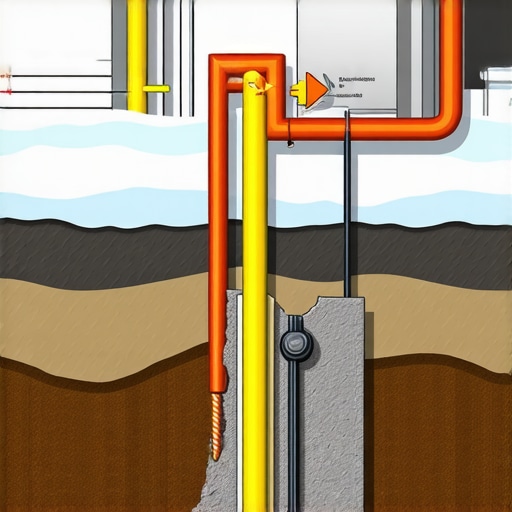
Implementing these advanced ground stabilization techniques can be visualized through detailed schematic diagrams illustrating PCM integration, geosynthetic reinforcement, and thermal barriers within trench structures.
Leveraging Remote Sensing for Precision Utility Mapping in Surreal Conditions
Emerging remote sensing modalities, such as hyperspectral imaging combined with advanced machine learning algorithms, are revolutionizing underground utility detection beneath frozen soils. These technologies discern subtle material signatures and molecular reflections, enabling accurate mapping even when visual cues are obscured by ice and snow. This precision reduces excavation errors, prevents utility strikes, and streamlines winter maintenance operations.
How Do Phase-Change Materials Actually Stabilize Soil During Freezing Cycles?
Phase-change materials function by absorbing or releasing thermal energy during their transition phases, typically from liquid to solid or vice versa. When embedded within trench backfills, they help maintain a consistent temperature, buffering against external cold impacts and preventing soil expansion or contraction. Comprehensive understanding of PCM melting points and heat capacity ensures optimal effectiveness, as detailed in recent publications by the Geosynthetica Journal. Incorporating such materials necessitates precise design considerations to maximize their thermoregulatory benefits without compromising soil permeability or compaction standards.
For professionals aiming to elevate their expertise, engaging in specialized geotechnical training focused on cold-region excavation techniques offers invaluable insights into integrating these cutting-edge approaches seamlessly into your projects.
Expert Insights & Advanced Considerations
Utilize Thermal-Responsive Materials for Soil Stabilization
In freezing conditions, integrating phase-change materials (PCMs) within backfill and soil treatment protocols can buffer soil temperatures, significantly reducing frost heave and maintaining trench integrity over seasonal cycles.
Implement Adaptive Monitoring for Dynamic Ground Management
Deploying IoT-enabled sensors that track soil temperature, moisture, and deformation in real-time allows engineers to proactively adjust excavation parameters, ensuring stability and safety amidst shifting thermal conditions.
Customize Equipment Settings Based on Soil Behavior Models
Leveraging predictive geotechnical models enables operators to fine-tune hydrovac water pressures and vacuum forces tailored to the specific thermomechanical properties of frozen soils, optimizing efficiency and minimizing risks.
Adopt Multi-Layered Ground Insulation Strategies
Applying layered insulation approaches, such as thermal blankets combined with geosynthetic barriers, effectively minimizes soil temperature fluctuations around excavations, mitigating frost heave and preserving utility lines.
Refine Utility Detection with Advanced Subsurface Imaging
Integrating ground-penetrating radar (GPR) with machine learning algorithms enhances utility localization accuracy in frozen terrains, reducing accidental strikes and ensuring precise project planning.
Curated Expert Resources
- Geosynthetica Journal: Provides cutting-edge research and case studies on geotechnical innovations for winter trenching and ground stabilization.
- Foundation Engineering by C. R. G. Clough: Offers comprehensive insights into soil behavior under freezing conditions and mitigation techniques.
- International Society for Trenchless Technology (ISTT): Publishes guidelines and best practices specifically tailored for underground utility work in cold climates.
- US Army Cold Regions Research and Engineering Laboratory (CRREL): Delivers extensive guidance on construction and excavation in permafrost and frozen soils.
- Online Geotechnical Forums: Communities where professionals discuss real-world challenges and innovative solutions for cold-region trenching and excavation.
Final Expert Perspective
Mastering reliable trenching and vacuum excavation in frozen ground hinges on integrating advanced materials science, real-time monitoring, and tailored equipment strategies rooted in geotechnical expertise. Implementing these high-level insights can significantly elevate safety, efficiency, and the longevity of underground utilities amidst challenging winter conditions. For professionals eager to lead in cold-region projects, staying connected with authoritative resources and continuous technical education is essential. Share your experiences or explore dedicated training modules to push the boundaries of underground work proficiency in freezing climates.
About the Author
Noah Wight
Houston, Texas, United States
Noah Wight is a seasoned industry professional and consultant based in Houston, Texas, with over eight years of specialized experience in technical surveying and industrial consulting. As a primary contributor to hydrovacdrilling.com, Noah leverages his extensive background in offshore survey operations and freelance consultancy to provide authoritative insights into the world of non-destructive excavation. His career, highlighted by his long-standing tenure at DaigonLLC, has been defined by a commitment to precision, safety, and operational efficiency in complex environments. Throughout his professional journey in the Texas industrial sector, Noah has developed a deep understanding of the technical requirements and safety protocols essential for successful hydrovac operations. His expertise allows him to translate complex surveying data and excavation methodologies into actionable advice for contractors and project managers alike. Noah’s contributions help bridge the gap between high-level technical surveying and practical field applications. He is dedicated to advancing the standards of the hydrovac industry through education and professional advocacy. Noah is deeply passionate about sharing his technical knowledge to help others navigate the complexities of modern excavation and underground utility management safely.
LinkedIn Profile
This article provides a thorough overview of the innovative approaches to tackling the challenges of trenching in frozen soils. I’ve personally seen the effectiveness of thermal insulation and phase-change materials during winter projects—particularly how they help minimize soil movement caused by frost heave. It’s fascinating how advances in sensor technology and real-time soil monitoring can dynamically adapt drilling and excavation parameters, which seems to greatly reduce risks of utility strikes and equipment failure. I wonder how widespread these sensor systems are in typical cold-weather operations today? Are many companies adopting fully integrated IoT solutions for borehole management yet? In my experience, combining these high-tech methods with traditional soil stabilization techniques really enhances overall project safety and efficiency. I’d love to hear others’ experiences with implementing such systems in the field, especially regarding cost and training hurdles. Do you think the benefits outweigh the initial investment, especially in highly frost-prone regions? Overall, this is a compelling direction for advancing cold-weather excavation practices.