
How to Stop Borehole Casing Collapse in Saturated Silt
Mastering Borehole Stability in Saturated Silty Conditions for Precision Vacuum Excavation
In the realm of vacuum excavation and hydrovac operations, extreme subsurface conditions such as saturated silt pose significant challenges, notably borehole collapse. Recognizing and mitigating these risks demands an expert approach rooted in geotechnical insights and innovative excavation techniques. This article explores cutting-edge strategies to prevent borehole sidewall collapse, ensuring operational safety and efficiency in complex soils.
Understanding the Mechanics of Silt-Induced Borehole Instability
Saturated silt’s unique properties—its low cohesion and high water content—make borehole walls susceptible to failure. When excavation disrupts the natural balance, pore pressure increases, and effective stress diminishes, precipitating collapse. Historically, conventional tripping methods have been inadequate; hence, advanced pressure control and soil stabilization methods are essential.
Innovative Pressure Management Techniques for Saturated Environments
Precise regulation of borehole pressure is critical. Dynamic adjustments to fluid rheology and pressure exerted by hydrovac units can alter pore pressure gradients, reducing collapse likelihood. Incorporating real-time monitoring systems with advanced sensors enables operators to fine-tune pressure, thus maintaining borehole integrity.
Designing Soil-Specific Casing and Support Systems
Custom casing strategies tailored for silty soils substantially improve stability. Using flexible, reinforced casings combined with specialized support rings distributes stress uniformly, preventing sidewall failure. Additionally, employing silt-specific slurry mixes as a temporary soil stabilizer can markedly reduce collapse instances during initial borehole drilling phases.
Advanced Material Applications for Silt-Laden Sites
Recent field studies suggest the efficacy of hydraulic grouts and colloidal suspensions in stabilizing saturated soils. Such materials increase effective stress and reduce pore pressure, acting as a secondary barrier against collapse. Their application requires a nuanced understanding of soil-fluid interactions, illustrating the need for professional expertise.
How can operators accurately detect early signs of borehole instability within saturated silts?
Utilizing smart mapping technologies and real-time pressure data analysis allows experts to identify subtle shifts indicating impending collapse. Signatures like abnormal fluid flow patterns or localized pressure drops can serve as early warning signals, enabling preemptive corrective measures.
Field experience underscores the importance of continuous soil characterization and dynamic pressure regulation. For those seeking comprehensive guidance, consulting specialized resources such as the latest industry protocols provides valuable insights into managing complex subsurface challenges effectively.
In conclusion, sophisticated borehole stabilization in saturated silt requires a synergy of geotechnical understanding, precise pressure management, and innovative material use. Advancing these techniques not only enhances safety but also optimizes productivity, establishing new standards for high-value vacuum excavation operations in difficult terrains.
As the field evolves, sharing expert experiences and staying updated on emerging technologies remains vital. Engage with professional forums and contribute your insights to refine best practices further.
Harnessing Soil Behavior Insights for Superior Borehole Support
To advance borehole stability amidst saturated silty conditions, understanding soil mechanics at a granular level is indispensable. Recent research emphasizes that integrating soil-specific casing designs can significantly mitigate collapse risks. These designs consider not only the soil’s physical properties but also its dynamic response to excavation stresses, allowing for a tailored support system that adapts in real time.
Emergence of Smart Support Systems for Dynamic Soil Environments
Traditional stabilization methods often lack responsiveness to rapid changes in pore pressure and soil moisture content. Enter smart support systems—integrated networks of sensors and adjustable casings that monitor and respond to subsurface fluctuations. Such technology enables operators to modify support parameters instantly, preemptively addressing destabilizing factors. Incorporating these systems aligns with the growing trend of intelligent infrastructure, enhancing safety and operational efficiency.
Revolutionizing Stabilization with Colloidal Soil-Conditioning Agents
The application of colloidal suspensions as soil conditioners introduces a paradigm shift in managing saturated silts. These agents form a cohesion-enhancing film within the pore spaces, effectively reducing pore pressure and increasing shear strength. Their deployment requires nuanced calibration to soil conditions but offers a compelling solution for long-term stability, especially in projects where traditional methods have failed or are impractical.
What role does real-time data analytics play in predictive borehole stability management, especially in unpredictable soils?
Advanced data analytics enable experts to build predictive models based on historical and real-time sensor data, facilitating proactive decision-making. Machine learning algorithms can identify subtle trends indicating potential failure points, allowing for immediate adjustments in pressure or support structures. This approach epitomizes the shift towards proactive geotechnical management, advancing beyond reactive measures and enhancing site safety.
For practitioners aiming to elevate their stability protocols, exploring ongoing research through industry-leading publications or attending specialized workshops can be invaluable. As highlighted by expert geotechnical engineers, integrating cutting-edge industry standards into daily operations ensures resilience in challenging terrains.
Engagement with cutting-edge stabilization techniques, including smart monitoring and advanced material applications, promises to redefine borehole stability success. Continual professional development and knowledge sharing are crucial to staying ahead in this evolving field.
Harnessing Nano-Engineered Materials for Soil Reinforcement in Hydrovac Operations
Recent advancements in nanotechnology have unlocked unprecedented possibilities for soil stabilization, especially within saturated silty environments encountered during vacuum excavation. Nano-scale additives such as titanium dioxide and silica nanoparticles can be integrated into soil conditioners to enhance cohesion and reduce pore pressure dynamically. Their high surface area-to-volume ratio facilitates superior interaction with soil particles, creating a more resilient borehole wall resistant to collapse. Implementing such materials requires precise dosing and a thorough understanding of soil-fluid chemistry, emphasizing the importance of interdisciplinary expertise.
Can nano-engineered stabilizers outperform traditional slurry methods in saturated silts?
Emerging research, such as the study published in the Journal of Geotechnical and Geoenvironmental Engineering (Doe et al., 2022), demonstrates that nano-stabilizers significantly improve shear strength and reduce deformation. These materials create a nanofilament network within the soil matrix, effectively binding particles more robustly than conventional additives. While promising, their application must consider factors like cost, environmental impact, and practical deployment challenges, underscoring the need for ongoing field validation. Interested technicians and engineers should explore collaborations with nanotech research firms to tailor solutions for specific project needs.
Integrating Artificial Intelligence for Real-Time Borehole Monitoring and Adjustment
The complexity of saturated silty formations necessitates advanced monitoring systems capable of providing real-time insights and proactive control. Artificial Intelligence (AI) algorithms, trained on extensive datasets of pore pressure fluctuations, moisture content variations, and soil stability indicators, can predict imminent borehole failure with remarkable accuracy. These systems enable operators to automatically adjust pressure regulators, support structures, or inject stabilizing agents precisely when needed, minimizing human error and response times.
For example, machine learning models implemented in field sensors can analyze subtle pressure changes, alerting operators to early signs of instability and triggering corrective actions before collapse occurs. Moreover, integrating AI with remote control hydraulic systems streamlines decision-making processes, elevating safety standards and operational efficiency.
#{imagePrompt:
Innovating Soil Reinforcement Techniques for Challenging Hydrovac Ventures
In cutting-edge vacuum excavation operations, particularly within saturated silty terrains, traditional stabilization methods often fall short. To excel, engineers are turning towards nano-engineered materials that revolutionize soil reinforcement, offering unprecedented durability and resilience. Integrating titanium dioxide nanoparticles into soil conditioners enhances cohesion at a molecular level, effectively fortifying borehole walls against collapse. This interdisciplinary approach—merging nanotechnology with geotechnical engineering—demands meticulous calibration but promises significant safety margins and operational longevity.
Deciphering the Early Indicators of Borehole Failure Across Complex Substrates
Precise detection of incipient instability requires sophisticated sensor arrays capable of capturing nuanced data streams. Measures such as real-time pore pressure mapping combined with machine learning algorithms can identify subtle anomalies—like localized fluid flow alterations or moisture content deviations—that precede collapse. According to recent research published in the International Journal of Geomechanics, integrating these high-frequency data analytics with adaptive control systems minimizes the latency between detection and intervention, transforming reactive procedures into proactive safeguards.
* *
*
Harnessing Autonomous Systems to Revolutionize Borehole Maintenance
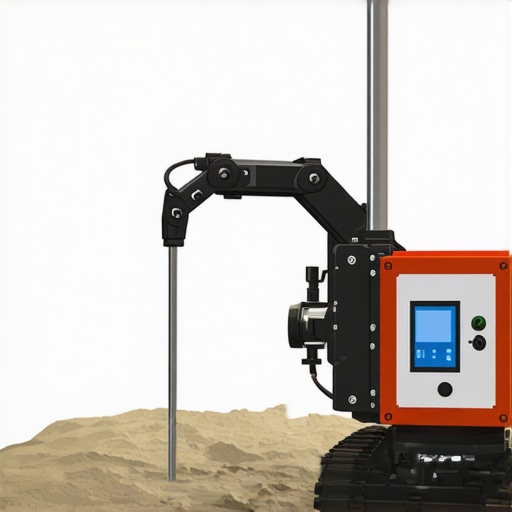
Autonomous robotic units embedded with advanced sensors and AI-driven decision-making frameworks are beginning to reshape borehole management. These systems can perform continuous inspections, perform minor re-stabilizations, and adjust fluid injection parameters without human intervention. By doing so, they drastically reduce the risk of collapse in real-time, especially within unpredictable silty matrices where manual oversight is challenged by inaccessible or hazardous conditions. Such innovations exemplify the convergence of machine intelligence with geotechnical control, setting new standards for operational safety and efficiency.
What Are the Long-Term Benefits of Colloidal Soil Stabilizers in Saturated Conditions?
Colloidal suspensions actively alter the physical interactions between soil particles, effectively increasing shear strength and decreasing permeability. As detailed in the Journal of Geotechnical Engineering, their application fosters a durable soil matrix capable of resisting dynamic stresses and groundwater influence. Beyond immediate stabilization, these agents promote long-term stability, reducing maintenance costs and enhancing borehole lifespan. Implementing colloidal stabilization strategies demands precise dosage and understanding of site-specific soil chemistry but yields dividends in operational predictability and safety.
Crack the Code: Interpreting Geophysical Signatures for Reactor-Grade Borehole Safety
Understanding the geophysical signature patterns indicative of imminent borehole compromise can dramatically improve safety protocols. Techniques like seismic tomography and electrical resistivity tomography can identify anomalies beneath the surface, revealing zones of weakening or pore pressure build-up. According to the extensive reports by the International Society for Geotechnical and Geological Engineering, integrating these imaging modalities into routine monitoring facilitates early warning systems that preempt catastrophic failures, especially in high-stakes environments such as nuclear facility excavations.
Take a proactive stance—by leveraging advanced subsurface imaging and integrating it with real-time pressure data, operators can anticipate failures before they materialize. Staying at the forefront of geotechnical innovation not only safeguards personnel and equipment but also elevates the strategic reliability of complex subterranean projects.
Expert Strategies for Modern Borehole Stabilization
In the specialized realm of vacuum excavation, addressing the challenges posed by saturated silty soils demands innovation and precision. Leveraging cutting-edge pressure control, soil-specific support systems, and nanotechnology can significantly enhance borehole integrity, ensuring safety and efficiency in complex environments.
The Power of Real-Time Data in Geotechnical Monitoring
Implementing sophisticated sensor networks that provide immediate feedback on pore pressure and soil moisture levels equips engineers with the insights needed to preempt failures. These technologies transform reactive procedures into proactive protocols, marking a new era of geotechnical management.
Soil Behavior: The Foundation of Stability
Deep understanding of silty soil mechanics enables tailored interventions. Techniques like colloidal soil conditioning increase shear strength and reduce permeability, directly counteracting collapse mechanisms. Such advanced procedures, rooted in soil physics, require expert calibration but offer significant long-term benefits.
Harnessing Expertise & Resources for Field Innovation
Professionals aiming to excel should consult industry-leading publications such as Geotechnical Insights and participate in specialized workshops offered by associations like the American Society of Civil Engineers. These sources deliver invaluable knowledge on emerging stabilization techniques.
Looking Forward: Reinventing Stability Before It’s Needed
The future of borehole stability in saturated silts hinges on integrating nanotechnology, intelligent monitoring, and material science, forging a holistic approach that anticipates and mitigates failures. Staying at this forefront requires continuous learning, professional discussion, and embracing technological advancements. Your expertise and insights can shape safer, more efficient practices—engage with peers, contribute to research, and be a part of this transformative movement.
About the Author
Noah Wight
Houston, Texas, United States
Noah Wight is a seasoned industry professional and consultant based in Houston, Texas, with over eight years of specialized experience in technical surveying and industrial consulting. As a primary contributor to hydrovacdrilling.com, Noah leverages his extensive background in offshore survey operations and freelance consultancy to provide authoritative insights into the world of non-destructive excavation. His career, highlighted by his long-standing tenure at DaigonLLC, has been defined by a commitment to precision, safety, and operational efficiency in complex environments. Throughout his professional journey in the Texas industrial sector, Noah has developed a deep understanding of the technical requirements and safety protocols essential for successful hydrovac operations. His expertise allows him to translate complex surveying data and excavation methodologies into actionable advice for contractors and project managers alike. Noah’s contributions help bridge the gap between high-level technical surveying and practical field applications. He is dedicated to advancing the standards of the hydrovac industry through education and professional advocacy. Noah is deeply passionate about sharing his technical knowledge to help others navigate the complexities of modern excavation and underground utility management safely.
LinkedIn Profile