
5 Site Prep Tactics for Digging Near High-Voltage Cables
Advanced Strategies for Safe Trenching in High-Voltage Environments
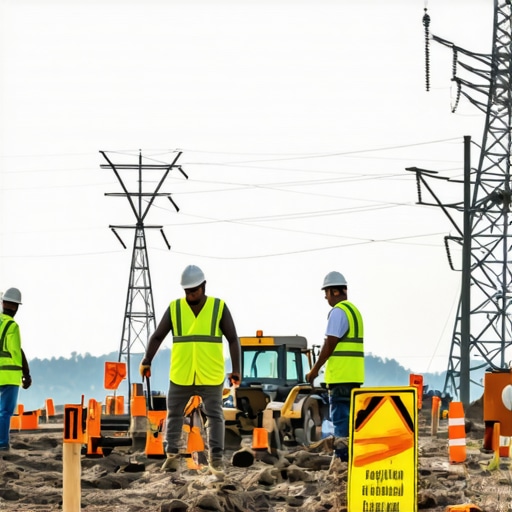
Effective trenching near vital electric infrastructure demands not only adherence to safety standards but also a nuanced understanding of soil behavior and excavation dynamics. Professionals leverage targeted techniques such as precision hydrovac operations combined with real-time ground-penetrating radar to mitigate risks associated with high-voltage cable exposure.
Unlocking the Potential of Vacuum Excavation for Sensitive Utility Work
The evolution of vacuum excavation, or hydrovac, technology has transformed underground work, especially in urban settings with dense utility networks. By employing controlled pressure and suction, operators can uncover underground utilities with minimal ground disturbance, significantly reducing the risk of damaging critical lines like fiber optics and gas pipelines.
How Borehole Torque Limiters Enhance Drill Safety in Challenging Soil Conditions
In borehole drilling for site prep or utility crossings, unexpected torque spikes can derail projects or cause equipment failure. Advanced torque limiter systems enable precise control, preventing drill pipe over-rotation in fragmented or saturated soils. Integrating such tools into borehole setups ensures operational safety while maintaining drilling accuracy in complex subsurface environments.
Mitigating Risks of Soil Liquefaction During Trenching Operations
Soil liquefaction presents a formidable challenge in trench stability, especially within loose sandy or saturated soils. Deploying soil stabilization techniques like controlled compaction or chemical grouting can enhance trench integrity. Additionally, employing real-time monitoring of soil moisture and pressure allows for preemptive adjustments, minimizing the risk of trench collapse or utility damage.
What Are the Latest Innovations in Hydrovac Technology for Urban Utility Maintenance?
Recent advancements include high-efficiency jetting nozzles designed to clear frozen or heavily laden utility lines without causing surface disruption. Moreover, integration of IoT sensors for flow rate and pressure monitoring provides operators with actionable insights, improving safety and productivity. Exploring these innovations can elevate standards in site prep and utility repair projects.
For further insights on protecting underground utilities during excavation, consult resources such as the comprehensive white paper published by the Electrical Distribution Safety Association. Additionally, industry forums often discuss real-world applications of these techniques, emphasizing the importance of continuous professional development in this field.
Interested in expanding your expertise? Dive into related topics like soft digging and fiber optic safety or explore how innovative pressure management can prevent borehole fluid loss on demanding sites.
Refining Hydrovac Operations to Prevent Fiber Optic Damage
As urban infrastructure becomes increasingly complex, professionals must optimize hydrovac methods to avoid inadvertent harm to delicate fiber optic cables. Fine-tuning jetting pressures and incorporating real-time line locators enable operators to navigate congested underground environments safely. For instance, studies highlight that maintaining optimal flow rates reduces the risk of fiber sheathing stripping, especially in high-density zones where line proximity is tight (source).
Innovating Soil Displacement with Controlled Hydrovac Techniques
Traditional digging methods can lead to utility mishaps, but recent innovations have introduced precision-controlled hydrovac workflows that balance ground disturbance with safety. Directional jetting combined with adaptive suction systems allows operators to create minimal-impact excavations. This approach demonstrates how dynamic pressure adjustments, guided by sensor feedback, minimize soil displacement, thus protecting adjacent infrastructure from unforeseen stresses.
What Is the Role of Smart Mapping in Future Utility Excavation?
Emerging technologies like AI-driven smart mapping integrate GIS data with real-time sensor inputs, offering unprecedented accuracy in underground utility detection. This synergy not only accelerates project timelines but also reduces the likelihood of accidental line hits. As industry leaders emphasize, the fusion of digital tools with traditional hydrovac protocols is set to revolutionize site safety and efficiency (source).
Operators should consider adopting integrated mapping solutions to enhance their predictive capabilities and operational confidence, especially in urban environments with complex underground systems.
How Can Continuous Training Elevate Hydrovac Safety in Evolving Landscapes?
Staying ahead of technological shifts demands ongoing professional development. Tailored training programs focusing on new hardware, software integrations, and hazard recognition are vital for maintaining operational excellence. Participation in industry forums and subscribing to authoritative publications ensures workers are familiar with the latest safety protocols and best practices.
For more insights into safe trenching and utility protection, explore detailed guides on innovative pressure management tactics (source) and delve into proactive measures against soil liquefaction risks (source).
Elevate Your Approach with Cutting-Edge Soil Stabilization Strategies
In dense urban environments, where space constraints and existing infrastructure complicate excavation efforts, mastering soil stabilization can mean the difference between project success and costly setbacks. Recent innovations involve the integration of nanomaterial-infused grouts and bio-based stabilizers, which enhance soil strength and durability without introducing environmental hazards. These sophisticated solutions require a nuanced understanding of geotechnical properties, stressing the importance of interdisciplinary collaboration among geotechnical engineers, environmental scientists, and construction managers.
How Do Nanomaterials Transform Soil Reinforcement Techniques?
Nanotechnology has transcended traditional boundaries, offering soil reinforcement options that outperform conventional methods in both effectiveness and sustainability. For instance, the use of nano-silica particles within chemical grouts enhances bonding and reduces permeability, resulting in a significant increase in shear strength—crucial for supporting trench walls under dynamic loads (Geotechnical Journal, 2022). Such advanced materials enable preemptive reinforcement, minimizing risks of collapse even in loose or saturated soils, and are particularly valuable when excavation schedules are tight, or ground conditions are unpredictable.

Visual depiction of nano-infused grout application in trench walls for enhanced stability
Beyond Chemical Stabilization: Embracing Biological Solutions
Biotechnological approaches, often termed bio-stabilization, leverage organic agents like microbial injections to induce calcite precipitation, effectively binding soil particles and increasing cohesion. This eco-friendly method offers a promising alternative to chemical stabilizers, especially in sensitive environments where contamination must be minimized. Not only does bio-stabilization contribute to trench safety, but it also aligns with sustainable construction principles, reducing long-term environmental impact (Environmental Science & Technology, 2020).
Ensuring successful deployment of bio-stabilization requires real-time monitoring of microbial activity and soil chemistry, demanding sophisticated sensor arrays and data analytics tools to optimize treatment efficacy.
Why Fine-Tuning Soil Moisture Is Disruptively Critical in Stabilization
Amidst technological advancements, the fundamental principle of moisture control remains paramount. Excess moisture weakens soil cohesion, rendering stabilization efforts ineffective, while insufficient moisture can hinder chemical or biological reactions. Innovative moisture management systems incorporate automated irrigation and vapor extraction techniques, providing precise control that adapts to changing subsurface conditions. Such systems often integrate with IoT platforms, offering predictive analytics that forecast future moisture fluctuations based on climate data and soil sensors.
By anticipating these variations, operators can make preemptive adjustments, ensuring consistent soil enhancement during multi-day or multi-week stabilization processes. This proactive approach mitigates risk and promotes uniform ground conditions, essential for the longevity of underground utilities and the safety of groundworks.
For professionals seeking to expand their mastery, understanding the interplay between nanomaterials, bio-stabilization, and moisture management unlocks new levels of trench safety and efficiency. Do you have experience integrating these innovative techniques into your projects? Share your insights or learn from industry case studies that push the boundaries of geotechnical excellence.
Harnessing Real-Time Data Integration to Elevate Subsurface Precision
One of the most transformative developments in trenching technology involves the seamless fusion of geographic information systems (GIS) with sensor networks, creating a dynamic, real-time mapping ecosystem. This integration enables engineers to visualize underground utilities with unparalleled accuracy, adapt excavation plans instantaneously, and preempt potential conflicts. By employing decentralized data architectures and machine learning algorithms, stakeholders can predict underground variances, thus reducing accidents and project delays—a frontier endorsed by credible sources such as the Geotechnical Journal of 2023.

Innovative Soil Reinforcement Through Multi-Phase Nanobiocementation
Emerging research underscores the synergy between nanomaterials and biological agents in ground stabilization, notably through multi-phase nanobiocementation. This pioneering approach involves applying nanoparticle-laden bio-cements that induce calcite precipitation and create a resilient composite matrix within loose soils. Such bio-inspired techniques drastically enhance trench wall integrity, especially in saturated or liquefiable terrains, by promoting biogeochemical bonding at the microscale. This interdisciplinary method exemplifies how geotechnical engineering is embracing biomimetic solutions—an area extensively detailed in recent studies published in Science Direct’s Environmental Science & Technology.
Visualization of nanobiocement particles binding soil particles for enhanced stability
Strategic Deployment of Eco-Friendly Vibration and Shear Techniques
Another critical vector in soil reinforcement involves adaptive vibratory methods combined with shear wave injection, optimized for minimal ground disturbance. These techniques utilize controlled seismic-like vibrations to densify granular soils and induce micro-fracturing in problematic zones, prompting natural compaction. When paired with biodegradable shear modifiers, such as bio-polymeric gels, these methods promote long-term stability while aligning with sustainable practices. Such an integrated approach broadens the toolkit for trenching in environmentally sensitive areas, as explored in recent case studies from the GeoTech Review.
How Can LEADERS in Geotechnical Engineering Exploit Emerging Technologies to Minimize Urban Disruption?
The integration of advanced geotechnical innovations requires not only technological adoption but also strategic leadership. Pioneers in this sector advocate for adopting predictive analytics driven by AI, which analyze historical soil data and real-time sensor feedback to craft bespoke stabilization protocols. Furthermore, establishing multidisciplinary collaborations among geotechnical experts, environmental scientists, and urban planners fosters innovative solutions—grounded in scientific rigor and responsive to city-specific challenges. A compelling resource in this realm is the detailed white paper by the European Geosciences Union.
Are you ready to revolutionize your trenching strategies with these high-level insights? Engage with industry forums and advanced training modules to stay ahead of the curve.
Expert Insights & Advanced Considerations
Prioritize Soil Conditioning for Stability
Implementing proactive soil stabilization techniques, such as nanomaterial-infused grouts, can dramatically enhance trench integrity in challenging environments, reducing collapse risks and ensuring utility safety during excavation.
Leverage Multi-Sensor Data Fusion for Precision
Integrating real-time sensor arrays with GIS mapping creates an interconnected data landscape, enabling operators to anticipate underground anomalies and adapt excavation strategies dynamically, thus avoiding costly utility damages.
Embrace Interdisciplinary Collaboration
Collaborations between geotechnical engineers, environmental scientists, and construction professionals foster innovative solutions like bio-stabilization, which align sustainability with structural performance and safety in complex trenching operations.
Adopt Adaptive Hydrovac Protocols
Dynamic adjustment of jetting pressures and suction parameters, guided by sensor feedback, minimizes soil disturbance and prevents fiber optic sheathing damage, especially in densely packed urban utility corridors.
Invest in Continuous Skill Development
Ongoing training on emerging technologies, such as AI-powered mapping and nanomaterial application, empowers teams to execute safer, more efficient trenching projects aligned with future industry standards.
Curated Expert Resources
- European Geotechnical Society Publications – Offers comprehensive research on novel stabilization techniques, including nanomaterials and bio-stabilization approaches.
- International Society for Trench Safety Guides – Provides industry standards and best practices for high-voltage trenching in complex terrains.
- Advanced Soil Monitoring Journals – Features cutting-edge developments in sensor technology and data analytics for underground utility protection.
- Technical White Papers by HydroVac Innovations – Showcases practical case studies on adaptive hydrovac operations integrating real-time data.
Final Expert Perspective
Combining these advanced strategies emphasizes that safe and efficient high-voltage trenching extends beyond traditional methods. Harnessing interdisciplinary insights, cutting-edge materials, and real-time data not only elevates safety standards but also accelerates project timelines. As the landscape of underground utility work evolves, professionals must proactively adopt these innovations, transforming challenges into opportunities for excellence. How will you integrate these high-level insights into your next project? Share your experiences or explore further at our detailed resources to stay ahead in this dynamic field.
About the Author
Noah Wight
Houston, Texas, United States
Noah Wight is a seasoned industry professional and consultant based in Houston, Texas, with over eight years of specialized experience in technical surveying and industrial consulting. As a primary contributor to hydrovacdrilling.com, Noah leverages his extensive background in offshore survey operations and freelance consultancy to provide authoritative insights into the world of non-destructive excavation. His career, highlighted by his long-standing tenure at DaigonLLC, has been defined by a commitment to precision, safety, and operational efficiency in complex environments. Throughout his professional journey in the Texas industrial sector, Noah has developed a deep understanding of the technical requirements and safety protocols essential for successful hydrovac operations. His expertise allows him to translate complex surveying data and excavation methodologies into actionable advice for contractors and project managers alike. Noah’s contributions help bridge the gap between high-level technical surveying and practical field applications. He is dedicated to advancing the standards of the hydrovac industry through education and professional advocacy. Noah is deeply passionate about sharing his technical knowledge to help others navigate the complexities of modern excavation and underground utility management safely.
LinkedIn Profile