
How to Dial Back Hydrovac Pressure Before You Shred a Fiber Line
Mastering Hydrovac Pressure Control: The Key to Precision in Vacuum Excavation
In the realm of underground utility installation and environmental remediation, the discipline of hydrovac excavation has revolutionized the approach to trenching and borehole creation. Central to its success is the meticulous regulation of pressure settings, which directly influence both operational efficiency and protection of existing infrastructure. As experts recognize, understanding how to dial back hydrovac pressure before encountering sensitive fiber lines or unstable soils is crucial for project integrity and safety.
The Underlying Mechanics: How Hydrovac Pressure Affects Subsurface Conditions
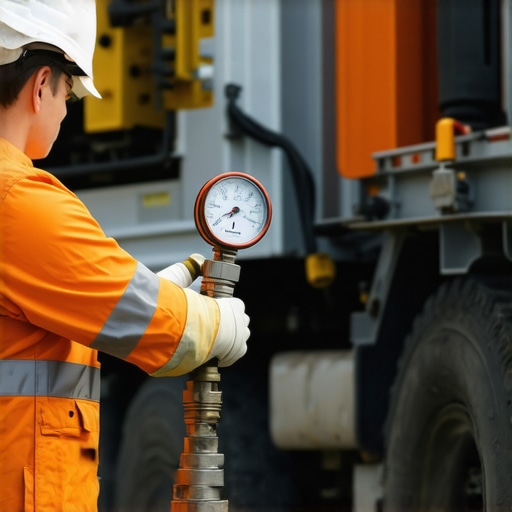
Hydrovac systems operate by projecting a pressurized water stream coupled with a vacuum to excavate soil delicately, minimizing disturbance. However, if the pressure exceeds certain thresholds—commonly around 2500 psi—risk of damage to underground fiber-optic cables, pipes, and other utilities significantly increases. Knowledge of soil composition, such as loose gravel or layered soils, demands tailored pressure adjustments. Field-tested practices show that lowering pressure to optimal levels, often in the range of 1000-1500 psi, allows for a controlled, damage-free excavation process.
Essential Techniques for Pressure Modulation and Risk Mitigation
One advanced method involves pre-calibrating pressure settings based on comprehensive site assessments, including soil analysis and utility maps. Implementing real-time pressure monitoring through digital control systems enhances responsiveness, ensuring that pressure is dialed back when encountering zones with high fiber density or potential for collapse. Incorporating borehole torque limiters, as detailed in this resource, further reduces mechanical stress, preventing drill pipe failures in complex formations.
Expert Strategies for Safe Traversing of Fiber-Intensive Zones
Experts recommend conducting a risk-based approach, adjusting pressure incrementally in confined spaces, and using low-pressure nozzles for sensitive areas. Additionally, continuous operator training and leveraging smart mapping technologies help detect proximity to fiber-optic networks, enabling proactive pressure reduction. A notable challenge arises in high-density urban settings where fiber lines are dense and often undocumented. Here, adaptive pressure management becomes a safeguard, preventing costly damages and service disruptions.
How can operators accurately identify the optimal pressure threshold when approaching unknown underground utilities?
This question is frequently discussed among trenching professionals and underscores the importance of integrating advanced detection techniques such as ground-penetrating radar and electronic utility locators. Combining these tools with conservative pressure settings mitigates risks inherent in unpredictable subsurface conditions. For further insights, consult the comprehensive guide on avoiding utility damage using hydrovac technology in this authoritative source.
Enhancing Field Protocols with Cutting-Edge Pressure Management Solutions
In ongoing projects, integrating automated pressure regulation systems offers a promising avenue for maintaining optimal pressures dynamically. This approach reduces human error and ensures consistent safety margins. Additionally, maintaining detailed logs of pressure settings and soil responses facilitates continuous improvement and training, fostering a proactive safety culture in hydrovac operations.
As underground utility networks become increasingly complex, the importance of precise pressure control extends beyond mere operational parameters—it embodies the core of sustainable, damage-free excavation practices. For professionals committed to excellence, mastering pressure modulation is a fundamental skill that underpins the integrity of every trench and borehole.
Refining Pressure Strategies: Pushing Beyond Basic Adjustments for Greater Precision
While initial pressure modulation techniques focus on adjusting water jet intensity based on soil type and utility proximity, cutting-edge practices now incorporate predictive analytics and adaptive control systems to anticipate subsurface variations. Leveraging sensors and real-time data, operators can dynamically refine pressure settings, minimizing risks associated with unpredictable geological features. Integrating systems like borehole torque limiters, as discussed in this resource, enhances mechanical stability during these refined adjustments, especially in complex formations.
Harnessing Artificial Intelligence for Utility Detection and Pressure Decision-Making
Artificial Intelligence (AI) models trained on geological, infrastructural, and operational data enable precision prediction of underground utility locations. When combined with advanced detection technologies such as ground-penetrating radar and electromagnetic locators, AI facilitates a preemptive approach to pressure regulation. These systems can suggest optimal pressure thresholds tailored to each unique zone, reducing the dependency on operator experience alone. An example of such an integration can be seen in comprehensive site assessment platforms that incorporate machine learning algorithms to interpret sensor data and recommend pressure adjustments in real time.
Can Intelligent Control Systems Mitigate the Learning Curve in Complex Urban Environments?
This question resonates deeply within urban excavation projects, where dense infrastructure and undocumented utilities pose significant challenges. Implementing intelligent control modules that adapt to real-time feedback not only enhances safety but also streamlines workflows. Such systems enable less experienced operators to perform delicate operations with confidence, reducing the likelihood of utility strikes and service interruptions. For insights into proactive risk management, see the detailed strategies in this authoritative article.
Advancing Operator Training with Virtual Reality Simulations
To complement technological innovations, virtual reality (VR) training modules are emerging as vital tools for mastering pressure optimization techniques. Simulating varying subsurface conditions, VR environments allow operators to practice pressure adjustments in a risk-free setting, fostering intuition and decision-making skills. Such immersive training reduces the learning curve and prepares crews for real-world unpredictability, especially in highly urbanized or geologically complex sites.
As the industry moves toward increasingly automated and intelligent systems, the importance of human oversight remains paramount. Continual education, supported by VR and data-driven tools, ensures operators can interpret complex feedback and intervene effectively when needed. For a deeper exploration of integrating AI and VR into hydrovac operations, refer to this comprehensive guide.
Executing Precision with Dynamic Pressure Modulation in Challenging Soil Profiles
Successful hydrovac operations in heterogeneous soil environments demand not only accurate initial pressure settings but also the agility to adapt dynamically as excavation progresses. Modern systems integrate sophisticated sensor arrays and machine learning algorithms capable of interpreting real-time soil behavior. For example, impedance sensors measure soil resistance changes, allowing automated adjustments that optimize soil removal rates while safeguarding utilities. Such adaptive systems excel in layered soils or mixed compositions, where static pressure protocols fall short. Implementing these technologies requires a nuanced understanding of subsurface signals, demanding operators to be conversant with both soil mechanics and digital control interfaces—a synergy that’s redefining trenching precision.
Dissecting the Nuances of Utility Mapping to Inform Pressure Strategy
Accurate underground utility mapping remains the cornerstone of risk mitigation, particularly in urban settings where undocumented services proliferate. Beyond traditional electromagnetic and ground-penetrating radar methods, integrating advanced geospatial data analytics with utility locator outputs enhances the reliability of pre-excavation assessments. For instance, employing Geographic Information System (GIS) layers combined with recent utility marking data allows for probabilistic modeling of utility locations. This synthesis informs not only initial pressure settings but also guides real-time adjustments as excavation approaches known or suspected utility zones. Consequently, operators can execute more cautious pressure reductions, minimizing the risk of utility strikes and service outages.
Why does soil moisture content influence hydrovac pressure choices, and how can operators accurately gauge its impact?
This question addresses a subtle yet critical factor in pressure modulation. Soil moisture significantly affects soil cohesion and pressure transmission characteristics, altering how soil responds to water jetting. Wet soils tend to be more cohesive, requiring slightly higher pressures to fragment effectively, yet they also pose risks of collapse if pressures are too high. Conversely, dry, loose soils may be excavated successfully at lower pressures, reducing risk to underground utilities. To assess moisture influence, operators can utilize infrared thermal imaging, prototype moisture sensors, or even conduct in-field soil moisture tests before beginning. Incorporating this data into pressure setting protocols enhances excavation efficiency and reduces utility damage risk—an intersection of geotechnical science and real-time operational decision-making that underscores expert mastery in hydrovac excavation.
Unlocking the Dual Realm of Soil Dynamics and Utility Safety Through Advanced Hydrovac Pressure Tuning
In sophisticated underground excavation operations, the subtle art of pressure regulation extends beyond mere equipment settings into an intricate understanding of soil mechanics and utility protection. Operators equipped with comprehensive knowledge can anticipate how variations in soil moisture, composition, and existing infrastructure influence optimal pressure thresholds, enabling safer and more efficient trenching.
Exposing the Hidden Layers: Integrating Soil Analysis with Pressure Optimization
Beyond standard site assessments, deploying real-time soil sensor arrays that monitor moisture content, compaction levels, and resistivity can revolutionize pressure management. Such data, when processed through predictive algorithms, facilitate dynamic adjustments that align with emerging soil conditions, thus preventing utility strikes and soil collapses. Incorporating these insights into an intelligent control system transforms static pressure settings into adaptive responses, elevating operational precision.
Are High-Resolution Subsurface Imaging Techniques Essential for Fine-Tuned Pressure Application?
Indeed, technologies like cone beam tomography and electrical resistivity tomography (ERT) offer unparalleled clarity of underground utility layouts and soil heterogeneity. High-definition imaging allows operators to identify corridors of dense fiber optic networks and fragile utilities, prompting preemptive pressure reductions. The fusion of such imaging with AI-enabled decision-support tools fosters a proactive approach—anticipating problem zones before excavation begins.
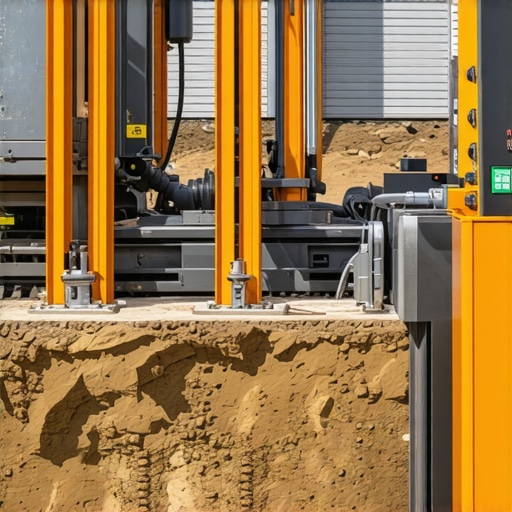
Consider a detailed schematic illustrating the layered soil profiles and utility layouts derived from advanced imaging, serving as a visual guide for pressure modulation strategies in complex environments.
Where Do Smart Hydrovac Systems Really Make the Difference?
Automated pressure control units equipped with machine learning capabilities analyze sensor inputs and environmental data streams to refine excavation parameters continuously. These systems excel in challenging scenarios—urban landscapes with dense, undocumented networks or variable soil conditions—where manual adjustments fall short. By learning from each operation, they enable operators to predict potential hazards and adapt pressure settings proactively, significantly reducing risk profiles.
Hand-in-Hand with Data: The Role of Historical Operation Logs in Refining Pressure Protocols
Meticulous documentation of past excavations reveals patterns correlating soil type, utility proximity, and pressure outcomes. Mining this data through advanced analytics uncovers subtle indicators predicting when specific pressure thresholds risk utility damage or soil instability. Such insights inform baseline settings and trigger thresholds, enabling a data-driven approach to pressure regulation—an essential facet of expert-level hydrovac operation.
Can AI-Driven Simulation of Subsurface Conditions Accelerate Mastery of Pressure Control?
Yes; by creating virtual models of anticipated subsurface scenarios, AI-powered simulation tools allow operators to test various pressure settings against simulated soil and utility configurations. This rehearsal environment accelerates learning curves and crystallizes nuanced decision-making, fostering mastery in pressure management. As these simulations incorporate real sensor data over time, they evolve into personalized training platforms that adapt to individual operator skill levels and project complexities.
Driving Excellence: Cultivating an Ecosystem of Continuous Learning and Innovation
Establishing a feedback-rich environment where pressure management outcomes are continuously analyzed and shared across teams fosters collective expertise. Integrating cutting-edge technology with ongoing education and AI insights creates a resilient and adaptable workforce, ready to navigate even the most unpredictable subsurface challenges. Incorporating virtual reality modules that simulate pressure adjustments in complex settings further enhances operator readiness, bridging theoretical understanding with real-world dexterity.
Expert Insights & Advanced Considerations
Emphasize Soil Moisture and Composition
Accounting for soil moisture content is crucial, as it directly influences soil cohesiveness and response to water jetting. Wet soils may require higher pressures to fragment effectively but also increase collapse risks, while dry soils demand lower pressures to prevent utility damage. Incorporating real-time moisture data enables dynamic pressure adjustments, optimizing safety and efficiency.
Leverage AI for Predictive Utility Mapping
Integrating artificial intelligence with ground-penetrating radar and electronic locators enhances predictive accuracy of utility locations. AI models trained on geological and infrastructural datasets can recommend tailored pressure settings for each zone, reducing reliance on manual estimations and mitigating risks in complex urban environments.
Implement Adaptive Control Systems
Automated systems utilizing sensor feedback and machine learning algorithms can dynamically modulate pressure during excavation. These intelligent controls respond to changing subsurface conditions, maintaining optimal pressure levels, preventing utility strikes, and reducing operator workload in challenging terrains.
Prioritize Comprehensive Soil and Utility Data
Advanced mapping that combines GIS layers, utility records, and recent site assessments provides a robust foundation for pressure strategy development. Such integration allows for preemptive pressure reductions near suspected utility corridors, safeguarding infrastructure and streamlining workflows.
Invest in Operator Education through Virtual Reality
VR-based training modules simulate complex subsurface conditions, enabling operators to practice pressure adjustments in a risk-free environment. This immersive approach accelerates skill acquisition and enhances decision-making capabilities, particularly in dense urban settings with unpredictable utilities.
Curated Expert Resources
- Hydrovac Safety Practices and Pressure Optimization – Offers comprehensive guidelines for pressure regulation tailored to soil and utility conditions, critical for damage prevention.
- AI and Machine Learning in Subsurface Detection – Showcases how advanced analytics improve utility detection accuracy and inform pressure control strategies.
- Ground-Penetrating Radar Technology Guides – Details cutting-edge imaging methods that enhance subsurface visualization for safer trenching.
- Virtual Reality Training Platforms for Excavation – Demonstrates how immersive simulations develop operator expertise in pressure management.
- GIS Integration for Urban Utility Mapping – Explains combining geospatial data to refine site assessments and pressure adjustments.
The Clarity of Precision: Elevating Excavation through Masterful Pressure Control
Achieving excellence in hydrovac operations hinges on sophisticated pressure management strategies that adapt to intricate soil and utility conditions. By harnessing AI, real-time data, and immersive training tools, industry professionals push the boundaries of safe, damage-free excavation. Commitment to integrating these advanced insights signifies a future where precision becomes the norm rather than the exception. Engage with these resources and contribute your expertise to shape safer, smarter underground projects.
About the Author
Noah Wight
Houston, Texas, United States
Noah Wight is a seasoned industry professional and consultant based in Houston, Texas, with over eight years of specialized experience in technical surveying and industrial consulting. As a primary contributor to hydrovacdrilling.com, Noah leverages his extensive background in offshore survey operations and freelance consultancy to provide authoritative insights into the world of non-destructive excavation. His career, highlighted by his long-standing tenure at DaigonLLC, has been defined by a commitment to precision, safety, and operational efficiency in complex environments. Throughout his professional journey in the Texas industrial sector, Noah has developed a deep understanding of the technical requirements and safety protocols essential for successful hydrovac operations. His expertise allows him to translate complex surveying data and excavation methodologies into actionable advice for contractors and project managers alike. Noah’s contributions help bridge the gap between high-level technical surveying and practical field applications. He is dedicated to advancing the standards of the hydrovac industry through education and professional advocacy. Noah is deeply passionate about sharing his technical knowledge to help others navigate the complexities of modern excavation and underground utility management safely.
LinkedIn Profile