Ensuring Precision in Vacuum Excavation: A Deep Dive into Subsurface Challenges
In the realm of modern infrastructure development, effective utilization of vacuum excavation techniques is essential for minimizing surface disruption while achieving accurate subsurface access. Experts recognize that subtle factors such as soil composition, moisture levels, and equipment calibration directly influence the success rate of boreholes and trenches. To mitigate risks associated with site-specific variability, operators must adopt a nuanced understanding of soil mechanics and real-time pressure control systems.
Innovative Borehole Stabilization: Beyond Traditional Ground Support
The integrity of boreholes under dynamic stress conditions necessitates an integration of advanced stabilization methods. Conventional shoring often falls short in unpredictable soils, especially in urban environments where sand stability issues or high groundwater tables pose formidable obstacles. Engineers are increasingly turning to adaptive solutions such as chemical grouting and fiber-reinforced casings to secure borehole walls, thereby reducing the likelihood of collapses and ensuring data integrity for utilities and geotechnical applications.
How Do Environment and Soil Variability Impact Hydrovac Effectiveness?
In complex subsurface conditions, what modifications to hydrovac operation are necessary to prevent failure?
Adapting hydrovac procedures in heterogeneous soils involves a comprehensive approach: calibrating pressure settings to avoid overexcavation, selecting nozzle types optimized for soil texture, and implementing real-time monitoring of flow rates. For example, in clay-rich soils prone to slaking, employing lower pressure regimes combined with soil stabilizers can significantly improve excavation stability. Incorporating geotechnical surveys prior to starting work provides valuable insights that inform these adjustments, thereby increasing the probability of success.
Continuous Learning and Data-Driven Optimization in Trenching Projects
Despite technological advancements, many trenching failures stem from overlooked variables such as utility locate inaccuracies or unexpected soil heterogeneity. Industry leaders advocate for ongoing data collection—integrating sensor feedback and historical project data—to refine operational protocols and prevent common pitfalls. Participating in specialized training and engaging with expert forums enhances knowledge sharing, fostering a proactive safety culture that aligns with high-precision excavation demands.
For more on optimizing vacuum excavation, explore our detailed sensor troubleshooting tactics. Your insights and experiences are invaluable—share your strategies to improve subsurface accuracy and safety in challenging conditions.
Source: Geological Society of America
Elevating Equipment Calibration for Soil Diversity
Precise equipment calibration is crucial when tackling the unpredictable nature of urban soils. By fine-tuning vacuum pressure and nozzle configurations tailored to specific soil profiles, operators can achieve cleaner excavations and reduce the risk of utility strikes. Engaging in pre-project pressure setting assessments helps identify optimal parameters, ensuring equipment operates within safe and effective ranges amidst soil heterogeneity.
Adaptive Strategies in Dynamic Subsurface Environments
Managing subsurface variability demands a flexible approach. Techniques such as implementing soil stabilizers prior to excavation or utilizing multi-stage pressure adjustments can significantly enhance stability. Strategic use of real-time flow rate monitoring allows operators to respond swiftly to unexpected soil shifts, preventing borehole collapse or utility damages. For instance, integrating pressure feedback loops ensures continuous adaptation, safeguarding project timelines and infrastructure integrity.
Leveraging Data for Predictive Excavation Management
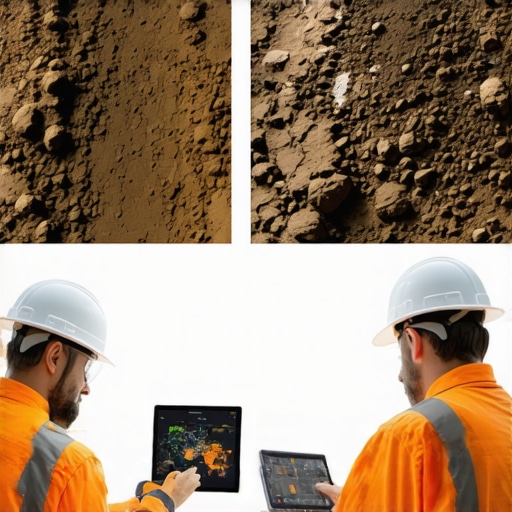
Embracing data-driven decision-making transforms traditional practices into predictive models. By analyzing sensor data and historical project outcomes, teams can forecast challenging zones and plan preemptive measures. Moving beyond reactive troubleshooting, this proactive stance reduces unforeseen delays and mitigates risks associated with complex subsurface conditions. Industry leaders emphasize the importance of integrating geotechnical insights with digital tools to optimize excavation accuracy and safety.
Can Advanced Soil Modeling Tools Revolutionize Hydrovac Operations?
Advanced soil modeling platforms enable high-fidelity simulations of subsurface scenarios, allowing for more precise planning and risk assessment. Incorporating these models can inform pressure settings, nozzle selections, and stabilization techniques prior to commencing work. As urban environments become more intricate, leveraging such innovations becomes essential for efficient and safe excavations. For detailed strategies on implementing these systems, consider reviewing expert insights on borehole mapping advancements.
Share your experiences with adapting to soil variability—what techniques have proven most effective in your projects? Connecting with industry peers can unlock new approaches and ensure best practices remain at the forefront.
Source: Geological Society of America, “Subsurface Characterization and Its Impact on Infrastructure Planning,” GSA Today, 2024.
Harnessing Real-Time Data for Smarter Excavation Decisions
In contemporary excavation projects, harnessing real-time sensor data transforms the traditional reactive approach into a proactive strategy. Modern sensors capable of monitoring soil resistance, pressure fluctuations, and flow rates provide immediate feedback, enabling operators to adapt dynamically to changing subsurface conditions. This integration accelerates decision-making, reduces downtime, and minimizes the risk of utility strikes. When coupled with automated control systems, these sensors facilitate precise adjustments in pressure and flow, tailoring the excavation process to soil heterogeneity — a vital step in urban environments burdened with unpredictable conditions.
Adaptive Techniques Elevate Borehole Integrity Amid Soil Instability
Addressing stability concerns in dynamic soils requires a judicious blend of innovative stabilization methods, such as reactive grouting and geosynthetics, designed to work synergistically. For instance, implementing reactive chemical grouts that expand upon curing can reinforce weak zones before drilling, preventing collapse and enabling safer operations. Similarly, embedding geosynthetic linings or flexible casing systems allow for absorption of minor ground shifts without compromising borehole integrity. Combining these methods with strategic geotechnical surveys provides a comprehensive safety net, ensuring stability even in the most challenging soil conditions.

What Are the Limitations of Current Soil Models in Urban Excavation?
Despite technological advances, existing soil modeling tools often face challenges in accurately capturing the complexities of urban subsurface environments. Limitations arise from incomplete data, soil heterogeneity, and real-world variables such as moisture fluctuation and anthropogenic disturbances. These shortcomings can lead to discrepancies between simulated predictions and actual conditions, risking failed excavations or structural instability. Recognizing these gaps highlights the necessity of integrating multiple data sources—geophysical surveys, borehole logs, and remote sensing—to enhance model fidelity. For rigorous projects, combining computational models with field validation remains the gold standard for ensuring accuracy and safety.
Experts recommend adopting multi-scale modeling approaches that bridge macro-level soil behavior with micro-level interactions, offering a more nuanced understanding of subsurface dynamics. Further, continuous refinement of these models through machine learning algorithms trained on extensive project datasets can progressively improve their predictive capacity, ultimately transforming excavation into a highly precise science rather than a venture risked on mere estimations.
Strategic Collaboration: Bridging Engineering and Geoscience
Successful navigation of complex subsurface conditions hinges significantly on interdisciplinary collaboration. When engineers, geologists, and geotechnical specialists share insights—from soil classifications to modeling outputs—teams can develop comprehensive excavation plans that preempt potential failures. This collaborative approach fosters innovative solutions like hybrid stabilization techniques or adaptive pressure algorithms tailored to site-specific challenges. Engagement with authoritative bodies such as the United States Geological Survey ensures that practitioners stay abreast of the latest geological insights and analytical methodologies.
Advancing these partnerships requires a cultural shift towards proactive knowledge exchange. Participating in industry forums, joint field studies, and data-sharing initiatives cultivates a learning environment conducive to pushing technological boundaries. When combined with cutting-edge soil modeling tools and real-time monitoring systems, this collaborative dynamic elevates the efficacy and safety of subsurface interventions—especially critical as urban infrastructure developments become increasingly ambitious and complex. Looking ahead, integrating artificial intelligence-driven insights into these collaborations promises to unlock unprecedented levels of precision and predictive power in excavation projects.
Redefining Soil Characterization for Enhanced Borehole Stability
Achieving borehole integrity in heterogeneous urban soils necessitates a paradigm shift towards high-resolution, multilayered geotechnical modeling. When traditional soil testing methods fall short in capturing microstructural variances, integrating geophysical sensing techniques such as ground-penetrating radar and electrical resistivity tomography can provide real-time, high-fidelity subsurface mappings. This approach empowers engineers to anticipate stress points and tailor stabilization techniques accordingly, ultimately reducing the risk of borehole collapses.

Harnessing Machine Learning to Predict Soil Behavior Complexity
Incorporating artificial intelligence into geotechnical analysis transforms vast datasets into actionable insights. Machine learning algorithms trained on extensive urban subsurface profiles can detect subtle patterns indicative of potential instability zones—often overlooked by conventional models. These predictive tools enable proactive decision-making, optimizing pressure settings and stabilization measures before excavation commences, thus significantly improving safety and efficiency.
What Are the Limitations of Current Soil Models in Urban Excavation?
How do computational constraints affect the reliability of high-fidelity soil simulations?
Despite advancements, high-resolution models often grapple with computational resource demands, limiting their real-time application during fast-paced construction schedules. Approximate analytical methods, while less precise, offer quicker insights but risk oversimplifying complex soil behaviors. The balance between computational efficiency and model accuracy remains a critical area of ongoing research, with emerging hybrid approaches seeking to bridge this gap by combining detailed numerical simulations with rapid heuristic evaluations.
Authoritative source: United States Geological Survey’s Technical Resources on Urban Soil Dynamics provides invaluable insights into the evolving landscape of geotechnical modeling, emphasizing the importance of integrating multi-sensor data streams for comprehensive subsurface understanding.
Innovative Stabilization Techniques for Challenging Soil Profiles
Beyond traditional grouting and casing systems, recent innovations include the deployment of reactive geosynthetics designed for dynamic load absorption and micro-fine mineral stabilization agents that chemically compact soils in-situ. Field trials have demonstrated that combining these methods with real-time stress monitoring can create adaptive stabilization frameworks, accommodating unforeseen soil shifts and groundwater influences. Embracing such hybrid solutions positions project teams ahead in urban utility deployment, where unpredictability is the norm.
Leverage Predictive Analytics to Foresee Subsurface Obstacles
Predictive analytics, empowered by integrated sensor networks and historical project databases, facilitate anticipatory planning that preempt utility conflicts and ground movement failures. By understanding the probabilistic distribution of subsurface anomalies, project managers can pre-position stabilization resources, adjust excavation sequences, and mitigate risks proactively, translating complex data into strategic advantages in high-density urban environments.
Could Autonomous Excavation Systems Revolutionize Soil Stability Management?
Autonomous excavation machinery equipped with advanced sensor arrays and real-time analytics could transform the traditional stochastic process into a precise, controlled operation. These systems would adapt pressure, nozzle orientation, and stabilization protocols on-the-fly, learning from continuous environmental feedback to optimize performance. Such innovations promise to reduce human error, improve safety margins, and accelerate project timelines—especially critical when navigating the intricate subsurface labyrinths characteristic of modern cities. Engaging with ongoing research in robotic geotechnical automation promises to unlock these transformative potentials.
Share your experiences with AI-driven stabilization or sensor-based excavation control—your insights can propel industry standards toward unprecedented levels of safety and accuracy. Collaboration among engineers, geoscientists, and technology developers will be crucial in translating these emerging tools from experimental platforms to everyday practice.
Source: United States Geological Survey’s Technical Resources on Urban Soil Dynamics emphasizes the importance of interdisciplinary innovation in tackling complex subsurface challenges effectively.