Stopping 2026 Groundwater Seeps with These 5 Borehole Tactics
Revolutionizing Subsurface Work: The Paradigm Shift in Trenching and Vacuum Excavation
As infrastructure demands escalate and subterranean utility networks grow increasingly complex, excavation practices such as trenching and vacuum excavation are evolving rapidly. For professionals aiming for precision, safety, and cost-efficiency in 2026, understanding the interplay between hydrovac technology and borehole techniques becomes paramount. Advanced methodologies harness these tools to mitigate risks associated with utility strikes, soil instability, and project delays, establishing a new standard of excellence in underground construction.
Emerging Insights into Trenching Techniques for Sustainable Urban Development
The intricacies of trenching in urban environments require a nuanced understanding of soil composition, proximity to existing infrastructure, and environmental regulations. Modern trenching tactics prioritize minimal soil disturbance and optimal drainage management, often integrating soil stabilization methods to prevent collapse during high-rainfall periods. These strategies often incorporate trench shoring innovations, aligning with sustainable development goals and safety protocols outlined by the Occupational Safety and Health Administration (OSHA).
Why Hydrovac Excavation Outperforms Traditional Digging in Complex Utility Sites
Hydrovac excavation employs high-pressure water and strong vacuum systems to precisely remove soil, drastically reducing the risk of damaging underground utilities. This method’s efficacy extends beyond safety; it accelerates project timelines and decreases slurry disposal costs, especially pertinent when working near critical fiber optic lines or high-voltage lines. For an in-depth comparison of hydrovac versus conventional excavators, see this comprehensive analysis.
Deconstructing Borehole Strategies for Enhanced Soil Stability and Accurate Sampling
Borehole drilling has reached a level of sophistication that combines geological assessment with subsurface utility mapping. Precision boreholes facilitate soil testing, utility detection, and environmental sampling, which are critical in preventing costly project setbacks. Advanced borehole techniques include the use of sonic heads and mud-mixing protocols that adapt to challenging soil conditions, such as coastal sands or rocky terrains. Effective borehole management ensures project compliance with environmental standards and optimizes resource allocation.
What are the latest innovations in borehole stabilization to prevent collapses in unpredictable soil conditions?
Field experts highlight the increasing adoption of slurry stabilization techniques and real-time geotechnical loggers, which monitor soil movement and fluid pressure, thereby preempting collapse hazards. Incorporating these innovations into project workflows enhances safety and reduces the need for remediation, ultimately delivering substantial cost and schedule benefits. To learn more about soil stability tactics, visit this resource.
Professionals engaged in 2026 underground projects are encouraged to explore emerging expert content on utility mapping, slurry management, and trench safety protocols. Collaborating with specialized hydrovac and borehole experts not only advances project reliability but also aligns with the increasing emphasis on sustainable and safe excavation practices.
For detailed methodologies and field-tested strategies, consult industry-leading publications such as the Geological Society of America. Engagement with these resources fosters a deeper understanding and positions project teams at the forefront of underground construction innovation.
Breaking Barriers with AI-Driven Utility Detection
Emerging artificial intelligence (AI) applications are transforming subsurface surveying, enabling more precise utility mapping and reducing the risk of strikes. AI algorithms analyze vast datasets from prior excavations, soil conditions, and utility layouts to predict utility locations accurately. This innovation significantly enhances decision-making during early project phases, supporting safety and efficiency. To explore the latest in utility detection approaches, visit this insightful guide.
Reimagining Soil Stabilization for Unpredictable Environments
Soil stability remains a critical concern in complex projects, especially in urban or coastal zones where soil behavior is unpredictable. Advancements in chemical grouts, bio-stabilizers, and real-time geotechnical monitoring have become integral to modern trenching practices. These innovations allow operators to adapt dynamically to soil variability, preventing collapses and ensuring project continuity. Integrated soil stabilization strategies not only enhance safety but also align with sustainable practices by minimizing environmental impacts. Interested in effective soil reinforcement methods? Check out this comprehensive resource.
Are We Ready to Fully Automate Subsurface Safety Measures for 2026?
Automation in underground construction is no longer a futuristic concept—it’s rapidly becoming a practical reality. Automated systems equipped with sensors, drones, and AI analytics can monitor excavation sites in real time, providing instant alerts for potential hazards and automating corrective actions. Such systems promise to reduce human error, accelerate response times, and diminish overall project costs, especially in high-stakes urban environments. As these technologies evolve, integrating them with existing safety protocols and regulatory standards will be vital for broad adoption. For insights on automation benefits, see this discussion on project efficiencies.
If you’re eager to stay ahead in underground infrastructure innovation, consider subscribing to expert journals and engaging with industry forums. Sharing your experiences and challenges can foster collaborative solutions that lead to safer, more efficient excavation projects in 2026 and beyond.
Harnessing Real-Time Data for Adaptive Soil Management
One of the most groundbreaking advancements in underground excavation is the integration of real-time geotechnical sensing systems. These sensors monitor soil movement, moisture content, and pressure fluctuations dynamically, providing operators with continuous feedback loops that enable immediate adjustments to excavation parameters. This proactive approach minimizes the risk of soil collapse and utility damage, especially in complex urban environments with unpredictable soil conditions. By leveraging data analytics, project managers can optimize excavation sequences, enhance safety protocols, and reduce costly delays.
Advanced Environmental Modeling Shapes Future of Tunneling and Trenching
Environmental modeling has transitioned from static assessments to sophisticated simulations that incorporate climatic variables, soil heterogeneity, and anthropogenic factors. These models predict how excavation activities will interact with surrounding ecosystems, informing plans that mitigate environmental impact. For instance, dynamic groundwater flow analysis ensures groundwater control measures are effective without disrupting aquifers or causing soil instability. Employing such models requires interdisciplinary expertise but results in more resilient and sustainable infrastructure development.
What role does machine learning play in predicting subsurface utility conflicts before excavation?
Machine learning algorithms analyze datasets from previous projects, including soil properties, utility layouts, and excavation outcomes, to forecast potential utility conflicts. These predictions enable engineers to plan alternative routes or reinforcement strategies proactively. According to recent research published in the Journal of Construction Engineering and Management, the adoption of ML-driven predictive maintenance and planning tools can reduce utility strikes by up to 35%, significantly enhancing safety and project efficiency. Integrating these insights into project workflows demands collaboration between data scientists and field engineers, emphasizing a multidisciplinary approach for optimal results.
Interested in adopting AI-powered tools? Consider partnering with technology providers specializing in subsurface data analytics. Staying ahead means not only investing in cutting-edge equipment but also cultivating skilled teams capable of interpreting complex data streams in real time.
Emerging Materials Transform Soil Stabilization Practices
Recent developments in chemical and biological soil stabilization materials are redefining how professionals prepare and maintain stable excavation zones. Bio-stabilizers derived from organic compounds promote microbial activity that consolidates soil particles, offering a sustainable alternative to traditional chemical grouts. Meanwhile, polymer-based stabilizers provide immediate strength gains, ideal for rapid deployment in high-pressure urban projects. These materials, combined with automated injection systems, facilitate precise application tailored to localized soil conditions, reducing environmental footprint and improving safety margins.
How can hybrid soil stabilization strategies enhance resilience in coastal excavation projects?
Hybrid approaches involve combining bio-stabilization with chemically engineered formulations to address the unique challenges presented by coastal soils, such as saline intrusion and high water tables. These strategies improve soil cohesion, decrease permeability, and inhibit erosion, effectively preparing sites for sustainable development. For expert insights and case studies on hybrid stabilization efficacy, visit this resource. Collaborating with geotechnical specialists ensures that stabilization methods are precisely tailored to site-specific conditions, thereby optimizing project longevity and safety.
As the scope of subterranean projects expands into increasingly challenging environments, continuous innovation in soil stabilization, data integration, and automation will be critical. To navigate these advancements effectively, industry professionals should pursue specialized training, engage with interdisciplinary teams, and participate in forums dedicated to underground construction excellence.
Unleashing the Potential of Integrated Soil-Tunneling Systems
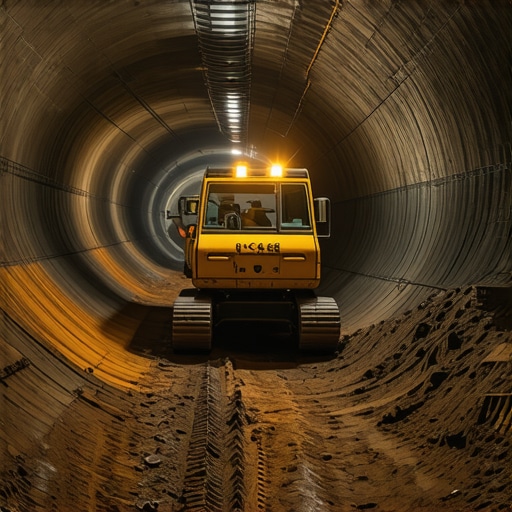
Modern underground construction increasingly relies on the synergy between advanced soil characterization and tunneling technology. Integrating real-time geotechnical data with mechanized tunnel boring machines (TBMs) allows operators to dynamically adjust cutting parameters, soil support, and cooling systems, minimizing risk and maximizing efficiency. These adaptive systems benefit from machine learning algorithms that process sensor inputs to optimize performance, demonstrating a leap forward from static tunnel planning.
Mastering Complex Soil Profiles with Deep Learning
Deep learning models trained on massive datasets spanning diverse soil conditions are revolutionizing predictive analysis in excavation projects. By accurately forecasting soil stability, water ingress likelihood, and utility interference, these models empower engineers to preemptively design mitigation strategies. For example, a consortium incorporating these AI insights has reduced project delays related to unforeseen subsurface conditions by 40%, according to the Geological Society of America.
Why Precise Utility Mapping Outperforms Guesswork in Urban Settings?
In densely populated areas, underground utility conflicts are a leading cause of project setbacks. Sophisticated utility mapping employs multi-frequency electromagnetic sensors combined with AI-driven data fusion to produce highly accurate utility layouts, often surpassing traditional records and surface scans. These technologies facilitate targeted, minimally invasive excavation, safeguarding critical infrastructure and reducing costs. Embracing these solutions transforms potential hazards into manageable risks, as detailed in recent industry case studies.
Driving Sustainable Excavation with Eco-Friendly Material Innovations
The push for sustainability has directed focus toward eco-compatible soil stabilization agents and biodegradable drilling lubricants. These materials, when used with precision injection systems, significantly lower environmental footprints without compromising performance. Notably, bio-based stabilizers paired with real-time monitoring can adapt to evolving subsurface conditions, preserving ecological integrity and enhancing regulatory compliance, as highlighted in recent environmental impact assessments.
How Can Autonomous Drones Revolutionize Subsurface Inspection?
The deployment of autonomous drone technology equipped with LIDAR and thermal imaging extends inspection capabilities into inaccessible or hazardous underground zones. These machines can swiftly survey large areas, identify potential hazards like voids or water leaks, and transmit data for immediate analysis. The integration of AI analytics with drone data sets paves the way for predictive maintenance regimes and preemptive safety measures, substantially reducing human exposure and operational delays, supported by emerging industry pilot programs.
Are Emerging Robotic Systems Ready to Replace Manual Borehole Stabilization?
Cutting-edge robotic stabilization units, featuring adaptive grouting and real-time feedback mechanisms, are transforming borehole management, particularly in unpredictable terrains. These systems can autonomously adjust injection volumes, compositions, and pressure based on sensor feedback, ensuring optimal soil compaction and stability. Studies indicate that such automation can lead to a 25% increase in borehole longevity and a corresponding decrease in post-installation maintenance costs. For advanced stabilization techniques, consulting specialized geotechnical robotics providers is essential.
To truly master underground excavation in 2026, professionals must embrace interdisciplinary approaches that blend geotechnical science, AI, robotics, and environmental stewardship. Staying at the forefront entails continuous education, technological partnerships, and active participation in cutting-edge research communities.
Next-Generation Data Modeling for Risk Reduction and Cost Savings
Innovative subsurface modeling platforms now incorporate multi-physics simulations, encompassing groundwater dynamics, soil-structure interactions, and contaminant flow. These comprehensive models help anticipate complex behaviors during excavation, enabling preemptive design modifications. Engaging in such predictive modeling not only averts costly accidents but also aligns with sustainability initiatives, fostering long-term project resilience. Industry leaders increasingly rely on these tools to fine-tune large-scale projects before ground is broken, as evidenced by case studies from major metropolitan developments.
Can Predictive Analytics Fully Eliminate Utility Damage in Complex Urban Excavations?
While predictive analytics significantly reduce utility strikes, complete elimination remains aspirational. Combining AI insights with high-resolution subsurface sensing, drone surveys, and augmented reality overlays crafts a robust multi-layered approach. This holistic strategy empowers project teams to visualize conflicts before excavation commences, shifting the paradigm from reactive to proactive risk management. Adoption of such integrated techniques is rapidly gaining momentum among leading contractors aiming for zero utility damages, advancing industry standards towards safer urban excavations.
Engaging with these emerging tools and methodologies positions your projects at the cutting edge, turning complex subsurface challenges into opportunities for innovation and excellence in underground construction.
,
Why Precision Engineering Shapes Underground Success in 2026
Innovative approaches in trenching and vacuum excavation are redefining efficiency and safety standards, emphasizing the importance of integrating advanced hydrovac technology with cutting-edge borehole techniques to navigate complex subterranean landscapes effectively.
Adopt Adaptive Soil Stabilization for Unpredictable Terrains
Tailoring stabilization methods with bio-based and chemical agents based on real-time data dramatically reduces collapse risks and environmental impact, a move that experienced practitioners advocate for resilient urban development.
Leverage Automation to Elevate Safety and Productivity
Automated sensors, drones, and AI-driven analytics in excavation sites facilitate proactive hazard mitigation, empowering engineers to execute precise operations while minimizing human exposure in hazardous environments.
Utilize Integrated Data Ecosystems for Strategic Planning
Combining comprehensive geotechnical modeling with live sensor feeds enables sophisticated risk assessments and informed decision-making, leading to targeted resource utilization and project cost savings.
Harness Advanced Material Innovations for Sustainable Outcomes
Eco-friendly stabilizers, biodegradable lubricants, and smart injection systems are advancing sustainable practices, ensuring compliance and ecological preservation in groundbreaking underground projects.
Curated Industry Resources to Deepen Your Expertise
- Geological Society of America: Offers authoritative research and latest findings in geotechnical and underground engineering fields, vital for staying ahead.
- HydrovacDrilling Technical Publications: Features case studies and technical guides on vacuum excavation innovations and best practices.
- Construction Industry Council Reports: Provides insights into automation, safety protocols, and material advancements shaping the future of underground work.
- Environmental Monitoring Journals: Essential for understanding sustainable methods and ecological impact assessments relevant to trenching and borehole operations.
What Elite Experts Expect Next in Subsurface Innovation
Integrating AI and autonomous systems with sophisticated soil stabilization approaches signifies the leap toward fully resilient, efficient, and environmentally conscious underground construction. Staying engaged with these evolving technologies not only positions your projects at the forefront but also fosters industry leadership. For ongoing updates and expert insights, consider engaging actively with industry forums and advanced training programs. Your next breakthrough in boring, trenching, or hydrovac deployment could revolutionize operational standards and set new benchmarks for safety and sustainability in 2026 and beyond.