Stop 2026 Borehole Heave: 5 Torque Adjustments for Sandy Soil
Revolutionizing Borehole Drilling: Navigating Complex Soil Dynamics in 2026
In the realm of subterranean investigations and utility installations, the resilience of boreholes amidst variable soil conditions remains paramount. As infrastructure projects grow increasingly sophisticated, understanding how to optimize borehole stability—especially in sandy soils prone to ground heave—becomes critical for engineers and drilling specialists.
Adaptive Torque Management: The Key to Counteracting Borehole Heave in Sandy Substrates
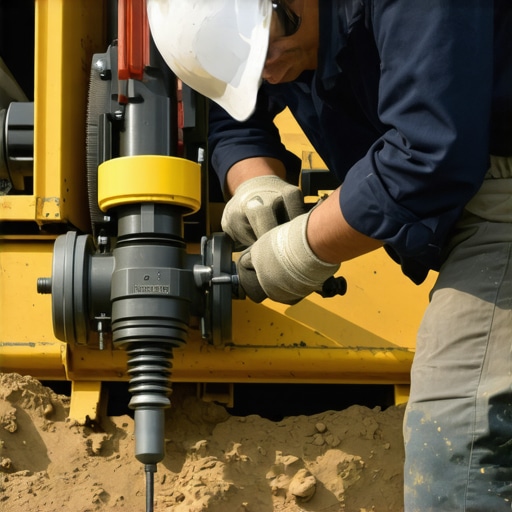
One of the most nuanced challenges in 2026 involves the precise calibration of drilling torque to mitigate borehole heave, a phenomenon prevalent in loose, granular soils. Excessive torque can induce soil displacement, leading to instability, whereas insufficient force may result in incomplete penetration or equipment damage. Recent studies emphasize that torque adjustments must be contextually aligned with soil moisture levels, grain size distribution, and ambient pressure conditions.
How Can Expert Operators Fine-Tune Torque Settings to Prevent Ground Heave During Borehole Advancement?
Field-tested techniques advocate for dynamic torque modulation, incorporating real-time feedback sensors, and soil property data integration. Utilizing advanced sensor technologies enables drilling teams to adapt torque parameters instantly, preventing instability while enhancing efficiency. Such adaptability necessitates a comprehensive understanding of soil mechanics and drill bit behavior, underscoring the importance of continuous operator training and technological innovation.
Soil Texture and Composition: Nuanced Factors in Borehole Integrity
The heterogeneity of sandy soils, compounded by clay interlayers or moisture variations, challenges traditional drilling paradigms. Advanced soil testing, including cone penetration and resistivity analysis, informs the selection of drilling fluids, bit type, and torque settings. For instance, employing soil stabilization techniques such as chemical grouting can mitigate collapse risks, especially in unstable sandy beds.
Balancing Equipment Wear with Ground Stability: The Expert Perspective
Equipment longevity and performance are deeply intertwined with torque management. Overexertion accelerates bit wear and increases operational costs, while under-utilization hampers progress. Recent innovations, like variable torque drill drives, exemplify the industry’s movement toward intelligent systems that optimize power input based on real-time soil feedback, reducing mechanical stress and enhancing borehole precision.
What Are the Emerging Trends in Drill Bit Designs for High-Density Sandy Soils in Urban Environments?
Experts suggest that innovations such as replaceable cutter heads with embedded sensors and tungsten carbide coatings significantly improve durability and cutting performance. For ongoing insights and case studies, consult the comprehensive guide provided by Hydrovac Drilling’s latest research.
Engaging with these advanced soil and equipment management strategies ensures not only the success of borehole installations but also bolsters the safety and sustainability of urban infrastructure projects. Professionals are encouraged to continuously refine their understanding of subterranean behaviors and leverage emerging technologies to stay ahead in this dynamic field.
For further exploration into expert methodologies, consider reviewing how real-time logging transforms borehole reliability. Your insights and experiences contribute immensely to evolving best practices in the industry—share your expertise to foster collective advancement.
Maximizing Borehole Resilience Amid Complex Soil Layers
In today’s urban and rural projects, soil heterogeneity often complicates borehole stability, demanding more than traditional techniques. Layered soils with varying moisture content and compositions require tailored approaches, integrating real-time soil analysis with innovative drilling methods. Utilizing cutting-edge hydrovac and borehole mapping techniques enables specialists to adapt on the fly, minimizing risks associated with unexpected soil shifts.
Harnessing Technology to Decode Subsurface Mysteries
Advanced sensors and data analytics are revolutionizing how drill crews approach unstable terrains. By deploying geophysical survey tools early, teams can identify pockets of unstable or saturated soils that pose collapse threats. This pre-emptive knowledge informs decisions about appropriate soil stabilization methods and drilling parameters, greatly reducing costly delays and ground failures. Multi-faceted data fusion, combining resistivity, seismic, and moisture measurements, creates a holistic view of subsurface conditions, empowering teams to strategize effectively.
Can real-time soil feedback systems truly predict and prevent borehole blowouts in unpredictable terrains?
Emerging research underscores that integrating real-time feedback mechanisms with automated control systems can significantly enhance borehole safety. Such systems continuously monitor parameters like pressure fluctuations, soil displacement, and bit wear, providing instant alerts or adjustments to drilling operations. For practitioners eager to elevate their risk mitigation strategies, consulting resources such as Hydrovac’s insights on real-time data integration offers valuable guidance. Adopting these technologies not only elevates safety standards but also drives operational efficiency in increasingly complex soil conditions.
Redefining Drilling Equipment for Extreme Soils
The industry is witnessing a paradigm shift with the development of specialized drill bits designed for aggressive penetration in unstable or abrasive soils. Innovations include cutter geometries optimized for minimal resistance, carbide-embedded surfaces for longevity, and modular designs that facilitate quick component swaps in the field. Expert-driven drill bit enhancements are crucial for maintaining borehole integrity when facing challenging subsurface conditions. Staying abreast of these technological advancements ensures that drilling operations remain resilient and cost-effective.
For those interested in expanding their toolkit, exploring expert strategies for stuck drill bits offers practical solutions to common equipment challenges, reducing downtime and preserving borehole quality. Embracing innovation allows specialists to tackle the unpredictable nature of complex soils with confidence and precision.
Engaging with state-of-the-art soil assessment and drilling tool technologies creates a competitive edge, ensuring projects meet safety, quality, and timeline expectations. Continuous professional development and knowledge exchange, including sharing experiences from the field, foster industry-wide advancements—your insights could help shape the future of subterranean engineering.
Implementing Variable Density Drilling: Achieving Precision in Unpredictable Terrains
In environments where soil composition varies abruptly, traditional uniform drilling techniques often fall short, risking borehole collapse or misalignment. To counter this, top-tier drilling operations now employ variable density drilling protocols—adjusting drill bit pressure, rotational speed, and fluid dynamics dynamically in response to real-time feedback. This adaptive approach minimizes mechanical stress on equipment and enhances the accuracy of borehole placement amidst complex soil stratification.
Integrating Geospatial Analytics for Subsurface Insight
Beyond conventional geophysical surveys, deploying advanced geospatial analytics—leveraging machine learning algorithms on multi-sensor data sets—enables engineers to model subsurface conditions with unprecedented precision. High-resolution 3D mapping derived from combined resistivity, seismic, and electromagnetic data informs strategic decision-making, from optimal drilling angles to targeted stabilization measures. This fusion of data science with geotechnical expertise marks a new era in subterranean project planning.
How can predictive modeling enhance borehole success rates in layered and saturated soils?
Predictive modeling harnesses historical and real-time data to forecast soil behavior under various drilling parameters. By simulating interactions between drill loads, soil moisture, and pressure distributions, operators can preempt potential failures—such as soil liquefaction or collapse—thus adjusting strategies proactively. For instance, integrating models from institutions like the US Geological Survey provides insights into seismic influences on soil stability, further refining safety protocols.
For practitioners committed to pushing the boundaries of subterranean engineering, engaging with predictive analytics tools represents not just an upgrade in capability but a fundamental shift in risk management philosophy. Continuous validation of models with field data ensures evolving reliability and relevance, making predictive modeling an indispensable component of complex drilling operations.
Emerging Material Science Innovations Enhancing Borehole Durability
Material science advancements underpin many recent breakthroughs, with high-performance composites and wear-resistant coatings extending drill bit lifespan significantly. The development of diamond-like carbon coatings, for example, offers exceptional hardness and low friction characteristics, essential for penetrating abrasive or chemically aggressive soils. Simultaneously, modular drill bit systems allow for rapid configuration changes aligned with geotechnical findings, minimizing downtime and maintaining operational momentum.
Coupling these materials with smart sensors embedded within drill bits facilitates real-time wear monitoring, enabling predictive maintenance schedules rather than reactive repairs. Companies like ResMiner showcase the latest in alloy combinations tailored for challenging environments, underscoring the importance of material innovation in field success.
What role will nanotechnology play in future borehole stabilization solutions?
Nanotechnology holds transformative potential, with nanoparticle-infused drilling fluids capable of creating ultra-thin, high-strength barriers that reinforce soil matrices at a molecular level. Such innovations can significantly reduce soil liquefaction risks, mitigate ground settling, and improve fracture containment. Preliminary research from institutions like MIT indicates that these materials can be selectively activated by environmental stimuli—like pH or moisture levels—offering targeted stabilization exactly where needed. Embracing nanotech-driven solutions may soon allow engineers to manipulate subsurface conditions proactively, turning a traditionally reactive process into a precise, controlled operation.
Engagement in interdisciplinary research and pilot projects is vital for translating these promising materials from lab to field, ultimately revolutionizing borehole durability standards and expanding the horizons of geotechnical engineering.
Reassessing Equipment Design for Deep, High-Pressure Wells
As drilling ventures reach unprecedented depths and encounter high-pressure zones, equipment resilience becomes critical. Innovations include reinforced drill assemblies featuring adaptive shock absorption systems and thermally resistant components, designed specifically to withstand extreme conditions. Hybrid drill bits combining traditional cutting edges with advanced abrasive-resistant alloys facilitate faster penetration while maintaining structural integrity under immense stress.
Furthermore, digital twin technology—creating real-time virtual replicas of drilling equipment—empowers operators to visualize operations and predict component failures before they occur, enabling preemptive maintenance and reducing costly downtime. Industry leaders like Ferrair are pioneering these applications in offshore and deep geothermal settings, exemplifying the potential for digital integration to elevate equipment reliability.
For those venturing into ultra-deep or high-pressure environments, staying abreast of these cutting-edge developments in equipment design offers a strategic advantage—both in operational safety and overall project success—and invites ongoing dialogue among experts seeking to push the boundaries of what is mechanically feasible.
Harnessing Multi-Physics Modeling to Anticipate Soil Responses
Advanced multi-physics simulation tools now enable engineers to predict complex interactions between drilling forces, soil mechanics, and fluid dynamics beneath the surface. By integrating resistivity, seismic, and pore pressure datasets into cohesive models, stakeholders gain predictive insights that preempt borehole failures. These systems facilitate scenario testing and optimize drilling parameters proactively, thus reducing costly trial-and-error approaches in unpredictable terrains.
How Can Integrated Modeling Revolutionize Borehole Planning in Layered Geologies?
Employing comprehensive modeling platforms consolidates heterogeneous data sources, enabling the visualization of subsurface heterogeneity at micrometer scales. This predictive capability allows for tailored drilling strategies, pre-emptive stabilization interventions, and informed casing design selection, ultimately minimizing unforeseen collapses and ensuring site safety. For detailed methodologies, consult the expert analyses in the US Geological Survey’s advanced geotechnical modeling resources.
Innovations in Adaptive Drilling Fluids for Enhanced Soil Compatibility
The evolution of intelligent drilling fluids with adaptive properties—responsive to real-time soil feedback—has markedly improved borehole stability in challenging sediments. These fluids can modify viscosity, rheology, and chemical composition dynamically, providing optimal lubrication and cuttings transport, while minimizing soil disturbance. Nanoparticle-infused fluids and environmentally friendly formulations are leading the charge, delivering sustainability alongside performance benefits.
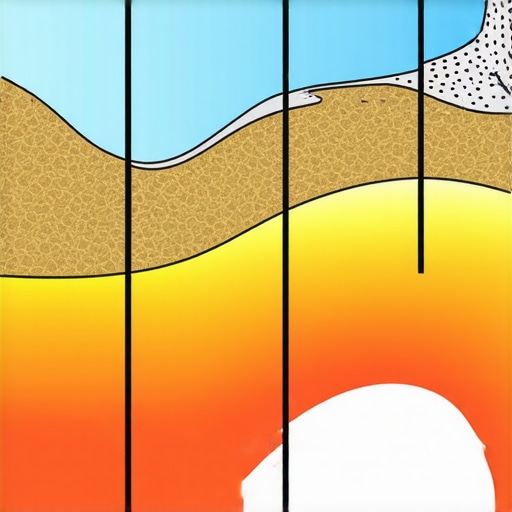
Image Prompt: Cross-section of adaptive drilling fluid interacting with layered soil, showing dynamic viscosity changes under different conditions, high-resolution digital art.
Exploiting Additive Manufacturing for Custom Drill Bit Components
The advent of additive manufacturing (3D printing) enables rapid prototyping and production of bespoke drill bit components tailored to specific soil challenges. By utilizing high-strength alloys and incorporating embedded sensors, these custom parts optimize cutting performance and wear detection. This approach reduces lead times and costs associated with traditional manufacturing, allowing for on-demand adaptation to evolving subterranean conditions.
Can Custom-Designed Bits Significantly Extend Service Life in Abrasive Environments?
Evidence from field deployments indicates that specialized geometries, embedded with wear-resistant nanomaterials, cut down bit replacement frequency by up to 50%. Such innovations not only enhance operational efficiency but also contribute to environmental sustainability by reducing waste. For comprehensive case studies, review the reports from Stratasys’ industry applications.
The Role of Real-Time Acoustic Sensing in Drilling Optimization
Embedding acoustic sensors within drill strings allows for continuous monitoring of soil vibrations and cuttings trajectories. Analyzing this data in real time enables operators to adjust parameters swiftly, avoiding borehole deviations and inducing minimal soil disturbance. Acoustic signatures serve as early indicators of impending borehole instability, allowing for preemptive intervention, thus elevating safety standards.
Expert Insights & Advanced Considerations
Stay Ahead with Soil Behavior Predictions
Leveraging predictive modeling to anticipate soil responses can drastically reduce unforeseen borehole collapses, offering a proactive approach in complex terrains.
Embrace Material Innovations for Longevity
Integrating nanotechnology-infused drill bits and wear-resistant coatings extends equipment life, minimizing downtime and maximizing efficiency in abrasive soils.
Diversify Monitoring Techniques
Employing multi-physics sensors combined with real-time data fusion supplies a comprehensive understanding of subsurface dynamics, enabling smarter decision-making on site.
Optimize Equipment Design for Extreme Conditions
Developing adaptive drill assemblies with advanced shock absorption and thermal resistance ensures performance stability at greater depths and under high-pressure environments.
Refine Drilling Fluids for Soil Compatibility
Smart, adaptive drilling fluids that respond to real-time feedback improve borehole stability, especially in heterogeneous or sensitive soil layers.
Curated Expert Resources
- Hydrovac Drilling’s Technical Guides — A repository of cutting-edge techniques and case studies illustrating innovative solutions for challenging soil conditions.
- US Geological Survey Geotechnical Data Portal — Offers comprehensive soil models and predictive tools essential for advanced borehole planning.
- ResMiner Material Science Reports — Contains in-depth analyses on advanced drill bit materials, coatings, and additive manufacturing applications tailored for abrasive soils.
- MIT Nanotechnology Research Publications — Pioneering studies on nanoparticle-infused fluids and their potential in soil stabilization.
- Ferrair’s Digital Twin Solutions — Demonstrates how virtual modeling enhances equipment resilience and operational safety in extreme drilling scenarios.
Final Expert Perspective
Achieving borehole resilience in the face of increasingly complex soil environments demands a confluence of predictive analytics, material innovation, and intelligent monitoring. As the industry evolves, integrating these advanced strategies into your portfolio will not only boost project success but also position you at the forefront of subterranean engineering excellence. Don’t hesitate to engage with peer networks, contribute your experiences, and dive deeper into these resource reservoirs to refine your expertise in this dynamic field.
This article highlights the critical role of precise torque management in maintaining borehole stability in loose sandy soils, which I’ve encountered firsthand during recent urban projects. Integrating real-time sensor data with adaptive torque systems has significantly reduced ground heave issues, especially in areas with variable moisture content. One challenge I see is ensuring that operators are continuously trained to interpret the complex data outputs from these advanced sensors effectively. Do others have recommendations for skill development programs or simulation tools that help drilling teams become more proficient with such technologies? Overall, leveraging these innovations seems like a key step toward safer and more efficient drilling operations in unpredictable soils. I’d be interested to hear insights on how different teams are implementing these strategies in diverse geotechnical conditions.