Borehole & Hydrovac Excavation: Reliable Techniques for Maximum Precision
Revolutionizing Subsurface Work: The Symbiosis of Trenching, Vacuum Excavation, and Borehole Techniques
Modern infrastructure projects demand unparalleled accuracy and safety in subsurface operations. The integration of advanced trenching, vacuum excavation, and borehole drilling methods enables engineers and contractors to achieve exceptional precision while minimizing risks associated with underground utility damage. To stay ahead in this evolving landscape, understanding the nuanced technical differences and strategic applications of these techniques is essential.
Harnessing the Potential of Hydrovac Technology for Complex Subsurface Challenges
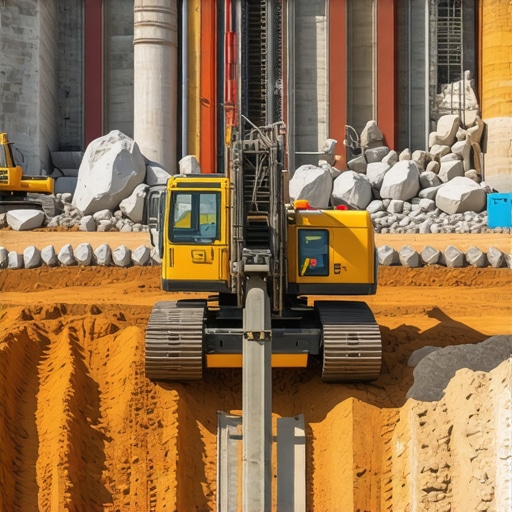
Hydrovac excavation represents a paradigm shift from traditional mechanical methods. Its ability to provide non-destructive, precise removal of soil makes it indispensable for utility locates, especially in congested urban environments. The ultimate guide to safe subsurface work details how hydrovac systems operate using pressurized water and high-powered vacuuming, allowing operators to navigate fragile underground networks without causing inadvertent damage.
Optimizing Trenching Strategies for Higher Safety Standards
Trenching remains a cornerstone technique for installing utilities. However, recent innovations emphasize integrated methods such as combined hydrovac and traditional trenching to enhance safety and efficiency. For instance, employing hydrovac to expose utilities before trenching diminishes the likelihood of accidental strikes, particularly in densely packed infrastructure zones. Modern trenching strategies now leverage real-time imaging and soil analysis to refine the process further.
Comparative Advantage of Vacuum Excavation in Complex Utility Environments
Vacuum excavation excels when precision and safety are paramount. In scenarios with existing underground facilities, traditional mechanical methods risk causing costly damages or service interruptions. Vacuum excavation’s capacity to accurately locate and expose utilities reduces downtime and hazards. Moreover, its environmentally friendly profile aligns with sustainable construction practices.
How Can Borehole Techniques Surpass Traditional Methods in Utility Mapping?
Traditional trenching often faces limitations in hard, rocky soils or sensitive locations. Borehole drilling offers an alternative, allowing for strategic utility mapping and subsurface testing at precise depths. Advanced borehole techniques employ rotary and percussion methods, incorporating geophysical sensors to ensure comprehensive underground data collection. This improves planning accuracy and reduces the need for disruptive surface excavations.
What Are the Emerging Innovations That Enhance Borehole and Hydrovac Capabilities?
The development of real-time sensing technologies, such as ground-penetrating radar integrated within borehole tools, has significantly enhanced subsurface imaging accuracy. Similarly, robotic hydrovac systems equipped with AI-driven navigation are improving operational safety in complex environments. To explore how these innovations could redefine your project workflows, visit our detailed analysis on hydrovac excavation strategies for safer underground infrastructure in 2025.
Engage with industry peers and share your insights on best practices in deep utility installation. Continuous learning and adaptation are key in mastering these sophisticated techniques.
Elevating Safety with Integrated Utility Mapping Solutions
As infrastructure complexity deepens, the need for precise utility mapping drives the adoption of multifaceted techniques. Combining hydrovac excavation with advanced borehole drilling can substantially reduce underground utility damage. This synergy allows workers to perform comprehensive subsurface investigations, leveraging the minimally invasive nature of hydrovac with the depth accuracy of borehole methods. Such integration not only speeds up project timelines but also minimizes safety risks. For further insights on how these strategies optimize reliability, consult our detailed overview on top techniques for reliable underground infrastructure.
Adopting Smart Technologies for Next-Gen Subsurface Exploration
The future of subsurface work hinges on the infusion of intelligent systems. Smart borehole sensors equipped with geophysical and acoustic monitoring capabilities enable real-time underground condition assessment. When paired with AI-powered hydrovac equipment, operators gain unprecedented awareness of underground environments, allowing for precise decision-making. These innovations collectively push the boundaries of safety and efficiency, making complex projects more manageable. For a deep dive into upcoming technological trends, explore our analysis on effective borehole techniques for reliable underground projects.
Could integrating AI and sensor technology redefine traditional underground utility surveys?
The integration of artificial intelligence, robotics, and sensor technology is poised to revolutionize utility detection and mapping. By enabling autonomous operation and continuous data analytics, these tools reduce human error and enhance detection accuracy. This shift could drastically cut project costs and enhance safety standards across the industry. To gain a strategic edge, professionals should explore emerging solutions that incorporate these advancements, such as AI-driven radar imaging systems and robotic drill rigs.
Would you like to learn more about innovative safety protocols? Engage with thought leaders in the field by sharing your experiences and questions, fostering a community committed to safer, more reliable underground construction practices.
,
Embracing Digital Twins to Revolutionize Utility Data Integration
In the quest for precision underground infrastructure mapping, digital twin technology emerges as a transformative force. By creating a real-time, dynamic virtual replica of subsurface environments, engineers can simulate, analyze, and update utility layouts continuously. These virtual models integrate data from hydrovac inspections, borehole sensors, and geophysical surveys, providing a holistic overview that minimizes surprises during construction. According to a recent study in the Journal of Infrastructure Systems, implementing digital twins reduces utility strikes by up to 40% and accelerates project timelines significantly, demonstrating their disruptive potential in complex projects.
Harnessing AI-Enhanced Geophysical Surveys
Traditional geophysical survey methods, while effective, often suffer from interpretative ambiguities. The advent of AI-driven analytics now enables the rapid processing and accurate interpretation of vast datasets generated by ground-penetrating radar (GPR), electromagnetic induction, and seismic imaging. These systems learn from historical and real-time data, refining detection algorithms to identify utility types, depths, and conditions with unprecedented accuracy. Integrating AI into geophysical surveys is revolutionizing underground detection, especially in densely populated urban zones where accuracy directly correlates with safety and cost savings.
Image prompt: AI-powered underground utility detection with sensors and analytical interfaces, demonstrating advanced subsurface mapping technology.
The Surge of Robotic Hydrovac Systems: Efficiency Meets Intelligence
Robotic hydrovac units, equipped with AI navigation and obstacle avoidance capabilities, are setting new standards for intelligent excavation. These systems can operate autonomously in complex environments, perform multi-pass excavation, and adapt to unexpected soil conditions without human intervention. Such advancements not only improve safety by reducing on-site personnel but also ensure consistent quality and precision. Industry reports predict that smart hydrovac technology could halve operational costs over the next five years, owing to increased efficiency and minimized rework.
What Next-Generation Data Security Means for Critical Infrastructure
As dependence on interconnected subsurface data systems grows, so does the importance of robust cybersecurity measures. Safeguarding digital twins, sensor networks, and AI analytics from cyber threats is paramount to maintaining operational integrity. Implementing end-to-end encryption, intrusion detection systems, and regular security audits are essential layers of defense. Experts warn that a breach in underground data systems could lead to misinformed decisions, risking safety and project costs. Therefore, proactive cybersecurity strategies are no longer optional but integral to advanced utility management practices.
Can Blockchain Enhance Transparency and Trust in Utility Data Sharing?
Blockchain technology offers promising solutions for secure, transparent sharing of subsurface data among stakeholders. By creating immutable records of utility mappings, inspection results, and maintenance histories, blockchain ensures data integrity and accountability. This layered security minimizes disputes and accelerates decision-making processes in multi-party projects. Leading infrastructure consultants suggest adopting blockchain frameworks for high-stakes environments, where data fidelity and traceability are critical for regulatory compliance and operational safety.
Engagement and continuous education are vital as these technologies reshape underground utility management. Professionals are encouraged to participate in industry forums and pilot programs exploring the integration of AI, digital twins, and blockchain to stay at the forefront of innovation.
Harnessing Multifaceted Data Integration for Precise Underground Mapping
In the evolving landscape of underground utility detection, the convergence of diverse data streams—ranging from hydrovac inspection records to high-resolution borehole sensors—is revolutionizing project accuracy. These synergistic approaches facilitate comprehensive subsurface models, minimizing uncertainties inherent in single-method assessments. By leveraging integrated datasets, engineers can generate dynamic, high-fidelity digital twins, which serve as real-time virtual blueprints for underground environments, greatly reducing the risk of utility strikes and project delays.
How Do Data Fusion Strategies Elevate Detection Accuracy Beyond Conventional Methods?
Employing advanced data fusion techniques combines geophysical imaging, robotic inspection data, and AI analytics to produce holistic subsurface models. This multi-layered approach uncovers minute anomalies and utility features often overlooked by traditional surveys. According to the American Society of Civil Engineers, such integrated strategies are essential for navigating complex urban subsurface landscapes with a previously unattainable level of precision. Their adoption leads to safer, more efficient excavation planning and risk mitigation.
Consider adopting these multilateral data schemes; the investment yields substantial dividends in operational reliability. For those intent on staying at the technological frontier, embracing these innovations is not optional but imperative.
Image prompt: collage of underground sensors, AI data dashboards, and robotic inspection tools illustrating integrated subsurface mapping technologies.
Embracing Autonomous Systems to Elevate Safety and Productivity
The integration of autonomous robotics, equipped with AI-driven navigation and real-time sensory feedback, is redefining underground excavation paradigms. These intelligent systems can perform complex tasks—such as hazard detection, utility exposure, and soil assessment—without human presence in hazardous zones. Their adaptability to varying soil conditions and obstacle-rich environments enhances safety and accelerates project timelines, while reducing operational costs significantly. Industry reports highlight a projected 60% reduction in excavation-related incidents as these technologies mature and become widespread.
What Impacts Will Fully Autonomous Hydrovac Machines Have on Project Safety and Costs?
Autonomous hydrovac units promise to transform project safety by eliminating operator exposure to unpredictable underground conditions. Their precision and consistency prevent rework, minimize surface disruption, and optimize resource deployment. The Worley Group emphasizes that adopting these systems could halve operational expenses within a five-year span, primarily through improved efficiency and enhanced safety standards. As these systems incorporate adaptive AI and machine learning, they will continue to evolve, setting new industry benchmarks for underground excavation.
Expert Insights That Drive Innovation
Prioritize Data Integration to Minimize Risks
Blending multiple subsurface data sources, such as geophysical surveys, borehole sensors, and hydrovac inspections, is essential for creating accurate underground models. This comprehensive approach reduces uncertainties and enhances decision-making precision in complex environments.
Leverage Autonomous and AI-Driven Technologies
The deployment of autonomous hydrovac systems and AI-enabled sensors represents a leap forward, offering safer and more efficient excavation procedures. These innovations decrease human error, enable real-time decision-making, and significantly lower operational costs.
Embrace Digital Twins for Real-Time Monitoring
Developing digital replicas of underground infrastructure allows engineers to simulate scenarios, predict issues, and plan interventions with greater confidence. The integration of live sensor data into these models fosters proactive maintenance and swift response strategies.
Invest in Cybersecurity for Data Integrity
As underground data systems become more interconnected, safeguarding them against cyber threats is critical. Implementing encryption, access controls, and continuous security assessments ensures data reliability and project safety.
Recognize the Limitations and Adapt
No technology is infallible. Continual assessment of methodologies, embracing iterative learning, and adapting strategies based on emerging insights keep projects resilient in the face of evolving underground challenges.
Top Resources for Deepening Expertise
- Hydrovac Drilling’s Ultimate Guide to Safe Subsurface Work — Your comprehensive manual on integrating hydrovac techniques with modern safety protocols.
- American Society of Civil Engineers Publications — Authoritative research and case studies on underground utility mapping and innovative excavation methods.
- Industry Reports on Autonomous Excavation Technologies — Periodicals and white papers highlighting advancements in AI-powered, robotic hydrovac systems.
- Digital Twin Platforms for Infrastructure — Leading software solutions enabling real-time underground environment simulation and monitoring.
- Cybersecurity Frameworks in Infrastructure — Guidelines and best practices to protect critical underground data systems from cyber threats.
Charting the Path Ahead with Confidence
Integrating cutting-edge subsurface technologies like AI-enhanced geophysical surveys and autonomous hydrovac units isn’t just about efficiency—it’s a strategic imperative for safety and reliability in underground infrastructure projects. As the industry advances, staying informed through reputable resources and adopting a flexible, data-driven approach will ensure your projects remain resilient and future-ready. Engage with fellow professionals, share insights, and contribute to the evolving dialogue—because the next breakthrough might emerge from your own experience or collaboration.
This article offers a compelling look at how integrating hydrovac, borehole, and advanced data technologies can significantly enhance safety and efficiency in underground work. From my experience on urban utility projects, utilizing hydrovac to expose utilities before digging has dramatically reduced accidental strikes, saving time and costs. The mention of digital twins is particularly exciting, as these virtual models can revolutionize how we plan and respond to underground conditions. However, I wonder how accessible these cutting-edge technologies are for smaller firms or in developing regions. Are there scalable solutions that still provide meaningful improvements without the hefty investment? It would be great to hear insights from others who have implemented these innovations on a budget or in resource-constrained settings.