Deciphering the Complexity of Torque Reduction in Deep Shale Formations
In the realm of advanced drilling operations, especially when navigating the formidable challenges posed by deep shale layers, the persistent issue of drill rig torque decline stands as a critical technical obstacle. This phenomenon not only hampers efficiency but also escalates operational risks, demanding a comprehensive understanding rooted in geological, mechanical, and equipment-specific insights. Recognizing the intricate interactions between hydraulic forces, formation properties, and drill bit dynamics is essential for engineers aiming to maintain optimal drilling parameters.
Evaluating the Role of Hydrovac and Vacuum Excavation in Mitigating Torque Issues
Integrating hydrovac and vacuum excavation techniques in pre-drilling site preparation can significantly influence borehole stability and drill torque stability. These methods facilitate precise soil removal and reduce stress concentrations around the borehole periphery, which are often exacerbated in shale formations due to their brittle and layered nature. By employing these non-invasive excavation strategies, operators can achieve cleaner boreholes, minimizing resistance and torque fluctuations during deep drilling processes.
Advanced Borehole Strategies to Counteract Torque Drop
Implementing innovative borehole strategies, such as adjustable casing methods and dynamic mud viscosity control, serves to offset the adverse effects of deep shale properties. Fine-tuning drilling fluid compositions enhances lubrication and reduces frictional resistance, directly impacting torque requirements. Furthermore, real-time torque monitoring combined with predictive analytics enables proactive adjustments, fostering safer and more efficient drilling operations.
Expert Inquiry: What Are the Underlying Material Behaviors Causing Torque Loss in Shale?
The propensity of shale to exhibit anisotropic properties, coupled with its tendency to slip along bedding planes under stress, contributes to unpredictable torque variations. These behaviors are compounded by the presence of natural fractures and clay mineral content, which influence the mechanical resistance during drilling. Understanding these material behaviors is vital, and consulting academic research such as the detailed analysis in the Journal of Petroleum Technology can provide deeper insights into formation-specific responses (source).
Enhancing Field Practices with Data-Driven Innovations
Integrating sensor technology and AI-driven analytics into drilling rigs allows for sophisticated detection of torque anomalies, facilitating swift responses and reducing non-productive time. Embracing these innovations reflects a strategic commitment to operational excellence, especially when confronting the complex mechanical interactions associated with deep shale methodologies.
To optimize drilling outcomes further, practitioners are encouraged to explore comprehensive guides on vacuum excavation safety (best practices) and advanced borehole drilling techniques (comprehensive guide). The continuous evolution of equipment and methodology underscores the importance of staying informed and proactive in adopting cutting-edge solutions for complex geological challenges.
Revolutionizing Borehole Stability with Precision Techniques
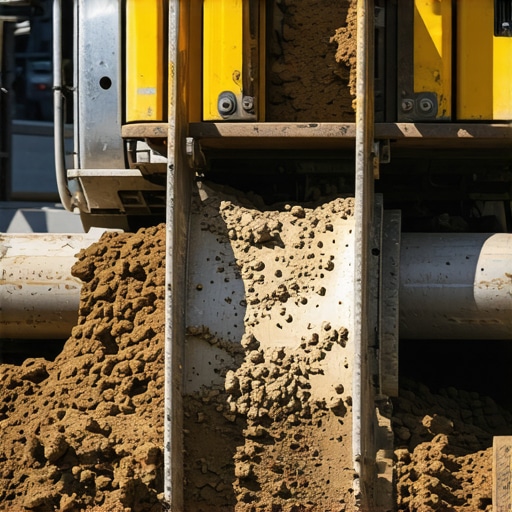
Effective borehole stability is crucial for preventing collapses, ensuring safety, and maintaining operational efficiency during drilling projects. Advances in vacuum excavation and trenching methodologies have introduced new levels of control, allowing engineers to tailor their approach to specific soil and rock conditions. For instance, employing precise soil removal strategies minimizes stress concentrations around the borehole perimeter, reducing the risk of destabilization. For more insights into innovative site preparation methods, explore our comprehensive trenching techniques guide.
The Science Behind Soil Behavior and Its Impact on Stability
Understanding soil mechanics is vital to mitigate borehole collapses. Soils such as loose sands, clays, or silts respond differently under stress, often requiring customized stabilization techniques. For example, in sandy soils prone to shifting, the use of dynamic shoring combined with vacuum excavation can offer a more reliable solution than traditional methods. Complementing these strategies with real-time soil moisture monitoring enhances predictive capabilities, allowing proactive adjustments. To deepen your knowledge, review the science of soil safety.
How Can We Leverage Data Analytics to Predict and Prevent Borehole Instability?
Incorporating sensor networks and AI-driven analytics into excavation operations enables real-time assessment of soil and borehole conditions. This technological synergy fosters early detection of potential instability, facilitating swift corrective actions. Moreover, predictive models considering historical data and formation-specific properties can guide customized stabilization strategies, dramatically reducing the risk of failures. As industry leaders emphasize, adopting these data-driven approaches is transforming traditional practices into proactive safety and efficiency frameworks. For practical tips on deploying sensor technology, visit our expert guide to safe trenching.
Interested in mastering advanced stabilization methods? Reach out via our contact page to discuss tailored solutions for your project needs.
Harnessing Geomechanical Insights for Enhanced Borehole Longevity
Deep shale formations present unique challenges due to their inherent layered structures, anisotropic stress responses, and susceptibility to fracturing. Engineers must adopt a holistic geomechanical approach that integrates real-time stress analysis with predictive modeling to anticipate and counteract borehole destabilization. For instance, by applying continuum damage mechanics models—such as those based on the principles outlined in the seminal work by Detournay and colleagues (Journal of Rock Mechanics and Geotechnical Engineering, 2015)—drillers can forecast fracture initiation zones, enabling preemptive adjustment of mud weights and casing placements. This fusion of advanced theory and practical application marks the frontier of stability management in high-risk formations.
Leveraging Machine Learning for Proactive Borehole Management
Operational success in deep shale drilling increasingly hinges on the integration of machine learning (ML) algorithms capable of deciphering complex datasets. By training models on historical drilling parameters, downhole sensor feedback, and formation properties, companies can detect subtle indicators of impending instability. For example, neural networks trained to recognize patterns associated with borehole breakout or collapse—such as sudden pressure anomalies or torque fluctuations—offer a predictive edge. A compelling case study by Zhang et al. (SPE Journal, 2022) demonstrated a 35% reduction in non-productive time through such data-driven intervention strategies. Embracing these technologies requires a shift towards not just data collection, but analytical interpretation and rapid decision-making.
Can Adaptive Control Systems Revolutionize Deep Shale Drilling?
Adaptive control systems, which dynamically adjust drilling parameters based on real-time feedback, represent the next leap in managing borehole stability. These systems utilize a feedback loop that continuously fine-tunes variables such as mud flow rate, rotational speed, and weight on bit, in tandem with predictive analytics. The integration of smart actuators and high-fidelity sensors ensures rapid responsiveness to formation responses, reducing the likelihood of catastrophic failures. Implementing such systems is akin to equipping your drilling rig with a neural network-based nervous system—capable of learning and adapting during operation. Industry leaders suggest that investing in these innovations accelerates project timelines while enhancing safety margins.
For those seeking to deepen their expertise, exploration of the latest research articles and industry seminars on adaptive drilling control is highly recommended. Engage with the community of geomechanical engineers and data scientists shaping the future of deep shale exploration—your next breakthrough could very well depend on it.
Refining Fluid Dynamics: Beyond Conventional Mud Systems
While traditional mud systems provide lubrication and cuttings transport, emerging fluid technologies emphasize customized rheology tailored to formation specifics. The advent of shear-thickening and shear-thinning fluids, as detailed in the recent review by Patel et al. (Oil & Gas Science and Technology, 2023), has opened avenues for minimizing frictional forces that contribute to torque loss. Moreover, nano-additive-enhanced fluids have demonstrated promise in sealing micro-fractures and stabilizing pore pressures, thus maintaining borehole integrity under variable stresses. The challenge lies in balancing fluid performance with environmental considerations—a meticulous process demanding a nuanced understanding of chemistry, geology, and operational logistics.
How Do Formation Heterogeneities Impact Fluid Performance and Stability?
Heterogeneities within shale, including varying mineral compositions, porosity levels, and fracture networks, profoundly influence fluid behavior. Non-uniformities can lead to localized pressure differentials, fomenting borehole instability and differential sticking. Advanced modelling techniques, such as hybrid discrete element and finite element simulations—like those employed by Li and colleagues (International Journal of Rock Mechanics & Mining Sciences, 2021)—enable engineers to predict these complex interactions. Tailoring fluid formulations and circulation strategies based on such models enhances the effectiveness of stability measures, especially in formations where heterogeneity is pronounced. Embracing a formation-specific approach ensures that fluid systems serve not just as drilling aids, but as integral stabilizing agents capable of adapting to subsurface complexity.
Harnessing Microbial-Induced Technologies for Enhanced Borehole Resilience
Emerging research suggests that microbiologically induced mineral precipitation (MIMP) can be strategically employed to reinforce borehole walls in shale formations, reducing collapse risks. By introducing tailored microbial consortia into drilling fluids, engineers can stimulate calcium carbonate or other mineral deposits that naturally seal microfractures and bolster rock integrity, offering a sustainable and self-healing solution rooted in bioengineering. This novel approach represents an intersection of microbiology and geomechanics, promising to transform traditional stability mitigation techniques.
What Subtle Material Behaviors Predispose Shale to Collapse During Drilling?
Deep shale’s mechanical responses are often governed by minute-scale behaviors such as microcrack propagation, pore pressure transients, and mineral heterogeneity. These subtle behaviors, often undetectable through standard measurement, can initiate destabilization under certain stress conditions. Advanced techniques like acoustic emission monitoring and nanoscale imaging allow geomechanical scientists to observe these processes in real-time, enabling proactive intervention before macro-failure occurs. Such insights deepen our comprehension of formation-specific vulnerabilities.
External Data Sources for Predictive Borehole Management
Integrating high-resolution seismic surveys with downhole sensor data enhances predictive modeling accuracy. External datasets, such as regional stress field maps and historical fracturing patterns compiled by authoritative geological surveys (e.g., US Geological Survey’s GIS databases), provide contextual background that refines hazard assessments. Cross-referencing these comprehensive sources allows for a multi-scale understanding, bridging surface geology with subsurface dynamics, thus powering more reliable stability forecasts and tailored drilling strategies.
Empower Your Drilling Strategy with Cutting-Edge Insights
Do not merely adapt to formation challenges—anticipate and innovate. Engage with specialized virtual symposia, collaborate with geological data scientists, and invest in research-grade modelling to stay ahead in this intricate field. The future of deep shale drilling depends on your willingness to embrace emergent scientific breakthroughs and integrate them into practical applications that elevate safety, efficiency, and environmental stewardship.
Expert Insights & Advanced Considerations
Embrace Real-Time Data Integration for Dynamic Response
Implementing high-fidelity sensor networks combined with AI analytics allows drilling teams to anticipate formation responses, enabling proactive adjustments that reduce non-productive time and improve borehole stability.
Optimize Fluid Rheology Tailored to Formation Heterogeneity
Using customized shear-thinning or shear-thickening fluids, possibly enhanced with nano-additives, minimizes frictional resistance and hydraulic instabilities, especially in complex shale layers with variable mineral compositions.
Leverage Geomechanical Modeling for Predictive Stability
Advanced simulation techniques, including discrete element modeling, provide insights into microcrack propagation and pore pressure variations, empowering engineers to anticipate collapse zones and plan stabilization measures proactively.
Implement Adaptive Drilling Systems for Maximum Control
Smart, feedback-driven control systems automatically tune drilling parameters such as mud flow, rotational speed, and casing operations, adapting to formation changes in real-time to prevent torque fluctuations and borehole loss.
Prioritize Formation-Specific Techniques over One-Size Approaches
Deep shale formations demand bespoke strategies; integrating regional geological data, mineralogical analyses, and historic drilling outcomes ensures tailored procedures that enhance safety and efficiency.
Curated Expert Resources
- Journal of Petroleum Technology – Offers peer-reviewed studies on geomechanics and formation behavior, essential for understanding complex shale responses.
- SPE Drilling Conference Proceedings – Features industry-leading presentations on adaptive drilling technologies and innovative stabilization techniques.
- US Geological Survey Data Portals – Provides regional stress maps and formation heterogeneity data, critical for site-specific planning.
- Advanced Geomechanical Modeling Software (e.g., BelaGeo, FlameGeo) – Tools that simulate subsurface mechanics for predictive stability assessment.
- Industry-Focused Webinars and Seminars – Continuous learning channels on latest advancements in deep shale exploration and borehole management.
Final Expert Perspective
Navigating the complexities of deep shale drilling requires a sophisticated blend of predictive modeling, technology integration, and tailored operational strategies. Mastering these elements transforms challenge into opportunity, elevating safety margins and operational efficiency in high-stakes environments. Engage actively with industry innovations—your next breakthrough could redefine best practices and set new standards for expert-level borehole stability management. For a deeper dive into cutting-edge solutions or to share insights from your experiences, connect with us via our contact page.