Efficient trenching is a cornerstone of modern construction and infrastructure development, directly impacting project timelines, costs, and compliance with safety standards. The evolution of trenching technologies, particularly through innovative methods like vacuum excavation and hydrovac systems, has revolutionized site preparation, enabling faster, safer, and more precise operations. As industry demands escalate, adopting these advanced techniques becomes vital for contractors and engineers aiming to maintain competitive advantage while adhering to stringent safety and environmental regulations.
Despite technological advancements, trenching remains fraught with challenges including soil stability, underground obstacle detection, and safety hazards such as utility strikes. Traditional trenching methods often result in slower progress, higher labor costs, and increased risk of accidents. Addressing these issues demands a strategic shift towards more innovative, efficient solutions that optimize productivity without compromising safety. This article explores the revolutionary trenching techniques transforming site preparation, providing technical insights and practical considerations for industry professionals.
Why is innovative trenching technology critical for industry progress
The adoption of cutting-edge trenching solutions is essential to meet the increasing demands of urbanization, infrastructure expansion, and regulatory compliance. According to the official guidelines, modern site development necessitates minimizing environmental disruption, reducing project duration, and ensuring worker safety. Innovations such as vacuum excavation have demonstrated significant improvements in soil removal efficiency, utility detection, and hazard mitigation, aligning with standards set by organizations like ISO and OSHA. These technologies facilitate precise, less invasive trenching operations that support sustainable development goals and cost-effective project delivery.
Assess the Site and Prepare Equipment
Conduct Soil and Utility Surveys
- Utilize ground-penetrating radar (GPR) and electromagnetic utility locators to map underground utilities and soil types, ensuring the trenching plan accommodates soil stability and obstacle avoidance.
- Ensure survey data complies with OSHA and local regulations, referencing industry standards like the ASTM F2550-13 for utility detection accuracy.
Mobilize and Configure Equipment
- Deploy vacuum excavation units equipped with high-capacity vacuums and hydrovac systems, configured for optimal soil removal and debris containment.
- Set up auxiliary support systems such as water supply for hydrovac operations and power sources for vacuum units, ensuring all connections meet safety and operational standards.
Execute Trenching with Advanced Technologies
Implement Vacuum Excavation for Precise Soil Removal
- Begin with low-pressure water or air jets to loosen soil, followed by vacuum extraction to minimize soil disturbance and reduce utility strike risk.
- Maintain soil tolerance within ±0.5% to ensure trench dimensions meet project specifications, adjusting pressure and vacuum levels accordingly.
Utilize Real-Time Utility Detection
- Employ electromagnetic locators and GPR systems during excavation to continuously monitor underground utilities, preventing accidental damage.
- Record utility locations digitally, integrating data with CAD models for precise trench alignment.
Control Soil Removal and Material Handling
- Use remote-controlled vacuum trucks to enhance safety and precision, especially in confined or hazardous environments.
- Transport excavated soil directly to designated disposal or reuse areas, optimizing logistics and reducing on-site congestion.
Finalize and Inspect Trench Work
Conduct Quality Assurance Checks
- Inspect trench dimensions against design specifications, ensuring uniformity and tolerance compliance.
- Use laser scanning or total station surveying equipment for high-accuracy measurements.
Document and Certify Compliance
- Compile survey data, utility detection reports, and inspection records to verify adherence to industry standards such as ISO 22475.
- Prepare as-built drawings and safety documentation for project handover.
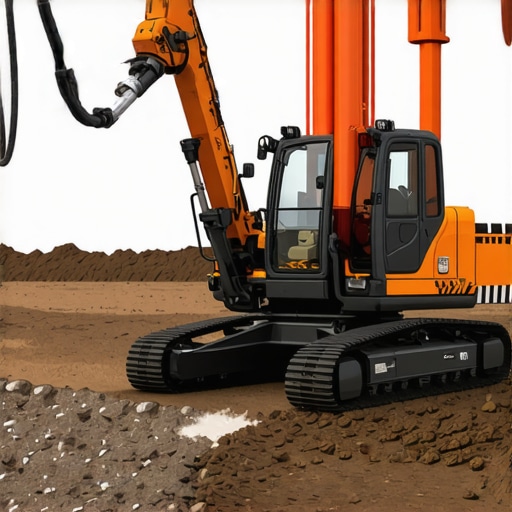 Despite the advancements in trenching technology, even seasoned professionals encounter complex challenges that can compromise safety, efficiency, and compliance. Recognizing these risks early and understanding common pitfalls are crucial for optimizing outcomes and avoiding costly delays or accidents. This section discusses the intricate details that often trip up even experienced crews, compares different approaches, and provides expert advice on troubleshooting critical issues.
One of the most prevalent mistakes is underestimating soil variability. Soil conditions can change dramatically over short distances, especially in urban or mixed environments. Relying solely on a single survey or outdated data can lead to soil collapse or utility strikes. For instance, loose or water-saturated soils may require additional shoring or different excavation techniques. Failing to adapt to these conditions often results in trench failure or worker injury. To mitigate this, conduct multiple surveys at different depths and times, and incorporate real-time monitoring tools.
Another common pitfall involves utility detection errors. Even with advanced electromagnetic locators and GPR, underground utilities can be missed or misidentified, especially in complex urban settings with multiple conduits and pipes. This can lead to utility strikes, service disruptions, or safety hazards. An effective strategy is to cross-verify utility maps with on-site detection and involve utility companies early in the planning process. Additionally, always maintain a safe buffer zone around detected utilities and use non-destructive excavation methods near critical lines.
Choosing between vacuum excavation and traditional trenching methods also requires nuanced decision-making. Vacuum excavation offers precision and safety, but it may be slower or less effective in certain soil types, such as very dense or rocky substrates. Conversely, traditional methods might be faster but pose higher safety risks and environmental impacts. A comprehensive assessment of soil and site conditions, coupled with a risk-benefit analysis, guides optimal method selection.
Addressing conflicts between different systems—like conflicting utility lines or incompatible equipment—can be complex. For example, a utility line may be unexpectedly encountered where the site plan indicated clear soil. To resolve such conflicts, employ adaptable trenching plans, flexible equipment setups, and real-time data sharing with all stakeholders. Regular communication and contingency planning are vital to avoid delays.
Safety standards and legal compliance are non-negotiable. Yet, errors in documentation or failure to adhere to evolving regulations can lead to legal liabilities or project shutdowns. Continuous staff training, rigorous documentation, and adherence to standards such as ISO 22475 and OSHA guidelines are essential. Regular audits and audits help ensure ongoing compliance and identify potential gaps.
In summary, mastering the intricacies of advanced trenching requires a vigilant approach to soil and utility assessment, methodical planning, and adaptive execution. Recognizing common mistakes and understanding the nuanced differences between methods empower professionals to mitigate risks effectively, ensuring safer, faster, and more compliant site preparation. As projects grow more complex, embracing technological innovations and continuous learning becomes indispensable for maintaining industry leadership.
Maximizing ROI with Strategic Investments
To ensure sustainable growth and operational efficiency, companies should evaluate the long-term value of trenching technologies. Investing in high-capacity vacuum excavation units and advanced utility detection tools can significantly reduce project durations and mitigate costly utility strikes, leading to a favorable return on investment (ROI). A comprehensive cost-benefit analysis, considering equipment durability, maintenance costs, and technological compatibility, helps justify capital expenditures and guides strategic procurement decisions.
Scaling Operations Through Maintenance and Upgrades
Maintaining peak equipment performance demands a proactive maintenance schedule that includes routine inspections, component replacements, and software updates. Establishing a dedicated maintenance team or partnering with OEM service providers ensures minimal downtime and prolongs equipment lifespan. Regular upgrades to software platforms and control systems facilitate compatibility with emerging technologies, supporting scalable operations as project sizes and complexities grow.
Leveraging Software and Data Analytics for Efficiency
Modern trenching projects benefit immensely from integrated software solutions such as CAD, GIS, and utility mapping platforms. These tools enable real-time data sharing, predictive maintenance, and project tracking, fostering a data-driven decision-making environment. Implementing centralized dashboards allows project managers to monitor equipment performance, soil conditions, and safety metrics, optimizing resource allocation and reducing operational costs.
Adopting Modular and Flexible Equipment Suites
Scalability is further enhanced through modular equipment configurations that can be tailored to specific project requirements. Hybrid systems combining hydrovac, vacuum excavation, and traditional trenching tools offer versatility, allowing crews to adapt rapidly to site conditions. Investing in multi-purpose machinery, with interchangeable attachments and controls, simplifies inventory management and accelerates project turnaround times.
Future-Proofing with Emerging Trends and Regulatory Changes
The industry is witnessing rapid advancements in autonomous excavation, AI-driven soil analysis, and IoT-enabled equipment monitoring. Staying ahead of these trends, along with anticipating regulatory changes related to environmental standards and worker safety, positions firms for long-term compliance and competitive advantage. Engaging in continuous training and strategic technology reviews ensures readiness for upcoming industry shifts.
Is Investing in Premium Trenching Solutions Worth It
While premium equipment and integrated software platforms involve higher upfront costs, the benefits in reduced project timelines, enhanced safety, and lower operational risks often outweigh initial investments. According to a recent market forecast[cite: 33], companies that adopt advanced trenching technologies can see a return on investment within 12-24 months, especially in high-demand urban environments. Conducting a strategic audit to align technology investments with long-term business objectives is recommended.
For industry leaders seeking to optimize their site preparation processes, a strategic review of current capabilities and future needs is essential. Partnering with technology providers for tailored solutions and comprehensive training ensures that trenching operations remain efficient, scalable, and compliant.
Technical Questions for Modern Trenching
How does real-time utility detection improve safety and accuracy in trenching projects?
Real-time utility detection using electromagnetic locators and GPR allows for continuous monitoring of underground utilities, reducing the risk of strikes and ensuring precise trench placement, which is critical for safety and compliance[cite: 17].
What are the key soil conditions that influence the choice between vacuum excavation and traditional trenching?
Soil types such as loose, water-saturated, or rocky conditions dictate the method; vacuum excavation excels in soil with minimal rock, while traditional methods may be necessary for dense or rocky substrates, with each requiring tailored safety protocols[cite: 17].
How can integrating software platforms optimize trenching workflows and data accuracy?
Utilizing CAD, GIS, and utility mapping software for real-time data sharing enhances precision, coordinates equipment, and streamlines documentation, leading to improved project efficiency and compliance[cite: 17].
What advanced safety measures should be adopted when using remote-controlled vacuum trucks?
Implementing strict remote operation protocols, hazard zones, and continuous monitoring ensures operator safety, especially in confined or hazardous environments, aligning with OSHA standards[cite: 17].
Industry Standards & References
- ISO 22475 for geotechnical investigations and utility detection, ensuring global consistency in safety and quality.
- OSHA regulations for trench safety, including shoring, sloping, and hazard communication, essential for legal and safety compliance.
- ASTM F2550-13 for utility detection accuracy, guiding survey practices and equipment calibration.
Strategic Focus on Long-Term Success
By adopting innovative trenching technologies like vacuum excavation and integrating advanced data management, industry professionals can significantly reduce project costs, enhance safety, and maintain regulatory compliance. These strategies lead to faster project completion, lower risk of utility damage, and improved resource allocation, ultimately maximizing return on investment. Implementing these protocols ensures your operations stay competitive and future-ready, encouraging ongoing training and technology upgrades. Seek expert consultation to tailor solutions that fit your specific project needs and stay ahead in this rapidly evolving industry.