
4 Torsion Settings to Stop Your Drill Bit From Snapping in Hard Rock
Optimizing Torsion Control to Enhance Borehole Drilling Reliability
In the realm of advanced underground excavation, particularly when confronting the formidable challenge of hard rock formations, the criticality of managing drill bit torsion cannot be overstated. Skilled professionals recognize that precise calibration of torsion settings directly correlates with operational efficiency and equipment longevity. As borehole specifications become increasingly demanding, understanding the nuanced application of torsion parameters becomes a vital component of expert drilling strategies.
Why Is Torsion Management Crucial in Hydrovac and Vacuum Excavation Tasks?
The execution of hydro-vacuum and vacuum excavation procedures involves delicate balancing acts. Excessive torsion during drilling not only risks catastrophic drill bit failure but also escalates non-productive time. Through meticulous torsion control, operators can minimize bit deflection, reduce drilling fluid frac-outs, and prevent premature wear. The interaction between soil composition, drilling parameters, and equipment resilience underscores the importance of dynamic torsion adjustments tailored to project-specific conditions.
Four Torsion Adjustment Tactics for Hard Rock Boreholes
Implementing the right torsion settings demands a synergistic approach combining real-time monitoring and pre-drilling analysis. The following tactics are informed by field data and reinforce best practices documented in recent industry white papers:
1. Fine-tune Torque Limits Based on Geological Feedback
By setting torque thresholds aligned with geological reports and in-situ conditions, operators can prevent sudden drill pipe stresses. This proactive adjustment supports sustained bit life and reduces the risk of snap failures.
2. Integrate Advanced Torque Sensors for Real-Time Feedback
Utilizing high-precision torque sensors enables immediate response to torque spikes, facilitating immediate torsion reductions when necessary. This technological edge allows for adaptive control in unpredictable formations.
3. Harmonize Rotation Speed with Torque Application
Adjusting RPMs in concert with torsion settings optimizes cutting efficiency and minimizes equipment strain. This holistic approach ensures that mechanical loads remain within safe operational ranges, especially when penetrating dense, abrasive substrates.
4. Leverage Soft-Start Techniques to Gradually Increase Torsion
Implementing staged torsion escalation prevents shock loading and mitigates drill pipe fatigue. Progressive torque application respects equipment limits and enhances borehole precision.
For comprehensive insights into torque management, refer to detailed strategies in this authoritative industry resource.
Can Customized Torsion Protocols Reduce the Incidence of Drill Bit Failures?
Absolutely. Tailored torsion management not only curtails immediate equipment damages but also contributes to ongoing operational safety and cost efficiency. Developing project-specific torsion protocols, informed by soil analysis and mechanical diagnostics, remains an essential aspect of expert borehole execution.
Engage with Industry Leaders to Advance Borehole Stability Techniques
Professionals are encouraged to contribute insights and refine torsion control methodologies, fostering a collaborative evolution in underground drilling practices. Explore more advanced tactics and share your field experiences through specialized forums and industry publications dedicated to hydrovac and trenching excellence.
Enhancing Soil Support Systems to Prevent Borehole Collapse
In contemporary hydrovac and trenching projects, especially with the evolving strict regulations set for 2026, ensuring borehole stability becomes more critical than ever. Proper soil support techniques not only mitigate the risk of collapse but also enhance overall operational efficiency, preventing costly delays and safety hazards. Implementing tailored soil stabilization methods, such as advanced casing designs and immediate grouting protocols, can significantly improve borehole resilience in challenging soil conditions.
Can Real-Time Soil Monitoring Revolutionize Borehole Maintenance?
Absolutely. Integrating high-precision sensors and adaptive monitoring systems allows operators to receive instant data on soil movement, pore pressure, and deformation. Such real-time insights enable proactive adjustments to support mechanisms, reducing unforeseen collapse incidents. Furthermore, recent innovations documented in industry sources like this expert resource highlight how real-time analytics foster a more agile, responsive approach to underground stability management.
What innovations in casing materials and installation techniques are shaping the future of borehole integrity?
Emerging materials such as high-strength composites and smart-casing technologies are redefining standards. These materials offer increased durability against corrosive soils and dynamic loading, while integrated sensors within casing walls provide ongoing integrity assessments. Adoption of modular casing systems can reduce installation times, minimize disruptions, and adapt more easily to variable soil profiles—crucial factors in adhering to the upcoming 2026 regulations that emphasize safety and environmental responsibility. To stay informed on best practices, consult industry updates and participate in specialized training programs focused on innovative borehole stabilization techniques.
Understanding the complexities of soil behavior and support systems is essential in navigating the challenges of modern hydrovac projects. For a comprehensive guide on recent advancements and practical implementation strategies, consider exploring our detailed articles or engaging with industry experts through professional forums.
Unleashing the Power of Adaptive Soil Stabilization in Challenging Environments
As underground excavation ventures dive deeper into complex terrains, the imperative for innovative soil support systems becomes more evident. Conventional methods often fall short when confronted with unpredictable soil behaviors, especially within compacted clays, loose sands, or rapidly varying moisture content. Cutting-edge stabilization techniques leverage advancements in materials science and real-time monitoring to preemptively address potential collapse scenarios, thereby safeguarding borehole integrity.
Embracing Smart Casing Technologies for Dynamic Soil Conditions
Recent developments have introduced smart casings embedded with sensors capable of transmitting continuous data on shear stress, deformation, and corrosion levels. These systems facilitate immediate responses to shifting soil dynamics, enabling operators to adjust support mechanisms proactively. Such integration of hardware and analytics exemplifies the shift towards intelligent borehole infrastructure, aligning with Industry 4.0 principles and regulatory mandates for enhanced safety standards.
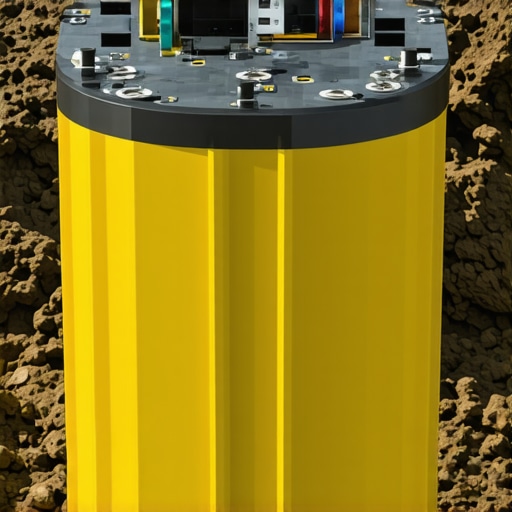
Visual representation of a high-strength smart casing with embedded sensors monitoring underground soil conditions in real time—illustrating the cutting-edge integration of materials and digital technology in borehole stabilization.
How Microcement Gels and Grout Innovations Are Transforming Support Protocols
Incorporating novel grout formulations and microcement gels opens new frontiers in soil stabilization, particularly within fractured rock or heterogeneous strata. These materials possess low viscosity, enabling deep infiltration into microvoids and fissures, creating a cohesive and resilient support matrix. When combined with controlled curing processes, they significantly reduce permeability and pore pressure build-up—key factors in preventing borehole collapse under dynamic loadings.
Moreover, their adaptability allows for tailored support solutions suited to specific project conditions, offering enhanced durability and environmental compatibility. Integrating these materials necessitates careful planning and precision application, often supported by robotic mixers and remote-controlled placement equipment, to ensure uniform coverage and optimal bonding within the geological matrix.
Why Precision in Soil Property Mapping Is a Game Changer
Advanced geophysical surveys employing 3D seismic reflection, resistivity imaging, and ground-penetrating radar now afford unprecedented resolution in soil property mapping. This level of detail enables engineers to develop highly accurate models of subsurface conditions, predicting zones of weakness or instability before drilling commences. Such foreknowledge becomes invaluable in customizing stabilization strategies, selecting appropriate materials, and designing support systems that respond precisely to the predicted stresses and deformation patterns.
As these technologies mature, integrating AI-driven data interpretation and machine learning algorithms enhances predictive accuracy, reducing the reliance on conservative estimates and enabling more resource-efficient installations. For practitioners committed to pioneering these innovations, continuous training and cross-disciplinary collaborations are vital to stay ahead in this rapidly evolving field.
Engagement and Continuous Education: Shaping the Future of Soil Stabilization
Ongoing dialogue among industry experts, researchers, and operational personnel fosters a culture of innovation—driving the development of next-generation stabilization techniques. Participating in specialized conferences, benchmarking with successful case studies, and contributing to knowledge-sharing platforms ensure that practitioners adopt best practices and adapt swiftly to regulatory changes and technological advancements. If you’re eager to deepen your expertise or share successful strategies from your projects, explore dedicated forums and subscribe to industry-specific journals. Collaborating now paves the way for safer, more resilient underground operations in the demanding landscapes of tomorrow.
Unlocking Precision Control for Borehole Integrity in Challenging Conditions
In the intricate realm of subterranean excavation, mastering the interplay between torsion management and soil stabilization techniques is vital for ensuring borehole longevity and operational safety. Recent technological breakthroughs have enabled drilling professionals to fine-tune torsion parameters with unprecedented accuracy, maximizing equipment lifespan while minimizing environmental impact. Innovative sensor integration and adaptive control algorithms permit real-time feedback loops, refining torque adjustments dynamically as geological conditions evolve. This synergy between hardware and software exemplifies the sophistication required to meet contemporary industry standards.
How Can Machine Learning Inform Soil Support Decisions in Complex Geologies?
Incorporating machine learning models with geophysical survey data enhances predictive capabilities concerning soil behavior and borehole stability. By analyzing vast datasets encompassing pore pressure, moisture content, and stress distributions, algorithms can forecast potential zones of collapse or deformation with high confidence. Such insights facilitate proactive support system deployment, optimize casing designs, and tailor grouting protocols, effectively reducing downtime and safety hazards. The integration of AI-driven analytics signifies a pivotal shift toward intelligent, adaptive subterranean management—empowering experts to preempt issues before they manifest physically.
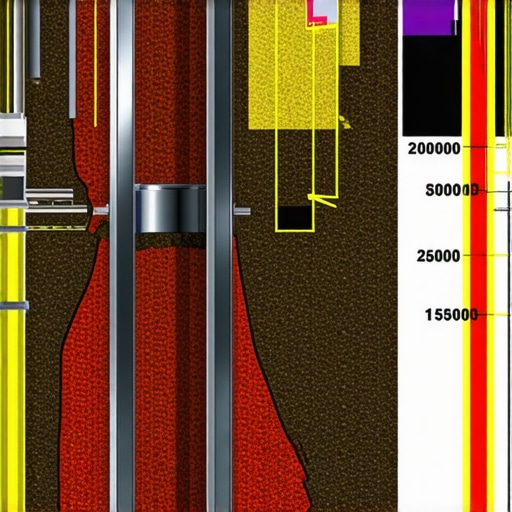
Futuristic underground monitoring station with AI interfaces analyzing soil and borehole data, illustrating the convergence of digital technology and geomechanics in modern drilling.
Are Emerging Composite Materials Reshaping Borehole Support Strategies?
Novel composite materials, including fiber-reinforced polymers and nano-enhanced grouts, are revolutionizing borehole reinforcement practices. These materials deliver superior strength-to-weight ratios, corrosion resistance, and adaptability to variable stress profiles. When strategically applied, they provide resilient barriers against shifting soil pressures and dynamic loadings, thereby reducing the frequency of support system failures. Carefully engineered bonding agents and curing protocols further enhance the integration of these composites within the subsurface environment, promising longer service lives and greater operational flexibility.
What Role Do High-Resolution Imaging Technologies Play in Soil Property Mapping?
Advanced imaging modalities such as 3D seismic reflection, electrical resistivity tomography, and borehole radar furnish high-fidelity subsurface models, revealing microstructural details vital for support system design. These detailed mappings enable practitioners to identify microvoids, fissures, and zones of weakness that traditional survey methods might overlook. Consequently, tailored stabilization measures—like targeted grouting and customized casing geometries—become standard, fostering safer drilling environments and reducing unforeseen failures. Embracing these imaging advancements ensures that project planning is grounded in precise, data-driven insights.
How Can Smart Casing Technologies Accelerate Response to Soil Dynamics?
Embedding sensors within casing materials allows real-time monitoring of parameters such as shear stress, deformation, and corrosion levels. These smart casings serve as an early warning system, alerting operators to subtle changes in soil behavior or material integrity. The immediate data transmission facilitates swift remedial actions—such as adjusting support tension or deploying supplementary stabilization—thus averting potential collapses or equipment damage. As a cornerstone of Industry 4.0 in underground engineering, smart casing technologies epitomize the move toward autonomous, responsive infrastructure that adapts proactively to subsurface conditions.
What Next-Generation Grouting Formulations Offer for Microfracture Sealing?
Emerging grout technologies, notably ultra-low viscosity nanogels and self-healing composites, provide excellent infiltration into microfractures and fissures. These materials create cohesive, impermeable barriers that enhance borehole stability against hydraulic fracturing and pore pressure fluctuations. The compatibility of these innovative grout formulations with eco-friendly, non-toxic components ensures compliance with stringent environmental standards expected of modern projects. Implementing such advanced sealing strategies demands precise mixing and curing protocols but rewards practitioners with substantially reduced maintenance needs and increased borehole resilience.
Achieving Clarity Through High-Resolution Geophysical Surveys
Employing cutting-edge geophysical tools like full waveform inversion and hyperspectral imaging allows for the accurate characterization of complex subsurface environments. These technologies offer granular details on soil heterogeneity, mineral composition, and stress pathways, enabling engineers to craft customized stabilization and support plans. Such precision reduces the uncertainty margin in project execution, enhances safety margins, and contributes to cost-effective operations. Continuous technological evolution in deep-earth imaging supports a future where borehole failures become increasingly rare, thanks to data-driven foresight.
Engage Innovators in Soil Stabilization for the Next Era of Undercover Engineering
Practitioners and researchers are on the cusp of pioneering breakthroughs that meld geomechanics with digital intelligence. Sharing field experiences, participating in cross-disciplinary collaborations, and investing in ongoing education are imperative to navigate this rapidly advancing landscape. By fostering a collaborative environment of innovation, industry professionals can shape resilient, efficient, and environmentally conscious underground infrastructure solutions—setting new benchmarks in borehole safety and performance. Stay active within professional networks and contribute to advancing this vital discipline.
Expert Insights & Advanced Considerations
Leverage Adaptive Monitoring for Dynamic Soil Conditions
Implementing real-time soil monitoring systems equipped with high-precision sensors allows operators to proactively respond to subsurface changes. By continuously assessing parameters such as pore pressure and deformation, teams can adjust support mechanisms swiftly, preventing collapses and extending borehole lifespan.
Prioritize Material Innovation for Long-Term Stability
The adoption of advanced composite casings and nano-enhanced grouts offers superior durability and resistance against corrosive or shifting soils. These materials, combined with smart integration, enable more resilient boreholes adaptable to evolving geological challenges.
Optimize Torque and Rotation in Sync with Geological Data
Synchronizing torsion and rotational speeds based on detailed geotechnical data reduces equipment stress and enhances drilling precision. This harmonized approach minimizes risks such as drill pipe failures while improving borehole quality.
Implement Modular Support Systems for Flexibility
Using modular, adaptable support frameworks facilitates quick adjustments in support configurations, accommodating variable soil strata and project demands. Such flexibility is crucial for meeting stringent regulatory standards and operational efficiency.
Integrate AI-Driven Data Analytics for Predictive Maintenance
Harnessing AI and machine learning algorithms to analyze vast amounts of geophysical and operational data enables predictive insights, allowing preemptive interventions and reducing downtime. This technological synergy elevates borehole management into a proactive discipline.
Curated Expert Resources
- Journal of Applied Geomechanics: Offers cutting-edge research on soil mechanics and borehole stability, serving as an invaluable resource for industry specialists.
- Industry White Papers on Novel Casing Materials: Provides in-depth analyses of high-strength composite and smart casing technologies, essential for modern borehole reinforcement.
- Geotechnical Monitoring Systems Catalog: A comprehensive guide to the latest sensors and monitoring solutions that support dynamic soil assessment.
- AI in Geotechnical Engineering Publications: Explores how artificial intelligence is transforming predictive diagnostics and maintenance strategies in underground drilling.
- Regulatory Standards for Soil Stabilization: Ensures adherence to evolving legal frameworks and environmental guidelines for borehole support practices.
From the Frontlines: Elevate Your Expertise
Mastering the art of borehole integrity necessitates a nuanced understanding of advanced monitoring, material science, and data analytics. Embracing these insights empowers professionals to move beyond reactive measures toward a paradigm of predictive and adaptive support. Dive deeper into these cutting-edge strategies, share your experiences with peers, and stay ahead of industry evolutions—because in this field, innovation is the key to enduring success.
About the Author
Noah Wight
Houston, Texas, United States
Noah Wight is a seasoned industry professional and consultant based in Houston, Texas, with over eight years of specialized experience in technical surveying and industrial consulting. As a primary contributor to hydrovacdrilling.com, Noah leverages his extensive background in offshore survey operations and freelance consultancy to provide authoritative insights into the world of non-destructive excavation. His career, highlighted by his long-standing tenure at DaigonLLC, has been defined by a commitment to precision, safety, and operational efficiency in complex environments. Throughout his professional journey in the Texas industrial sector, Noah has developed a deep understanding of the technical requirements and safety protocols essential for successful hydrovac operations. His expertise allows him to translate complex surveying data and excavation methodologies into actionable advice for contractors and project managers alike. Noah’s contributions help bridge the gap between high-level technical surveying and practical field applications. He is dedicated to advancing the standards of the hydrovac industry through education and professional advocacy. Noah is deeply passionate about sharing his technical knowledge to help others navigate the complexities of modern excavation and underground utility management safely.
LinkedIn Profile