5 Soil Stability Fixes to Stop Trench Slumping on 2026 Jobs
Mastering Soil Stability: The Cornerstone of Modern Borehole and Trenching Techniques
The transition to 2026 has intensified the necessity for advanced soil stabilization methods in borehole drilling and trenching, especially within urban environments. Experienced operators recognize that soil stability is more than a preliminary concern—it’s a dynamic challenge that dictates project safety, cost-efficiency, and regulatory compliance. Innovative soil testing protocols, such as real-time geotechnical logging, now inform immediate adjustments to drilling parameters, reducing the risk of trench slumping and borehole collapse.
Leveraging Hydrovac and Vacuum Excavation Technologies for Enhanced Soil Management
Hydrovac excavation has become indispensable for clean, precise utility exposure with minimal soil disturbance. The precision of hydrovac’s high-pressure water jets combined with vacuum systems allows for selective soil removal, mitigating the risk of inadvertent trench wall collapse. Such technology also facilitates targeted soil stabilization strategies, whereby soil amendments or reinforcements are precisely applied in situ, strengthening the trench envelope and ensuring long-term stability.
Integrating Soil Mechanics Insights into Trenching and Borehole Design
Understanding the complex interplay of soil types—clay, silt, sand, and rock—is fundamental to effective ground support. Deploying advanced soil stability solutions involves detailed geotechnical analysis and real-time monitoring to adapt to changing conditions. For instance, in sandy or highly saturated terrains, implementing chemical grouting or mechanical soil stabilization can dramatically reduce collapse risks. Expert practitioners are increasingly utilizing field data, such as shear strength and cohesion metrics, to tailor their approach for each specific site, thereby optimizing safety margins and project timelines.
What Are the Latest Innovations in Soil Stabilization for Urban Utility Projects?
Emerging trends include the use of biodegradable soil stabilizers and smart monitoring sensors that provide ongoing feedback on soil integrity throughout construction phases. These innovations enable proactive interventions before instabilities manifest into hazards, aligning with stricter safety standards and environmental considerations. Accessing comprehensive guides, like the recent [soil testing fixes for 2026 foundation stability](https://hydrovacdrilling.com/5-borehole-soil-testing-fixes-for-2026-foundation-stability), can elevate project planning and execution capabilities.
Optimizing Trenching Practices to Minimize Ground Disturbance and Erosion
Effective drainage and slope management are critical when working in rain-prone or water-saturated soils during extensive trenching projects. Implementing sediment control measures and innovative slope reinforcement techniques prevents washouts and erosion, ensuring trench wall integrity. The masterful integration of drainage fixes and soil geotechnical strategies reduces project delays associated with soil instability, ultimately safeguarding utility lines and urban infrastructure.
How Can Soil Stabilization Methods Be Tailored for Complex Urban Environments with Variable Soil Conditions?
This question has spurred ongoing research into adaptive soil stability tactics, merging geotechnical modeling with real-time environmental data. Engaging with these innovative approaches unlocks new efficiencies and safety assurances in high-density project zones. To deepen your understanding, explore our detailed guide on [soil stability fixes for 2026 projects](https://hydrovacdrilling.com/4-soil-stability-tactics-to-stop-2026-borehole-collapses).
Enhancing soil stability and safety requires a layered approach combining advanced technologies, precise geotechnical knowledge, and proactive monitoring. For continued insights into how these developments can optimize your trenching and borehole initiatives, stay connected with industry-leading resources and share your practical experiences with peers in the field.
Push the Boundaries of Soil Reinforcement in Challenging Urban Terrains
Urban environments present unique soil stabilization challenges, driven by a mosaic of soil types, groundwater fluctuations, and existing infrastructure. Traditional methods often fall short in such complex settings, prompting the adoption of cutting-edge techniques like chemical grouting with environmentally friendly formulations or the integration of nano-engineered soil modifiers. These innovative approaches not only enhance soil cohesion but also minimize ecological impact, aligning with sustainability goals for 2026 and beyond.
Harnessing Smart Monitoring for Dynamic Soil Stability Oversight
Emerging sensor technologies enable real-time monitoring of soil parameters such as moisture content, shear strength, and displacement. Wireless sensor networks can alert operators to early signs of instability, facilitating immediate, targeted interventions—such as adjusting auger torque or modifying slurry composition. For instance, deploying fiber optic strain gauges within trenches offers continuous feedback, effectively preventing unexpected collapses or utility damages. As highlighted in recent geotechnical innovations, integrating these systems substantially improves safety margins and project efficiency (see more on borehole mud tweaks).
Can Adaptive Soil Stabilization Evolve to Meet the Demands of Next-Generation Urban Developments?
This question captures the evolving landscape of geotechnical engineering, emphasizing the necessity for flexible, technology-driven solutions capable of responding to dynamic subsurface conditions. Adaptive stabilization strategies leverage data analytics, machine learning, and localized environmental inputs to refine treatment protocols rapidly. For example, predictive models can recommend optimal grouting densities or soil amendments based on real-time data streams, thereby increasing construction resilience against unforeseen soil behaviors.
For a comprehensive overview of future-proof stabilization techniques, consider reviewing industry benchmarks and innovative methodologies outlined in our guide on soil stability tactics.
If your projects involve complex terrain, sharing your experiences and insights can foster collaborative advancements—join discussions in online forums, or participate in webinars focusing on the latest geotechnical innovations for 2026 and beyond.
Adaptive Ground Support Solutions for Urban Challenges
As urban environments grow increasingly complex, traditional soil stabilization methods often struggle to keep pace with evolving subsurface conditions. Cutting-edge solutions incorporating nano-engineered soil modifiers are now paving the way for unprecedented ground support resilience. These advanced materials—designed at the molecular level—enhance soil cohesion, reduce permeability, and improve load-bearing capacity, all while minimizing environmental impact. Implementing such technologies requires a nuanced understanding of geotechnical interactions, but their transformative potential justifies the investment for projects demanding elevated safety and sustainability standards.
Decoding the Nuances of Groundwater Influence on Stabilization Efforts
Groundwater plays a pivotal role in dictating the success of soil stabilization techniques, especially in saturated or fluctuating water table scenarios. High groundwater levels can undermine chemical grouting efficacy or weaken soil reinforcement measures. To address this, engineers deploy composite barriers, such as bentonite mud caps combined with dewatering systems, to control hydrological variables proactively. Mastery over groundwater management allows for precise calibration of stabilization protocols, reducing risks of trench or borehole failure even amidst complex hydrogeological settings.
What Are the Latest Developments in Eco-Friendly Soil Stabilization Materials for Urban Use?
Recent advancements highlight biodegradable polymers and plant-based binders that meet both technical performance and environmental sustainability requirements. These materials withstand demanding construction conditions while breaking down harmlessly after project completion, minimizing long-term ecological footprints. Manufacturers are also integrating smart additives that respond to moisture and pH changes, dynamically adjusting their stabilizing properties. Such innovations are pivotal in aligning urban infrastructure development with ecological stewardship, as documented in the comprehensive review by the International Society for Soil Mechanics and Geotechnical Engineering (ISSMGE, 2023). To explore these developments further, consult specialized publications and industry case studies highlighting successful eco-friendly implementations.
Engage with our platform to access detailed technical resources, emerging research, and expert discussions on sustainable soil stabilization beyond traditional methods.
Integrating Data-Driven Modeling to Preempt Soil Instability
The advent of sophisticated geotechnical modeling software enables predictive analysis that anticipates potential failure zones before physical work begins. By inputting localized soil data, groundwater metrics, and historical project parameters, models produce probabilistic risk assessments and optimal reinforcement strategies. This proactive approach not only expedites decision-making but also enhances safety margins significantly. The use of machine learning algorithms to refine these models based on continuous field feedback exemplifies a leap toward truly adaptive stabilization strategies. Such integration of data analytics is revolutionizing soil management practices for high-stakes urban projects.
How Can Real-Time Monitoring Algorithms Be Customized for Unique Site Conditions?
This is a critical question as it touches upon the personalization of sensor systems and algorithms to match specific geotechnical profiles. Tailoring these tools involves calibrating thresholds, response algorithms, and alert parameters based on detailed site assessments. For instance, variable soil compositions may require different displacement, moisture, or shear stress thresholds to trigger alerts. Combining these customized systems with mobile GIS platforms allows engineers to visualize data spatially and temporally, enabling rapid targeted interventions. As digital geotechnics advances, developing user-friendly, flexible monitoring solutions remains a high priority—discover more about emerging tools in recent industry symposiums.
For practitioners eager to integrate these innovations into their workflows, participating in specialized training or collaborative research initiatives can be highly beneficial. Staying ahead demands continuous learning and adaptation to the latest geotechnical breakthroughs.
Advancing Geotechnical Approaches for Complex Urban Subsoils
Effectively managing diverse soil compositions in dense urban environments has become a critical focus, demanding an interdisciplinary understanding of geotechnical engineering and environmental science. Deploying techniques such as nano-engineered soil additives allows for the precise modification of subsurface properties, enhancing cohesion, reducing permeability, and mitigating risks associated with saturated or heterogeneous soils. Integrating these technologies with real-time in situ testing ensures adaptive stabilization tailored to unique subsoil behaviors, thus minimizing ground movement and structural risks during trenching and borehole operations.
Unlocking the Power of Predictive Analytics in Soil Stability Management
Emerging data-driven models leverage machine learning algorithms to analyze vast datasets on soil behavior under varying environmental conditions. By integrating geotechnical logs, groundwater flow metrics, and historical project outcomes, these models forecast potential instability zones with high accuracy. Such predictive analytics enable proactive decision-making, optimizing soil stabilization protocols before issues manifest. For professionals aiming to elevate project safety and efficiency, embracing these intelligent tools represents a transformative step toward precision-groundwork execution.
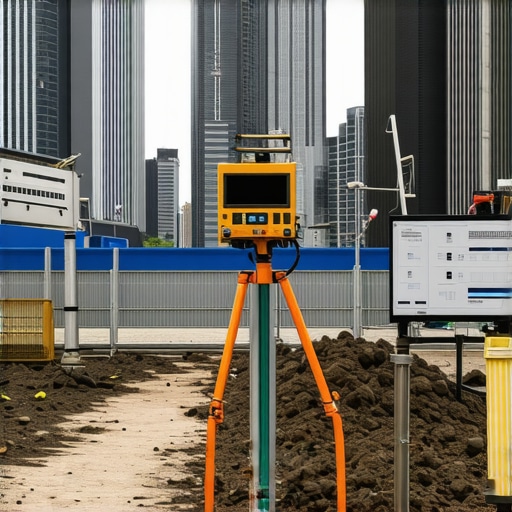
Illustration of a geotechnical predictive analytics system visualizing subsurface stability risks in urban trenching projects.
Can Smart Monitoring Revolutionize Soil Support Systems in Complex Ground Conditions?
Innovative sensor technologies, including fiber optic strain gauges and wireless moisture sensors, facilitate continuous oversight of subsurface conditions. When integrated with centralized monitoring platforms, these sensors deliver real-time feedback on parameters such as deformation, pore water pressure, and soil cohesion. This instant data empowers operators to adjust soil reinforcement methods dynamically, such as timely application of grouting or reinforcement panels, effectively preventing collapse incidents. The strategic deployment of smart monitoring systems in challenging terrains enhances resilience and contributes to sustainable urban development.
What Role Will Adaptive Soil Reinforcement Play in Future Urban Infrastructure Projects?
Adaptive reinforcement strategies—combining responsive materials with environmental sensing—are set to redefine ground support paradigms. These systems dynamically respond to soil movements and moisture variations, maintaining stability throughout construction and even post-completion. Integration of these technologies with autonomous control systems could enable immediate reinforcement adjustments, reducing labor costs and downtime. Insights from the latest trials published by the European Geotechnical Society demonstrate the efficacy of such responsive solutions in mitigating risks intrinsic to unstable urban soils.
Engaging with cutting-edge research and pilot implementations will be vital for industry leaders aiming to set new standards in ground safety and sustainability. Collaborate with geotechnical innovators to pioneer these transformative approaches in your upcoming projects.
Expert Insights & Advanced Considerations
Embrace Adaptive Stabilization Techniques
Modern projects demand flexible soil stabilization solutions that respond swiftly to changing ground conditions. Incorporating real-time data analytics and smart monitoring allows engineers to adjust reinforcement methods proactively, minimizing risks and ensuring safety.
Prioritize Environmental Sustainability
Sustainable soil management practices, such as biodegradable stabilizers and eco-friendly grouting materials, are gaining prominence. They reduce ecological impact while maintaining ground support integrity, aligning with the goals of green urban development.
Leverage Integration of Technology and Ground Knowledge
Combining advanced geotechnical modeling with sensor networks enables a comprehensive understanding of subsurface dynamics. This integrated approach facilitates precise intervention planning, reducing project delays and unforeseen failures.
Optimize Trenching in Variable Soil Conditions
Adaptive trenching strategies, including tailored drainage and slope management, help mitigate erosion and collapse in complex terrains. Utilizing soil-specific reinforcement enhances trench stability and project resilience.
Innovate with Nano-Engineered Soil Additives
Emerging nano-technology enhances soil cohesion at a molecular level, offering superior support in challenging urban terrains. These materials provide durable stabilization while minimizing environmental footprints.
Curated Expert Resources
- Geotechnical Engineering Journal: Offers cutting-edge research on soil stabilization methods and case studies demonstrating innovative ground support solutions.
- International Society for Soil Mechanics and Geotechnical Engineering (ISSMGE): Provides guidelines, standards, and publications on sustainable and adaptive soil stabilization technologies.
- Smart Geotechnical Monitoring Systems: Industry reports and case studies on integrating sensor networks and data analytics in ground stability management.
- Eco-Friendly Construction Materials Bulletin: Details advancements in biodegradable stabilizers and environmentally responsible geotechnical materials.
- Urban Trenching Techniques Handbook: Practical guidance on managing complex urban soils and minimizing ground disturbance during excavation.
Final Perspective from the Geotechnical Field
Advancements in soil stability for borehole and trenching operations hinge on innovative, adaptive approaches that marry technology with ground science. For those committed to excellence, embracing real-time monitoring, sustainable materials, and precision modeling is essential to navigating the complexities of modern urban soils. Professionals eager to elevate their expertise should explore authoritative resources like the soil stability tactics guide to stay at the forefront of this dynamic field. Your insights and experiences are invaluable—share your strategies and join the conversation shaping the future of geotechnical engineering.