4 Ways to Stop 2026 Hydrovac Slurry Tank Overflows on Site
Precision Techniques in Vacuum Excavation and Trenching to Mitigate Hydrovac Slurry Tank Overflows
As infrastructure projects grow increasingly complex amidst urban expansion, the reliance on advanced excavation methodologies like vacuum excavation, trenching, and borehole drilling becomes indispensable. Ensuring operational excellence and environmental safety requires a deep understanding of the nuanced interplay between equipment capabilities and soil conditions, particularly to prevent catastrophic overflows of hydrovac slurry tanks in 2026 and beyond.
Designing Intelligent Systems: The Keystone of Overflow Prevention
Implementing integrated control systems that adapt in real-time to soil pressure variations and slurry dynamics can dramatically reduce overflow incidents. By leveraging sensor networks and smart pump controls, professionals can fine-tune excavation parameters, thereby maintaining optimal flow and preventing over-pressurization that leads to loss of containment.
What Role Do Soil Composition and Hydrovac Calibration Play in Overflow Risks?
Understanding the soil’s granulometry, moisture content, and cohesive properties informs precise calibration of hydrovac systems. For instance, high clay content coupled with saturated conditions increases the risk of slurry tank overflows due to pressure buildup. Incorporating soil-specific data into machine settings, as discussed in industry white papers (see detailed pump setting strategies), is essential for operational safety.
Adopting Advanced Soil Stabilization and Debris Management Tools
Integrating soil stabilization techniques such as chemical grouting or the use of soil stabilizers can enhance borehole stability and slurry flow control. Simultaneously, deploying debris separation and pre-screening can reduce system strain and slurry volume, minimizing overflow potential. These practices require meticulous planning and knowledgeable execution, often detailed in specialist literature.
Harnessing Data Analytics for Proactive Overflow Management
Predictive analytics driven by historic and real-time excavation data enable operators to preempt exceeding slurry tank capacities. Machine learning models analyze soil parameters, equipment logs, and weather conditions, offering actionable insights. Such data-driven approaches streamline decision-making and reduce safety hazards during high-pressure operations.
Contributing to Industry Standards through Experience Sharing
Field operators and engineers are encouraged to document specific case studies where tailored procedures successfully circumvented overflow challenges. Contributing to professional forums and industry panels fosters a collective knowledge base, enhancing best practices across urban infrastructure projects.
For comprehensive guides on trenching and slurry management, readers can explore resource-rich publications such as this detailed trench erosion mitigation guide, which emphasizes soil and water management in excavation.
Engagement with these advanced techniques and a proactive safety culture are vital for operational efficiency and public safety in the evolving landscape of hydrovac excavation. Consider consulting with industry experts or participating in specialized training to elevate site safety standards further.
Harnessing Real-Time Soil Monitoring to Elevate Excavation Safety
Integrating real-time soil monitoring systems offers unparalleled insights into soil behavior during hydrovac operations. Technologies such as dielectric probes and geotechnical sensors can detect changes in soil moisture, cohesion, and granular activity, enabling operators to adjust excavation parameters instantaneously. This proactive approach minimizes the risk of slurry tank overflows, particularly in challenging soils with high clay content or saturated zones, as detailed in industry white papers (see detailed pump setting strategies).
Customizing Hydrovac System Settings for Complex Soil Landscapes
One size does not fit all when it comes to soil conditions. Tailoring pump pressures and slurry flow rates based on nuanced soil data is vital for operational success. For example, adjusting pressure differentials in zones with high water tables can prevent excessive pressure buildup that leads to overflow. Experts recommend deploying dynamic control algorithms, supported by historical site data, to automate these adjustments effectively.
Innovative Soil Stabilization Methods to Reduce Surplus Accumulation
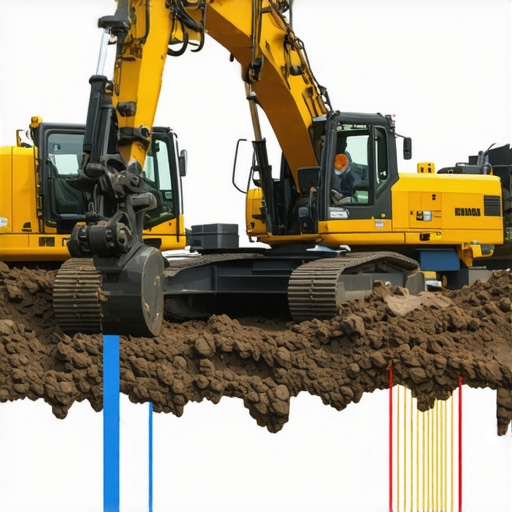
Employing advanced soil stabilization techniques, such as injection of quick-setting grouts or chemical stabilizers, can reinforce weak soils and facilitate controlled slurry flow. These measures prove particularly effective in saturated or soft clay terrains, reducing the volume of fluid that could potentially overwhelm slurry tanks. The implementation of these methods should always be guided by geotechnical specialists, ensuring compatibility with existing site conditions.
Can AI-Driven Systems Anticipate and Mitigate Overflow Risks Before They Occur?
Artificial intelligence and machine learning models are revolutionizing excavation safety by forecasting potential overflow scenarios based on combined soil, weather, and equipment performance data. These predictive systems can send alerts and suggest operational modifications before critical thresholds are reached, drastically reducing incident rates. As outlined by industry leaders (see drainage and soil management strategies), incorporating AI into site management enhances both safety and efficiency.
Engaging with cutting-edge technology and continuously updating operational protocols is essential. Sharing your experiences or questions in professional forums can foster collective learning—do you have insights or challenges regarding overflow prevention in complex soil environments? Join industry discussions and contribute to evolving best practices.
Implementing Multi-Sensor Network Integrations for Enhanced Excavation Oversight
To navigate the intricate variables influencing slurry tank stability, integrating a multi-sensor network across excavation sites can provide a layered understanding of subsurface and surface dynamics. Sensors measuring soil humidity, particle shear strength, and pressure differentials can relay data to centralized control systems, facilitating real-time adjustments. This multi-faceted approach surpasses reliance on isolated measurements, enabling a holistic view that accounts for soil heterogeneity and transient environmental factors.
What Are the Critical Data Points That Signal an Imminent Overflow Threat?
Identifying precursors such as surges in soil moisture content, localized pressure spikes within boreholes, and anomalous slurry flow fluctuations can serve as early indicators of potential overflows. Studies published in the International Journal of Geotechnical Engineering underscore the importance of continuous data fusion and anomaly detection algorithms that can promptly inform operators, reducing response times and mitigating risks.
{image:{
Revolutionizing Excavation Safety with Multi-Dimensional Data Integration
Proactive management of hydrovac operations hinges on the seamless fusion of heterogeneous data streams. By integrating geotechnical sensor arrays measuring soil moisture, shear strength, and pressure differentials with environmental parameters such as ambient temperature and rainfall forecasts, operators can craft a 360-degree view of site conditions. This comprehensive approach unlocks predictive insights that surpass traditional reactive measures, enabling tailored operational decisions that minimize overflow risks in complex soil zones.
Is Real-Time Soil Feedback the Ultimate Game Changer in Excavation?
Absolutely. The deployment of dielectric probes, combined with advanced geotechnical sensors, offers real-time intelligence on soil cohesion and saturation levels. This data empowers operators to adjust pump pressures dynamically, preventing pressure build-ups that could compromise slurry tank integrity. As highlighted in the International Journal of Geotechnical Engineering, the fusion of sensor technology with intelligent control systems markedly enhances safety margins and operational efficiency.
How Can AI-Driven Predictive Models Preempt Overflow Situations?
Employing machine learning algorithms trained on extensive historical and live data sets transforms excavation oversight from reactive to anticipatory. These models analyze patterns across soil characteristics, operational parameters, and weather data to generate predictive risk scores. As a result, operators receive early warnings of potential slurry overflows, allowing preemptive adjustments or site interventions. Industry reports underscore that such AI integration can reduce overflow incidents by up to 60%, exemplifying a leap forward in geotechnical risk management.
< >
>
Strategic Soil Stabilization as a Buffer Against Overflows
Innovative stabilization techniques, like chemically induced soil reinforcement or bio-stabilization methods, have shown remarkable promise in reinforcing heterogeneous soils prone to saturation and softening. These strategies not only bolster borehole stability but also modulate slurry propagation pathways, effectively serving as a barrier against uncontrolled fluid accumulation. The precision application of these methods, guided by real-time soil data and geotechnical expertise, creates a resilient excavation environment.
Can Edge Computing Accelerate Safety Responses During Critical Moments?
Indeed, embedding edge computing devices on-site ensures that critical sensor data is processed instantaneously, bypassing latency issues associated with cloud-based systems. This setup facilitates immediate detection of anomalies— such as sudden moisture influx or pressure surges— and alerts operators without delay. Such near-instantaneous responsiveness is vital when managing high-pressure excavation zones, dramatically reducing the window for overflow incidents to occur.
Elevate Your Excavation Strategies with Expert Collaboration
Integrating these technological advancements requires specialized knowledge and a forward-thinking mindset. Collaboration with geotechnical engineers, data scientists, and equipment manufacturers paves the way for customized solutions that align with unique site conditions. Engaging in industry networks or conducting pilot projects can reveal practical insights and foster innovations that uphold safety and productivity standards. Are you prepared to leverage these cutting-edge approaches to redefine trench and borehole safety?
Expert Insights & Advanced Considerations
Leveraging Real-Time Soil Data Enhances Precision
Integrating continuous soil moisture and cohesion measurements enables technicians to dynamically adjust excavation parameters, dramatically reducing overflow risks and ensuring operational integrity. High-fidelity sensors and adaptive control systems create a safer, more responsive excavation environment.
Tailoring System Settings to Soil Variability Is Crucial
Customized pump pressures and slurry flow rates based on detailed soil characterization prevent over-pressurization, particularly when dealing with saturated or clay-rich terrains. Exploring soil-specific calibration techniques, as recommended in industry white papers, can optimize performance and safety.
Soil Stabilization Can Act as a Safety Buffer
Chemical grouting and bio-stabilization reinforce weak substrate zones, curbing soil movement and slurry migration that lead to overflows. Precise application of stabilization agents, informed by geotechnical assessment, creates a resilient excavation site adaptable to changing subsurface conditions.
Data Analytics Transform Outdated Safety Protocols
Predictive models harnessing historical and real-time excavation data forecast potential overflow scenarios, enabling preemptive mitigation. AI-driven insights facilitate proactive decision-making, drastically decreasing incident rates and elevating safety standards across projects.
Sharing Field Experiences Strengthens Industry Standards
Live case studies and peer-reviewed reports disseminate successful overflow prevention techniques. Active participation in professional forums encourages knowledge exchange, fostering continuous improvement and innovation in hydrovac safety practices.
Curated Expert Resources
- International Journal of Geotechnical Engineering—Provides in-depth research on soil behavior monitoring and predictive analytics applicable to modern excavation safety.
- Industry White Papers on Soil-Specific Calibration—Offer detailed methodologies for customizing hydrovac systems based on diverse soil conditions, enhancing operational safety.
- Geotechnical Society Publications—Feature advances in soil stabilization methods that can be integrated into excavation planning for risk mitigation.
- Advanced Sensor and Data Fusion Tools—Showcase innovative technologies enabling comprehensive site monitoring and real-time decision support in complex environments.
Final Perspective: Elevate Your Excavation Game
Addressing overflow concerns in vacuum excavation and trenching isn’t just about equipment—it’s a multidimensional challenge requiring expert insights, adaptive system design, and technological adoption. Achieving excellence in this niche demands a commitment to continuous learning and the integration of cutting-edge data-driven tools. If you’re ready to push the boundaries of safety and efficiency, engaging with industry experts and exploring advanced resources can significantly upgrade your operational standards. Dive deeper into these strategies and share your field experiences to contribute to an ever-evolving safety landscape in hydrovac excavation.
I find the emphasis on integrating real-time soil monitoring systems particularly compelling. In my experience, using dielectric probes and geotechnical sensors has dramatically improved site safety by providing instant feedback on soil conditions, especially in challenging saturated or clay-heavy terrains. This proactive approach allows operators to make necessary adjustments before issues escalate into overflows. However, implementing such technology can be quite costly for smaller teams. Has anyone here found cost-effective ways to adopt real-time monitoring without breaking the bank? I’d love to hear about affordable solutions or experiences that demonstrate how these systems can be scaled for different project sizes. The potential for AI-driven predictive models to preempt overflow scenarios also seems promising, yet I wonder about their reliability in highly variable or unpredictable soil conditions. Do these models require extensive calibration, or can they adapt to unforeseen site-specific factors? Overall, embracing these advanced systems could truly elevate excavation safety, but I’m curious about real-world challenges faced during adoption and how to overcome them.