7 Hydrovac Hacks to Protect Sensitive Utilities on 2026 Jobs
Your Expert Guide to Safeguarding Utilities During Hydrovac and Trenching Operations
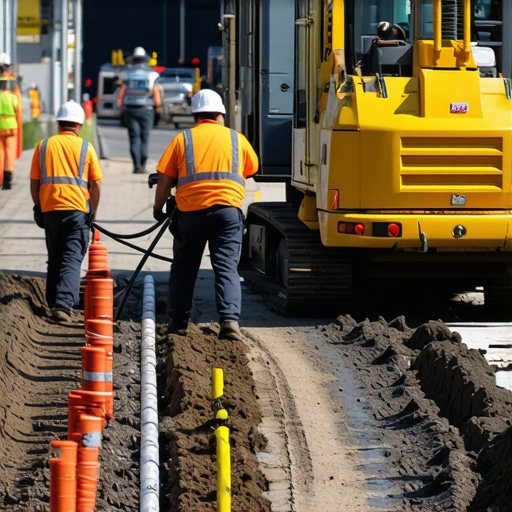
In complex construction and infrastructure development, precision and safety take precedence, especially when working near delicate underground utilities. As the industry evolves towards more sophisticated excavation methods like vacuum excavation and borehole drilling, understanding how to protect critical subsurface assets becomes not just a safety protocol but a project imperative. This article explores the latest technical strategies, emerging innovations, and expert insights into utilizing hydrovac and trenching techniques for optimal utility preservation in 2026 projects.
Harnessing Technological Nuance for Enhanced Utility Detection
Modern utility mapping in trenchless environments leverages advanced borehole drilling techniques to improve accuracy and reduce incidental damage. The integration of real-time sensor data during vacuum excavation allows operators to visualize utility locations with unprecedented clarity, minimizing unintentional strikes. These innovations exemplify how field-tested specialized soil analysis and geophysical detection contribute to critical decision-making, ensuring safety and compliance.
Refining Trenching Strategies for Saturated and Unstable Soils
Saturated soils pose unique challenges, making traditional trenching approaches inadequate. Experts recommend adopting trenching fixes tailored for saturated terrain, including soil stabilization techniques and controlled excavation sequencing. Employing hydrovac systems with adjustable pressure settings enables precise excavation while protecting existing utilities from collapse or damage, which aligns with safety-first project philosophies.
Is Vacuum Excavation the Key to Cutting Costs and Reducing Risks?
What role does vacuum excavation play in mitigating underground utility damages compared to traditional methods?
Vacuum excavation offers a high-precision, non-destructive alternative to conventional digging, significantly reducing the risk of utility strikes and associated costs. Its capability to swiftly expose utilities while maintaining soil stability is particularly valuable in crowded urban environments and fragile landscapes. Recent industry reports from the White Paper on Safe Subsurface Work emphasize that vacuum excavation can decrease utility damage incidents by up to 80% when properly integrated with advanced detection techniques.
As projects progress towards greater safety and efficiency, embracing vacuum excavation not only curtails costly repairs but also streamlines project timelines. For detailed methodologies, consult the comprehensive guide on safe underground work.
Innovating Soil Stabilization to Prevent Borehole Collapse
Soil stability remains a foundational concern in borehole and trench excavation, especially on coastal or water-saturated sites. Advanced soil stabilization strategies such as chemical grouting, geo-textiles, and dynamic compaction are now routinely employed to preempt collapse risks. When paired with precision-guided borehole drilling, these techniques significantly improve subsurface stability, expanding the scope of feasible excavation operations.
Leveraging Field Data to Anticipate and Mitigate Future Risks
Predictive analytics and soil behavior modeling are revolutionizing how operators forecast potential issues like utility conflicts or soil instability. Integrating high-resolution data from borehole-vacuum excavation technologies allows for dynamic risk assessment and adaptive decision-making during excavation, aligning with strict safety protocols.
How Can Site Managers Incorporate Emerging Tech for Next-Level Utility Safety?
Site managers should prioritize ongoing training in latest vacuum excavation strategies and foster collaboration with geotechnical experts to stay ahead of soil and utility detection challenges. Furthermore, engaging with industry safety standards organizations helps integrate best practices and technological innovations into everyday site operations.
For further insights into expert protective measures, explore the latest research at the National Institute for Construction Safety Standards. Consistent innovation and adherence to rigorous safety protocols are paramount in advancing the field of underground utility protection.
Interested in contributing your expertise or sharing case studies? Connect with industry peers through professional forums dedicated to underground infrastructure safety.
Are we truly maximizing the potential of emerging geophysical detection methods?
Recent advancements in utility detection technologies have revolutionized underground mapping, drastically reducing the risk of utility strikes. Incorporating methods like ground-penetrating radar and electromagnetic surveys into hydrovac operations not only enhances accuracy but also offers deeper insights into subsurface conditions. These innovations, supported by industry-leading research, demonstrate that leveraging multi-sensor approaches leads to superior safety outcomes and project efficiency. As such, integrating innovative geophysical detection now becomes essential for comprehensive utility mapping in complex urban environments.
Prioritizing Soil Reinforcement to Prevent Subsidence and Collapses
Preserving structural integrity during excavation hinges on proactive soil stabilization. Especially in sites with uncertain soil conditions, experts advocate for the implementation of chemical grouting, such as jet grouting or permeability-modifying agents, to reinforce vulnerable strata. These techniques, detailed in the comprehensive guide on soil stabilization strategies, provide critical support that prevents subsidence and collapse risks. When combined with precise borehole drilling, they expand the operational safety margins, safeguarding both personnel and infrastructure. Moreover, employing real-time soil behavior monitoring during excavation allows adjustments on the fly, ensuring optimal soil reinforcement throughout project phases.
How can predictive modeling reshape our approach to underground risk management?
Advances in soil behavior modeling enable site managers to anticipate subsidence and collapse events before they occur. By integrating high-resolution data and machine learning algorithms, predictive analytics facilitate proactive decision-making, resulting in safer, more reliable excavation workflows. These tools can identify potential weak zones within the subsurface, allowing targeted interventions that reduce delays and costs associated with unforeseen ground failures. Embracing such predictive frameworks moves the industry toward a future where risk mitigation is both precise and anticipatory.
For detailed strategies on elevating underground safety standards, consider reviewing the latest standards published by leading safety authorities and industry experts.
If you’re interested in applying cutting-edge risk assessment tools or sharing innovative practices, join professional forums focusing on underground infrastructure management and safety.
Revolutionizing Utility Mapping with Multi-Sensor Fusion Techniques
Integrating diverse geophysical detection methods, such as ground-penetrating radar, electromagnetic inductance, and acoustic sensors, enables a comprehensive subsurface profile that surpasses the capabilities of any single technology. This multi-sensor fusion approach facilitates the identification of utility pathways with unmatched precision, reducing false positives and enhancing operational confidence. Advanced algorithms employ data fusion to reconcile discrepancies across sensor outputs, providing a unified, high-resolution map that guides excavation activities.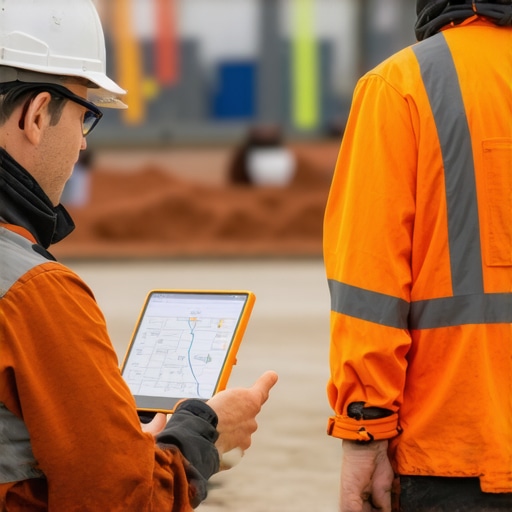
Implementing Dynamic Soil Response Models for Real-Time Risk Management
Traditional soil assessments often rely on static parameters, which can inadequately reflect the evolving conditions during excavation. Emerging dynamic soil response models incorporate real-time sensor data—such as pore water pressure, strain gauges, and shear stress measurements—to predict soil behavior under various loading scenarios. These models leverage machine learning to adapt forecasts dynamically, allowing excavation teams to modify procedures proactively. For instance, if a sudden increase in pore pressure signals potential instability, the system recommends immediate adjustments to pressure settings or excavation rates, thereby avoiding costly collapses or utility damages.
Can AI-Driven Predictive Analytics Preempt Utility Conflicts More Effectively?
Artificial intelligence platforms utilizing vast datasets from geotechnical surveys, historical project records, and real-time sensor inputs have demonstrated the potential to forecast utility conflicts with high accuracy. Machine learning models analyze parameters such as soil composition, utility installation history, and subsurface anomalies to identify high-risk zones before excavation commences. This proactive approach streamlines planning and resource allocation, while also minimizing unforeseen utility strikes. Leading industry projects now incorporate AI-driven predictive dashboards as standard planning tools, exemplifying a shift toward data-informed decision-making.
As the technology matures, integrating remote monitoring and automated alerts will further enhance field responsiveness, ensuring underground safety is maintained at the highest level.
Enhancing Soil Reinforcement with Nano-Engineered Materials
Innovative soil stabilization techniques are embracing nanotechnology to improve mechanical strength and permeability control. Nano-based grout formulations, with their superior penetration and bonding properties, create more resilient soil structures capable of resisting collapse during excavation. These materials also achieve targeted reinforcement, reducing the environmental impact and systematic costs associated with traditional chemical grouting. As research progresses, field trials indicate promising results in high-risk terrains, especially in coastal or water-saturated sites where conventional methods often underperform. The adoption of nano-engineered soil reinforcement signifies a leap toward smarter, more durable infrastructure development.
What Future Opportunities Are Emerging in Subsurface Data Analytics?
The evolution of subsurface data analytics encompasses the integration of Internet of Things (IoT) sensors, geographic information systems (GIS), and cloud computing to enable a continuous, real-time understanding of underground conditions. This convergence facilitates predictive analytics that can preemptively address utility conflicts, soil instability, and environmental constraints. Researchers are exploring the potential of digital twin technologies—virtual replicas of subsurface environments—for simulation and scenario testing before physical excavation begins. Such innovations promise to forge a new paradigm where underground utility protection is proactive, precise, and adaptive, ultimately transforming industry standards and safety protocols.
To stay at the forefront, industry professionals should actively participate in pilot programs, contribute to collaborative research, and adopt evolving data management tools that leverage these emerging technologies, ensuring holistic underground safety strategies.
Unlocking the Power of Multi-Sensor Fusion for Underground Utility Mapping
Eschewing traditional single-method approaches, industry leaders now emphasize combining ground-penetrating radar, electromagnetic induction, and acoustic sensors to generate a comprehensive subsurface profile. This multi-sensor fusion enhances utility detection accuracy, reduces false positives, and offers a layered understanding of complex underground environments. By employing sophisticated data reconciliation algorithms, operators can visualize utility pathways with unprecedented clarity, significantly minimizing the risk of unintentional strikes during excavation. This paradigm shift towards integrated geophysical detection embodies the pinnacle of precision and safety in infrastructure development.
Advancing Soil Integrity with Nanotechnology-Enhanced Stabilizers
Emerging research highlights the capitalizing potential of nano-engineered materials in soil reinforcement. Nano-grouts imbued with engineered nanoparticles penetrate and bond with soil particles more efficiently than conventional compounds, forming resilient matrices that withstand dynamic loads and prevent collapse. This ultra-fine infiltration capability enables targeted stabilization in water-saturated or unstable soils, expanding the operational scope for borehole and trench excavation in challenging terrains. As field trials validate performance gains, adopting nanotechnology-driven soil stabilization promises to revolutionize safety standards and operational reliability.
What Are the Long-Term Benefits of Predictive Soil Behavior Models?
Integrating high-resolution sensor data—such as pore water pressure, strain gauges, and acoustic emissions—with advanced machine learning algorithms allows for dynamic soil behavior modeling. These models forecast potential instability or subsidence events with notable lead times, empowering excavation teams to implement proactive mitigation strategies. Long-term, such predictive analytics cultivate a safety-centric culture, foster resource optimization, and reduce costly delays caused by ground failures. Continuous refinement of these models, through accumulated field data, will further enhance their predictive fidelity, ultimately driving industry-wide standards towards anticipatory risk management.
Empowering Site Managers with Real-Time Decision Support Tools
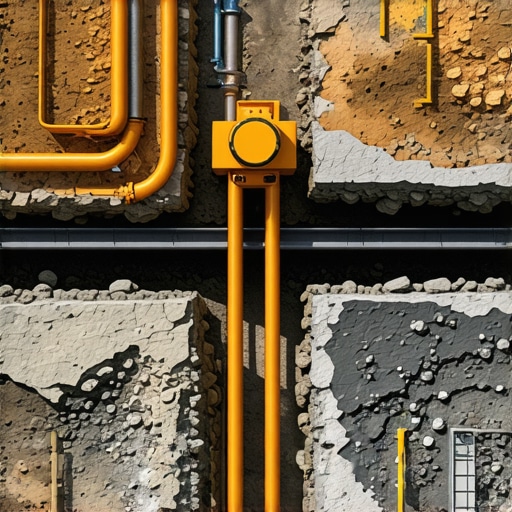
The integration of IoT-enabled sensors and cloud-based analytics creates a responsive ecosystem where site managers receive actionable insights instantaneously. These tools synthesize geotechnical data, utility maps, and environmental conditions, offering situational awareness that informs immediate operational decisions. Augmented reality interfaces now enable onsite visualization of subsurface structures overlaid on the physical environment, facilitating intuitive planning and hazard avoidance. Embracing these technologies accelerates safety protocols, enhances project efficiency, and cultivates adaptive management practices crucial for complex, high-stakes excavation projects.
Driving Safety with Innovative Soil Reinforcement Techniques
Advancements in chemical grouting, including the advent of eco-friendly, high-performance formulations, have significantly improved soil stabilization quality. Coupled with geo-textiles and dynamic compaction methods, these techniques ensure stable foundations for boreholes and trenches, particularly in coastal or waterlogged settings. The synergistic use of these methods, supported by real-time soil monitoring, enables targeted reinforcement tailored to specific subsurface challenges. This iterative approach not only elevates safety margins but also extends the feasibility of excavation in previously inaccessible or risky environments.
Are Digital Twins and Virtual Models Transforming Excavation Planning?
The emergence of digital twin technology offers an innovative avenue for pre-excavation simulation and risk assessment. Creating a virtual replica of the subsurface environment allows engineers to evaluate utility layouts, soil stability, and environmental constraints with high fidelity before deploying equipment. These models incorporate live sensor data, enabling scenario testing and contingency planning in a risk-free setting. As the technology matures, digital twins could become indispensable for precise, risk-averse planning in complex underground projects, reducing costly surprises and enhancing safety compliance. Industry adoption of such models signifies a leap toward a more predictive, intelligent excavation paradigm.
Reimagining Regulatory Standards in Subsurface Safety
In response to technological advancements, regulatory bodies are revising safety standards to incorporate multi-sensor detection, nanomaterial stabilization, and predictive analytics. These evolving frameworks emphasize proactive hazard identification, real-time monitoring, and adaptive safety practices aligned with industry innovations. Engaging with these standards ensures compliance and fosters a safety-first culture. Continuous collaboration between regulators, industry practitioners, and research institutions is essential for crafting forward-looking policies that reflect the state-of-the-art in utility preservation and underground safety management.
Expert Insights & Advanced Considerations
Innovate with Multi-Sensor Fusion for Clearer Utility Mapping
Integrating diverse geophysical detection methods enhances accuracy in utility detection, reducing surprises during excavation, and fostering safer work environments.
Prioritize Real-Time Soil Monitoring to Prevent Collapses
Employing dynamic soil response models that analyze live sensor data allows immediate adjustments, minimizing risks associated with unstable soil conditions.
Leverage AI-driven Analytics to Minimize Utility Conflicts
Machine learning models utilizing project data predict potential conflicts, enabling proactive planning and reducing costly utility strikes.
Adopt Nano-Engineered Stabilizers for Longer-Lasting Support
Nanotechnology-infused soil stabilizers provide resilient reinforcement, especially beneficial in water-saturated or challenging terrains.
Embrace Digital Twins for Precision Planning
Creating virtual replicas of subsurface environments allows testers to simulate excavation scenarios, optimizing safety and efficiency before physical work begins.