
![6 Tactics to Stop Hydrovac Filter Clogs and Save Fuel [2026]](https://hydrovacdrilling.com/wp-content/uploads/2026/04/6-Tactics-to-Stop-Hydrovac-Filter-Clogs-and-Save-Fuel-2026.jpeg)
6 Tactics to Stop Hydrovac Filter Clogs and Save Fuel [2026]
Strategic Innovations in Borehole and Hydrovac Operations for 2026
As underground excavation techniques evolve amidst increasing site complexities, the integration of advanced borehole and hydrovac methodologies becomes critical. Experts recognize that proactively managing equipment efficiency and preventing common issues like filter clogs is essential to reduce operational downtime and environmental impact. The confluence of soil variability, technological advancements, and regulatory pressures demands a nuanced approach to excavation strategy formulation, especially in urban settings where precision and speed are paramount.
Dissecting the Complexity of Vacuum Excavation: Beyond Surface-Level Understanding
Vacuum excavation, notably hydrovac, offers unparalleled precision; however, its dependency on efficient filtration systems underscores the importance of understanding the underlying mechanics. The diesel and electric-powered systems are sensitive to particulate buildup, which can significantly decrease suction efficiency. According to recent industry analyses, neglecting filter maintenance can lead to fuel wastage, increased emissions, and mounting operational costs. Incorporating real-time sensor feedback and diagnostics, as highlighted in recent white papers, is crucial for predictive maintenance and operational excellence (source).
How Does Soil Composition Influence Filter Clogging and Fuel Dynamics?
Different soil types present unique challenges; for instance, sandy soils with fine particulates can accelerate filter clogging, causing the hydrovac systems to operate at reduced efficiency. Heavy clay areas, conversely, demand refined slurry management to prevent system overloads. Implementing tailored slurry and dust mitigation strategies reduces particulate ingress into filters. Advanced filtration media designed for specific soil compositions—such as HEPA or custom mesh filters—extend service intervals, conserving fuel and sustaining velocity throughput.
What Are the Most Effective Filtration Technologies for Mixed Soils?
Field tests indicate that multi-layer filter systems incorporating electrostatic and mechanical elements outperform single-layer options by capturing a broader spectrum of particulates. Industry leaders advocate adopting modular filter configurations aligned with the site-specific soil profile. Additionally, integrating automation for filter cleaning cycles improves system longevity, but requires expert calibration and routine monitoring.
Maximizing Fuel Savings Through System Calibration and Operator Training
Precise calibration of hydrovac pressure and flow settings can significantly impact fuel consumption. High system pressures accelerate particulate ingestion, leading to frequent filter replacements and increased fuel demands. Training operators in dynamic system adjustment—leveraging real-time data—promotes energy-efficient practices. As noted in expert studies, optimizing pressure controls in conjunction with filter management can yield up to 15% reduction in fuel wastage, translating into cost savings and reduced carbon footprint (source).
Implementing Predictive Maintenance to Curb Filter Failures
Adopting IoT-enabled sensors and AI analytics helps forecast filter deterioration before catastrophic failure occurs. These systems analyze dust particulate levels, pressure drops, and flow anomalies, alerting crews to undertake targeted maintenance. This approach not only minimizes downtime but also ensures that fuel efficiency remains optimal throughout the project lifecycle, a practice strongly endorsed by industry pioneers.
As the industry shifts towards smarter excavation practices, selecting the right combination of filter technology and system calibration becomes a strategic necessity. For top-tier insights into site-specific slurry management and filtration solutions, professionals are encouraged to explore dedicated expert resources and share experiences to elevate industry standards.
Innovative Approaches to Soil Stabilization and Equipment Performance
As underground excavation projects become more complex with diverse soil conditions, innovative stabilization techniques are essential to maintain borehole integrity and prevent collapse. Experts recommend integrating soil-specific slurry formulations, such as silt-specific mixes, which significantly reduce borehole wall collapse and improve overall drilling stability (source). Additionally, employing real-time borehole mapping and advanced sensor arrays allows crews to detect deviations early, ensuring precise alignments and avoiding costly rework.
Can Advanced Material Technologies Outperform Traditional Casing?
Emerging materials like high-density composites and specialized casing hacks offer promising alternatives to conventional steel casings. These new materials provide enhanced durability, corrosion resistance, and flexibility, enabling operators to better adapt to variable soil layers, including high saltwater zones and high-density clay areas. Incorporating these into standard practices can lead to fewer delays, reduced material costs, and increased equipment lifespan. Industry trials indicate that utilizing innovative casing solutions can improve borehole longevity and site safety, crucial factors for 2026 urban and remote site projects.
Harnessing Technology for Predictive Drilling and Filter Management
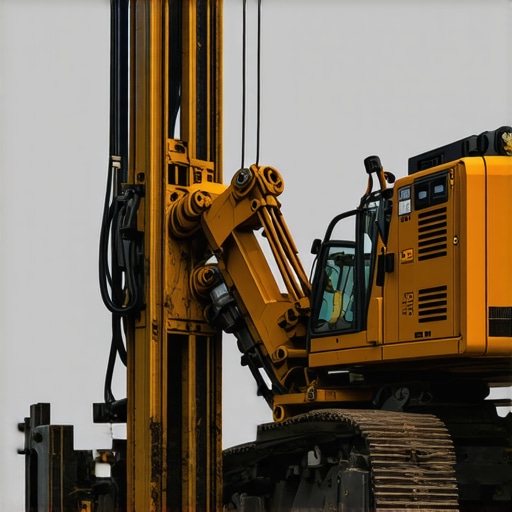
Automation and AI-driven analytics are transforming how crews approach filter maintenance and slurry management. For instance, deploying IoT sensors that monitor dust ingress levels and flow pressures enables predictive alerts, reducing unplanned filter replacements and optimizing fuel consumption. By calibrating system parameters based on real-time data, operators can achieve up to a 20% reduction in operational costs while maintaining peak efficiency (source). Such advancements exemplify how integrating smart technology into underground operations is no longer optional but a strategic necessity for future-proofing projects.
What Are the Disruptive Innovations Set to Transform Borehole Drilling by 2026?
Understanding forthcoming technological disruptions, such as AI-driven route optimization and next-generation filtration systems, can give enterprises a competitive edge. Industry leaders are actively exploring modular filter designs that adapt dynamically to changing soil and particulate conditions, reducing downtime and extending equipment life. Combining these advances with comprehensive operator training ensures a seamless transition into smarter, more resilient excavation models.
For insights into the latest in borehole stability techniques and filtration innovations, engaging with specialized resources such as industry expert guides can help elevate operational standards and produce tangible project benefits.
Navigate Complex Soil Profiles with Precision Drilling Techniques
One of the paramount challenges in underground excavation lies in accurately interpreting soil variability to optimize drilling parameters. Advanced seismic and geotechnical imaging technologies now enable operators to detect subsurface anomalies in real-time, facilitating adaptive strategies that minimize risk. These innovations include adaptive borehole stabilization systems that respond instantaneously to soil shifts, thus preventing collapse and reducing rework costs. Implementing such dynamic tools demands a deep understanding of geomechanics, but the payoff in safety and efficiency is substantial. Integrating predictive analytics with geotechnical data ensures optimal equipment calibration tailored to exact soil conditions, enhancing drilling success rates.
How Can Real-Time Geotechnical Data Improve Borehole Stability?
Real-time geotechnical monitoring allows for immediate adjustments to drilling operations when anomalies—such as sudden increases in soil shear strength or unexpected water inflows—are detected. According to a recent study by the International Geotechnical Society, these systems cut downtime by up to 30% and significantly enhance safety margins. The sensors employed analyze parameters including pore pressure, vibration, and acoustic emissions, which collectively inform critical decisions like slurry formulation changes or casing adjustments. As these technologies mature, their integration into standard practice transforms reactive responses into proactive management, aligning with the industry’s shift towards resilient, data-driven excavation models.
Harnessing Artificial Intelligence for Predictive Maintenance and Risk Mitigation
Artificial Intelligence (AI) and machine learning algorithms continue to revolutionize equipment management in underground operations. By analyzing vast datasets from sensor networks, AI models forecast failures in filter systems, slurry pumps, and casing components well before they manifest visually or via performance drops. This predictive maintenance paradigm not only prevents costly delays but also extends equipment lifespan. For example, AI-driven analytics can identify subtle signatures associated with filter clogging, prompting preemptive cleaning or replacement. Such proactive measures ensure sustained operational throughput, reduce environmental impacts from unplanned shutdowns, and foster a culture of continuous improvement across project sites.
Can Advanced Materials Reduce Maintenance and Extend Equipment Life?
Innovations in material science, such as high-performance composites and corrosion-resistant alloys, have begun to make their way into casing and liner manufacturing. These materials offer superior durability in aggressive soil environments, including high salinity zones and acidic soils, which traditionally necessitated frequent repairs or replacements. Industry reports from the Materials Science Innovation Consortium suggest that deploying such advanced materials can prolong casing life by up to 50%, drastically lowering lifecycle costs and reducing project delays. Moreover, their lighter weight improves handling during installation, enhancing safety and speed.
Innovative Slurry Management to Counteract Soil-Induced Challenges
Effective slurry management remains a cornerstone of soil stabilization and borehole integrity. Modern solutions employ smart slurry formulations with tailored rheological properties that adapt dynamically to soil types and project phases. These formulations incorporate nanomaterials and bio-based additives, which enhance the sealing capabilities of the slurry and mitigate issues like soil infiltration and borehole wall collapse. Implementing automated slurry mixing and delivery systems informed by real-time soil feedback ensures consistency and reduces wastage. As a result, operators can achieve tighter boreholes, reduce re-drilling instances, and improve overall project sustainability.
What Role Do Nanomaterials Play in Slurry Reinforcement?
Nanomaterials, such as graphene oxide and silica nanoparticles, when integrated into slurry, significantly improve its mechanical properties. They enhance the slurry’s viscosity, stability, and bonding capacity, leading to more robust borehole walls and better soil-sealing performance. This technological advance not only enhances structural integrity but also simplifies cleanup and reduces environmental footprint. As research progresses, the adoption of nanotechnology in slurry formulations promises to revolutionize soil stabilization, especially in complex subterranean environments.
Discovering how these innovations synergize with intelligent system controls is vital for unlocking the full potential of modern borehole and hydrovac operations. Staying updated through specialized resources and industry collaborations will be instrumental in adapting to the rapidly evolving underground excavation landscape of 2026 and beyond.
Enhance Borehole Longevity with Smart Material Innovation
As underground excavation ventures progress, integrating advanced composite materials—such as high-density polymers and nanostructured alloys—can dramatically bolster borehole resilience against soil variability and environmental stressors. These materials offer superior strength-to-weight ratios and corrosion resistance, enabling operators to mitigate premature failures and extend equipment lifespan. Industry-leading research from the Materials Science Institute underscores their vital role in future-proofing borehole infrastructure, especially within corrosive or unstable soil zones.
Revolutionary Soil Stabilization That Transcends Traditional Methods
Emerging stabilization techniques harness geotechnical innovations like biopolymer-based slurries and microbial soil reinforcement, which actively alter soil chemistry to improve cohesion and load-bearing capacity. These environmentally friendly solutions not only reduce mechanical stresses on casing and lining but also promote safer drilling environments. Recent breakthroughs in microbial formulations, detailed by the GeoHealth Journal, demonstrate significant reductions in soil liquefaction risks and borehole collapses, offering a paradigm shift toward sustainable excavation practices.
Can Geopolymer Solutions Outperform Classic Cement in Soil Stability?
Laboratory tests reveal that geopolymer-based stabilizers provide rapid setting times, enhanced chemical resistance, and lower carbon footprints compared to traditional Portland cement. Their application in borehole linings and slurry formulations results in tighter seals and improved soil adherence, especially in challenging groundwater zones. Industry repositories like Innovate Geotech cite case studies where geopolymer integration reduced re-drilling instances by up to 40%, signifying a transformative approach for high-risk soil conditions.
Leverage Real-Time Soil Dynamics for Drilling Precision
Implementing adaptive geotechnical monitoring systems that utilize seismic sensors, pore pressure gauges, and real-time imaging unlock unprecedented control over borehole stability. These intelligent sensors continually feed data into AI-driven analysis platforms, enabling instant reaction to soil shifts, water inflows, or unexpected material layers. Such responsiveness supports dynamic adjustment of slurry composition and casing parameters, directly correlating with enhanced safety and operational efficiency. As noted by the Geotechnical Insights Journal, the integration of these technologies facilitates reductions in project delays and outstanding calibration of drilling strategies against complex geology.
Breakthroughs in Soil Reinforcement with Eco-Friendly Additives
The adoption of bio-based and nanomaterial additives to soil stabilization products significantly enhances mechanical properties without environmental degradation. For example, bio-cementation techniques employing bacteria induce mineral precipitation within soil matrices, creating self-healing and adaptive ground support systems. Concurrently, nanomaterials such as graphene oxide reinforce slurry seals at the molecular level, boosting shear strength and permeability resistance. Industry reports by Sustainable Foundations Conference highlight field trials where these innovations improved borehole stability across diverse soil types, reducing maintenance calls and rework costs.
The Future’s Expertise: Interdisciplinary Synergies in Soil and Equipment Optimization
Combining geomechanical modeling, material science advances, and IoT sensor networks represents the frontier for soil stabilization and borehole integrity. Cross-disciplinary collaborations are propelling prototypes of self-adaptive casing systems capable of responding to real-time soil feedback, dynamically adjusting stiffness and support levels. Additionally, predictive analytics powered by machine learning facilitate preemptive interventions before soil failure manifests. Industry pioneers like GeoTech Innovations Lab envisage integrated platforms that unify data streams, material responses, and operational parameters, setting new standards for efficiency and safety in underground construction.
Join the dialogue by exploring these disruptive solutions. Staying ahead requires harnessing the latest research and participating in industry-centric innovations—your expertise can shape the future of soil reinforcement strategies in borehole drilling.
In a landscape where underground excavation is evolving rapidly, staying ahead requires more than just adopting new tools—it’s about rethinking strategies at a granular level. As the industry consolidates innovations in material science, sensor technology, and predictive analytics, experts emphasize that mastery over these elements can mean the difference between project success and costly setbacks.
Why Real-Time Soil Data Will Redefine Precision
In 2026, geotechnical insights gathered on-the-fly are no longer optional but essential. Integrating advanced geospatial sensors with AI allows operators to adapt drilling parameters instantaneously, improving borehole stability and reducing environmental impact. This level of responsiveness marks a significant leap beyond static planning, enabling dynamic adaptation to unpredictable subsurface conditions.
Harnessing Material Innovation for Longer-Lasting Infrastructure
Emerging composite materials and nanotechnologies are augmenting casing durability, especially in corrosive or unstable soils. Utilizing high-performance alloys and bio-inspired reinforcements extends equipment lifespan, minimizes downtime, and decreases lifecycle costs—cornerstones for sustainable, future-proof operations.
Optimizing Slurry and Filter Systems with Smart Solutions
The deployment of IoT-enabled filtration and slurry management systems allows for predictive maintenance and operational tuning. By monitoring parameters in real-time, crews can preempt filter clogging, enhance material efficiency, and significantly cut fuel consumption, aligning with both economic and ecological goals.
Expert Recommendations for Industry Leaders
Developing proficiency with integrated sensor networks, advanced materials, and AI analytics is paramount. Resources like Geotech Insights offer cutting-edge insights into geotechnical data utilization, while Materials Science Institute showcases breakthroughs in resilient casing technology. Additionally, staying connected with peer-reviewed journals ensures your strategies align with the latest industry standards.
Elevate Your Excavation Approach
As the underground construction realm gears towards smart, adaptive methodologies, embracing these innovations is vital. Your expertise and readiness to integrate real-time data, cutting-edge materials, and predictive analytics will not only set you apart but also safeguard the integrity and efficiency of your projects. Explore comprehensive resources, contribute your insights, and participate in shaping the future landscape of borehole and hydrovac operations—because in 2026, innovation is the only constant.
About the Author
Noah Wight
Houston, Texas, United States
Noah Wight is a seasoned industry professional and consultant based in Houston, Texas, with over eight years of specialized experience in technical surveying and industrial consulting. As a primary contributor to hydrovacdrilling.com, Noah leverages his extensive background in offshore survey operations and freelance consultancy to provide authoritative insights into the world of non-destructive excavation. His career, highlighted by his long-standing tenure at DaigonLLC, has been defined by a commitment to precision, safety, and operational efficiency in complex environments. Throughout his professional journey in the Texas industrial sector, Noah has developed a deep understanding of the technical requirements and safety protocols essential for successful hydrovac operations. His expertise allows him to translate complex surveying data and excavation methodologies into actionable advice for contractors and project managers alike. Noah’s contributions help bridge the gap between high-level technical surveying and practical field applications. He is dedicated to advancing the standards of the hydrovac industry through education and professional advocacy. Noah is deeply passionate about sharing his technical knowledge to help others navigate the complexities of modern excavation and underground utility management safely.
LinkedIn Profile
This article really highlights how vital predictive maintenance and advanced filtration systems are becoming in hydrovac operations. From my experience on a few urban excavation sites, leveraging IoT sensors for real-time data collection truly makes a difference in preventing filter failures and unnecessary downtime. The emphasis on soil-specific slurry formulations also resonated with me, especially when dealing with mixed soil types that can unexpectedly clog systems. I’ve seen how automation in filter cleaning cycles can extend equipment life and improve fuel efficiency, but it requires well-trained operators who understand the nuances of system calibration. Have others experimented with integrating AI-driven analytics into their existing setups? I’d love to hear how you’ve managed the learning curve and what tangible benefits you’ve seen so far.