Mitigating Trench Floor Heave: A Critical Challenge in High-Water Table Environments
Effective excavation in areas with elevated groundwater levels demands a nuanced understanding of soil mechanics and innovative application of hydrovac and vacuum excavation techniques. Trench floor heave, a phenomenon characterized by upward soil displacement, jeopardizes structural stability and safety during utility installation and maintenance. To safeguard excavation integrity, professionals must leverage expert insights and state-of-the-art methodologies.
Understanding Soil Dynamics and Water Table Interactions
At the core of trench floor heave prevention lies a comprehensive grasp of soil behavior under saturated conditions. High-water tables lead to increased pore water pressures, reducing soil cohesion and creating susceptibility to upheaval. Innovatively combining soil stabilization methods with precise hydrovac operations can significantly mitigate risks.
Implementing Differential Pressure Management for Soil Control
One advanced approach involves the strategic management of excavation pressures to counterbalance water-induced forces. By adjusting vacuum suction and hydrovac pressure in real-time, operators can limit soil disturbance and prevent uplift. For example, maintaining a slightly negative pressure differential ensures that soil remains compacted without excessive collapse or heave. For detailed pressure regulation techniques, refer to the insights offered in this resource on pressure management.
Utilizing Soil Stabilization and Dewatering Technologies
Active soil stabilization, such as chemical grouting or the injection of low-viscosity suspensions, can anchor pore spaces and enhance soil strength. Coupled with effective dewatering—using well-point systems or sump pumping—these measures reduce pore water pressures that drive heave. Moreover, the use of lightweight fill materials can provide additional support against uplift forces, especially in saturated granular soils.
Can Strategic Trenching Techniques Outperform Traditional Approaches?
Innovative trenching methods, such as controlled backfilling with geo-synthetic reinforcements, can distribute stresses uniformly and resist soil upheaval. Layered excavation sequences, combined with timed dewatering, allow for gradual soil stabilization. Modern equipment calibrated for low-pressure operation minimizes soil disturbance, ensuring safer excavations in challenging water-saturated zones.
What Role Does Groundwater Management Play in Long-Term Stability of High-Water Table Trenches?
Effective groundwater management is critical to preventing trench floor heave. Installing temporary or permanent dewatering systems reduces pore pressures, ensuring that soil compaction remains stable over time. Continuous monitoring and adaptive pressure control can further mitigate the risk of subsidence or heaving during and after the excavation process.
Professionals should also explore integrated solutions combining vacuum excavation precision with soil reinforcement techniques. To learn more about managing debris and contaminated soils during high-water table excavations, visit this comprehensive guide.
Ultimately, preventing trench floor heave in high-water table scenarios requires a holistic, expert-informed approach. Combining real-time pressure regulation, soil stabilization, and diligent groundwater management strategies can dramatically enhance excavation safety and efficiency, paving the way for sustainable underground infrastructure development.
Leveraging Advanced Soil Stabilization Techniques for Long-Term Success
Beyond basic dewatering and lightweight fill, implementing chemical grouting and soil reinforcement can provide sustained soil strength in high-water environments. Chemical grouting involves injecting low-viscosity suspensions to bind soil particles, effectively reducing permeability and pore water pressure buildup. When combined with mechanical soil reinforcement, such as soil nails or geosynthetics, these methods establish a resilient barrier against upheaval, especially in layered or heterogeneous soils.
Could Real-Time Monitoring Transform How We Manage Water-Induced Soil Movement?
Integrating sensor technologies like piezometers, inclinometers, and real-time pressure sensors enables operators to detect subtle shifts in pore water pressure and soil displacement during excavation. This data-driven approach supports adaptive pressure regulation, allowing for responsive adjustments that prevent escalation into hazardous heave. Adopting such innovations aligns with industry best practices outlined in pressure mitigation techniques.
Balancing Excavation Efficiency and Geotechnical Safety
Employing layered trenching sequences with strategic timing for dewatering and stabilization minimizes soil disturbance. For passages through rock or dense soils, pre-drilling and controlled backfilling with geosynthetics distribute stresses uniformly, reducing localized uplift risks. Additionally, employing low-pressure hydrovac systems tailored to specific soil compositions diminishes excessive disturbance, aligning operational efficiency with safety imperatives.
Expert Tip: The Key to Sustainable Excavations Lies in Community Collaboration
Engaging with geotechnical engineers, environmental scientists, and local agencies ensures a holistic approach to high-water table excavation projects. Such collaboration facilitates comprehensive site assessments, tailored stabilization plans, and proactive groundwater management. For a thorough understanding of how to effectively manage groundwater and prevent long-term instability, see this expert resource.
Are you ready to refine your trenching operations for maximum safety and durability? Sharing your experiences or questions in the comments can foster practical solutions and community learning.
Harnessing Geotechnical Analytics for Predictive Soil Behavior Models
Harnessing advanced geotechnical data allows engineers to forecast soil responses under fluctuating water table conditions, enabling preemptive mitigation measures. Utilizing soil sensors that monitor pore pressure, moisture content, and shear strength in real-time can inform dynamic adjustments during excavation, minimizing hysteresis effects and reducing unexpected uplift occurrences. Comprehensive modeling, integrating site-specific soil profiles and hydrogeological inputs, contributes to creating resilient excavation strategies tailored to complex, saturated environments.
Adapting Excavation Techniques to Tackle Layered Soil Variability
Layered soils, especially those exhibiting contrasting permeability and cohesion, pose distinctive challenges. Engineers must consider phased excavation approaches, sequential dewatering, and targeted reinforcement in zones where layers differ significantly. Techniques like pre-conditioning softer horizons with controlled injections and employing geo-synthetically stabilized backfill can distribute stresses evenly. Recognizing the heterogeneity inherent in layered deposits underscores the importance of precision planning, ultimately aiding in maintaining trench integrity over the long term.
What Advances in Soil Reinforcement Are Revolutionizing High-Water Table Excavations?
Recent developments include the integration of deep soil mixing and bio-mediated stabilization, which bolster soil resilience against uplift. Deep soil mixing introduces cementitious compounds at depth, creating a mechanically integrated mass less prone to heave. Simultaneously, bio-mediated methods employ microbial activity to precipitate calcite, cementing soil particles sustainably. These innovative reinforcement techniques not only improve stability but also align with environmental considerations, exemplifying a progressive shift in geotechnical engineering practices.
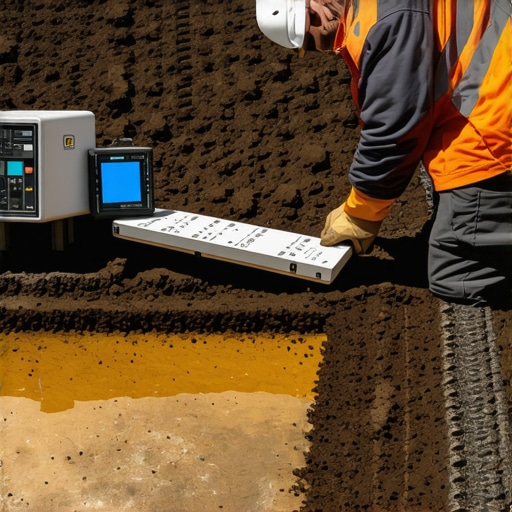
Incorporating real-time data acquisition systems enhances decision-making during high-water table excavations, providing granular insights into subsurface conditions that inform adaptive management strategies.
Implementing Multi-Phase Dewatering to Reduce Long-Term Risks
Developing phased dewatering protocols that align with excavation progress minimizes pore pressure buildup and stabilizes soil structures over time. Combining well-point systems with vertical drainage and low-permeability cutoff walls creates a comprehensive water management framework. This layered approach controls water infiltration, safeguards against future uplift due to seasonal variations or hydraulic pressure fluctuations, and ensures that excavation remains stable well beyond project completion stages.
Integrating Remote Sensing Technologies for Continuous Site Surveillance
The deployment of drone-based LiDAR mapping and satellite imagery allows for expansive, rapid assessment of soil surface movements and surface disturbances. Coupled with ground-based sensors, these tools enable ongoing surveillance and early detection of excessive displacement or uplift risks. Such integration facilitates proactive responses, thereby preserving trench stability and preventing costly remedial actions. Industry pioneers like Geo-Spatial Innovations have demonstrated the efficacy of such systems in complex geotechnical scenarios.
Mobilizing Community Expertise for Sustainable Excavation Outcomes
Engagement with multidisciplinary teams—including hydrogeologists, environmental engineers, and local regulatory bodies—ensures that high-water table challenges are addressed holistically. Building collaborative frameworks promotes knowledge sharing and enhances adaptive planning, ultimately leading to more resilient infrastructure design. To deepen your understanding of sustainable practices, explore case studies published by the Geotechnical Society of America, highlighting innovative groundwater management in urban development projects.
Are you prepared to elevate your trenching operations with cutting-edge, sustainable solutions? Reach out with your questions or share insights to foster a community committed to excellence in geotechnical engineering.
,
Harnessing Geophysical Surveys for Subsurface Precision
Advanced geophysical methods, such as electrical resistivity tomography and ground-penetrating radar, enable engineers to map subsurface heterogeneity with exceptional accuracy. By integrating these technologies into pre-construction planning, professionals can identify zones of variable permeability and cohesion, tailoring stabilization strategies accordingly. Such precision minimizes unforeseen upheaval risks and optimizes resource allocation during excavation projects.
What Surprises Lie Beneath Your Feet During High-Water Table Excavation?
Subsurface conditions often defy surface observations, with layered soils, hidden voids, or bio-engineered structures influencing stability. Employing borehole seismic assessments and cone penetration tests (CPT) supplemented by real-time telemetry can unravel these complexities. Recognizing heterogeneity early informs appropriate intervention measures, such as targeted grouting or reinforcement, safeguarding against unpredictable soil movements.
How do Chemical and Biological Stabilization Methods Revolutionize Soil Support?
Emerging stabilization techniques harness chemical agents and microbial activity to enhance soil strength sustainably. Low-viscosity resin injections can rapidly solidify loose sandy soils, while bio-mediated calcite precipitation offers a green alternative for long-term stabilization. These innovative methods reduce the need for extensive dewatering and mechanical reinforcement, providing resilient barriers against uplift in saturated environments. For detailed protocols, consult the comprehensive guidelines established by the International Society for Soil Mechanics and Geotechnical Engineering.
Visualizing subsurface interventions with animated 3D models and sensor data dashboards empowers engineers to make informed, adaptive decisions during excavation campaigns.
Integrating Soil Anisotropy Insights for Directional Stability
Recognizing directional differences in soil strength and permeability—soil anisotropy—can significantly influence trench stability strategies. Employing anisotropic models based on in-situ testing and exposing the impact of layering and bedding planes helps craft orientation-specific stabilization and dewatering plans. Such tailored approaches prevent unanticipated uplift and prolong trench integrity in complex sedimentary environments.
The Power of Adaptive Water Management Techniques
Dynamic control of dewatering systems—through real-time feedback loops, variable pump rates, and localized drainage—ensures pore pressures remain within safe thresholds throughout construction. Combining these with semi-permeable cutoff walls or vertical drains facilitates gradual, controllable pore pressure dissipation, ultimately reducing the likelihood of long-term uplift and fostering a stable underground environment.
The Future Is Sensor-Driven Soil Surveillance
Deploying a network of wireless sensors—measuring parameters like pore water pressure, soil strain, and moisture content—enables continuous monitoring of excavation zones. Data analytics and machine learning algorithms can predict impending instability or heave, prompting preemptive countermeasures. Such technology integration aligns with the cutting-edge practices exemplified by leading geotechnical consulting firms striving for zero-failure standards.
To harness these advanced insights, collaboration with geophysical experts and data scientists is crucial, fostering innovative solutions beyond conventional methods. Explore further with detailed case studies available through the American Society of Civil Engineers, which showcase successful integration of geotechnical analytics into high-water table projects.
Strategic Soil Stabilization Innovates in Tough Conditions
Proactively employing chemical grouting and bio-mediated stabilization techniques fortifies saturated soils, reducing uplift risks and extending trench longevity. These approaches not only enhance safety but also align with sustainable development practices, ensuring resilient underground infrastructure.
Leverage Real-Time Data for Dynamic Decision-Making
Integrating sensors such as piezometers and inclinometers empowers engineers to monitor soil movement live, enabling swift adjustments in dewatering and pressure management that prevent unforeseen heave.
Incorporate Advanced Geophysical Tools for Precise Mapping
Employing electrical resistivity and ground-penetrating radar yields detailed subsurface images, revealing heterogeneities that might trigger instability, allowing targeted interventions before issues arise.
Refine Excavation Techniques to Adapt to Layered Soils
Layered soil profiles require phased excavation, meticulous dewatering schedules, and reinforcement strategies like geo-synthetics to distribute stresses evenly and prevent localized upheaval.
Embrace Multi-Phase Dewatering Configurations
Designing phased, adaptive dewatering plans utilizing well-points, vertical drains, and cutoff walls ensures manageable pore pressure levels, contributing to long-term trench stability in fluctuating water tables.
Authoritative Resources for Deep Diving into Soil and Water Management
- “High Water Table Ground Stabilization Techniques” by Geotechnical Engineering Journal — Offers in-depth analysis on stabilization methods tailored to high-water conditions.
- “Application of Sensor Technologies in Deep Excavations” by International Society for Soil Mechanics & Geotechnical Engineering — Guides on integrating real-time monitoring systems for proactive safety measures.
- “Geophysical Methods for Subsurface Mapping” by US Geological Survey — Essential for accurate detection of soil heterogeneities influencing stability.
- “Bio-Engineering Approaches to Soil Stabilization” by Sustainable Geotech Conference Proceedings — Discusses eco-friendly stabilization options suitable for sensitive environments.
- “Design Guidelines for Multi-Phase Dewatering in Urban Projects” by Civil Engineering Practice — Provides practical frameworks for effective groundwater management in complex urban settings.
Embracing the Future of Excavation Safety
Mastering high-water table trenching transcends basic techniques; it demands a blend of advanced geotechnical insights, innovative stabilization methods, and smart monitoring systems. These strategies not only mitigate geological risks but also foster sustainable infrastructure growth. For seasoned professionals, staying abreast of these cutting-edge approaches ensures excellence in execution and safety. Engage with industry forums, share your challenges, and collaborate on pioneering solutions—your expertise will shape safer, smarter excavations ahead.
Comments are closed.