Don’t Cut the Line: 5 Vacuum Excavation Tactics for 2026
Elevating Subsurface Work: The Next Generation of Borehole and Vacuum Excavation Techniques
In the rapidly evolving landscape of underground construction and utility management, an expert understanding of borehole drilling and vacuum excavation is paramount for delivering projects that are both efficient and safe. As infrastructure demands escalate in complexity, integrating advanced methodologies tailored for 2026 becomes not just beneficial but essential for industry professionals aiming to mitigate risks and optimize operational costs.
Harnessing Precision in Borehole Drilling for Complex Urban Environments
Precision borehole drilling is at the forefront of ensuring accurate subterranean mapping, especially in congested urban settings. The deployment of top-tier borehole methods that incorporate real-time logging and sensor integration enhances the reliability of utility detection. For instance, leveraging sonic head technology can significantly minimize utility strikes, ensuring safety and compliance within high-density zones.
Innovating Safety Protocols: Vacuum Excavation and its Role in Preventing Utility Damage
Vacuum excavation emerges as a transformative technique in safeguarding utilities during trenching and site preparation. By providing a non-destructive approach, vacuum systems allow for precise exposing of underground assets, reducing accidents associated with traditional mechanical methods. Expert guides emphasize the pivotal role of material-specific pressurization settings and soil condition assessments to prevent utility damage effectively.
Addressing Soil Variability: Adaptive Strategies for Borehole and Trenching in Diverse Geologies
One of the significant challenges in underground excavation is managing soil heterogeneity. From expansive clay to rocky substrates, adapting borehole techniques using specialized mud mixes and pressure controls ensures borehole stability and reduces collapse risk. Advanced soil testing and geotechnical analysis inform these adaptations, aligning with research published in the Journal of Geotechnical Engineering.
What are the most effective methods to prevent borehole deviation in dense urban soil conditions?
Mitigating borehole deviation requires a combination of enhanced drilling equipment, such as steerable bits, and meticulous geotechnical analysis. Real-time inclination monitoring and adaptive drilling parameters enable operators to correct deviations promptly, maintaining alignment with project specifications. Implementing these tactics can significantly improve project timelines and reduce rework, as outlined in case studies from leading industry sources.
For professionals seeking to elevate their excavation protocols, exploring detailed content on safety standards and innovations is vital. Consider reviewing industry-leading insights on cutting-edge borehole technology. Your expertise in these sophisticated techniques not only enhances project success but also advances the entire field’s safety and sustainability efforts.
Engagement from experienced practitioners is critical to refine these emerging methodologies. Sharing insights or challenging existing practices fosters a culture of continuous improvement across the industry.
Optimizing Utility Detection with Innovative Borehole Strategies
Implementing cutting-edge borehole drilling methods that incorporate real-time data analytics enhances the precision of underground utility mapping. Techniques such as integrating sensor technology and adaptive drilling parameters allow operators to detect and avoid lines more effectively, reducing costly utility strikes. As highlighted by industry leaders, adopting these advanced strategies can dramatically improve project outcomes and safety standards. For comprehensive guidance, explore top techniques for utility mapping.
Elevating Soil Stability Approaches to Prevent Borehole Failures
Soil variability remains a critical challenge in underground projects. Utilizing customized mud mixes tailored for specific geologies, combined with soil testing, offers significant improvements in borehole stability. For instance, in high-clay or rocky terrains, implementing soil-stabilizing additives and pressure-adjusted drilling protocols can prevent collapses and deviations. These practices complement geotechnical assessments and are supported by recent research published in the International Journal of Geomechanics.
How can real-time soil monitoring redefine safety standards in dense urban excavations?
Real-time soil monitoring systems that provide continuous data on soil conditions enable proactive adjustments during drilling, avoiding unexpected failures. By integrating such systems with autonomous control algorithms, operators can dynamically adapt pressure and rotation parameters, minimizing risks. This technological synergy significantly enhances safety and operational efficiency, aligning with strategies detailed in soil stability tactics. For professionals looking to deepen their understanding, engaging with these innovations can lead to more resilient project planning.
If you’re ready to refine your excavation safety protocols, sharing insights or asking questions about implementing these advanced solutions can spark valuable industry discussions. Continual learning and knowledge exchange remain essential in harnessing the full potential of 2026’s emerging technologies.
Transforming Utility Mapping Through Multi-Modal Data Fusion
Emerging advancements now enable the integration of multiple data streams—geophysical surveys, real-time sensor inputs, and machine learning analytics—to create comprehensive subsurface models. This fusion enhances the accuracy of utility detection in complex urban environments, reducing the incidence of misinterpretation. The key lies in deploying sensor arrays that cross-validate findings, establishing a layered validation process that surpasses traditional single-method approaches.
Implementing Autonomous Drilling for Precision and Safety
Automation within borehole drilling, especially through autonomous steerable drills, introduces an era where human error diminishes, and consistency elevates. These systems leverage advanced PLCs and AI-driven feedback loops to adapt drilling parameters dynamically, ensuring borepath accuracy even through heterogeneous soils. Such innovations are critical when working adjacent to sensitive underground utilities, facilitating safer excavation workflows and shorter project durations.
Can AI and machine learning reshape subterranean inspection protocols at scale?
Absolutely. Recent studies highlight AI’s capacity to analyze vast datasets from sensor arrays and predict potential failure zones before physical issues manifest. According to detailed research published in the Automation in Civil Engineering journal, machine learning algorithms enable early detection of soil instability and groundwater infiltration risks, prompting preemptive measures that safeguard both personnel and infrastructure. This predictive capacity empowers project teams to strategize proactively rather than reactively, vastly improving safety metrics and operational continuity.
For industry professionals eager to stay ahead, immersing oneself in AI integration techniques and sensor fusion methodologies can unlock new efficiencies. Engagement with leading research, workshops, or pilot programs accelerates implementation readiness, transforming conventional practices into next-generation standards.
Moreover, fostering collaborations across geotechnical, data science, and field operations domains catalyzes innovation, ensuring that technological advancements translate into tangible safety enhancements and cost savings. As we push into increasingly complex subsurface challenges, staying informed about these cross-disciplinary solutions becomes imperative for maintaining industry leadership.
Advanced Soil Management for Unmatched Borehole Stability
Addressing soil heterogeneity isn’t solely about reactive measures but involves predictive modeling and customized material interventions. Advanced geotechnical simulations allow for virtual testing of soil stabilization techniques, aiming to optimize additive concentrations and injection schedules. These simulations, validated through in-situ trials, enable engineers to predefine optimal protocols for every soil type encountered, reducing guesswork and increasing success rates.
What Is the Future of Soil and Soil-Utility Interaction Interfaces?
Emerging interface technologies promise real-time, bidirectional communication between subsurface sensors and surface control units. This connectivity facilitates granular monitoring of soil-utility interactions, with instant feedback loops that adjust drilling parameters on the fly. Imagine systems where soil compaction, moisture content, and utility proximity are continuously assessed, with autonomous machinery responding instantaneously—minimizing disturbance and maximizing safety.
Implementing this level of integration requires sophisticated sensor networks, edge computing, and robust cybersecurity measures. These innovations will not only revolutionize safety standards but also embed advanced predictive analytics into routine operations, ensuring resilient and optimized projects in challenging geological conditions. To stay at the vanguard, professionals should investigate emerging interface standards and participate in pilot programs that test these integrated systems’ viability and scalability.
As the industry steadily adopts these cutting-edge solutions, the emphasis on multidisciplinary collaboration and continuous innovation will be key. The evolution of subsurface operation tools underscores a decisive shift toward smarter, safer, and more adaptive underground practices, promising a future where complex urban projects are executed with unprecedented precision and confidence.
Unlocking the Potential of Multi-Dimensional Data for Subterranean Precision
The future of underground operations hinges on the seamless integration of geophysical surveys, sensor arrays, and machine learning algorithms—forming a triad that elevates utility detection to unprecedented accuracy. By fusing seismic, electromagnetic, and gravimetric data streams, engineers can construct high-fidelity 3D models that reveal underground intricacies with remarkable clarity. This layered approach mitigates the risks of utility misidentification, especially in urban jungles where subterranean clutter confounds simpler techniques. Industry leaders advocate for adopting cloud-based analytics platforms that synthesize real-time sensor inputs, enabling rapid decision-making and adaptive excavation strategies.
How Autonomous Drilling is Overhauling Safety Protocols Beneath Our Feet
Autonomous drilling systems, equipped with AI-driven feedback mechanisms and steerable bit technology, are set to redefine precision in subterranean navigation. These systems dynamically adjust drilling angles and pressures in response to live geotechnical data, ensuring boreholes remain true to their intended paths despite soil heterogeneity. Such automation diminishes human error, expedites complex projects, and reduces site personnel exposure to hazards. Moreover, integrating autonomous drills with hazard detection sensors allows for immediate response to soil collapse or utility proximity alerts, fostering a new era of risk mitigation.
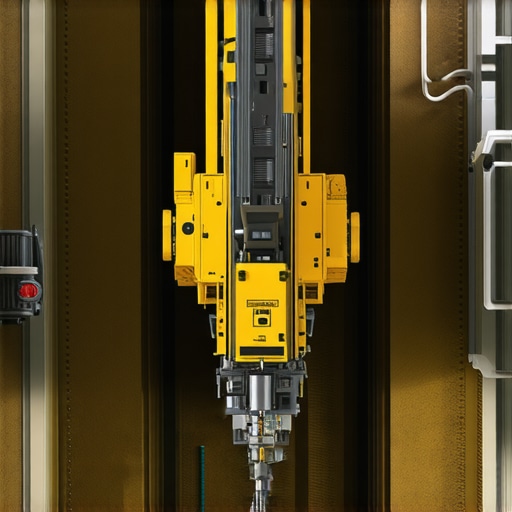
![Autonomous drill navigating complex subsurface conditions, utilizing AI corrections in real-time, amidst heterogeneous soils.]
The Role of Advanced Soil Stabilization in Achieving Borehole Integrity
Predictive geotechnical modeling now guides the formulation of bespoke mud mixes and soil reinforcement protocols. By simulating various additive combinations and injection sequences, engineers can preemptively address anticipated instability zones. These virtual tests, validated through controlled field trials, inform the deployment of soil stabilization agents like polymer emplacements or resin grouting, effectively fortifying boreholes against collapse and deviation. The emphasis on tailored solutions ensures that drilling operations can adapt swiftly to changing geological conditions, safeguarding both project timelines and safety standards.
Are Smart Interfaces Changing How We Monitor Ground Stability?
Next-generation subsurface interaction systems feature smart sensors capable of continuous, bidirectional communication with surface control units. These interfaces monitor soil compaction, moisture, and utility proximity at granular levels, providing actionable insights that inform immediate operational adjustments. When coupled with edge computing devices, these systems realize near-instant data processing, enabling autonomous responses such as pressure modulation or drill path correction. This technological evolution fosters an environment where ground stability is proactively managed, drastically reducing unexpected failures and enhancing safety margins.
To fully leverage these innovations, industry stakeholders should engage with emerging standards for sensor interoperability and participate in pilot projects exploring integrated control architectures. Such initiatives accelerate adoption, ensuring that subterranean work remains safe, efficient, and precisely aligned with project objectives.
Collaborative Knowledge: The Drive Toward Resilient Subsurface Operations
Fostering multidisciplinary collaborations among geotechnical scientists, data analysts, and field engineers is vital. Sharing findings from advanced modeling, sensor deployments, and automation trials accelerates the refinement of best practices. Open forums, industry consortia, and joint research initiatives serve as catalysts for cultivating resilient, adaptive strategies capable of overcoming the evolving challenges posed by complex urban soils and utility networks.
Expert Insights & Advanced Considerations
Prioritize Adaptive Technologies for Complex Geologies
In the rapidly evolving realm of underground construction, leveraging adaptable drilling techniques like real-time soil analysis and AI-guided systems becomes essential to navigate unpredictable subsurface conditions efficiently.
Integrate Multi-Modal Data for Unparalleled Precision
Combining geophysical surveys, sensor networks, and machine learning analytics enhances utility detection accuracy, reducing costly strikes and workflow delays in urban environments.
Adopt Autonomous Drilling to Minimize Risks
Autonomous borehole drilling systems equipped with advanced sensors and AI feedback loops are transforming safety protocols by ensuring high precision even amidst heterogeneous soils and congested utility networks.
Enhance Soil Stabilization with Predictive Modeling
Utilizing virtual geotechnical simulations guides the deployment of tailored soil stabilization agents, such as resins or polymers, thus preventing borehole collapse and deviation in challenging conditions.
Implement Smart Monitoring Interfaces for Continuous Ground Feedback
Next-generation soil-utility interaction sensors provide real-time, bidirectional data, allowing automatic adjustments to drilling parameters that uphold ground stability and safety standards.
Curated Expert Resources
- Hydrovac Drilling Technical Guides: In-depth manuals and case studies detailing the latest safety innovations and technological advancements in vacuum excavation and borehole techniques.
- Industry Association Publications: Publications from organizations such as the Geotechnical Society and Utility Safety Consortium offer peer-reviewed research and consensus guidelines.
- Emerging Journal Articles: Recent papers in journals like the International Journal of Geomechanics provide cutting-edge insights into soil behavior modeling and stabilization solutions.
- Advanced Data Fusion Platforms: Cloud-based tools enabling multi-sensor data integration for real-time decision-making and predictive analytics in underground projects.
- Automation and AI in Civil Engineering: Research compilations outlining the integration of machine learning with drilling automation systems for enhanced precision and safety.
Reflections on Tomorrow’s Challenges and Opportunities
Innovation-driven approaches like autonomous drilling, multi-modal data fusion, and smart soil stabilization are redefining the landscape of subsurface excavation. Embracing these advancements requires a strategic shift towards integrating cutting-edge technology with foundational geotechnical expertise. By doing so, industry leaders can minimize risks, optimize project costs, and push the boundaries of underground construction safety and efficiency. Engaging with these high-level insights and resources not only positions professionals at the forefront of the field but also fosters a culture of continuous improvement and resilience. Share your thoughts, insights, or questions to enrich this ongoing dialogue—your expertise shapes the future of underground work.