Borehole Drilling: 4 Soil Stability Fixes for 2026 Projects
Harnessing Advanced Soil Stability Methods for Complex Construction Challenges
In the evolving landscape of underground infrastructure development, leveraging innovative techniques such as vacuum excavation, borehole drilling, and trenching has become essential for ensuring soil stability and project reliability. As we approach 2026, a comprehensive understanding of these methods allows engineers and contractors to anticipate soil behavior, adapt to diverse geotechnical conditions, and mitigate risks associated with soil collapse or utility strikes.
Strategic Integration of Vacuum Excavation in Soil Stabilization
The application of hydrovac excavation techniques offers a precise, minimally invasive approach to exposing underground utilities and assessing soil properties. Its capacity to prevent soil disturbance during excavation aligns with the need for maintaining soil integrity, especially in urban environments where soil stability is compromised by previous development activities. The strategic integration of vacuum excavation not only minimizes surface disruptions but also enhances safety and reduces the likelihood of soil subsidence.
Unveiling the Critical Role of Borehole and Trenching Strategies
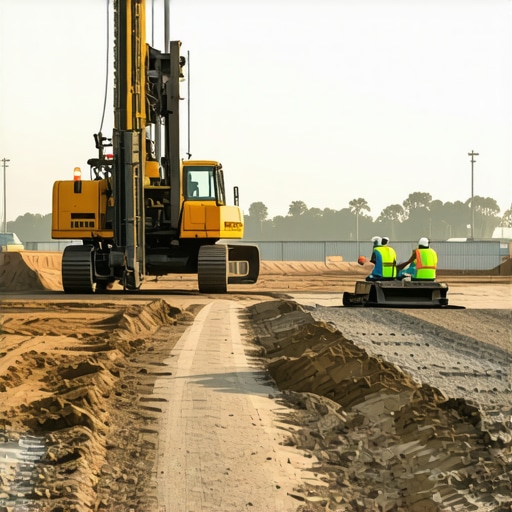
Complementing vacuum excavation, borehole drilling provides invaluable insights into soil composition at various depths, enabling engineers to identify areas prone to collapse or erosion. Employing top-tier borehole techniques, such as rotary, percussion, or innovative modular approaches, allows for precise soil characterization. Simultaneously, advanced trenching strategies—focused on soil reinforcement and controlled excavation—play a pivotal role in stabilizing soil during project execution. Combining these methods yields a comprehensive soil stabilization framework, pivotal for complex projects demanding high structural integrity.
Are Soil Stability Challenges Underestimated in Modern Construction?
This question underscores the importance of anticipatory planning and the adoption of cutting-edge excavation techniques. Soil instability remains a significant risk, often underestimated in early project phases. Experience from field applications indicates that integrating vacuum excavation and borehole analysis can substantially reduce unforeseen soil failures, saving costs and ensuring safety. Consulting specialized resources, such as the Hydrovac Drilling guide on underground safety, provides valuable insights into implementing these strategies effectively.
For professionals committed to advancing soil stability solutions, exploring interdisciplinary approaches and sharing field experiences foster a proactive environment essential for 2026 and beyond. Contributing insights or case studies can help refine these techniques further, ensuring the growing demands of urban development are met with the highest standards of safety and efficiency.
Harnessing Real-Time Data to Predict Soil Behavior During Excavation
One of the most promising advancements in soil stabilization is the deployment of real-time monitoring systems that utilize sensors to evaluate soil response throughout excavation processes. Incorporating technologies such as piezometers, inclinometers, and ground-penetrating radar allows engineers to receive instant feedback on soil shifts, moisture levels, and potential collapse zones. This dynamic approach enables proactive adjustments, reducing the risk of unexpected soil failure. As an example, integrating borehole monitoring techniques enhances understanding of subsurface conditions, ultimately streamlining the stabilization process.
Can Soil Stabilization Keep Pace with Urban Expansion Demands?
Urban growth continually presses the boundaries of traditional soil management strategies, often leading to compromises in safety and efficiency. Emerging methods, including the strategic use of vacuum excavation combined with advanced geotechnical analysis, aim to meet these demands. These techniques facilitate detailed utility mapping and soil assessment without the disturbances associated with conventional deep digging, as discussed in the Hydrovac safety primer for urban sites. The challenge lies in adapting these innovations to diverse urban environments where soil conditions and existing infrastructure vary widely, demanding tailored solutions that prioritize safety without compromising project timelines.
Making Soil Integrity Metrics an Industry Standard
To elevate soil stabilization practices, establishing clear, quantifiable metrics becomes essential. These include parameters like soil compaction levels, moisture content thresholds, and collapse risk indices. Adoption of industry-wide standards for soil assessment can drive consistency and quality in project execution. By harnessing data analytics and integrating advanced borehole data, professionals can craft customized stabilization plans that mitigate risks upfront. Furthermore, these metrics facilitate better communication among stakeholders, ensuring everyone operates with a shared understanding of soil health and stability benchmarks.
How Will the Integration of AI and Machine Learning Transform Soil Stabilization Techniques?
Artificial intelligence and machine learning are poised to revolutionize soil management by enabling predictive analytics that can simulate soil behavior under various conditions. Machine learning models trained on extensive geotechnical datasets can identify subtle patterns indicating potential instability, often before human observation can detect them. Coupled with drone technology for aerial surveys, these tools offer a comprehensive platform for preemptive decision-making. As highlighted in current research, embedding AI into soil stabilization workflows enhances accuracy, reduces unforeseen delays, and optimizes resource allocation. For those interested in staying ahead of the curve, exploring these technologies can redefine standards in underground construction safety and efficiency.
If you’re keen to explore more about cutting-edge soil stabilization methods and their practical applications, consider sharing your insights or case experiences in our community forum. Collaborative knowledge exchange is vital in driving industry standards forward.
Revolutionizing Soil Reinforcement: Beyond Traditional Methods
As urban infrastructure projects become increasingly complex, conventional soil stabilization techniques often fall short in addressing the nuanced challenges posed by dense built environments and variable geotechnical conditions. Innovative reinforcement strategies, such as soil nailing, geosynthetic reinforcement, and deep soil mixing, are emerging as game-changers, offering tailored solutions that enhance soil bearing capacity and reduce settlement risks. These methods not only stabilize problematic soils but also allow for the development of more ambitious construction designs, pushing the boundaries of urban development.
Leveraging Fiber-Reinforced Polymers for Soil Stabilization
Fiber-reinforced polymers (FRPs) have gained traction as a lightweight, corrosion-resistant option for soil reinforcement. Their high tensile strength and flexibility make them suitable for retrofitting existing structures and for new constructions in corrosive environments. When properly designed, FRPs can distribute stresses uniformly, improving overall soil-structure interaction. A recent study published in the Journal of Geotechnical and Geoenvironmental Engineering demonstrates the durability of FRP reinforcements under cyclic loading, a critical factor for seismic regions where soil stability is repeatedly tested.
Which soil types benefit most from geosynthetic reinforcement techniques?
Geosynthetics, including geogrids and geotextiles, are particularly effective in sandy and silty soils with poor cohesion, where traditional stabilizers may falter. Their ability to reinforce internal soil structures helps prevent shear failures and reduce deformation. For clayey soils, layered geosynthetic systems can assist in controlling water flow and preventing erosion-induced failure. Integrating these reinforcement methods requires nuanced understanding of subsurface conditions, emphasizing the importance of comprehensive geotechnical investigations before deployment.
The Impact of Soil-Structure Interaction on Reinforcement Efficacy
Understanding the complex dynamics between soil and structural elements is essential for optimizing reinforcement strategies. Soil-structure interaction (SSI) influences the load transfer and stability of reinforced soils. Advanced modeling techniques, such as finite element analysis and discrete element modeling, enable engineers to simulate SSI effects accurately. This level of analysis informs design choices—like reinforcement placement and material selection—maximizing support while minimizing costs. Recent developments demonstrate that considering SSI can dramatically alter predicted settlement and failure modes, underscoring its critical role in modern geotechnical design.
Can AI-Driven Modeling Predict Long-Term Performance of Soil Reinforcements?
Artificial intelligence and machine learning present vast potential for predictive modeling of reinforced soils’ long-term behavior. By training algorithms on extensive datasets—including environmental factors, load histories, and material properties—AI systems can forecast performance over decades, accounting for aging, fatigue, and environmental degradation. These insights can guide maintenance schedules, promote adaptive management, and inform material innovations. An emerging research paper in the Geotechnical Engineering Journal highlights early successes in applying machine learning to predict reinforcement durability, marking a significant step toward autonomous geotechnical assessment.
For professionals engaged in infrastructure resilience, staying abreast of these advancements is paramount. Engaging in interdisciplinary collaboration and investing in pilot studies can accelerate the adoption of predictive technologies, ensuring that soil reinforcement solutions evolve in tandem with urban demands and environmental challenges.
Elevating Geotechnical Precision with Multimodal Soil Analysis
In the pursuit of impeccable soil stability, integrating multimodal geotechnical analysis—combining seismic testing, resistivity surveys, and in-situ testing—has become a game-changer. This comprehensive approach allows engineers to capture the multifaceted nature of subsurface conditions, thereby tailoring stabilization techniques with heightened accuracy. Recent advancements advocate for the deployment of robotic sensor arrays that can traverse challenging terrains, providing real-time data streams to optimize intervention strategies.
How Can Advanced Computational Modeling Augment Soil Reinforcement Design?
The complexity of soil-structure interactions demands sophisticated computational tools. Finite element models incorporating nonlinear behavior, coupled with machine learning algorithms trained on extensive datasets, facilitate predictive simulations of long-term reinforcement performance under varied environmental loadings. Experts now leverage these models to preemptively identify potential failure zones, enabling proactive reinforcement adjustments that align with sustainability and durability goals.
What Are the Emerging Solutions for Soil Liquefaction in Seismic Zones?
Addressing soil liquefaction remains critical in seismic-prone areas. Innovations such as stone columns, dynamic compaction, and deep soil mixing with cementitious agents are showing promising results. Additionally, recent research suggests combining geosynthetic diaphragms with vibro-replacement techniques to create resilient barriers that mitigate liquefaction effects. For detailed methodologies, consult the latest publications in the Journal of Geophysical Research, which delve into these advanced remedial measures.
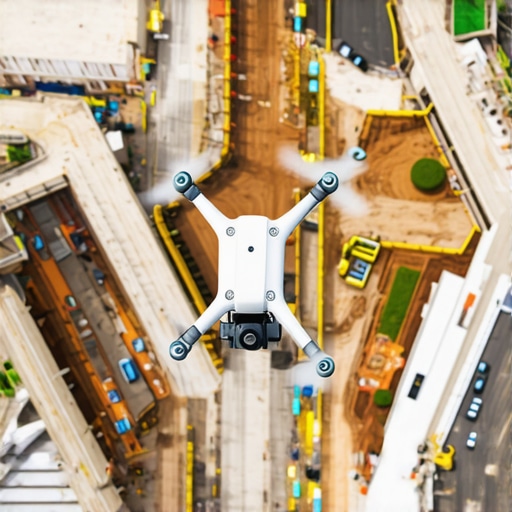
Integrate an image depicting an innovative soil stabilization site utilizing drone-based geotechnical sensors to visualize multimodal analysis in action.
Can Geoengineering Principles Transform Urban Soil Management?
Applying geoengineering concepts—originally devised for climate intervention—offers novel perspectives on urban soil management. Techniques such as controlled soil flushing, vitrification, and staged injection of stabilizing agents enable precise manipulation of subsurface properties. These methods are particularly advantageous in densely built environments where traditional excavation is impractical, thus opening pathways for sustainable urban development with minimized disturbance.
Why Real-Time Monitoring Will Redefine Maintenance Protocols
The integration of IoT-enabled sensors—measuring moisture fluctuations, stress levels, and strain—has paved the way for dynamic maintenance strategies. Continuous data acquisition facilitates adaptive management, ensuring that reinforcement systems respond proactively to evolving conditions. This paradigm shift from reactive to predictive maintenance reduces lifecycle costs and enhances safety margins across critical infrastructure networks.
Harnessing Data-Driven Standards to Elevate Industry Performance
The establishment of quantitative benchmarks—such as permissible settlement rates, maximum deformation thresholds, and reinforcement longevity indices—supports uniformity in project outcomes. Implementing machine learning-assessed standards ensures fail-safe designs tailored to specific geotechnical contexts. Engagement with authoritative repositories, like the International Society for Soil Mechanics and Geotechnical Engineering, supplies vetted datasets that underpin these norms, fostering global industry excellence.
How Will AI Enhance the Legacy of Soil Reinforcement in the Next Decade?
Artificial intelligence stands poised to revolutionize soil reinforcement by enabling autonomous analysis and predictive modeling. Deep learning systems can assimilate vast geotechnical records, climate data, and material performance logs to forecast long-term stability with unprecedented accuracy. These insights will empower engineers to design adaptive reinforcement schemes that evolve over the lifespan of infrastructure, ensuring resilience amidst changing environmental stresses.
Advancing your expertise in these frontier techniques requires continuous engagement with academic breakthroughs and field innovations. Share your experiences or seek collaborative opportunities to contribute to the dynamic evolution of soil stabilization solutions, shaping safer and more sustainable urban futures.
Expert Insights & Advanced Considerations
Embrace Multidisciplinary Approaches to Soil Stability
Integrating geotechnical engineering with emerging technologies such as AI-driven analytics and real-time sensor data can dramatically enhance soil stabilization strategies, ensuring safer and more efficient construction projects.
Prioritize Customized Solutions Over Generic Standards
Given the variability of soil conditions across urban environments, tailored stabilization methods that consider local geotechnical profiles outperform standardized approaches, minimizing risks of failure.
Leverage Cutting-Edge Monitoring for Proactive Management
Deploying advanced monitoring systems, including ground-penetrating radar and IoT sensors, allows engineers to observe soil behavior dynamically, enabling preemptive interventions and optimized resource allocation.
Curated Expert Resources
- Hydrovac Drilling Guide: Offers comprehensive insights into safe and precise utility mapping techniques, essential for reducing subsurface disturbance and identifying soil weaknesses.
- Applied Geotechnics Journal: Features the latest research on soil reinforcement materials like fiber-reinforced polymers, highlighting innovations in durability and environmental resistance.
- AI in Geotechnical Engineering Reports: Explores how machine learning models are transforming predictive analysis for long-term soil stability assessments.
- International Society for Soil Mechanics and Geotechnical Engineering: Provides industry standards, datasets, and best practices for soil analysis and stabilization benchmarks.
- Urban Soil Management White Paper: Discusses geoengineering principles tailored for dense urban settings, emphasizing sustainable and minimally invasive methods.
Final Expert Perspective
Mastering advanced soil stabilization remains a cornerstone of successful complex construction projects, especially as urban environments demand innovative solutions that integrate technological progress with traditional geotechnical expertise. Focusing on personalized strategies, continuous monitoring, and cross-disciplinary innovation will determine success in future infrastructure development. Engage with these authoritative resources and contribute your expert insights to elevate standards and safety across the industry.