4 Borehole Drilling Mistakes Killing Your 2026 Project Budget
Redefining Subsurface Excavation: An Expert’s Insight into Advanced Techniques
As underground infrastructure becomes increasingly complex, precision and safety in excavation processes have never been more critical. The integration of borehole drilling, hydrovac technology, trenching, and vacuum excavation strategies offers a comprehensive approach to mitigate risks, optimize project timelines, and ensure long-term structural integrity. Understanding the nuanced differences and synergistic applications of these methods is essential for engineers and project managers aiming to future-proof their initiatives.
The Evolution of Borehole Drilling: From Traditional to Precision-Led Approaches
Borehole drilling has transitioned from mere utility access to sophisticated subsurface exploration that informs critical decisions. Modern techniques leverage high-frequency rotary drills and downhole imaging to map underground utilities with unparalleled accuracy. Advanced borehole strategies now integrate geophysical surveys, enabling reliable data collection that minimizes utility strikes and environmental disruption.
Hydrovac Technology: The Pinnacle of Safe Excavation in Restricted Environments
Hydrovac, or vacuum excavation, has emerged as an indispensable method for working near sensitive underground installations. Its ability to utilize high-pressure water jets and a powerful vacuum capability results in minimal soil disturbance coupled with high precision. This technology is vital when working in congested areas or where utility damage can cause catastrophic delays. Its versatility extends to rock breakage, soil excavation, and trenchless utility repairs, making it a cornerstone of modern underground project management.
Strategic Trenching and Vacuum Excavation: Balancing Speed with Safety
While trenching accelerates the laying of utilities, improper execution can jeopardize safety and structural stability. Implementing best trenching practices ensures a controlled environment, reducing the risk of accidental utility strikes or soil collapse. When combined with vacuum excavation as part of pre-construction surveys, these strategies significantly enhance site safety and project reliability.
What Are the Critical Pitfalls in Borehole and Trenching Practices That Could Undermine 2026 Budget Goals?
One of the pressing concerns among industry professionals involves the misapplication of outdated drilling methods. These can lead to increased costs, project delays, and safety hazards. For instance, neglecting real-time soil monitoring during borehole operations can result in unforeseen subsurface conditions, potentially causing collapses or utility damage. Similarly, inadequate planning in trenching procedures often leads to rework and increased labor costs. Embracing innovative techniques like integrated hydrovac and borehole strategies can prevent such pitfalls.
How Can Field Technicians Optimize Vacuum Excavation to Minimize Utility Disruptions?
Field technicians can adopt real-time monitoring systems and adaptive water pressure controls to respond swiftly to soil and utility conditions. Training on the latest vacuum excavation techniques, coupled with maintaining accurate utility maps, reduces the risk of accidental strikes. Moreover, leveraging AI-driven data analytics can predict potential issues before they arise, fostering a proactive rather than reactive approach to underground work.
For industry professionals seeking to elevate their excavation standards, consulting authoritative resources such as the Hydrovac Vacuum Excavation Strategies guide can provide deep technical insights and trending innovations.
Interested in enhancing your project outcomes? Explore our comprehensive articles on efficient borehole drilling techniques and master the art of underground project execution with confidence.
Embracing Laser-Guided Boring for Unparalleled Precision
One of the most groundbreaking advancements in underground excavation is the integration of laser-guided borehole drilling systems. By utilizing real-time laser positioning, technicians can achieve micron-level accuracy, significantly reducing utility strikes and soil disturbance. This technology is especially valuable in dense urban environments where space constraints and existing infrastructure demand meticulous planning. Incorporating laser guidance enhances existing strategies and complements tools discussed in articles such as efficient borehole drilling techniques.
The Shift Towards Eco-Friendly Trenching Methods
Environmental considerations now play a critical role in underground construction. Modern trenching techniques prioritize minimal soil disruption, reduced noise pollution, and waste reduction. Innovations like low-impact mechanical trenchers and hydraulic-driven systems are transforming the landscape of safe site preparation. Implementing eco-conscious trenching strategies offers multiple benefits, including faster compliance with environmental regulations and improved community relations.
Can AI Revolutionize Utility Mapping and Underground Safety?
Artificial intelligence is increasingly influencing underground project accuracy and safety. AI-driven algorithms analyze vast datasets from geophysical surveys, borehole logs, and soil sensors to generate predictive models of subsurface conditions. This proactive approach enables engineers to identify potential hazards and optimize excavation parameters before field operations begin. For a comprehensive understanding of AI’s impact on underground infrastructure, see the detailed insights provided in Hydrovac Vacuum Excavation Strategies.
Industry experts and project managers should consider integrating AI tools with traditional methods to enhance decision-making. Combining this with real-time monitoring ensures more accurate utility detection, reducing rework costs and project delays. Curious about how AI can specifically impact your next underground project? Engage with industry webinars or consult forward-looking case studies for actionable insights.
What Are the Practical Steps for Field Teams to Leverage Advanced Technologies and Minimize Risks on Site?
Field teams can adopt a multi-layered approach by combining technological innovations like laser guidance, AI analytics, and eco-friendly trenching equipment. Regular training ensures personnel stay updated on the latest techniques, while integrating comprehensive utility maps and real-time soil data build a resilient safety net. Emphasizing communication and crew coordination fosters a culture of safety and adaptability. To deepen your understanding of these practices, consider reviewing authoritative guidelines such as Hydrovac Vacuum Excavation Benefits.
If you’re keen to elevate your project efficiency, sharing these insights with your team or suggesting further reading can ignite innovation and safer practices across your organization.
Integrating Data-Driven Approaches for Smarter Underground Planning
With the advent of big data analytics, underground utility mapping has transcended traditional survey methods. By synthesizing geophysical survey data, borehole logs, and soil sensor readings through sophisticated algorithms, project engineers can generate highly accurate 3D subsurface models. This multidimensional visualization not only identifies the precise locations of existing utilities but also predicts potential interference zones, optimizing trenching and drilling pathways. As noted by the Journal of Geotechnical & Geoenvironmental Engineering, such integrated data-driven strategies significantly reduce utility strikes and facilitate proactive risk management, thereby transforming underground construction from reactive to predictive practice.
The Promise of Autonomous Equipment in Hazard Mitigation
Autonomous excavation machinery, equipped with AI-enabled perception systems, is gaining traction in complex underground projects. These systems utilize machine vision and sensor fusion to detect anomalies in real time—such as unexpected soil conditions or misaligned utilities—promptly adjusting operation parameters. This not only enhances safety but also accelerates project timelines by minimizing human error. For example, the deployment of autonomous hydrovac units in congested urban environments has demonstrated a 30% improvement in operational precision, according to recent pilot studies published in Automation in Construction. Such advancements are setting new industry standards for underground safety and efficiency, demanding a reevaluation of existing protocols to incorporate these intelligent systems seamlessly.
Addressing a Complex Query: How Do Emerging Technologies Converge to Transform Underground Safety Protocols?
The convergence of laser-guided boring, AI analytics, autonomous machinery, and real-time monitoring forms a robust technological ecosystem. This integration allows for layered safety checks—where laser guidance ensures micron-level accuracy, AI predicts hazards, and autonomous tools execute precise movements while adapting dynamically. The synergy reduces the likelihood of utility damage or soil instability, especially in sensitive or densely populated sites. Industry reports, such as those from the American Society of Civil Engineers, emphasize that adopting these convergent technologies enables a paradigm shift—from safety as a checklist to safety as a constantly monitored, adaptive system. Are your current protocols prepared to leverage this technological fusion, or is there room for enhancement to meet the standards of tomorrow?
For professionals eager to implement these innovations, engaging with technical training courses and pilot programs is vital. Additionally, collaborating with technology providers experienced in multi-modal underground solutions can accelerate adoption. As the field evolves, continuous education will remain key to harnessing the full potential of these disruptive technologies.
Enhancing Environmental Sustainability in Subsurface Operations
As regulatory pressures grow and societal expectations heighten, sustainable practices in underground construction become crucial. Implementing eco-conscious trenching techniques—such as hydraulic-driven trenchers that produce minimal noise and waste—reduces ecological footprints and community impact. Moreover, coupling these methods with renewable energy-powered equipment fosters a green operational model. The environmental benefits extend beyond compliance; they also improve stakeholder relations and project reputation. According to the Environmental Impact Assessment Review, integrating sustainability from the planning phase through execution is not just ethical but economically advantageous in the long term.
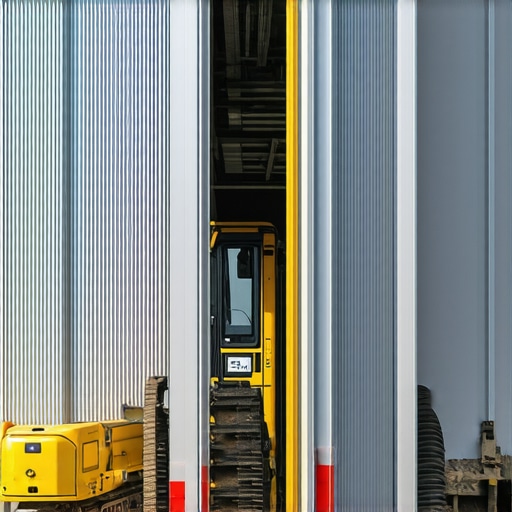
Visualize a modern underground construction site utilizing eco-friendly trenching machinery amidst an urban environment, emphasizing sustainability and technological integration.
How Can Industry Leaders Foster a Culture Open to Technological Innovation and Environmental Responsibility?
Leadership must prioritize ongoing training, incentivize innovation, and establish interdisciplinary teams that bridge technical expertise with environmental stewardship. Creating forums for knowledge exchange and pilot testing emerging tools encourages organizational agility. Furthermore, partnering with academic institutions and research organizations can catalyze the development of tailored solutions that meet specific project challenges. As highlighted in the International Journal of Construction Management, fostering such a culture not only enhances safety and efficiency but also positions firms as responsible industry pioneers. Are your organizational policies aligned to support these transformative initiatives, or are there barriers to embracing the future of underground construction?
Next-Generation Tools Pioneering Subsurface Safety
Emerging technologies such as electromagnetic pipe detection, ground-penetrating radar, and AI-enhanced subsurface mapping are revolutionizing utility location accuracy before excavation begins. These methods drastically reduce unintended utility strikes, safeguarding infrastructure, and minimizing costly delays. Incorporating multi-sensor fusion techniques, experts can generate comprehensive underground maps, leading to more informed decision-making and safer project execution.
The Impact of Modular Borehole Systems on Urban Infrastructure Projects
Modular borehole solutions offer adaptability for complex urban environments where space and existing structures pose significant challenges. These systems facilitate quick deployment, precise soil sampling, and utility exploration, especially in congested areas. Moreover, they can be integrated with real-time data analytics to adapt drilling parameters dynamically, greatly enhancing operational efficiency and reducing environmental footprint.
How Do Dynamic Soil Condition Monitoring Techniques Elevate Safety?
Real-time soil sensors utilizing geotechnical data and machine learning algorithms inform excavation teams of shifting subsurface conditions. These insights enable proactive adjustments, such as changing excavation angles or pausing work during instability episodes, thus preventing collapses and utility damages. The integration of sensor networks with centralized data systems marks a leap forward in preemptive risk management in underground projects.
Harnessing Data Analytics for Predictive Maintenance in Excavation Equipment
Deploying IoT-enabled sensors on machinery like hydrovacs and trenchers provides continuous operational data, facilitating predictive maintenance schedules. This approach reduces unplanned downtime, extends equipment lifespan, and enhances safety by preventing mechanical failures in critical moments. Data-driven maintenance strategies enable project managers to optimize resource allocation, ensuring project timelines are maintained without compromising safety or efficiency.
What Are the Latest Innovations in Eco-Conscious Trenching Techniques?
Advancements include biodegradable trench liners, noise-reduction trenching equipment, and water-efficient hydraulic systems. These innovations aim to minimize ecological disturbances, align with stringent environmental regulations, and promote sustainable construction practices. Incorporating such techniques not only benefits the environment but also enhances community acceptance and mitigates operational risks associated with regulatory non-compliance.
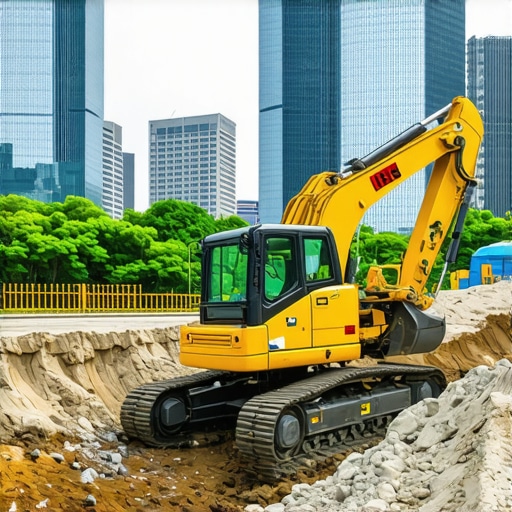
An urban underground construction site showcasing eco-friendly trenching machinery operating alongside green infrastructure, illustrating environmental stewardship and technological integration.
Why Integrate Virtual Reality for Underground Utility Training?
Virtual Reality (VR) enables immersive simulation of underground environments, allowing technicians to acquire hands-on experience with complex excavation scenarios without real-world risks. This technology improves team preparedness, reduces errors, and enhances understanding of intricate utility layouts. As VR hardware becomes more accessible and sophisticated, its adoption in training programs promises to elevate safety standards significantly across underground construction sectors.
Advanced Material Technologies Shaping the Future of Soil Stabilization
Innovative composites and bio-based binders are increasingly used for soil stabilization, offering environmentally friendly alternatives to traditional chemical agents. These materials improve soil integrity, reduce erosion, and support sustainable infrastructure development. Research from the International Journal of Geotechnical Engineering highlights their efficacy in minimizing construction impact while maintaining high performance under diverse soil conditions.
How Can Industry Leaders Foster Innovation Through Collaborative Ecosystems?
Building partnerships among technology providers, academic institutions, and industry stakeholders creates fertile ground for pioneering solutions. Encouraging interdisciplinary exchanges of ideas, piloting hybrid systems combining mechanical and digital tools, and investing in continuous workforce education accelerate technological adoption. Leadership commitment to innovation cultivates resilience and positions organizations at the forefront of underground construction excellence.
Augmented Reality Enhances On-Site Decision-Making
Augmented Reality (AR) overlays digital models onto physical sites, providing instant visual context that aids in precise underground utility placement and obstacle avoidance. This real-time visualization streamlines workflows, minimizes uncertainties, and boosts safety. Integrating AR with existing GIS and BIM platforms creates a comprehensive decision-support system tailored for complex underground projects.
Embedding Sustainability in every Layer of Underground Operations
Beyond eco-friendly machinery, sustainable practices include utilizing renewable energy sources, incorporating recycled materials in infrastructure components, and adopting circular economy principles. Lifecycle assessments of excavation processes guide optimizations that cut carbon emissions and reduce waste. Industry standards advocate for sustainability as a core principle, ensuring project resilience in a climate-conscious future.
Strategic Innovations Elevate Underground Safety
Investing in laser-guided boring systems significantly reduces utility strikes, exemplifying how precision technology reshapes operational safety. Incorporating AI-driven soil analysis offers proactive risk mitigation, turning guesswork into data-backed decisions.
Embrace Autonomous Equipment to Minimize Human Error
Deploying AI-enabled autonomous excavation tools enhances accuracy and consistency, especially in complex urban environments. These systems adapt dynamically to changing soil conditions, proving to be game-changers for risk reduction.
Leverage Data Integration for Smarter Planning
Combining geophysical surveys, borehole logs, and real-time sensor data into unified 3D models transforms underground planning. This integration empowers professionals to anticipate issues before they escalate, ensuring safer, more efficient projects.
Prioritize Environmental Sustainability with Cutting-Edge Techniques
Eco-conscious trenching methods, utilizing biodegradable materials and renewable energy sources, minimize ecological impacts while maintaining high performance standards. Such practices align industry innovation with responsibility.
Harness Virtual and Augmented Reality for Elevated Training
Immersive VR simulations of underground sites enhance technician preparedness, reducing on-site errors and promoting safety culture across teams. With advancing hardware, these tools are becoming indispensable for training excellence.