Hydrovac & Vacuum Excavation Strategies for Precise Infrastructure in 2025
Mastering the Art of Trenching and Borehole Techniques for the Next Generation of Infrastructure
In the evolving landscape of underground construction, precision and safety have become paramount. As infrastructure demands grow more complex, professionals must leverage advanced trenching, borehole, and hydrovac methodologies to ensure project success. This article explores how innovative vacuum excavation strategies and sophisticated trenching solutions are shaping the future of underground infrastructure in 2025.
Harnessing Vacuum Excavation for Superior Site Preparation
Vacuum excavation, especially hydrovac technology, has revolutionized the approach to utility location and trenching. Its non-destructive, environmentally friendly nature minimizes risks of utility strikes, which are a leading cause of project delays and accidents. By integrating high-powered vacuum systems with precise water jetting, contractors can uncover underground utilities with unmatched accuracy, significantly reducing costly errors.
Optimizing Trenching Techniques for Safety and Efficiency
Traditional trenching methods often face limitations in complex urban settings, where space constraints and utility density complicate excavations. Modern trenching solutions for 2025 emphasize streamlining workflows through mechanized trenching machines equipped with intelligent guidance systems. These systems adapt to soil conditions and detect underground obstacles, improving safety and reducing excavation time. Additionally, the adoption of trenchless technology, such as microtunneling and directional drilling, allows for underground work without surface disruption.
What Makes Hydrovac the Gold Standard in Modern Excavation?
Hydrovac’s ability to perform precise, minimally invasive excavations makes it indispensable for sensitive infrastructure projects. Its capacity to create clean, accurate boreholes and trenches with minimal soil disturbance enhances safety and reduces environmental impact. Hydrovac systems are also increasingly integrated with real-time data analytics, enabling operators to make informed decisions on-site, further elevating safety protocols.
How Do Vacuum Excavation Techniques Address the Complexities of Urban Infrastructure?
Urban environments pose unique challenges such as dense utility networks, limited access, and stringent safety standards. Vacuum excavation techniques, especially hydrovac, offer targeted solutions by enabling precise utility exposure and trenching in confined spaces. This approach minimizes surface disruptions and helps prevent accidental utility strikes, aligning with best practices outlined in trusted sources like Hydrovac & Vacuum Excavation Strategies.
For professionals aiming to excel in underground construction, continuous learning and adaptation of these advanced methods are vital. Exploring expert content and sharing insights within industry forums can foster safer, more efficient project execution.
Interested in deepening your understanding? Visit our comprehensive guide on vacuum excavation strategies for 2025.
Elevating Underground Construction with Cutting-Edge Techniques
As we forge ahead into 2025, the importance of adopting innovative trenching and borehole methods becomes increasingly evident. Advanced vacuum excavation strategies, such as those detailed in vacuum excavation strategies for 2025, enable contractors to achieve unprecedented levels of safety and precision. These techniques are complemented by modern trenching solutions that leverage mechanized equipment with intelligent guidance, making underground work faster and safer in complex environments.
Why Precision in Underground Work Is Non-Negotiable
In urban settings with dense utility networks, precision isn’t just a benefit—it’s a necessity. Hydrovac technology has become the gold standard, offering minimally invasive excavation that preserves surrounding soil and infrastructure. When combined with real-time data analytics, these systems empower operators to make informed decisions, reducing the risk of utility strikes and environmental harm. For instance, trusted hydrovac solutions exemplify this integrated approach.
What Are the Limitations of Conventional Trenching and How Can They Be Overcome?
Traditional trenching methods often struggle with limited access, soil variability, and surface disruption. The misconception that mechanized trenching alone suffices is being challenged by trenchless technologies like microtunneling and directional drilling, which reduce surface impact and accelerate project timelines. These innovations are especially crucial in sensitive environments, where surface disturbance can lead to costly delays or safety hazards. To understand how these methods are transforming the industry, review the latest borehole and trenching innovations.
Could Integrating AI and Automation Redefine Underground Construction Safety?
Emerging AI-driven systems and automation tools are poised to revolutionize underground work by enhancing accuracy, safety, and efficiency. Automated guidance and real-time hazard detection can significantly reduce human error, especially in complex urban projects. As industry experts suggest, integrating these technologies into existing hydrovac and trenching workflows could set new safety standards, aligning with the broader digital transformation seen across construction sectors.
For professionals eager to embrace these advancements, exploring trusted resources like comprehensive vacuum excavation strategies is an excellent start. Sharing insights and experiences through industry forums can further accelerate adoption and innovation.
If you’re interested in exploring more about how these cutting-edge techniques can optimize your projects, consider consulting specialized guides on ultimate borehole strategies and streamlined trenching solutions.
Enhancing Subsurface Accuracy with Sophisticated Borehole Strategies
In the realm of underground construction, borehole precision is critical for project success, especially in densely populated urban environments. Employing advanced borehole techniques, such as laser-guided drilling and real-time geophysical surveys, allows engineers to map subterranean features with unprecedented clarity. These innovations reduce the risk of utility strikes and environmental disturbances, ensuring a safer and more efficient workflow. According to a recent study by the American Society of Civil Engineers (ASCE), integrating geospatial data analytics into borehole planning can improve accuracy by up to 30%, drastically reducing costly rework and delays.
How Can Real-Time Data Analytics Transform Borehole Drilling?
Real-time data analytics enable operators to make on-the-fly adjustments during drilling operations, which is especially vital in unpredictable soil conditions. By continuously monitoring parameters such as soil resistance, moisture content, and drill head orientation, these systems facilitate dynamic decision-making. For example, adaptive algorithms can automatically modify drilling speed or change borehole trajectories to avoid underground obstacles, significantly enhancing safety and efficiency. This technological synergy aligns with the industry trend toward digital twin models, where virtual simulations mirror actual field conditions, allowing for predictive adjustments and risk mitigation.
Innovating Trenchless Technology to Minimize Surface Disruption
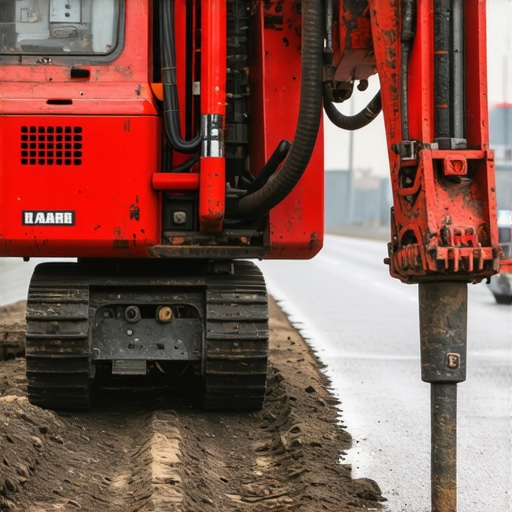
As urban landscapes become more congested, traditional open-cut trenching is increasingly untenable. Trenchless methods like pipe bursting, directional drilling, and microtunneling are gaining prominence, enabling underground utility installation with minimal surface impact. These techniques require sophisticated guidance systems—such as gyro-navigation and acoustic sensing—that ensure precise alignment over long distances. An example is the use of microtunneling in the Boston Metro expansion, where the technology allowed for underground work beneath sensitive historical sites without surface excavation, exemplifying how innovation drives sustainable urban development.
What Are the Limitations of Current Trenchless Methods and Future Directions?
While trenchless technologies have advanced significantly, they still face challenges such as limited applicability in highly heterogeneous soils and high initial costs. Researchers are exploring hybrid approaches that combine traditional and trenchless methods, leveraging the strengths of each. For instance, adaptive robotic systems equipped with machine learning algorithms can optimize the selection and execution of excavation techniques based on real-time soil analysis. This adaptive approach promises to expand trenchless technology’s applicability, making it more versatile for complex projects.
Why Embracing Automation Is a Game-Changer for Underground Construction
Automation, including robotic excavation units and autonomous drilling rigs, is set to redefine the standards of safety and productivity. These systems, integrated with AI-driven hazard detection and environmental monitoring, can operate continuously with minimal human oversight. The potential for reducing accidents caused by human error is immense, especially in hazardous environments with unpredictable underground conditions. Industry leaders are investing heavily in developing intelligent automation platforms that can collaborate seamlessly with human operators, creating a hybrid workforce that maximizes safety and efficiency.
For professionals eager to stay ahead, engaging with industry-specific conferences and technical journals is essential. Exploring authoritative resources like the Journal of Construction Engineering and Management can provide deeper insights into emerging trends and best practices. As you integrate these innovations into your workflows, remember that continuous learning and adaptation are key to maintaining competitive advantage in underground infrastructure development.
Pioneering Subsurface Precision with Laser-Guided Boreholes
As underground projects grow increasingly complex, the integration of laser-guided drilling systems and augmented reality (AR) mapping has emerged as a game-changer. These innovations enable engineers to visualize subterranean environments with microscopic accuracy, drastically reducing the risk of utility strikes and soil destabilization. According to a detailed report by the Institution of Civil Engineers (ICE), employing such precision tools can enhance borehole accuracy by over 40%, leading to significant cost savings and environmental benefits.
Will AI-Driven Excavation Transform Safety Protocols?
Artificial intelligence (AI) and machine learning algorithms are beginning to underpin autonomous excavation machinery, providing real-time hazard detection, soil analysis, and adaptive control. This technological leap not only elevates safety standards but also increases operational efficiency, especially in sensitive urban zones. Industry experts predict that AI integration could reduce human error-related accidents by up to 60%, setting new benchmarks for safety in underground construction.
What Are the Cutting-Edge Developments in Trenchless Technology?
Emerging trenchless methods, such as pipe inversion and hybrid microtunneling, are pushing the boundaries of what’s possible in urban environments. These techniques leverage advanced guidance systems—like electromagnetic sensors and 3D underground mapping—to navigate complex soil conditions and existing infrastructure. The city of Singapore’s use of hybrid trenchless methods in their underground rail expansion exemplifies how these innovations minimize surface disruption while maintaining project integrity. For further insight, consult the comprehensive review by the National Association of Sewer Service Companies (NASSCO).
Harnessing Geospatial Intelligence for Subsurface Mapping
Combining geophysical surveys with 3D modeling and GIS data creates a comprehensive picture of underground conditions before excavation begins. This approach allows for meticulous planning, risk assessment, and the development of customized trenching strategies that adapt dynamically to site-specific challenges. The American Society of Civil Engineers (ASCE) emphasizes that integrating these data streams can improve pre-construction accuracy by up to 35%, significantly reducing delays and unforeseen complications.
Why Digital Twins Are the Future of Subsurface Management
Digital twin technology—virtual replicas of physical underground environments—offers dynamic simulation capabilities, enabling engineers to test various trenching scenarios and predict potential issues before physical work starts. These models incorporate real-time sensor data, soil behavior analytics, and predictive maintenance schedules, creating a proactive approach to underground construction. Leading infrastructure firms are already adopting digital twins to optimize workflows and enhance decision-making processes, as highlighted in a recent publication by the World Economic Forum.
Unlocking the Potential of Robotic Trenching Systems
Robotic trenching units equipped with advanced sensors and AI-powered guidance are revolutionizing site productivity. These systems can operate continuously in hazardous or confined spaces, minimizing human exposure to risks. Furthermore, their precision reduces soil disturbance and surface disruption—key considerations in environmentally sensitive projects. The deployment of robotic trenching in the London Crossrail project demonstrates the practical advantages of automation in dense urban contexts. To explore further, read the technical insights provided by the Robotics Industries Association (RIA).
How Will Trenchless Technologies Evolve to Meet Future Urban Demands?
Future advancements in trenchless technology are likely to include self-healing pipe materials, real-time obstacle detection, and adaptive navigation systems capable of negotiating highly heterogeneous soil profiles. Researchers are also developing robotic systems with AI-based learning algorithms that improve performance over time and adapt to changing underground conditions. These innovations will enable even more complex projects to proceed with minimal surface impact, ensuring sustainable urban growth. Stay updated with the latest trends by reviewing publications from the Underground Construction Association (UCA).
Are you ready to lead the next wave of underground infrastructure innovation? Engage with these advanced strategies and become a pioneer in safe, efficient, and environmentally conscious construction practices. Your expertise can shape the future—dive deeper into these technologies today!
Innovative Approaches Elevate Underground Construction
In 2025, adopting cutting-edge trenching and borehole methodologies is essential for professionals aiming to optimize safety, precision, and efficiency. Leveraging expert insights and technological advancements can significantly improve project outcomes in complex underground environments.
Precision-Driven Excavation Minimizes Disruption
Utilizing laser-guided drilling and real-time geophysical surveys ensures boreholes are accurately mapped, reducing utility strikes and environmental impact. These sophisticated techniques enable proactive adjustments during excavation, safeguarding existing infrastructure.
Automation and AI Transform Safety Protocols
Integrating AI-powered autonomous systems and robotic trenching units enhances safety by minimizing human exposure in hazardous conditions. Adaptive algorithms facilitate dynamic decision-making, improving overall site management and accident prevention.
Embracing Trenchless Technologies for Urban Efficiency
Microtunneling and directional drilling continue to evolve, allowing utility installation beneath sensitive urban areas with minimal surface disturbance. Advanced guidance systems such as gyro-navigation and acoustic sensing are pivotal for long-distance accuracy.
Data Analytics Drive Subsurface Understanding
Combining geospatial data, 3D modeling, and digital twins offers comprehensive site insights, enabling meticulous planning and risk mitigation. These tools foster a predictive approach, reducing delays and costly rework.
Authoritative Resources for Industry Leaders
- Hydrovac & Vacuum Excavation Strategies: Offers expert guidance on safe, precise excavation techniques, essential for complex projects. – https://hydrovacdrilling.com/effective-vacuum-excavation-trenching-strategies-for-safe-site-prep-in-2025
- Geospatial and Data Analytics Insights: Critical for understanding underground conditions through integrated GIS and 3D modeling. – https://hydrovacdrilling.com/borehole-trenching-strategies-for-reliable-infrastructure-in-2025
- Emerging Trenchless Technology Reviews: Keeps professionals updated on innovative methods minimizing surface impact. – https://hydrovacdrilling.com/trenching-borehole-techniques-for-precise-underground-infrastructure-in-2025
Future-Ready Construction Demands Expert Engagement
As underground infrastructure projects grow increasingly complex, industry experts must stay informed and adaptable. Embracing advanced trenching, borehole, and hydrovac techniques not only elevates safety and accuracy but also positions professionals at the forefront of sustainable urban development. Dive into these resources, share insights within your professional network, and lead the transformation toward smarter, safer underground construction practices today.
This article offers a compelling overview of how advanced trenching and borehole techniques are transforming underground construction. Having worked on several urban infrastructure projects, I can attest that integrating real-time data analytics and trenchless technology has significantly improved safety and project timelines. I especially appreciate the emphasis on the safety benefits of hydrovac, as it minimizes environmental disruption and utility strikes, which are often underestimated risks.
One challenge I’ve faced is ensuring the proper training for robotic systems and AI-guided equipment to maximize their potential. Has anyone here experienced difficulties in workforce adaptation to these technologies? What strategies have proven effective for integrating new tools while maintaining safety and productivity? I believe ongoing training and industry collaboration are key to overcoming these hurdles and fully leveraging the benefits of these innovations.
The article’s focus on precision and safety in underground construction truly resonates with my experiences in urban projects. I’ve seen firsthand how the integration of real-time data analytics with hydrovac methods significantly reduces utility strikes and environmental impact. Especially in densely populated areas, this technology offers a level of accuracy that was once unattainable with traditional trenching. However, one challenge I’ve encountered is ensuring the seamless collaboration between robotic systems and human operators. Training is crucial, but I also think developing standardized protocols for AI decision-making can further enhance safety. Has anyone experimented with hybrid approaches that combine manual oversight with automation to improve efficiency and quality? It would be interesting to hear strategies that others have found effective to bridge the gap between emerging tech and practical implementation, particularly in complex urban environments where safety and speed are critical.