Unveiling the Complexities Behind Vacuum Truck Limitations in Deep Sludge Extraction
In the realm of underground utility installation and maintenance, vacuum excavation has ascended as an essential technique for precision and safety. However, occurrences where vacuum trucks fail to lift heavy sludge at depth often perplex even seasoned operators. This challenge underscores the intricate interplay of soil mechanics, equipment limitations, and environmental variables that define successful excavation outcomes.
Semantic Nuances in Soil Composition and Their Impact on Vacuum Efficacy
How Do Variations in Soil Texture and Viscosity Influence Vacuum Performance?
Soil heterogeneity, especially in substrates like clay, silt, or loamy mixtures, significantly affects sludge mobilization. High-viscosity or cohesive soils, such as saturated clay, create formidable barriers for vacuum systems due to their inherent resistance and tendency to form pluggable deposits within hoses and nozzles. Recognizing these properties allows for targeted adaption of hydro-vac procedures, including tailored pressure and flow adjustments to optimize extraction efficiency. Consulting detailed analyses like those found in the Journal of Geotechnical Engineering (see this source) can deepen understanding of soil-fluid interactions pertinent to vacuum excavation.
Equipment Limitations Versus Environmental Dynamics
What Mechanical and Technical Constraints Hinder Heavy Sludge Retrieval at Depth?
While field operators often attribute failure to equipment inadequacy, deeper insights reveal that pump capacity, hose diameter, and nozzle design critically influence performance. Vacuum pumps with insufficient suction power may struggle against high-pressure zones created by trapped gases or water-saturated sediments, leading to premature loss of suction or cavitation. Additionally, hose diameter constraints can impede the flow of viscous materials, necessitating specialized hose materials or auxiliary tools. Analyzing real-time pressure data and conducting routine maintenance enhances operational reliability. For more sophisticated equipment considerations, technical manuals like those from Hydrovac Drilling provide comprehensive guidelines.
Can Site Preparation Techniques Enhance Vacuum Penetration in Challenging Conditions?
Pre-conditioning soils through techniques such as controlled dewatering, soil loosening, or the use of chemical stabilizers can dramatically improve excavation outcomes. For example, managing groundwater levels prevents soil saturation from elevating viscosity, thereby facilitating smoother sludge removal. Strategic site prep reduces mechanical strain on vacuum systems and shortens excavation timeframes.
Strategies for Overcoming Deep Excavation Challenges in Complex Sediments
Addressing failures where vacuum trucks cannot lift sludge at depth requires a multi-faceted approach. Implementing auxiliary methods like jetting to disintegrate compacted sediments (see detailed trenching techniques) or employing dual-force vacuum systems increases efficiency. Incorporating real-time monitoring tools further aids in adapting the process dynamically, ensuring safety and productivity.
What Are the Common Signs Indicating Vacuum System Inefficiency in Heavy Sludge Conditions?
Operators should monitor for symptoms such as inconsistent suction, frequent pump cavitation, hose clogging, or pressure fluctuations. Recognizing these signs early enables proactive intervention, minimizing downtime and preventing equipment damage.
Interested in advanced techniques for borehole stabilization or trenching in complex soils? Explore our comprehensive articles or share your expert insights to foster community knowledge exchange.
For further technical depth, consult scholarly articles like the work on soil-fluid interactions available at this authoritative source.
Innovative Techniques to Break Through Deep-Set Sludge Barriers
When conventional vacuum methods fail to mobilize stubborn sludge at significant depths, it’s time to consider advanced solutions that enhance efficiency and safety. Techniques such as employing sonic or ultrasonic oscillation can loosen densely packed sediments, making them more accessible for extraction. Additionally, the use of hydraulic jetting prior to vacuum application can pre-condition the soil, reducing viscosity and preventing hose clogging. Implementing such combined approaches not only accelerates the process but also extends equipment lifespan by minimizing undue strain.
Leveraging Technology to Detect and Map Subsurface Anomalies
How Can Ground Imaging Tools Enhance Deep Sludge Management?
High-resolution ground penetrating radar (GPR) and electromagnetic surveys serve as invaluable assets for pinpointing underground voids, dense sludge zones, or layered sediment structures that impede vacuum efficiency. These tools provide real-time data, informing operators on optimal positioning and technique adjustments. By integrating such advanced geophysical techniques, site managers can anticipate potential challenges and tailor strategies accordingly. For instance, understanding the distribution of saturated clay or silty sediments allows for targeted soil conditioning, reducing the risk of equipment damage and ensuring smoother operations. Learn more about the limitations of ground imaging in saturated soils at this insightful resource.
Minimizing Environmental and Safety Risks During Intensive Extraction
Deep sludge extraction often involves handling hazardous materials or unstable sediments that pose safety risks to personnel and the environment. Utilizing real-time pressure monitoring systems enables immediate detection of pressure drops or anomalies, facilitating prompt responses before catastrophic failures occur. Structural reinforcement, such as temporary casing or flexible liners, safeguards against collapse or blowouts in unstable strata. Furthermore, adhering to environmental regulations by containing and properly disposing of excavated materials minimizes ecological impact. Integrating environmental best practices ensures compliance and promotes sustainable project management. Discover more about site stabilization techniques at this detailed guide.
Could Adaptive Equipment Modules Revolutionize Deep Sludge Extraction?
Emerging modular systems, designed with interchangeable components tailored for specific sediment types, promise to transform deep sludge management. For example, combining variable-pressure pumps with adaptable nozzles allows operators to customize their approach based on real-time feedback, optimizing efficiency across diverse soil conditions. Such adaptive machinery could reduce downtime, extend equipment lifespan, and improve safety margins. Embracing these innovations requires ongoing training and investment but offers significant long-term dividends in complex subterranean operations.
If you’re looking to refine your technique, share your experiences or explore in-depth case studies—community engagement is crucial for collective growth. To stay ahead in subterranean excavation strategies, regularly consult authoritative sources such as industry-leading research that delves into soil-fluid interactions and engineering advancements for underground works.
Harnessing Ultrasonic Technologies to Disrupt Deep-Settled Sediments
Ultrasonic oscillation represents a cutting-edge approach in the arsenal against stubborn underground sludge. By transmitting high-frequency vibrations into saturated sediments, operators can induce micro-fractures, reducing viscosity and facilitating easier removal. Studies have shown that ultrasonic-assisted vacuum extraction can slash operational times by disrupting soil matrices at a microscopic level, making previously inaccessible zones manageable. This method, integrating sound vibration with traditional vacuum systems, unlocks new potentials for complex subterranean remediation projects.
What Are the Practical Applications of Ultrasonic Vibration in Trenchless Soil Disruption?
In real-world scenarios, ultrasonic modules are affixed to hydrovac nozzles or integrated into specialized pipe linings to deliver targeted vibrations directly into problematic zones. For example, in a case involving saturated clay layers, ultrasonic waves introduced via probe-inserted probes emitted localized vibrations, significantly loosening the material. This technique minimizes the need for aggressive mechanical excavation, reduces environmental disturbance, and prolongs equipment lifespan. Further reading on ultrasonic soil disruption techniques can be found in the Journal of Geotechnical Engineering (see here).
Adaptive Cutting Systems for Variable Soil Landscapes
The future of deep sludge extraction hinges on machinery that responds dynamically to changing underground conditions. Modular cutting and vacuum systems equipped with intelligent sensors can alter parameters such as nozzle aperture, pressure levels, and vibration intensity in real-time. This adaptability ensures optimal performance across diverse sediment types—from dense, cohesive clays to loosely packed silts—without requiring lengthy manual adjustments. Training operators to leverage these smart systems enhances productivity, safety, and equipment longevity, positioning companies at the forefront of underground excavation technology.
How Can Real-Time Data Analytics Improve Deep-Subsurface Operations?
Incorporating IoT-based sensors into excavation equipment allows for continuous monitoring of pressure fluctuations, soil consistency, and equipment health. Advanced analytics process these data streams to predict potential blockages, detect early signs of equipment fatigue, and adapt operational parameters proactively. For instance, a sudden spike in pressure readings might indicate an impending hose clog, prompting automatic adjustments or maintenance alerts. This predictive approach not only minimizes downtime but also elevates safety standards, making deep sludge extraction safer and more efficient.
To explore these emerging technologies further and their implementation in your projects, engaging with industry-leading research and innovation hubs is essential. The integration of ultrasonic vibrational tools and smart adaptive systems signifies a paradigm shift, promising to resolve the most intractable subterranean challenges and expand the horizons of underground utility work.
Harnessing the Power of Adaptive Nozzle Technologies for Challenging Sediment Profiles
Innovative nozzle systems equipped with real-time feedback mechanisms have revolutionized deep sludge removal by dynamically adjusting flow rates and pressure based on subsurface conditions. These intelligent nozzles facilitate targeted soil loosening and enhance suction efficiency, particularly in heterogeneous sediment layers exhibiting variable viscosity and cohesion. Such adaptive tools allow operators to optimize performance without manual interventions, leading to reduced downtime and increased safety in complex underground environments.
Optimizing Vacuum Dynamics Through Fluid-Structure Interaction Modeling
Advanced computational models that simulate fluid-structure interactions provide invaluable insights into pressure distributions and flow patterns within subterranean sediments. By understanding how viscous sludges respond to suction forces and fluid acceleration, engineers can refine vacuum parameters and hose configurations to maximize extraction efficacy. Incorporating high-fidelity simulations into operational planning fosters predictive maintenance and strategic equipment deployment, ultimately elevating the standards of underground excavation precision.
Is Real-Time Soil Characterization the Future of Deep Borehole Management?
Integrating downhole sensors capable of continuous soil property assessment offers a transformative approach to managing complex sediment profiles. Technologies such as resistivity probes, acoustic impedance sensors, and laser-induced breakdown spectroscopy enable detailed, instantaneous data on soil composition, moisture content, and cohesion levels. This granular knowledge empowers operators to customize milling or jetting techniques proactively, minimize equipment wear, and mitigate environmental risks. As the precision of subsurface imaging advances, real-time soil characterization is poised to become an industry staple, ensuring safer and more effective extraction processes.
Leverage Expert Resources for Cutting-Edge Subsurface Solutions
By consulting authoritative sources like the American Society of Civil Engineers’ Geotechnical Engineering Materials and Testing guidelines (see here), practitioners can stay informed on the latest standards and innovations in underground soil management. Engaging with specialized research enhances operational strategies, supports compliance with safety regulations, and fosters innovation in equipment design.
Activate Your Expertise: Join the Next Wave of Deep Excavation Innovation
Discover how integrating these advanced methodologies can redefine your project outcomes. Share your experiences or inquire about tailored solutions that address your unique underground challenges. Collaborate with industry leaders committed to pushing the boundaries of what is possible beneath the surface.
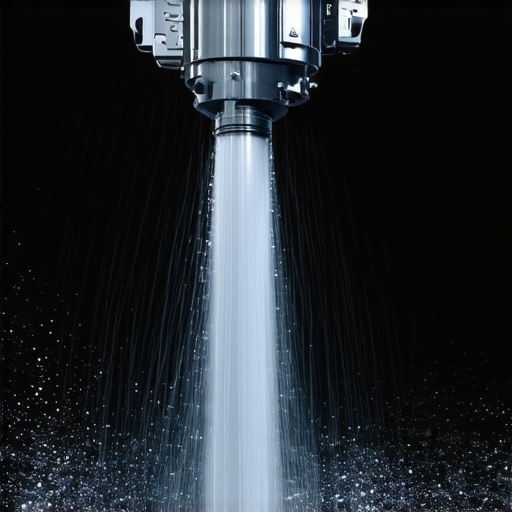
Expert Insights & Advanced Considerations
Employ Adaptive Nozzle Technologies to Tackle Variable Sediments
Utilizing nozzles with real-time feedback mechanisms enables operators to dynamically adjust flow and pressure, optimizing vacuum efficiency across heterogeneous underground conditions. This adaptability minimizes downtime and maximizes extraction success in complex sediment landscapes.
Integrate Ultrasonic Disruption for Persistent Sludge
Ultrasonic vibrational tools emit high-frequency waves that micro-fracture dense, viscous sediments, facilitating easier removal. Combining ultrasonic oscillation with traditional vacuum methods can significantly reduce processing time and equipment strain in stubborn scenarios.
Leverage Real-Time Geophysical Monitoring to Anticipate Obstacles
Ground penetrating radar and electromagnetic imaging provide vital subterranean maps, revealing zones of high viscosity or unexpected voids before excavation begins. This foresight allows for proactive adjustments, enhancing safety and operational planning.
Advance Site Preparation for Challenging Conditions
Preconditioning soils through controlled dewatering or chemical stabilizers reduces viscosity and soil cohesion, easing sludge removal. Strategic site prep prevents equipment clogging and accelerates excavation workflows.
Embrace Modular, Intelligent Equipment Systems
Future equipment trends point toward modular systems with sensors and adaptive controls, allowing for on-the-fly adjustments based on soil feedback. Such innovations promise safer, more efficient deep excavation processes.
Curated Expert Resources
- Journal of Geotechnical Engineering: Offers peer-reviewed research on soil-fluid interactions and innovative excavation techniques, valuable for understanding complex sediment behavior.
- Hydrovac Drilling Technical Manuals: Provides comprehensive guidelines on equipment specifications, maintenance, and advanced operation strategies tailored to challenging excavation scenarios.
- American Society of Civil Engineers Publications: Features standards and best practices in underground construction, emphasizing safety and environmental considerations.
- Ground Penetrating Radar Case Studies: Document real-world applications of geophysical tools in detecting subsurface anomalies, aiding proactive planning.
Final Perspective on Mastering Deep Sludge Extraction
Achieving success in deep sludge recovery hinges on integrating expert insights, leveraging state-of-the-art technology, and meticulous site planning. The evolving landscape of trenching and borehole management demands a proactive, informed approach, especially when conventional methods encounter limitations. As the industry advances, embracing innovative strategies not only enhances efficiency but also elevates safety and environmental sustainability. For practitioners committed to excellence, continuous learning and engagement with authoritative resources are indispensable. Engage with industry forums, share your insights, and stay at the forefront of underground excavation breakthroughs—your expertise drives progress in this complex domain.