Revolutionizing Trenching Strategies in Unstable Sandy Soils
In the realm of underground utility installation and excavation, mastering trenching in sandy soils is a nuanced challenge that demands a synthesis of precision engineering, soil mechanics expertise, and innovative hydrovac technology. As infrastructure demands grow increasingly complex, professionals must employ sophisticated methods that mitigate risks such as trench collapse, ground displacement, and utility damage. Exploring advanced trenching techniques not only enhances project safety but also optimizes operational efficiency in challenging geotechnical environments.
Navigating the Intricacies of Soil Behavior Under Stress
Understanding the granular nature of sandy soil is essential for effective trench management. Unlike clay or cohesive soils, sands exhibit low cohesion and are prone to shifting when disturbed. This behavior necessitates a careful balance during excavation, where overexertion can trigger collapses, and insufficient reinforcement leads to instability. Implementing real-time soil analysis and geotechnical assessments allows engineers to adapt their approach dynamically, reducing the likelihood of unexpected failures.
The Role of Vacuum Excavation in Preserving Subsurface Integrity
Among cutting-edge techniques, vacuum excavation (or hydrovac) offers unparalleled precision when dealing with delicate subsurface conditions. Its non-destructive removal of soil minimizes ground disturbance, which is critical for avoiding collapse in sandy environments. Incorporating high-pressure hydrovac systems with enhanced suction capabilities ensures that ground stability is maintained throughout the trenching process. For instance, adjusting water flow rates and vacuum strength based on soil moisture content helps manage complex layered deposits effectively. The technology’s capacity for visual inspection and precise utility location further elevates safety standards, reducing the risk of utility strikes and near-miss incidents.
Strategic Shoring and Ground Support Innovations for Sandy Environments
Practical application of trench shoring systems must be tailored to the specific geotechnical profile. Modular trench boxes equipped with adaptive braces, coupled with soil stabilization techniques such as ground grouting or chemical agents, can significantly reinforce trench walls. These methods not only prevent collapses but also facilitate extended excavation depths without compromising safety. Experts often integrate real-time monitoring tools that provide stress analysis and wall deformation data, allowing for immediate intervention when anomalies are detected.
How to Prevent Ground Collapse During Deep Excavations
Deep trenching in sandy soils is particularly susceptible to rapid ground failure. To mitigate this, engineers implement a multi-layered approach combining soil reinforcement, controlled dewatering, and careful sequencing of excavation. Dewatering reduces pore water pressure, increasing effective stress in the soil matrix and enhancing stability. Additionally, employing controlled trenching sequences that gradually expose soil layers allows for better management of the soil’s shear strength. Supplementing these methods with real-time ground sensors provides an additional layer of safety, enabling quick response to potential instability indicators.
Can Advanced Soil Stabilization Techniques Bridge the Gap in Sandy Soil Support?
Addressing this question involves evaluating innovative soil stabilization approaches such as chemical grouts, permeation grouting, and the use of geosynthetics. These methods strengthen the soil structure by interlocking sand particles and reducing their susceptibility to liquefaction or collapse under load. Ongoing research, including white papers from the American Society of Civil Engineers, underscores the potential of these techniques to extend safe excavation depths in loose granular deposits, thereby transforming traditional trenching paradigms.
For more insights on optimizing sub-surface excavation safety, consider exploring comprehensive guides on groundwater management during deep trenches and innovative soil support methodologies.
Professional collaboration and continuous research into soil behavior dynamics are essential for advancing trenching efficacy in challenging soils. Your expertise and insights can contribute to refining these techniques—sharing experiences helps evolve industry standards and safety protocols.
Leveraging Soil Moisture Content to Enhance Excavation Control
Understanding the role of soil moisture is pivotal when working with sandy soils. Adequate moisture levels can improve cohesion temporarily, reducing the risk of trench wall instability. Engineers often manipulate water infiltration strategically, employing real-time soil moisture sensors to fine-tune water application rates during excavation. This precise control helps prevent sudden collapses and enhances the overall safety of deep trenching operations. For example, adjusting water flow based on readings from reliable sensors optimizes soil stability without causing excessive softening or erosion.
Integrating High-Resolution Ground Penetrating Radar for Accurate Subsurface Mapping
Accurate subsurface imaging is vital for avoiding utilities and understanding soil heterogeneity, especially in sandy terrains where conditions can vary unexpectedly. Modern ground-penetrating radar (GPR) systems equipped with high-frequency antennas can delineate layered deposits, voids, or contamination zones with remarkable clarity. Implementing advanced GPR techniques, such as multi-offset measurements, provides a more comprehensive picture of underground conditions. High-quality imaging ensures that excavation strategies are tailored precisely, reducing the likelihood of utility strikes and ground collapse—crucial when working in environments prone to shifting sands.
Innovative Soil Stabilization Beyond Traditional Methods
Beyond chemical grouts, emerging soil stabilization technologies hold promise for supporting deep trenches in unconsolidated sands. The application of geosynthetics, such as retention fabrics and synthetic anchors, creates a reinforced barrier that contains soil movement. Moreover, in-situ chemical stabilization using eco-friendly binders can modify the soil’s shear strength, without necessitating extensive ground treatment. Ongoing research published by structural engineers at the Institution of Civil Engineers highlights these methods’ potential to unlock deeper, safer excavations in loose granular terrains, expanding operational possibilities.
What Are the Long-Term Implications of Soil Stabilization Techniques on Groundwater Flow?
Assessing the environmental impact of stabilization methods is essential, especially when reactive chemicals or synthetic materials are used near groundwater sources. Advanced models suggest that certain chemical treatments, while effective in immediate soil stabilization, could alter subsurface hydrology over time, potentially leading to contamination or changes in water flow patterns. Consulting environmental experts and adhering to guidelines, such as those outlined in state environmental regulations, ensures that excavation practices remain sustainable while maintaining safety standards. For additional guidance, explore groundwater management strategies during deep trenching.
Engaging in continuous research and sharing practical experiences contribute to refining these innovative techniques, making trenching safer, more efficient, and environmentally responsible. Industry stakeholders are encouraged to collaborate and publish their findings to advance the collective knowledge base.
Harnessing Dynamic Soil Property Monitoring for Optimized Excavation Safety
In sophisticated trenching operations, static soil assessments often fall short of capturing the real-time shifts occurring beneath the surface. Integration of advanced sensor technologies—such as piezometers, laser scanning, and portable geotechnical probes—enables continuous monitoring of critical parameters like pore water pressure, shear stress, and subsurface deformation. This dynamic data stream informs immediate decision-making, allowing engineers to adapt excavation techniques proactively rather than reactively. Deploying these systems in tandem with hydrovac operations creates a feedback loop that maintains ground stability and prevents catastrophic failures, especially in layered sandy deposits where heterogeneity can cause unpredictable soil responses.
Implementing Multi-Asset Ground Stabilization: Combining Mechanical, Chemical, and Biological Interventions
Emerging consensus among geotechnical experts advocates for a holistic approach to soil stabilization that transcends traditional methods. Mechanical reinforcement—using soil nails and geosynthetics—provides immediate physical support, while chemical grouts impart long-term cohesion enhancement. Complementing these, biological stabilization—such as bio-cementation employing microbes to induce calcite precipitation—offers eco-friendly, sustainable solutions that can fill microvoids and bind sand particles effectively. A recent comprehensive study in the Journal of Geotechnical Engineering highlights the synergetic effects of integrating these techniques to achieve higher load-bearing capacities and increased resistance to liquefaction during trenching operations in challenging terrains.
Unveiling Cutting-Edge Solutions for Sandy Soils
Deep excavation in sandy environments presents a suite of geotechnical challenges, primarily due to the inherent low cohesion and propensity for rapid ground failure. Traditional support methods often fall short in ensuring safety and stability at greater depths. Emerging innovations in soil stabilization are redefining the limits of what is achievable, enabling engineers to design safer, more efficient trenching operations even amidst the unpredictable behavior of loose granular deposits. These methods hinge on a blend of mechanical, chemical, and biological approaches—each offering unique advantages in reinforcing fragile subsurface conditions.
Why Standard Support Fails in Deep Sandy Trenches?
Conventional shoring techniques rely heavily on structural barriers and pre-battered walls, which are often insufficient in sandy soils where shear strength diminishes rapidly under load. The high pore water pressures in such soils can induce liquefaction, especially during heavy rainfall or groundwater fluctuations. This dynamic instability necessitates a shift toward more adaptive solutions that can respond to evolving subsurface conditions in real time, ensuring both worker safety and project integrity.
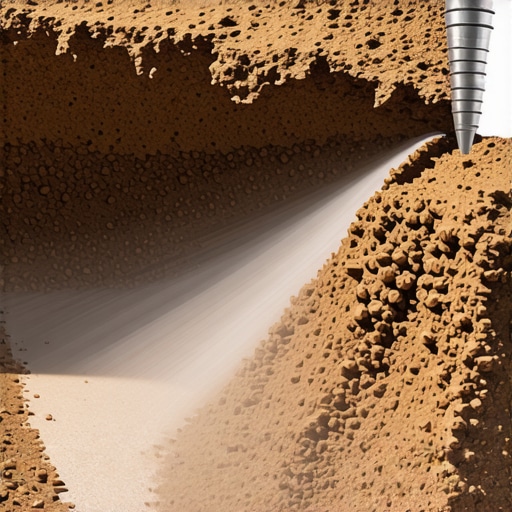
Implementing resilient soil support systems becomes a multifaceted endeavor when working in challenging deposits. By integrating geosynthetics that distribute stresses evenly, employing chemical matrix modifications to create stronger particle bonds, and utilizing biological agents that precipitate mineralization, engineers create a multi-layered defense against collapse. Such synergistic approaches harness the strengths of each technique, compensating for the weaknesses when used in isolation.
What Are the Long-Term Impacts of Soil Stabilization Techniques?
While immediate stability is paramount, sustainability and environmental impact are equally critical considerations. Chemical stabilizers, if not judiciously selected, could alter groundwater chemistry or impede natural filtration processes. Similarly, biological stabilization methods, leveraging microbes to form calcite binding, offer eco-friendly alternatives with minimal ecological footprint. Recent studies from the American Society of Civil Engineers highlight the importance of assessing both performance and environmental compatibility when deploying these innovative solutions at scale.
How Can Real-Time Ground Monitoring Revolutionize Deep Excavations?
Advances in sensor technology and data analytics are transforming site management by enabling continuous, real-time monitoring of ground behavior. Embedded piezometers gauge fluctuations in pore water pressure, while laser scanners detect subtle deformations in trench walls. Coupling these sensors with predictive analytics allows for dynamic adjustments to excavation methods, preventing catastrophic failures before they occur. This proactive approach is especially valuable in layered sandy soils, where heterogeneity can cause sudden, unpredictable shifts.
Can Soil Reinforcement Micro-Systems Offer a Breakthrough in Stability?
Micro-scale reinforcement technologies, such as nano-engineered binders and fiber-reinforced matrixes, are on the horizon. These systems can permeate even the most loosely packed sands, enhancing cohesion from within. The potential for injecting such materials during early excavation phases extends safe excavability depths significantly, possibly revolutionizing traditional trenching paradigms for granular substrates. Ongoing research at leading institutes suggests that, with further development, these techniques could provide rapid, cost-effective support tailored to immediate project needs.
What Is the Future of Eco-Friendly Trenches in Unstable Soils?
Looking ahead, the trend toward sustainable trenching practices indicates a shift from purely technical solutions to integrated environmental strategies. The deployment of biodegradable support materials, coupled with biological cementation methods, aims to minimize ecological footprint while maximizing safety. Policy frameworks and industry standards are increasingly emphasizing these green innovations, urging practitioners to adopt environmentally conscious yet technically robust techniques. As innovations mature, the industry will likely witness a new standard where safety, efficiency, and ecological responsibility coalesce seamlessly.
To stay at the forefront of these advancements, professionals in geotechnical engineering and excavation fields should actively engage with emerging research, participate in pilot projects, and contribute insights from field experiences. Sharing successes and lessons learned accelerates industry-wide adoption of these transformative techniques, ultimately fostering safer, more sustainable trenching operations worldwide.
,
Expert Insights & Advanced Considerations
Innovate with Multi-Method Soil Support
Combining mechanical reinforcement, chemical stabilization, and biological methods creates a resilient barrier, ensuring safety even in unpredictable sandy deposits.
Leverage Real-Time Monitoring Technologies
Employing sensors such as piezometers and laser scanners provides continuous data on ground shifts, enabling proactive adjustments that prevent failures during deep excavations.
Prioritize Eco-Friendly Stabilization
Adopting sustainable techniques like bio-cementation reduces environmental impact while enhancing ground stability, aligning operational excellence with ecological responsibility.
Utilize High-Resolution Subsurface Imaging
Advanced ground-penetrating radar systems reveal layered deposit structures, aiding precise planning and minimizing utility strikes in complex sandy terrain.
Optimize Soil Moisture Control Strategically
Balancing water content with real-time sensors influences cohesion temporarily, thereby controlling trench wall stability during sensitive excavations.
Curated Expert Resources
- American Society of Civil Engineers White Papers: Offers cutting-edge research on innovative soil stabilization techniques and their long-term environmental implications.
- Geotechnical Monitoring Technologies Handbook: A comprehensive guide to employing sensors and real-time data analysis for ground stability monitoring.
- Environmental Soil Stabilization Journals: Cover eco-friendly and biological stabilization methods that align with sustainable construction practices.
- Ground Penetrating Radar Advances Reports: Detail the latest high-resolution imaging techniques for subsurface mapping in challenging terrains.
- Hydrogeology and Water Management Literature: Provides insights into soil moisture manipulation’s role in ground support during excavation in sandy soils.
Final Perspective: Elevate Your Excavation Precision
In the pursuit of safe, efficient trenching in sandy soils, integrating expert-level strategies—such as multi-method stabilization, real-time monitoring, and environmentally conscious techniques—can transform project outcomes. These advanced insights not only mitigate risks but also set new industry standards for sustainable and resilient excavation practices. Your continued commitment to adopting and sharing these expert techniques will shape the future of underground work—fostering safer sites and more responsible engineering. To deepen your expertise, explore our comprehensive guides and collaborate with industry peers to pioneer innovations that push the boundaries of what’s possible in demanding geotechnical environments.