Harnessing Thermal Imaging for Precision in Underground Utility Detection
In modern subsurface exploration, especially within borehole, vacuum excavation, and trenching operations, the ability to accurately identify underground utilities dramatically reduces risk and enhances project efficiency. Thermal imaging technology, leveraging infrared sensors, offers a sophisticated approach to detect concealed infrastructure by analyzing temperature differentials in soil and materials, enabling experts to visualize energy signatures emitted or reflected by utilities. This advanced technique serves as a vital tool for geotechnical engineers and excavation specialists committed to safety and precision.
The Complexity of Soil Thermal Signatures in Utility Mapping
Understanding the nuances of soil thermal properties is crucial. Variations in moisture content, soil composition, and ambient temperature influence infrared readings, necessitating targeted calibration. For instance, recent studies indicate that thermal contrasts are most pronounced when utilities carry current or have residual heat from recent activity, highlighting the importance of timing and environmental considerations during surveys. Incorporating known soil thermal conductivity values, supplemented with geophysical data, refines utility differentiation and reduces false positives.
Interpreting Infrared Data: A Skill Beyond Technology
Expertise in thermal data interpretation involves recognizing temperature anomaly patterns indicative of electrical conductors, metal pipes, or fiber-optic cables beneath the surface. Professionals often combine thermal imaging with other detection methods, such as electromagnetic locator tools, to validate findings. This integrated approach enhances detection accuracy, particularly in densely populated urban areas with complex underground networks, such as high-density city centers where utility congestion poses significant challenges. For further insights, consult [the Journal of Geotechnical and Geoenvironmental Engineering](https://ascelibrary.org/journal/atgecq).
Limitations and Challenges in Thermal Imaging Utility Detection
While thermal imaging offers significant advantages, its limitations must be acknowledged. Factors like soil moisture saturation, recent weather changes, and ambient thermal conditions can obscure utility signatures. Moreover, non-conductive utilities such as plastic pipes often emit minimal thermal contrast, complicating identification. Thus, experts advocate for comprehensive site surveys that integrate thermal imaging with traditional detection techniques, ensuring reliable outcomes for complex projects involving trenching and borehole logging.
Why Does Thermal Imaging Fail to Detect Certain Utility Types?
Are there scenarios where thermal imaging might be ineffective for utility detection?
Indeed, thermal imaging’s efficacy diminishes when utilities do not generate a temperature differential, such as in plastic pipes or underground conduits lacking residual heat. Additionally, soil conditions like high moisture levels can equilibrate temperature differences, masking utility signatures. Recognizing these limitations, experienced professionals recommend a multimodal detection strategy—integrating electromagnetic, ground-penetrating radar, and acoustic methods—to compensate for each technique’s shortcomings and ensure comprehensive subsurface mapping.
For advanced utility detection strategies and case studies, explore [this comprehensive guide on high-density urban utility mapping](https://hydrovacdrilling.com/how-to-map-underground-utilities-in-high-density-urban-centers). Engaging with industry peers through forums or webinars enhances your understanding of cutting-edge techniques and diagnostic interpretations.
In conclusion, mastery of thermal imaging technology, combined with expert interpretation and complementary detection methods, elevates underground utility identification from a procedural task to a strategic component of safe and efficient trenching and borehole operations. Continual learning and adaptation to soil and environmental variables remain fundamental for the professional to excel in this field.
,
Innovating Beyond Infrared: Emerging Technologies in Utility Locating
While thermal imaging has solidified its role in underground utility mapping, researchers and practitioners are now exploring hybrid solutions that combine infrared sensors with other geophysical tools to overcome current limitations. For instance, integrating thermal data with electromagnetic inductance measurements or ground-penetrating radar (GPR) enhances the probability of accurate detection, especially in challenging soil conditions such as high moisture content or clay-rich environments. This multimodal approach not only compensates for individual weaknesses but also consolidates data into comprehensive models that improve decision-making during trenching and borehole operations.
Can AI Revolutionize the Interpretation of Thermal Signatures?
Recent advancements suggest that machine learning algorithms could play a critical role in interpreting complex thermal datasets. By training neural networks on extensive labeled datasets—incorporating soil properties, utility types, and environmental variables—AI systems can identify subtle patterns not easily discernible by humans. Such intelligent data analysis could drastically reduce false positives and improve detection speed, ultimately leading to safer and more efficient urban excavations. Industry leaders are investing heavily in developing these AI-driven diagnostic tools, aiming to provide real-time utility mapping that adapts dynamically to on-site conditions.
Overcoming Soil and Ambient Temperature Challenges
One of the significant hurdles in thermal utility detection is the influence of external factors, such as recent rainfall or fluctuations in ambient temperature. For example, high soil moisture levels tend to dissipate thermal contrast signals, complicating identification. To mitigate these effects, experts recommend conducting surveys during specific weather windows—preferably during dry, cool periods—and calibrating infrared sensors with localized soil thermal conductivity data. Additionally, deploying sensors that can measure temperature gradients at multiple depths enhances stratification analysis, allowing for more accurate localization of utilities beneath variable terrain.
The Role of Expert Analysis in Modern Utility Mapping
Advanced data collection is only as valuable as the expert interpretation that follows. Professionals skilled in integrating thermal imagery with electromagnetic data, soil geotechnical information, and detailed utility records can craft precise underground maps. This holistic understanding is pivotal when planning complex trenching projects, especially in densely packed urban centers where the risk of accidental utility strikes is high. For those interested in elevating their detection strategies, exploring authoritative resources like [the Journal of Geotechnical and Geoenvironmental Engineering](https://ascelibrary.org/journal/atgecq) can provide valuable insights into cutting-edge research and case studies demonstrating successful integrations of multiple geophysical techniques.
Driving the Future: Practical Steps for Site Reliability
To achieve dependable results, practitioners should adopt a systematic approach: begin with extensive site background research, incorporate multimodal detection methods, and ensure calibration against known soil thermal properties. Regular training sessions on emerging technologies and interpretation skills foster continuous improvement. Additionally, collaborating with industry peers through forums or professional networks enhances collective knowledge sharing. Examples like implementing advanced utility mapping in dense urban areas illustrate how combining technical innovation with experienced judgment significantly reduces project risks and costs.
As technology accelerates, so does the potential for innovative solutions that challenge traditional utility detection paradigms. For instance, the development of portable AI-supported thermal scanners promises to revolutionize field operations, making real-time analysis accessible even in complex subterranean environments. Embracing these advancements requires a commitment to ongoing education and an openness to integrating new diagnostic frameworks that enhance safety and efficiency in trenching and borehole projects.
Elevating Precision: Combining Thermal Imaging with Geophysical Data for Superior Utility Maps
In the quest for pinpoint accuracy, practitioners increasingly resort to integrating thermal imaging with complementary geophysical methods, creating a multidimensional approach to underground utility mapping. For example, coupling infrared temperature differentials with ground-penetrating radar (GPR) can significantly reduce uncertainties—especially when environmental conditions obscure thermal signatures. This synergy leverages the strengths of each technique: thermal imaging’s sensitivity to heat anomalies and GPR’s ability to visualize subsurface structures regardless of temperature contrasts. Together, they facilitate a more holistic understanding of complex underground networks—a critical advantage in urban environments where utility congestion and unpredictable soil conditions challenge conventional approaches.
The Nuances of Soil Thermal Conductivity and Its Impact on Detection Accuracy
Understanding soil thermal conductivity is vital to interpreting infrared data effectively. Thermal conductivity varies with moisture content, mineralogy, and compaction—factors that influence how heatwaves propagate through the soil matrix. When conducting thermal surveys, calibrating sensors with localized soil parameters minimizes false negatives caused by anomalies such as high moisture saturation or clay-rich soils that dampen thermal contrasts. Advanced modeling techniques, incorporating soil physics and thermal boundary conditions, can predict expected temperature profiles around utilities, enabling professionals to distinguish true signals from background noise. Staying abreast of recent research in soil thermal behavior—such as the detailed geo-environmental studies by [the U.S. Geological Survey](https://pubs.usgs.gov/pp/1809/PP1809.pdf)—embeds scientific rigor into practical detection frameworks.
Incorporating Artificial Intelligence to Decode Complex Thermal Signatures
The future of underground utility detection hinges on harnessing AI’s data-processing prowess. Machine learning algorithms trained on extensive labeled datasets—including various utility types, soil conditions, and environmental variables—can discern subtle patterns that escape human observers. For instance, convolutional neural networks (CNNs) can analyze thermal imagery to classify utility materials, distinguish active vs. dormant lines, and flag potential anomalies in real time. This dynamic analysis accelerates decision-making, reduces reliance on extensive field surveys, and enhances safety margins. Industry trailblazers, such as AI startups specializing in geophysical data analysis, are pioneering platforms that integrate thermal, electromagnetic, and GPR data into unified models—transforming utility mapping from a reactive to a predictive process. For an in-depth exploration, see [the IEEE Transactions on Geoscience and Remote Sensing](https://ieeexplore.ieee.org/xpl/RecentIssue.jsp?punumber=36).
Overcoming Environmental Challenges with Adaptive Survey Protocols
External weather factors frequently interfere with thermal utility detection. Recent rainfall or dew can homogenize soil temperatures, smearing the thermal contrast needed for accurate identification. To mitigate these effects, adaptive survey protocols are instrumental: scheduling surveys during dry, cool periods—preferably early mornings—or conducting multiple passes to identify consistent anomalies. Furthermore, deploying sensors capable of measuring temperature gradients at different depths enhances stratified analysis—differentiating surface temperature changes from deeper utilities. Incorporating environmental sensors that monitor ambient humidity, wind speed, and soil moisture during surveys provides valuable context to refine data interpretation. Resources such as [the American Geophysical Union’s publications](https://agupubs.onlinelibrary.wiley.com) offer insights into environmental control methods that improve detection reliability under variable conditions.
Harnessing Expert Judgment in Multimodal Data Synthesis
While technological advancements are transforming utility detection, expert analysis remains indispensable. Skilled professionals synthesize thermal data with electromagnetic, acoustic, and residual utility records, forming an integrated subsurface map that accounts for soil heterogeneity and operational nuances. This holistic approach not only validates detection results but also anticipates potential ambiguities—such as non-metallic pipelines emitting minimal thermal signatures. Investing in continuous professional development—through specialized workshops, industry seminars, and peer collaborations—enhances interpretive accuracy. Leading organizations often utilize complex simulation tools, such as virtual models of underground networks, to visualize potential utility configurations, thereby guiding field investigations with greater confidence. For further mastery, consider engaging with publications like [the Journal of Applied Geophysics](https://www.journals.elsevier.com/journal-of-applied-geophysics), which present case studies of sophisticated data integration strategies.
Leveraging Synergistic Techniques for Subsurface Clarity
Combining thermal imaging with advanced geophysical methods such as ground-penetrating radar (GPR) and electromagnetic induction creates a comprehensive framework for underground utility detection. This integrative approach addresses the limitations inherent in standalone technologies, facilitating precise localization amidst challenging soil conditions. For example, GPR’s proficiency in visualizing stratigraphy complements thermal imaging’s thermal anomalies—together providing a layered understanding of subsurface features that is invaluable in dense urban environments.
The Science Behind Soil–Utility Thermal Interplay
The thermal conductivity of soil—a function of moisture content, mineral compositions, and compaction—directly influences the fidelity of infrared utility detection. Advanced models incorporate soil physics to predict thermal gradients around utilities, enabling engineers to calibrate equipment effectively. Knowledge of these interactions, as detailed in recent USGS research (USGS geo-environmental studies), enhances interpretative accuracy, markedly reducing false readings caused by environmental variability.
Innovating Data Interpretation Through Machine Learning
Artificial intelligence emerges as a transformative force in geophysical analysis. Deep learning algorithms, such as convolutional neural networks, trained on extensive datasets, are adept at recognizing subtle thermal and electromagnetic signatures indicative of specific utility types. This automation accelerates survey workflows, mitigates interpretive bias, and elevates detection confidence—particularly in complex, cluttered subsurface scenarios where manual analysis may falter.
Adapting to Environmental Fluctuations with Dynamic Protocols
External conditions—ranging from recent precipitation to diurnal temperature cycles—pose significant challenges. Implementing adaptive survey protocols, such as scheduling during optimal weather windows and utilizing environmental sensors to inform real-time data correction, maintains data integrity. The integration of multi-depth temperature profiling further refines asset localization, accounting for soil heterogeneity and seasonal fluctuations that can obscure signals.
Expert-Driven Multidisciplinary Collaboration
The fusion of thermal, electromagnetic, and GPR data sets relies heavily on the expertise of interdisciplinary teams. Specialists adept in geophysics, soil science, and data analytics collaborate to synthesize complex datasets into actionable underground maps. Continuous professional development through targeted training and engagement with cutting-edge research—like recent publications from the Journal of Geotechnical and Geoenvironmental Engineering—is essential in maintaining a competitive edge in utility detection capabilities.
Pioneering Future Directions in Utility Mapping Technologies
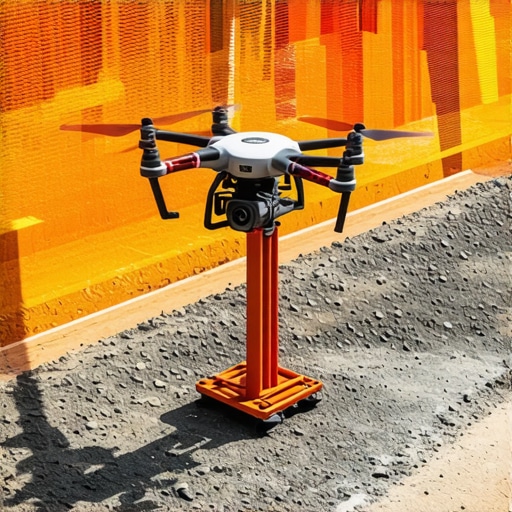
Emerging innovations include portable, AI-enhanced thermal scanners capable of delivering real-time utility characterization on-site. Integration of drone technology with advanced sensors is opening new frontiers in rapid, non-invasive subsurface imaging. These advancements promise to reduce excavation risks, minimize service disruptions, and streamline project timelines—underscoring the importance of embracing technological evolution to achieve higher precision in subterranean Utility mapping.
Expert Insights That Illuminate the Path Forward
Prioritize Multimodal Validation to Reduce Risks
Integrating thermal imaging with electromagnetic and GPR techniques allows for cross-verification, significantly enhancing detection reliability especially in complex urban settings.
Stay Ahead of Soil Variability’s Impact
Recognize how moisture content and soil mineralogy alter thermal signatures; calibration with localized soil data ensures consistent accuracy across diverse conditions.
Leverage AI for Smarter Interpretation
Implement machine learning algorithms trained on extensive datasets to identify subtle utility signatures, minimizing false alarms and accelerating decision-making.
Optimize Survey Timing for Better Results
Schedule inspections during optimal weather windows—dry, cool periods—to mitigate environmental influences on thermal contrasts.
Develop Cross-Disciplinary Expertise
Encourage collaboration among geophysicists, soil scientists, and data analysts to build comprehensive underground maps, elevating project safety and efficiency.
Top Resources for the Dedicated Utility Mapper
– Journal of Geotechnical and Geoenvironmental Engineering: Provides cutting-edge research and case studies on soil-utility interactions and geophysical techniques.
– USGS Publications: Offers in-depth insights into soil thermal behavior and environmental factors affecting detection methods.
– IEEE Transactions on Geoscience and Remote Sensing: Showcases advances in AI applications and remote sensing technologies relevant to utility mapping.
– Industry Webinars and Conferences: Platforms for networking with peers and exploring emerging hybrid solutions and best practices.
The Power of Modern Utility Detection Lies in Integration
Embracing a holistic approach—blending thermal imaging with electromagnetic and GPR tools—translates to precision mapping that is resilient against environmental and soil variability challenges. Mastering this synergy not only streamlines trenching and borehole operations but also elevates safety standards and project outcomes. As new AI innovations become more accessible, the opportunity to revolutionize underground utility detection is knocking. To stay at the forefront, professionals should seek continuous learning, real-world collaboration, and engagement with authoritative resources, transforming routine detection into strategic asset management. Your proactive adaptation today paves the way for safer, faster, and more accurate subsurface exploration tomorrow.