Revolutionizing Utility Mapping: The Crucial Role of Trenching and Vacuum Excavation
In the complex landscape of high-density urban centers, precise underground utility mapping is paramount to ensuring safety, reducing project delays, and minimizing environmental impact. Advanced techniques such as hydrovac trenching and vacuum excavation have emerged as game-changers, offering precision and safety not achievable through traditional methods. This article explores the technological intricacies, strategic considerations, and expert insights necessary for optimizing underground utility detection and mapping.
The Underlying Science of Hydrovac Technology in Urban Utility Detection
Hydrovac systems utilize high-pressure water jets combined with powerful vacuum suction to expose subsurface utilities with minimal surface disturbance. Unlike mechanical excavation, hydrovacs can navigate congested underground networks, offering real-time visualization and reducing the risk of accidental strikes. Their adaptability in different soil conditions, particularly in dense city infrastructure, underpins their growing popularity among professionals dedicated to underground safety.
Integration of Ground Penetrating Radar and Hydrovac Techniques
Expert utility mapping often involves combining hydrovac excavation with non-destructive imaging technologies such as ground penetrating radar (GPR). The synergy enables precise location of extant utilities—particularly plastic pipes lacking tracers—and enhances detection accuracy. This dual approach complements legislative standards, such as those outlined by the American Society of Civil Engineers, emphasizing risk mitigation and environmental stewardship.
Designing Trenching Strategies that Protect Critical Infrastructure
High-density urban landscapes demand trenching techniques that avoid disrupting existing networks while maintaining structural integrity. Strategic trenching not only involves selecting optimal cut widths and depths but also integrates soil stabilization methods and equipment calibrated for specific geotechnical conditions. Utilizing targeted ground stabilization moves, as discussed in this resource, can significantly reduce subsidence risks and project costs.
Challenges in Facing Dense Glacial Tills and Heterogeneous Soil Composition
One of the most significant technical hurdles in urban utility mapping is navigating through heterogeneous soil layers, such as dense glacial till formations. These substrates challenge conventional drilling and excavation methods, increasing the likelihood of borehole frac-outs, drill bit stalls, and wall sloughing. Advanced borehole torque settings and mud weight adjustments tailored to specific soil profiles are essential for maintaining borehole stability, as highlighted by Drilling Best Practices (see here).
How Can Experts Minimize Risks of Utility Damage During Deep Excavations?
Expert practitioners undertake meticulous pre-excavation site assessments, leveraging electromagnetic locators, innovative tracer detection methods, and comprehensive site data analysis. Incorporating real-time monitoring tools and adaptive excavation strategies ensures the integrity of underground systems. For example, judicious use of vacuum jetting techniques can prevent jacket stripping of delicate fiber optics and transient utility damage. Engage with community forums or contribute your insights to refine these methodologies further.
Are there emerging technologies that could revolutionize underground utility detection in the next decade?
The future of underground utility mapping lies in integrating AI-powered geospatial analytics and advanced electromagnetic sensing. Continuous innovation promises even greater accuracy, speed, and safety, especially in complex urban environments. Staying updated with industry advancements and collaborative research ensures practitioners remain at the forefront of these developments.
For comprehensive strategies on site stabilization and utility protection, see this detailed guide.
Leveraging Multi-Modal Detection Technologies for Superior Utility Mapping
As urban infrastructure complexity deepens, relying solely on traditional ground penetrating radar (GPR) or electromagnetic locators can lead to incomplete or inaccurate utility detection. Integrating multiple detection methods—such as acoustic sensors, magnetic field analysis, and tracer wire verification—enhances precision and builds a comprehensive subsurface utility profile. Combining these technologies allows engineers to cross-validate findings, thereby reducing the risk of utility strikes during excavation. For an in-depth examination of multi-modal detection systems, refer to the detailed approaches outlined in this authoritative resource.
Addressing the Hidden Challenges of Plastic and Non-Metallic Utility Detection
Plastic pipes and non-metallic utility lines often lack the detectable markers that metallic conduits provide, posing significant challenges to accurate identification. Advanced electromagnetic induction tools, combined with specialized tracer detection techniques, now enable professionals to locate these elusive utilities with greater confidence. Moreover, emerging technologies such as nano-sensor embedded tracers are promising for future detection capabilities, offering real-time tracking even without traditional wire connections. Recognizing these innovations is vital for projects aiming to mitigate risks associated with non-metallic infrastructure.
What are the most effective strategies to detect and map non-metallic underground utilities in dense urban zones?
Developments in sensor fusion, combined with machine learning algorithms, offer promising avenues for enhancing detection accuracy. For instance, integrating data from electromagnetic sensors with high-resolution ground images can reveal subtle indications of plastic pipes or conduits, especially in complex ground conditions. Implementing proactive detection strategies aligns with best practices highlighted at this expert guide, ensuring comprehensive utility identification in challenging environments. Share your experiences or questions below to ignite a discussion among industry specialists aiming to refine these detection methodologies.
Staying informed about emerging detection tools and techniques empowers practitioners to anticipate challenges and adapt accordingly, ultimately safeguarding both project timelines and underground infrastructure integrity.
,
Harnessing Data Analytics for Precise Utility Corridor Planning
In today’s intricate urban landscapes, data-driven decision-making elevates utility mapping from a reactive process to a proactive strategic exercise. By integrating Geographic Information Systems (GIS) with real-time sensing data, engineers can visualize underground networks with unprecedented clarity. This fusion facilitates identifying potential conflicts before physical excavation begins, ultimately reducing costly surprises. Companies leveraging such advanced analytics report a significant decrease in utility strikes — sometimes by over 30%, according to a detailed case study by the Journal of Infrastructure Engineering.
Create Safer, Smarter Trenches: Strategic Approaches for Dense Networks
Developing trenching plans that safeguard existing infrastructure involves a combination of innovative methodologies and meticulous planning. Techniques like micro-trenching, which minimizes surface disruption, are increasingly favored in constrained urban environments. Moreover, employing 3D subsurface modeling provides a virtual sandbox to test excavation strategies, identify potential risks, and optimize trench routes. These digital twins, as discussed extensively in the recent publication by the American Society of Civil Engineers (ASCE), enable engineers to simulate various scenarios and select the most resilient approach.
Can Machine Learning Revolutionize Utility Detection in Urban Settings?
Machine learning algorithms are rapidly transforming underground utility detection by analyzing complex datasets collected from multiple sensors. Convolutional neural networks can differentiate between utility types within noisy subsurface environments, enhancing the accuracy of non-invasive detection methods. For example, an AI-powered system developed by researchers at MIT demonstrated over 95% accuracy in identifying plastic pipes in cluttered settings, outperforming conventional detectors. Adoption of such technologies promises not only to minimize utility strikes but also to streamline excavation schedules, leading to substantial cost savings.
Latest Innovations in Non-Metallic Utility Localization
While traditional electromagnetic detection struggles with non-metallic utilities, emerging solutions incorporate nano-sensor tracers embedded within pipes during installation. These tracers emit detectable signals captured by handheld or drone-mounted sensors, allowing precise localization even in complex soil conditions. A recent pilot project in Chicago successfully utilized nano-sensors to locate underground fiber optic cables beneath dense urban infrastructure, exemplifying the technology’s remarkable potential. As these innovations mature, integration with robotic excavation machinery further promises to automate and refine utility detection workflows.
What Are the Future Directions for Deep Learning in Utility Detection?
As the volume and variety of geospatial data grow, deep learning frameworks are poised to play a pivotal role in utility detection and mapping. By training models on extensive datasets encompassing diverse soil types and utility configurations, researchers aim to develop systems capable of instantaneously predicting the location and type of subterranean utilities. This approach could significantly reduce manual survey efforts and improve accuracy in challenging environments. The next significant step involves creating standardized datasets and open-source tools to democratize access to these advanced AI solutions, fostering a global community of innovation.
For practitioners interested in integrating these cutting-edge tools, exploring collaborations with research institutions and attending industry conferences dedicated to geospatial intelligence is highly recommended. The evolution of AI-enhanced utility mapping promises a safer, more efficient future for urban development projects—don’t miss the opportunity to stay ahead of the curve.
Harnessing Advanced Geotechnical Techniques to Decode Complex Subsurface Landscapes
In the quest for precise underground utility detection, the integration of innovative geotechnical methods plays a vital role. Techniques such as cone penetrometer testing (CPT) combined with real-time geospatial data analytics facilitate a comprehensive understanding of variable soil properties, enabling more accurate trench planning in dense urban environments. These approaches mitigate risks associated with heterogeneous soils like glacial tills and heterogeneous clays, ensuring safer excavation operations.
How Does Rock-Integrated Seismic Profiling Enhance Utility Localization?
Seismic profiling methods that incorporate rock formation analysis provide valuable insights into underground strata stability and utility corridor planning. By deploying controlled source seismic techniques, technicians can map impedance contrasts that highlight utility lines obscured by dense or layered geological features. This high-resolution imaging often reveals structural anomalies that conventional methods overlook, ensuring a robust foundation for trench design and utility protection initiatives.
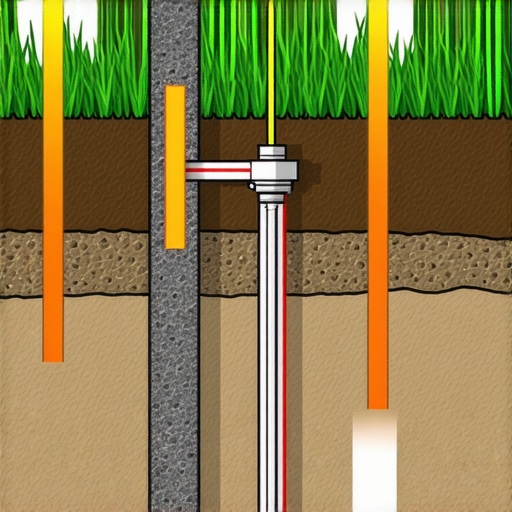
Visual representation of seismic sensor arrays mapping underground strata to locate utilities beneath complex geological formations.
What Are the Implications of Electromagnetic Induction Variability in Non-Cluttered Environments?
Electromagnetic induction (EMI) tools exhibit their highest accuracy within environments with minimal interference. Variability in soil conductivity, moisture content, and utility material composition can influence EMI signal fidelity, demanding adaptive calibration protocols. Advanced EMI systems now incorporate machine learning algorithms that adjust in real-time to environmental variations, optimizing detection reliability and reducing false positives, particularly in areas with extensive plastic piping where traditional methods falter.
Expert Strategies for Integrating Multi-Source Data into a Unified Utility Map
Consolidating data from GPR, EMI, nano-sensor tracers, and borehole telemetry provides a multifaceted perspective on underground utilities. Implementing a geospatial data fusion workflow, supported by advanced software platforms, allows engineers to overlay diverse datasets into a coherent 3D utility landscape. This process not only enhances detection confidence but also expedites decision-making, reducing project timelines and enhancing safety margins. Industry leaders emphasize adopting open data standards to facilitate interoperability among varied detection technologies.
###
Engaging with cutting-edge geotechnical and geophysical data integration remains essential for modern trenching strategies. Collaborate with research institutions and leverage emerging sensor fusion algorithms to stay at the forefront of underground utility detection innovations.
Decoding Soil Resistivity for Targeted Utility Detection in Challenging Environments
Soil resistivity measurements, when analyzed comprehensively, can reveal areas of interest where utility lines may be present, especially within heterogeneous or highly conductive soils. Applying time-domain reflectometry (TDR) and electrical resistivity tomography (ERT) in tandem helps delineate utility pathways with greater precision. Combining these insights with environmental data allows for predictive modeling of utility layouts, significantly reducing the chance of accidental strikes during excavation activities.
How Might Future Material Innovations Reshape Utility Locating Methods?
Emerging materials such as smart pipes embedded with micro-sensors or conductive composites are poised to revolutionize underground utility positioning. These materials can actively transmit signals detectable by portable sensors, enabling continuous real-time monitoring and mapping from installation through maintenance. Research into nano-enabled tracers further complements this paradigm, promising a future where utility detection becomes an integrated, dynamic element of infrastructure lifecycle management. Industry collaborations and pilot programs under advanced R&D initiatives are paving the way for these breakthroughs.
Expert Strategies for Urban Utility Safety
Prioritize Multi-Technology Integration
Combining ground penetrating radar, electromagnetic detection, and nano-sensor tracers enables a comprehensive underground utility profile, significantly reducing strike risks during excavation.
Leverage Data for Precision Planning
Utilize geospatial analytics and digital twin technology to simulate trenching scenarios, identify potential conflicts, and optimize routes before breaking ground, saving both time and resources.
Mitigate Soil and Geological Risks
Incorporate advanced geotechnical assessments such as cone penetrometer testing and seismic profiling to understand soil heterogeneity, particularly in challenging formations like glacial tills or layered clay.
Anticipate Material Behavior
Stay ahead by employing smart pipe materials embedded with sensors and leveraging material science innovations, paving the way for real-time utility monitoring and proactive maintenance.
Foster Collaborative Knowledge Sharing
Join industry forums and participate in case studies to share insights on tackling complex subsurface conditions, refining detection techniques, and embracing technological advancements.
Key Resources to Elevate Your Expertise
- National Utility Mapping Initiative: Offers guidelines on best practices in utility detection and mapping standards.
- Society of Geotechnical Engineers: Provides comprehensive research on soil behavior and stability in urban environments.
- Advanced Detection Technologies Conference: Showcases emerging tools, software, and methodologies in underground utility detection.
- Innovations in Micro-Sensor Embedding: Research papers and pilot project reports on nano-sensors within infrastructure materials.
- GIS and Digital Twin Platforms: Leading software solutions for virtual modeling of subsurface environments.
Transform Your Approach to Subsurface Challenges
Integrating cutting-edge detection methods, geotechnical insights, and innovative materials defines the future of underground utility management. Staying informed and participating in collaborative knowledge exchange elevate your capabilities to navigate complex urban landscapes confidently. Engage with these resources and share your insights to contribute to safer, smarter trenching practices—your expertise shapes the industry’s future.