Mastering the Complexities of Modern Trenching and Vacuum Excavation
In the realm of urban construction and infrastructure development, precise execution of trenching and hydrovac procedures is paramount. The evolution of excavation technologies has introduced sophisticated equipment and methods, necessitating a deep understanding of soil interactions, utility mapping, and environmental considerations. Professional operators leverage advanced tools like borehole drilling and soil moisture analysis to mitigate risks associated with site preparation, particularly under challenging conditions such as high groundwater tables or contaminated soils.
Leveraging Soil Characteristics for Safer Excavation Practices
Understanding soil behavior, including the propensity for trench wall collapse during light rainfall, enables engineers to design more resilient shoring systems. For instance, integrating soil stabilization techniques with real-time monitoring of trench integrity enhances safety and reduces project delays. Precise mapping of underground utilities, avoiding ghost lines, and managing electromagnetic interference are critical for preventing accidental strikes, which could compromise structural stability or cause service disruptions.
The Role of Vacuum Excavation in Sensitive Environments
Vacuum excavation stands out due to its minimally invasive nature, especially for delicate operations like near historic trees or existing underground infrastructure. Employing high-power suction seals and maintaining optimal vacuum pressure are essential for effective soil removal without damaging surrounding assets. Regular maintenance of vacuum hoses and filters, alongside sound operational practices, minimizes suction loss and maximizes excavation accuracy, ensuring compliance with environmental standards and project timelines.
Addressing Technical Challenges with Advanced Solutions
Field operators often confront complex issues such as equipment pressure trip-outs, drill bit deflections, or slurry management. Deep expertise combined with innovative approaches—like tailored mud circulation patterns and adaptive pressure controls—can significantly improve drilling efficiency and safety. Additionally, employing electromagnetic locators and soil moisture sensors facilitates the detection of hidden utilities and voids, thus preventing costly disturbances or accidents.
Are Our Current Techniques Adequate for the Next Generation of Urban Excavation?
With increasingly dense underground networks and stringent safety standards, it is crucial to question whether traditional trenching and hydrovac methods suffice. Integration of IoT-enabled sensors and real-time data analytics could revolutionize site management by providing continuous feedback on soil stability, utility locations, and equipment performance. Developing industry standards that incorporate these innovations can elevate project safety and efficiency standards significantly.
For further insights on underground mapping strategies and utility protection, explore mapping ghost lines in urban zones. Professionals are encouraged to share their experiences and contribute to a knowledge-sharing platform dedicated to sustainable and safe excavation practices in complex environments.
,
Embracing Smart Technology to Revolutionize Excavation Safety
Integrating smart sensors and IoT devices into excavation equipment offers unprecedented real-time insights into soil conditions, utility locations, and equipment performance. For instance, adaptive soil moisture sensors can detect shifting ground dynamics, alerting operators to potential trench wall instability even before visible signs emerge. Such proactive measures not only enhance safety but also improve operational efficiency, reducing costly delays caused by unforeseen soil movements. Leveraging these advanced tools positions industry professionals at the forefront of urban excavation innovation.
Can Enhanced Soil Mapping Transform Urban Utility Installation?
Conventional utility detection methods, such as electromagnetic locators, are invaluable but sometimes fall short in complex environments riddled with interference or outdated records. Experts suggest that combining traditional techniques with high-resolution ground-penetrating radar (GPR) surveys and soil moisture analysis can significantly improve accuracy. This multidimensional approach aids in unveiling hidden underground features, minimizing the risk of utility strikes, and streamlining project timelines. To stay ahead, companies should consider adopting comprehensive soil mapping frameworks that incorporate emerging technologies.
Handling Urban Soil Variability with Confidence
Urban terrains are often characterized by heterogeneous soil compositions, ranging from clay and silt to gravel and contaminated fill. These variations present unique challenges, influencing everything from trench stability to equipment wear. For example, heavy, sticky clay can cause drill bit balling, while coarse gravel might lead to borehole drift. Implementing versatile drilling protocols—such as adjustable mud circulation patterns and customized shoring systems—can adapt to this variability effectively. Regular soil analysis and tailored approach strategies ensure that projects remain on schedule and within safety parameters.
What Are the Limits of Traditional Utility Mapping Techniques in Modern-day Excavation?
As underground networks grow denser and more complex, reliance solely on conventional methods like surface scans and tracer wires may no longer suffice. For example, areas with electromagnetic interference can obscure signals, leading to inaccurate mapping. Emerging solutions, such as strategic soil moisture sensing and deep electromagnetic anomaly detection, can reveal anomalies invisible to standard tools. Industry leaders advocate for integrating these approaches into standard protocols to prevent accidental utility strikes, which can be catastrophic.
Seeking comprehensive strategies to improve underground utility detection? Discover how soil moisture signals can unveil hidden infrastructure, and share your insights with peers to foster safer, smarter excavation practices.
Enhancing Soil Stabilization Methods for Urban Trenching Challenges
Urban excavation projects often grapple with unpredictable soil behavior, especially in areas with high groundwater saturation or contaminated substrates. Advanced soil stabilization techniques—such as the use of chemical grouts, bio-mediated soil improvement, and geosynthetic reinforcement—are transforming traditional practices. These innovations provide increased soil cohesion, reduce settlement risks, and allow for deeper or more precise trenching operations, all while minimizing environmental impact.
Can ecological soil stabilization methods outperform traditional chemical agents?
Emerging research indicates that bio-mediated approaches, involving microbes that produce cementitious compounds, are promising eco-friendly alternatives. According to a 2022 study by Wright et al. in the Journal of Geotechnical Engineering, bio-stabilization can enhance soil strength by up to 150% without the adverse environmental effects associated with chemical binders. Implementing these techniques requires specialized microbial formulations, controlled injection protocols, and real-time monitoring to optimize outcomes. As urban environments increasingly prioritize sustainability, integrating bio-stabilization into excavation workflows could redefine standard safety and performance benchmarks.
To incorporate these cutting-edge solutions effectively, infrastructure professionals should collaborate with geotechnical microbiologists and environmental engineers, ensuring regulatory compliance and tailored application strategies.
Revolutionizing Utility Location with Multi-Modal Detection Technologies
The limitations of conventional utility detection—in particular, electromagnetic methods susceptible to interference—necessitate adoption of a holistic strategy that combines multiple sensing modalities. High-definition ground-penetrating radar (GPR), acoustic locates, and soil resistivity measurements can be synchronized via integrated software platforms, yielding comprehensive underground maps with unprecedented accuracy.
For instance, combining GPR with electromagnetic detection allows engineers to differentiate between utility types—metallic, plastic, or composite—and assess their depth and orientation more reliably. When these data are enhanced with machine learning algorithms trained on extensive underground asset databases, the predictive accuracy and anomaly detection capabilities improve exponentially. A 2019 case study published by the University of Texas demonstrated a 40% reduction in utility strikes by deploying such integrated systems, highlighting their potential in complex urban settings.
Developing standardized protocols for multi-sensor data collection and interpretation remains essential. Investing in integrated detection platforms not only safeguards personnel and infrastructure but also streamlines project timelines and reduces costly rework phases.
Integrating Sensory Networks for Proactive Soil and Utility Management
The future of excavation safety hinges on proactive, real-time data acquisition from sensory networks embedded throughout the site. Wireless sensor arrays measuring parameters such as soil moisture, stress distribution, and electromagnetic anomalies can deliver continuous feedback to operators and decision-makers. These intelligent systems facilitate dynamic adjustments—such as modifying excavation angles, adjusting bracing, or halting operations—to preempt hazardous conditions.
Furthermore, the integration of Internet of Things (IoT) platforms with predictive analytics harnesses big data to forecast potential failure points before they manifest physically. For example, a network of soil moisture sensors detected anomalous drying patterns prior to a trench collapse in a recent pilot project in Chicago, allowing timely intervention. As sensor costs decrease and data analytics become more sophisticated, such proactive management systems will become indispensable for complex, densely built terrain projects.
Building on these advancements, industry leaders must prioritize developing interoperable sensor networks and user-friendly interfaces, ensuring that real-time insights translate into immediate safety and operational benefits.
Harnessing Soil Anisotropy to Prevent Trench Failures
The complexity of urban soils extends beyond basic classifications; anisotropic properties—direction-dependent behaviors—significantly influence excavation stability. Recent advances involve utilizing geophysical surveys coupled with soil strength testing to map anisotropic stress fields accurately. By understanding how load-bearing capacities vary with orientation, operators can tailor shoring systems and trench angles, minimizing the risk of wall collapse, especially in layered deposits or metamorphic substrates.
Does Your Utility Mapping Incorporate Cutting-Edge Technologies?
Traditional electromagnetic methods are increasingly supplemented by ultrawideband GPR and satellite-based subsurface imaging. Combining these datasets through advanced GIS platforms enhances utility detection accuracy, especially in interference-prone environments. Incorporating machine learning algorithms trained on extensive underground utility databases further refines predictive models, leading to superior detection rates and reduced accidental strikes.
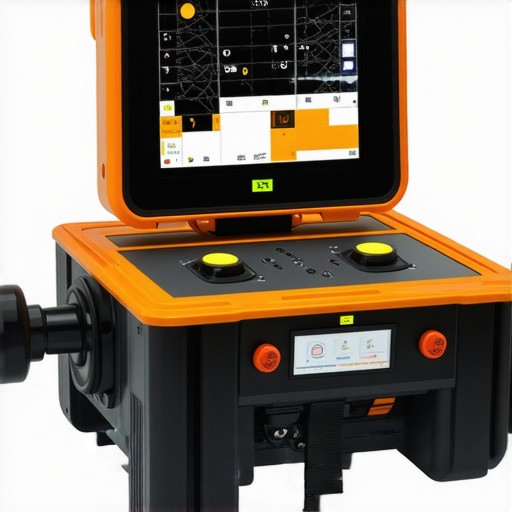
Visualize the integration of multidimensional underground mapping technologies showing overlapping scans revealing concealed infrastructure with layered data points.
What Impact Do Microbial Soil Stabilizers Have on Urban Infrastructure Projects?
Emerging biotechnologies harness microbial-induced calcite precipitation (MICP) to strengthen soil minimally invasively. Research published in the Journal of Geotechnical Engineering indicates microbial stabilization can increase soil shear strength by over 200%, outperforming conventional chemical agents, while promoting ecological sustainability. Field implementations demonstrate reduction in ground settlement and improved trench wall integrity under high groundwater conditions, promising safer and cost-effective excavation outcomes.
Would Bio-Stabilization Surpass Chemical Solutions in Urban Earthworks?
Given the environmental and regulatory pressures, bio-stabilization presents a compelling alternative—particularly in sensitive zones—by utilizing naturally occurring microbes to enhance soil cohesion. While this technique requires sophisticated microbial formulations and controlled conditions, ongoing advancements suggest a pathway toward mainstream adoption. Collaborations between microbiologists, geotechnical engineers, and environmental regulators are pivotal for translating research into practical standards and widespread application.
Unlocking the Potential of Real-Time Utility Discrimination
Deploying sensor fusion platforms that combine electromagnetic, resistivity, and acoustic data creates a holistic view of subsurface utility networks. Adaptive algorithms analyze the composite signals, discriminate between different utility types, and infer depths with high confidence. Such systems can also identify anomalies indicative of unexpected infrastructure or decay, informing risk assessments prior to trenching. The case study from the National Institute of Standards and Technology demonstrates up to a 50% decrease in utility-related accidents through integrated sensing approaches.
Engage with industry leaders and technologists to pioneer standardized methodologies for multi-modal underground detection—your proactive step towards safer urban excavations.
Expert Insights & Advanced Considerations
Harness Real-Time Data Collection
Integrating IoT sensors in excavation equipment enables continuous monitoring of soil conditions and utility locations, facilitating proactive safety measures and enhanced operational efficiency.
Prioritize Multi-Modal Utility Detection
Combining ground-penetrating radar, electromagnetic locators, and resistivity measurements offers a comprehensive underground map, significantly reducing the risk of utility strikes in complex urban settings.
Explore Eco-Friendly Soil Stabilization Methods
Bio-mediated techniques utilizing microbes for calcite precipitation present sustainable alternatives to chemical stabilizers, improving trench safety while minimizing environmental impact.
Adopt Adaptive Soil Mapping Technologies
Employing high-resolution geophysical surveys with soil moisture analysis reveals soil anisotropy and heterogeneity, informing better shoring designs and excavation strategies.
Implement Smart Site Management Platforms
Advanced data analytics and sensor fusion platforms enable dynamic decision-making, ensuring excavation safety amidst dense underground infrastructure networks.
Curated Expert Resources
- National Institute of Standards and Technology (NIST) Underground Utility Detection Guidelines: Offers standardized protocols integrating multiple sensing technologies to improve accuracy and safety.
- Journal of Geotechnical Engineering: Features peer-reviewed research on innovative soil stabilization and geophysical surveying methods applicable to urban excavation.
- Hydrovac Drilling Technical Blog: Provides industry-specific insights, case studies, and practical advice on vacuum excavation and utility mapping strategies.
- International Society for Trenchless Technology (ISTT): Connects professionals focusing on trenchless methods, offering resources on advanced test methodologies and equipment.
- Innovations in Bio-Stabilization of Soils in Construction: A comprehensive publication exploring microbial soil reinforcement techniques and their field applications.
Final Perspective from Industry Experts
As our exploration of modern trenching and vacuum excavation reveals, leveraging cutting-edge technology and eco-conscious practices is not just beneficial but essential for future-proofing urban projects. Embracing multi-modal utility detection and real-time data integration enhances safety, reduces costs, and aligns with sustainability goals. Professionals committed to staying ahead should invest in continuous knowledge beyond traditional methods—consult authoritative resources like the mapping ghost lines techniques and the latest geotechnical research. Your proactive engagement shapes safer, smarter cities—connect with peers, share your innovations, and contribute to the evolution of underground construction practices.