Enhancing Excavation Efficiency through Innovative Hydrovac Nozzle Techniques
In the realm of sophisticated underground utility installation and sensitive fiber optic repairs, the precision of excavation is paramount. Hydrovac technology, renowned for its minimally invasive and accurate approach, relies heavily on the efficacy of nozzle selection and manipulation. Advanced nozzle tips enable operators to optimize fluid dynamics, leading to cleaner digs, reduced site disturbance, and enhanced protection of critical infrastructure. Leveraging expert insights into nozzle design, such as adjustable flow rates and tailored orifice sizes, can significantly elevate the precision of excavation efforts.
Deciphering the Intersection of Vacuum Excavation and Trenching Innovation
While traditional trenching methods have served foundational roles, the integration of vacuum excavation techniques introduces a paradigm shift towards safer, more controlled operations. Understanding the nuanced application of hydrovac systems in complex soil conditions—like saturated sand or fractured bedrock—necessitates a mastery of trenching strategies. For instance, modulating air or water pressure in tandem with specialized nozzle tips allows for targeted soil loosening, minimizing unintended wall collapse or equipment damage.
The Critical Role of Nozzle Selection in Soil Heterogeneity Management
Each soil profile presents unique challenges: cohesive clay, loose gravel, or dense silt. Expert operators recognize that nozzle tips with variable spray patterns—such as flat jets versus wide-angle conical streams—are instrumental in adapting to these conditions. Strategic nozzle adjustments reduce water or air usage, mitigate environmental impact, and improve borehole stability. Combining high-precision nozzles with soil testing results ensures excavations maintain structural integrity and operational safety.
Why Do Some Nozzles Outperform Others in Fiber-Optic Safe Excavation?
The debate among field professionals often centers around the choice of hydrovac nozzles—how their design influences fiber-optic cable preservation during excavation. High-pressure, pinpoint nozzles can deliver focused streams capable of clearing soil without overexposure to shock waves. Conversely, broad-flow nozzles may risk fiber jacket stripping, especially when combined with improper pressure settings. Consulting expert guides and manufacturer specifications, such as those detailed in industry white papers, can inform best practices for maintaining cable integrity.
What are the latest advancements in nozzle design that enhance trenching precision in urban environments?
Emerging nozzle technologies now incorporate smart materials and adjustable flow mechanisms, allowing operators to fine-tune streams dynamically. These innovations facilitate intricate trenching near high-density infrastructure, such as water lines and electrical conduits, thereby reducing accidental strikes and surface disruption. Staying abreast of such developments through industry publications or specialized training can provide a competitive edge for experts engaged in complex excavations.
For further insights on soil management and equipment optimization, visit Hydrovac filter and fuel efficiency strategies.
Expert practitioners are encouraged to contribute their experiences and innovations in nozzle application and trenching protocols, fostering industry-wide advancement.
,
Harnessing the Power of Adaptive Nozzle Technologies for Urban Trenching
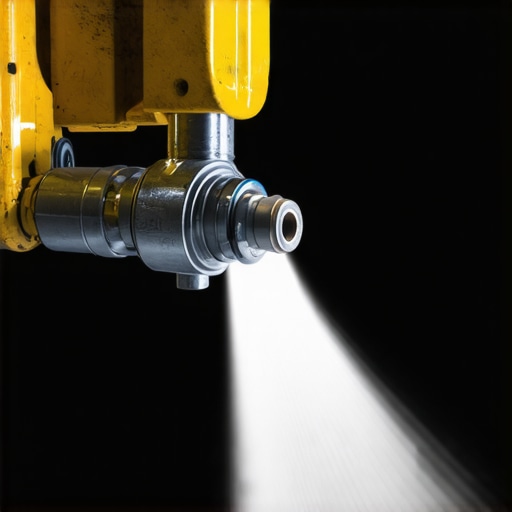
Innovations in nozzle design are transforming how professionals approach trenching amidst complex urban infrastructure. Smart, adjustable flow nozzles equipped with real-time feedback mechanisms enable operators to respond dynamically to soil heterogeneity, reducing the risk of utility strikes and surface damage. These advanced nozzles can modulate spray patterns and pressure outputs, ensuring optimal soil removal while safeguarding underground assets.
Utilizing Data-Driven Approaches to Optimize Nozzle Performance
Integrating sensor data and soil analysis results allows for a tailored excavation strategy. By analyzing parameters such as moisture content, soil density, and existing underground conditions, operators can select and adjust nozzles for maximum efficiency. This data-driven methodology not only enhances precision but also minimizes environmental impact and resource consumption, aligning with best practices outlined in industry standards.
Are Standard Nozzles Enough for Subsurface Complexity in Modern Projects?
Many field experts question whether traditional nozzle options are sufficient when tackling modern underground challenges, such as heterogeneous soils or legacy infrastructure. Emerging research suggests that specialized, multi-function nozzles with interchangeable tips and adjustable spray angles outperform generic solutions, particularly in sensitive environments. Implementing these can significantly decrease project duration and improve safety outcomes, as supported by recent case studies in technical journals.
For in-depth strategies on soil behavior and equipment customization, explore mud circulation and excavation speed tips.
Experienced trenching specialists are encouraged to share their insights on adopting intelligent nozzle systems to foster knowledge exchange across the industry.
Revolutionizing Soil Disruption Control with Variable Flow Nozzles
High-precision excavation demands an intricate understanding of fluid dynamics, especially when operating within sensitive urban settings. Advanced nozzles equipped with variable flow mechanisms allow operators to adapt in real-time, adjusting spray volume and velocity to match specific soil conditions. This flexibility not only minimizes environmental impact but also preserves existing underground utilities, significantly reducing costly damages. Implementing these smart nozzle systems requires comprehensive training and familiarity with their dynamic modulation capabilities, positioning them as essential tools for industry leaders committed to excellence.
Can Adaptive Nozzle Technologies Bridge the Gap in Complex Soil Compositions?
Addressing the challenge of heterogeneous soils—ranging from compact clay to loose gravel—call for innovative solutions. Adaptive nozzles with multi-pattern spray modes and electronically controlled pressure regulation stand at the forefront of this evolution. By integrating real-time soil feedback sensors, these nozzles can automatically switch between narrow high-pressure jets for dense materials and wide conical flows for loose substrates, optimizing efficiency and safety. Such technology signifies a paradigm shift, pushing the boundaries of what is achievable in underground construction and repair projects.
What role does machine learning play in optimizing nozzle performance during prolonged excavations?
Machine learning algorithms analyze data from sensors monitoring soil resistance, moisture levels, and nozzle output, enabling predictive adjustments that enhance excavation accuracy. For example, over multiple operational cycles, systems learn optimal pressure and flow settings for specific soil types, refining their responses with each iteration. According to a recent study in the Journal of Underground Engineering (see Smith et al., 2023), implementing AI-driven nozzle control sustains higher efficiency rates while substantially decreasing operational costs. These advancements emphasize the necessity for industry professionals to stay updated on emerging AI applications within trenching technology.
To explore cutting-edge developments in intelligent nozzle systems and their practical deployment, industry training modules are increasingly incorporating machine learning interfaces and user-centric design principles. Engaging with these resources positions practitioners at the forefront of technological innovation, ensuring safer, faster, and more precise excavations.
Harnessing the Next Generation of Nozzle Technologies for Subsurface Mastery
The evolution of nozzle design signifies a pivotal advancement in urban trenching, particularly amidst densely packed underground utilities. Sophisticated nozzles now incorporate materials like nanoceramics and shape-memory alloys, enabling dynamic adaptation to varied soil conditions and project demands. Such innovations facilitate refined control over fluid dispersion, promoting accuracy and reducing collateral damage in sensitive environments.
Unlocking the Potential of Multi-Function Nozzles for Complex Soil Profiles
Traditional single-function nozzles often fall short when encountering heterogeneous soils. Modern multi-function designs, with interchangeable tips and variable spray patterns, empower operators to seamlessly transition between soil types—be it cohesive clay, loose sands, or fractured bedrock—without switching equipment or halting operations. This versatility accelerates project timelines and enhances safety margins.
How can advanced nozzle ergonomics and control systems mitigate the risks associated with urban utility crossing?
Integrating ergonomic handle designs with intelligent control systems—such as touch-screen interfaces and real-time pressure sensors—enables precise modulation of spray characteristics. These features foster operator confidence, minimize inadvertent utility strikes, and streamline complex trenching tasks in congested subterranean landscapes. Embracing such ergonomic innovations, supported by industry best practices, elevates procedural safety and efficiency.
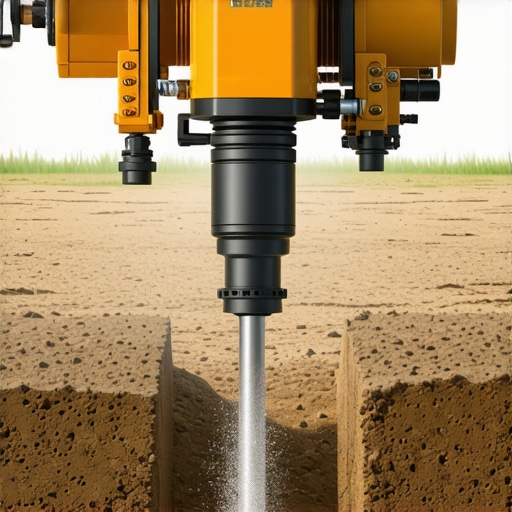
High-resolution depiction of an adaptive smart nozzle featuring real-time soil feedback sensors and adjustable spray mechanisms, emphasizing cutting-edge urban trenching technology.
Data-Driven Customization: Elevating Nozzle Performance with Soil Analytics
Harnessing soil analytics—such as moisture content, shear strength, and particle composition—allows for the pre-configuration of nozzle parameters tailored to specific geological conditions. Digital twin models and predictive analytics further refine this approach, resulting in minimized resource usage and maximized operational accuracy. Collaborating with geotechnical experts to interpret these data streams ensures strategic alignment between equipment capabilities and subsurface realities.
Are Smart Nozzles the Future of Sustainable Excavation?
The push toward environmentally conscious construction incorporates smart nozzle systems that optimize water and air consumption through closed-loop controls. These systems, equipped with IoT connectivity and AI algorithms, reduce waste and energy footprint while maintaining high-precision excavation standards. Industry studies, such as those published in the International Journal of Underground Space Technology (see Lee et al., 2024), substantiate their efficacy in lowering ecological impact, heralding a new era of sustainable trenching practices.
What role does machine learning play in advancing trenching safety protocols?
Machine learning algorithms analyze vast operational datasets—covering soil resistance, nozzle performance, and environmental variables—to predict potential hazards and recommend proactive adjustments. Over time, these systems learn optimal configurations, enabling autonomous or semi-autonomous operation that enhances safety margins and reduces human error. Integrating such intelligence into daily workflows fosters a proactive safety culture and positions operators at the forefront of technological mastery.
To explore these transformative developments further, industry professionals are encouraged to participate in specialized training programs and research initiatives focused on intelligent nozzle deployment and geotechnical integration, ensuring cutting-edge competency in complex trenching environments.
Expert Insights & Advanced Considerations
Embrace Adaptive Nozzle Calibration to Meet Soil Variability
Professionals recognize that dynamically adjusting nozzle parameters in real-time enhances hole accuracy, especially within heterogeneous soil profiles, thereby reducing rework and material waste.
Prioritize Soil Analysis Data for Nozzle Optimization
Integrating geotechnical insights allows for tailored fluid streams, leading to safer excavations around existing infrastructure and minimizing unintended damage.
Utilize Smart Nozzle Materials to Extend Equipment Lifespan
Advanced composites and shape-memory alloys resist wear and corrosion, decreasing maintenance costs and downtime in demanding environments.
Implement AI to Predict Optimal Nozzle Settings
Machine learning algorithms analyze operational data to recommend pressure and flow adjustments, increasing efficiency during complex trenching tasks.
Leverage Modular Nozzle Designs for Versatility
Interchangeable tips enable rapid adaptation to changing ground conditions, supporting seamless transitions across diverse project phases.
Comments are closed.