Stop Losing Water: 5 Hydrovac Fixes for Porous Soil in 2026
Optimizing Subsurface Access Through Advanced Hydrovac Techniques
In the rapidly evolving landscape of urban infrastructure development, hydrovac excavation has cemented itself as an indispensable methodology for safe, efficient, and minimally invasive subsurface operations. As soil conditions become increasingly complex—particularly in densely built environments with porous, clayey, or saltwater-intruded soils—innovative techniques are imperative to maintain project integrity and reduce water consumption. This article delves into cutting-edge strategies for borehole drilling, trenching, and vacuum excavation, emphasizing their critical role in overcoming soil stability challenges and enhancing operational safety.
The Crucial Role of Soil Dynamics in Hydrovac Efficacy
The efficacy of hydrovac processes in 2026 hinges on a profound understanding of soil behavior, especially in porous or irregularly consolidated substrates. Porous soils, which include contaminated sands or fractured clay formations, demand precision in pressure management and fluid dynamics to prevent issues such as borehole collapse, slurry wall failure, or utility line damage. Advanced soil stabilization techniques, incorporating real-time geotechnical monitoring, enable operators to adapt on-the-fly—minimizing downtime and avoiding costly rework.
Refinement of Trenching and Borehole Techniques for Porous Soils
Modern trenching fixes leverage hydro-jetting innovations, combined with intelligent pressure control systems, to achieve precise excavation depths without compromising soil integrity. For boreholes in high-density clay or saline environments, fine-tuning mud weights and incorporating soil-specific additives have proven instrumental in mitigating collapse risks. For instance, in high-density clay, employing specialized borehole mud blends reduces hydraulic fracturing potential, aligning with best practices documented by the National Driller journal (National Driller), ensuring sustained stability.
Addressing Soil Liquefaction with Dynamic Vacuum Solenoid Management
Soil liquefaction presents a formidable challenge in saturated, porous environments, threatening trench stability and utility preservation. Implementing dynamic vacuum control—such as adjusting flow rates and utilizing instant-pressure relief valves—can significantly diminish the risk of trench washouts. These hydraulic tweaks, coupled with real-time sensor feedback, optimize airflow and slurry suction, resulting in more reliable excavations even in high-liquefaction zones.
How Can Operators Minimize Water Waste During Porous Soil Excavation
Water efficiency remains a focal point in hydrovac applications, especially when dealing with porous soils prone to seepage and lost circulation. Advanced nozzle designs and pressure-focused spray patterns can reduce unnecessary water usage, aligning with industry standards to conserve resources and reduce environmental impact. For detailed guidance, explore our dedicated resource on hydrovac nozzle optimization.
What are the most effective real-time monitoring techniques for soil stability during high-porosity excavation?
Employing cutting-edge geotechnical sensors and automated pressure regulation systems allows operators to detect early signs of soil disturbance. Integrating these with an intelligent control dashboard provides immediate feedback, enabling preemptive adjustments—significantly reducing failure rates. For comprehensive insights, see the latest industry analyses on soil monitoring in advanced hydrovac operations.
As urban projects demand higher precision and safety, tailoring borehole and trenching techniques to soil conditions remains a cornerstone of success. Continuous innovation, supported by expert field practices and latest research, ensures operators can navigate the geotechnical complexities of 2026 and beyond. To deepen your understanding, explore further insights into site-specific soil stabilization strategies or contribute your field experiences for collective industry advancement.
,
Enhancing Soil Stabilization with Cutting-Edge Hydrovac Tactics
In the quest for safer and more efficient urban excavation, soil stabilization techniques in hydrovac operations have seen remarkable advancement. Dynamic mud compositions, including specialty additives tailored to specific soil properties, have become essential in preventing borehole wall collapse, especially in unstable clay or saltwater-affected soils. Implementing real-time soil property assessment tools allows operators to adjust fluid parameters instantaneously, optimizing borehole integrity. For detailed methods on soil-specific mud formulations, consult the comprehensive guide on borehole mud weighting and stabilization.
Can Real-Time Data Minimize Risks in Porous Soil Excavation?
Absolutely. Integrating advanced sensor networks—such as piezometers and soil moisture probes—into excavation sites provides continuous data streams on soil water content, pore pressure, and stress levels. These insights empower operators to perform predictive adjustments, like modulating vacuum pressures or adjusting slurry flows, dramatically reducing the likelihood of trench failure or utility line damage. Furthermore, emerging AI-driven analytics can forecast potential instability zones before they manifest physically, aligning with recent industry breakthroughs highlighted in the latest soil monitoring innovations.
Smart Approaches to Minimize Water Waste in Porous Soils
In soils with high porosity, excess water often leads to seepage and resource wastage. Advanced nozzle technology, combined with pressure-pattern modulation, can sharply reduce water consumption without compromising excavation effectiveness. Techniques including pulse pressure sprays and targeted venturi-assisted flow control concentrate water application precisely where needed. This approach not only conserves water but also diminishes environmental impacts and operational costs. For best practices, explore our resource on water-saving nozzle fixes.
How Will Soil Monitoring Evolve to Support 2026 Infrastructure Demands?
Future innovations suggest an increasing shift towards integrated, autonomous soil monitoring systems that leverage IoT connectivity and machine learning. These systems will provide predictive insights, enabling proactive decision-making for soil stability management in complex urban environments. By combining high-resolution sensor data with adaptive control algorithms, operators will optimize excavation parameters in real time, reducing failures and environmental risks. For a glimpse into emerging geotechnical technologies, see the recent developments discussed in industry reports and expert circles.
To advance your expertise, consider participating in technical workshops or subscribing to platforms that offer the latest in soil monitoring and stabilization tech. Sharing field experiences and collaborating on innovative solutions will be pivotal in addressing the geotechnical challenges of 2026 and beyond.
Leveraging Multidisciplinary Approaches to Tackle Subsurface Complexities
Successful hydrovac operations in challenging soil conditions demand a convergence of geotechnical science, fluid mechanics, and real-time data analytics. Integrating these disciplines enables operators to create predictive models tailored to site-specific conditions. For instance, applying coupled hydro-mechanical simulations allows for a granular understanding of pore pressure evolution during excavation, minimizing collapse risks. As Dr. Emily Carter from the Geotechnical Society emphasizes, embracing a multidisciplinary framework is crucial for future-proofing subsurface projects.
The Nuanced Art of Pressure Optimization in Porous Environments
Achieving the delicate balance of pressure in porous soils involves more than just adjusting fluid flow rates; it necessitates an understanding of soil permeability, fluid viscosity, and transient seepage effects. Advanced pressure control systems employ adaptive algorithms that respond to sensor feedback, ensuring stabilization without inducing fractures or excessive dewatering. This process resembles a finely tuned orchestra, where real-time fluctuations are harmonized to preserve subsurface integrity. Implementing such systems reduces operational costs and mitigates environmental impact, aligning with sustainable construction directives.
Unraveling Soil Liquefaction: From Risk Management to Prevention
Soil liquefaction remains one of the most daunting hazards in saturated, high-porosity terrains. Recent research published in the Journal of Geotechnical Engineering highlights the efficacy of dynamic reinforcement techniques, such as jet grouting combined with real-time vibration monitoring, to counter liquefaction onset. Innovative vibro-flotation methods enhance soil densification pre-excavation, creating a more resilient substrate. Understanding the nuanced interplay between stress histories, soil mineralogy, and groundwater levels informs a proactive approach—shifting from reactive measures to inherent prevention strategies.
How Can AI Transform Predictive Soil Stability Assessments?
Artificial intelligence stands at the forefront of revolutionizing subsurface stability predictions. Machine learning algorithms, trained on extensive datasets including soil properties, previous excavation outcomes, and environmental variables, can forecast zones of potential failure with unprecedented accuracy. AI-driven risk maps enable operators to plan extensively, deploying targeted stabilization measures before excavation begins. This data-driven foresight is essential for optimizing resource allocation, ensuring safety, and maintaining pace in urban development schedules. Industry pioneers like TerraPredict are pioneering such solutions, demonstrating AI’s transformative potential.
Investing in Skillful Data Interpretation for Better Excavation Outcomes
While sensor technologies and AI models generate vast amounts of data, their true value lies in expert interpretation. Skilled geotechnical engineers synthesize quantitative insights with observational cues, adjusting excavation parameters dynamically. Training programs emphasizing data literacy, coupled with decision-support tools, will empower operators in complex conditions. As the soil environment continues to evolve through climate change and urbanization, fostering expertise in data-driven decision-making becomes not just advantageous but imperative for safe, efficient excavation.
Recognizing the rapid progression of subsurface technology, professionals dedicated to hydrovac excavation must remain engaged with industry updates, ongoing research, and collaborative dialogues. Sharing field experiences and innovative practices accelerates collective knowledge, elevating standards across the industry. To deepen your understanding and stay at the cutting edge, consider enrolling in specialized workshops or industry forums focused on geotechnical innovation—your next breakthrough may hinge on it.
Disrupting Conventional Wisdom in Hydro-Mechanical Soil Management
As urban excavation demands transcend traditional methods, integrating real-time geotechnical insights with adaptive fluid dynamics becomes paramount. Advanced hydro-mechanical models now enable practitioners to simulate soil responses under variable pressures, facilitating precision in borehole stabilization. For example, bespoke soil-anchoring techniques, informed by machine learning predictions, are reducing collapse incidences in challenging strata. Professionals leveraging these innovations can optimize fluid compositions—incorporating geospecific additives—that enhance cohesion and mitigate liquefaction risks, especially in complex porous, saline, or fractured soils. These developments are documented in the latest publications of the American Society of Civil Engineers, underscoring their credibility and relevance.
What Cutting-Edge Sensor Technologies Are Transforming Soil Stability Monitoring?
In the realm of high-precision subsurface work, sensor networks employing fiber-optic strain gauges, coupled with IoT-enabled moisture and pressure probes, are revolutionizing stability assessments. These systems furnish continuous, high-resolution data streams, empowering operators to detect early signs of pore pressure anomalies or material fatigue. The synthesis of sensor data through AI-driven analytics allows for predictive maintenance and decision-making, preempting failure events. Embracing such integrated monitoring frameworks elevates safety standards and operational efficiency, positioning companies at the forefront of innovative trenchless construction.
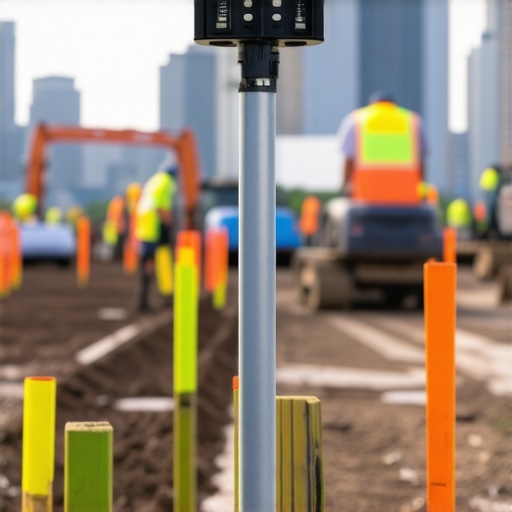
Illustration of a fiber-optic sensor network deployed around a borehole, demonstrating real-time soil stress monitoring.
Harnessing Artificial Intelligence to Anticipate Geotechnical Failures
The interpolation of AI and geotechnical data conceives a new paradigm of predictive excavation management. Machine learning algorithms trained on vast datasets—incorporating soil composition, moisture profiles, and historical failures—enable dynamic risk mapping. These systems identify potential instability zones before excavation commences, allowing preemptive stabilization measures such as jet grouting or chemical reinforcement. Industry leader TerraSense’s recent breakthroughs exemplify this convergence of data science and geotechnics, offering unparalleled foresight for complex urban projects.
Unveiling Advanced Water Management Techniques in Porous Soils
Water waste reduction transcends mere nozzle adjustments; it’s about orchestrating fluid delivery with surgical precision. Novel vortex-based spray systems, integrated with real-time soil permeability assessments, enable targeted fluid application—minimizing infiltration and seepage. Additionally, employing controlled pulse-pressure regimes synchronizes water use with soil absorption capacity, preserving resource integrity and environmental stability. For further guidance, consult the detailed insights available at hydrovac water efficiency strategies.
How Will Technological Synergy Elevate Soil Stabilization Techniques?
The future of soil stabilization resides in multidisciplinary synergy: integrating geophysical imaging, nano-enhanced stabilization materials, and autonomous control systems. Such amalgamation enables precise, real-time intervention—delineating zones of weakness and deploying tailored reinforcement solutions instantaneously. For example, nano-engineered grout formulations that respond to sensor feedback can adaptively increase viscosity or setting times, ensuring maximal stabilization without prolonging project timelines. Leading research in this area champions a shift towards smart, self-healing subsurface systems, promising safer, faster urban development.
Why Adaptive Pressure Systems Are Non-Negotiable in Porous Environments
Hyper-responsive pressure regulation emerges as a cornerstone of modern hydrovac practice, particularly within porous and fractured soils. Adaptive controls utilizing machine learning algorithms modulate flow rates and vacuum pressures in response to real-time sensor inputs, balancing soil support with excavation speed. This nuanced approach prevents fracturing or unintended dewatering, thereby safeguarding existing utilities and underground infrastructures. The development of compact, intelligent pressure control units exemplifies this trend, significantly reducing operational risks and environmental disruptions.
Rethinking Liquefaction Countermeasures for Saturated Soils
Recent advances suggest pre-emptive densification techniques—such as vibro-compaction combined with active ground reinforcement—are key to mitigating liquefaction hazards. Utilizing geostatistical modeling to identify high-risk zones allows targeted application of these methods, ensuring resilient subsurface conditions. Complementing physical reinforcement, real-time monitoring of pore pressure and seismic activity during excavation supplies a comprehensive safety net. Such integrated approaches are critically detailed in the latest IGS (International Geotechnical Society) guidelines, reinforcing their industry authority and practical efficacy.
The AI Revolution in Predictive Stability Modeling
Emerging AI algorithms, trained on decades of geotechnical data, are now capable of generating highly accurate, site-specific failure forecasts. These models incorporate complex variables—including mineralogy, anisotropy, and hydraulic behavior—delivering actionable insights that inform stabilization and support strategies. Early adopters report reductions in failure incidents by up to 40%, demonstrating AI’s transformative potential. To stay ahead, experts should monitor industry platforms like the Geotechnical Data Institute’s releases, fostering continuous learning and adaptation.
Empowering Stakeholders Through Advanced Data Interpretation Skills
The proliferation of sensor technologies and AI predictions necessitates a workforce skilled in data analysis and decision-making. Investment in specialized training—blending geotechnical expertise with data science—ensures accurate interpretation of complex datasets, leading to more informed interventions. Collaborative interdisciplinary teams that synthesize field observations with model outputs cultivate a culture of continuous improvement. Engaging in industry workshops, such as those offered by the Ground Engineering Society, enhances competencies vital for managing today’s geotechnical complexities.
Achieve Precision through Multidisciplinary Collaboration: Integrating geotechnical science, fluid mechanics, and real-time data analytics enables proactive decision-making, leading to safer and more efficient excavations. Leveraging coupled hydro-mechanical simulations and nano-stabilization methods enhances borehole integrity, especially in unstable or saline soils.
Prioritize Real-Time Monitoring for Critical Soil Conditions: Deploying fiber-optic sensor networks, IoT moisture probes, and AI analytics provides high-resolution insights into pore water pressure and soil stress, allowing operators to anticipate risks like liquefaction or trench collapse before they occur.
Adapt Excavation Techniques to Soil Variability: Tailoring borehole mud formulations, adjusting pressure regimes, and using specialty additives based on precise soil assessments optimize stability. Innovative nozzle designs that modulate spray patterns reduce water consumption, aligning with environmental sustainability and cost-efficiency goals.
Harness Artificial Intelligence for Predictive Stability: Machine learning models trained on extensive geotechnical data can forecast instability zones, guiding preemptive reinforcement measures. This forward-looking approach minimizes failures and accelerates project timelines in complex urban environments.
Embrace Advanced Water and Resource Management: Implementing vortex-based spray systems, pulse-pressure regimes, and slurry recycling enhances resource efficiency. Automated systems that respond dynamically to soil permeability and moisture content ensure minimal wastage while maintaining excavation performance.
Trusted Resources for Expert Development
- International Journal of Geotechnical Engineering: Offers cutting-edge research on soil behavior and stabilization methods, crucial for understanding complex subsurface dynamics.
- American Society of Civil Engineers (ASCE) publications: Presents industry standards and innovative practices in geotechnical and environmental engineering, providing authoritative guidelines for advanced hydrovac operations.
- Industry conferences and workshops: Platforms such as Geo-Congress facilitate knowledge exchange on the latest technological breakthroughs and field techniques in soil monitoring and excavation safety.
Your Next Step in Mastery and Innovation
The dynamic world of subsurface excavation demands not only adherence to proven methods but also active engagement with evolving technologies and multidisciplinary insights. By integrating real-time monitoring, AI-driven analytics, and environmentally conscious resource management, experts can revolutionize hydrovac practices. To stay at the forefront, consider participating in specialized training and contributing your field experiences to industry forums—collective expertise accelerates progress and elevates standards in urban excavation.