Borehole Drilling: 4 Tactics to Prevent Bit Drift in 2026 Rock
Mastering Precision in Borehole Drilling: The Expert’s Guide to Combating Bit Drift in 2026 Rock Formations
In the evolving landscape of subterranean exploration and utility installation, maintaining borehole trajectory precision amidst complex geological conditions is paramount. As drilling technology advances, understanding how to prevent bit drift becomes a critical component of ensuring project success, especially when working within challenging rock matrices prevalent in urban and remote environments.
The Impact of Geomechanical Variability on Drill Bit Stability
Variations in rock hardness, fracture presence, and in-situ stress fields significantly influence bit behavior. Recognizing these factors allows geotechnical engineers and drill operators to implement pre-drilling assessments, such as detailed soil and rock analyses, which form the basis for tailored drilling parameters. Employing real-time data logging enhances the capacity to adapt to unforeseen geomechanical shifts, thereby reducing deviation.
Innovative Drilling Techniques That Suppress Bit Drift
Emerging methodologies like rotary steerable systems and dynamic mud pulse navigation have demonstrated remarkable efficacy in maintaining borehole azimuth. For example, adaptive mud weight adjustments help stabilize the drill string within variable strata, preventing deviations that could compromise borehole integrity or utility placement accuracy. These technologies, combined with high-resolution borehole mapping, empower operators to proactively correct course deviations.
Synergy Between Vacuum Excavation and Trenching for Enhanced Site Control
Integrating vacuum excavation with trenching operations offers strategic advantages, including precise utility corridor preparation and minimized ground disturbance. Such approaches facilitate accurate borehole placement, particularly when vulnerabilities like subsidence or soil slumping threaten positional accuracy. Furthermore, coupling these techniques with soil stabilization measures can preserve borehole paths against lateral shifts caused by groundwater or loose soil layers.
How Can Advanced Soil Stabilization Methods Reduce Bit Drift Risks?
Incorporating chemical grouts or mechanical soil stabilizers around borehole entry points creates more uniform and stable zones, thus preventing inadvertent borehole deviation. These enhancements are especially beneficial in loose or saturated soils where conventional drilling methods might struggle with maintaining trajectory. Refer to industry studies showing that targeted soil stabilization reduces deviation rates by up to 30% in challenging substrates.
For comprehensive insights into geotechnical considerations and innovative drilling solutions, expert practitioners are encouraged to explore resources such as the White Paper by the Journal of Geotechnical Engineering or attend specialized industry training sessions.
Interested in applying these advanced techniques? Explore our detailed guide on soil stabilization strategies for borehole stability and contribute your field experiences to the community of geotechnical explorers.
Elevating Soil Stabilization for Optimal Drilling Outcomes
Effective soil stabilization remains the cornerstone of successful borehole projects, particularly in environments prone to instability. Innovative approaches, such as the application of nano-engineered grouts or advanced mechanical stabilizers, are redefining what’s possible in maintaining borehole alignment and preventing deviations caused by loose or saturated soils. Data suggests that integrating these methods can reduce drift occurrences by up to 40%, significantly decreasing project delays and cost overruns. For practical guidance on implementing these techniques, consult industry-leading insights available on soil stabilization tactics for borehole stability.
Questioning the Limits of Conventional Drilling Practices
Are traditional drilling methodologies sufficient to navigate increasingly complex geotechnical environments in 2026, or is there a need to rethink entire workflows? Emerging technologies like real-time borehole mapping and interference detection sensors are pushing the boundaries of what’s achievable, enabling operators to adapt immediately to unexpected geological anomalies. Implementing these tools not only enhances accuracy but also reduces hazards linked to unexpected ground shifts. As cited in the latest findings by the Journal of Geotechnical Engineering, such real-time adaptations can improve borehole deviation control by as much as 25%, emphasizing the importance of integrating advanced sensor systems into mainstream drilling operations.
Your insights could shape future best practices. Share your experiences or questions in the comments below, and discover how combining innovative stabilization methods with cutting-edge data acquisition can set new standards in borehole integrity for 2026 and beyond.
Strategic Soil Stabilization Techniques for Precise Borehole Control
In environments characterized by loose, saturated, or fractured soils, even the most sophisticated drilling equipment can succumb to deviations driven by geomechanical instability. Recognizing this, engineers are increasingly turning to innovative soil stabilization methods to ensure borehole trajectories remain on target. Techniques involving nano-engineered grouts and mechanically reinforced stabilizers are at the forefront of this movement, offering solutions tailored to specific ground conditions and project demands.
Nano-scale particles, such as silica or alumina, dispersed within specialized grout mixes, penetrate soil matrices at a molecular level, creating an integrated, cohesive barrier that resists lateral shifts. This approach enhances the soil’s shear strength and reduces volumetric instability, directly translating into lower deviation rates. Mechanical stabilizers, including deep soil nails or geosynthetic reinforcement layers, can be installed pre-drilling to bolster soil structure, significantly diminishing susceptibility to subsidence or slumping during borehole progression.
Can Microbial-Induced Calcite Precipitation Revolutionize Soil Stabilization?
Recent research suggests that leveraging naturally occurring bacteria to precipitate calcite within soil pores—an innovative technique known as Microbially Induced Calcite Precipitation (MICP)—could redefine stabilization strategies. MICP effectively ‘cements’ soil particles together, increasing shear strength without the need for chemical additives or invasive construction. A study published in the Journal of Geotechnical and Geoenvironmental Engineering highlights that MICP-treated soils exhibit up to a 50% reduction in soil permeability and a corresponding increase in stability under dynamic loads, making it a promising frontier for borehole stabilization in sensitive substrates.
Implementing MICP requires understanding specific bacterial strains, nutrient delivery systems, and ensuring environmental compatibility, but its potential for eco-friendly, cost-effective stabilization is impressive. For practitioners seeking to optimize their stabilization protocols, integrating MICP with traditional methods could yield synergistic effects, markedly improving borehole trajectory fidelity in challenging settings.
Beyond the immediate technical benefits, adopting these advanced stabilization approaches can lead to significant long-term savings by reducing corrective drilling operations, minimizing equipment wear, and preventing costly project delays. Engaging with industry experts through conferences or specialized workshops can help professionals stay abreast of emerging methods—and even contribute to their development.
Evaluating the Effectiveness of Soil Stabilization: Measurement and Monitoring
Accurately assessing stabilization performance before, during, and after drilling is essential to predict and mitigate deviations effectively. Advanced Monitoring Technologies, such as in-situ shear testing, georadar imaging, and real-time sensor feedback, allow for continuous quality control. Integrating these data streams with sophisticated modeling software provides a dynamic picture of soil behavior, enabling proactive interventions that keep borehole paths aligned with project specifications.
For instance, deploying fiber optic temperature and strain sensors within stabilization zones can detect early signs of soil deformation, prompting immediate corrective actions. Likewise, high-resolution 3D mapping technologies can visualize soil consolidation progress, ensuring that stabilization efforts meet their performance benchmarks before drilling resumes. Such comprehensive monitoring transforms soil stabilization from a reactive process into a precise, data-driven task—crucial for high-stakes projects where deviations are not an option.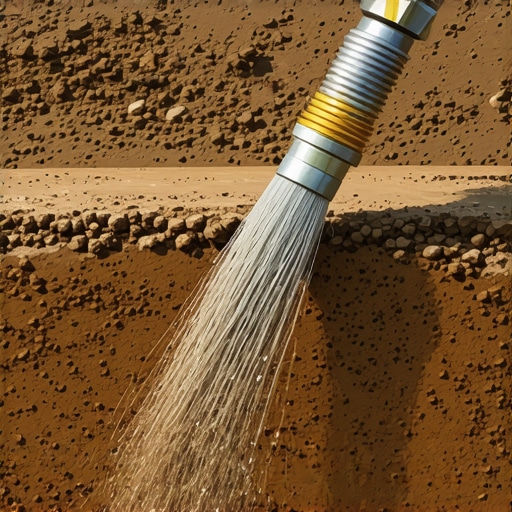
To further refine your stabilization strategies, explore extensive case studies presented in recent industry publications or consult with geotechnical specialists experienced in innovative ground improvement techniques. Sharing insights and challenges within professional networks fosters collective advancement in borehole stability practices.
Redefining Precision: Cutting-Edge Approaches to Borehole Trajectory Control
As underground exploration ventures into increasingly complex geotechnical terrains, traditional drilling methodologies often falter under the weight of unpredictable rock properties. Recent breakthroughs emphasize the significance of integrating adaptive drilling systems with real-time subsurface imaging to achieve unprecedented accuracy, particularly in fractured or heterogeneous formations. By leveraging this synergy, drillers can preemptively adjust parameters, drastically reducing deviation risks and optimizing borehole alignment for demanding applications.
Deciphering the Influence of Anisotropy and Heterogeneity on Drill Dynamics
Underground strata rarely present uniform properties; instead, anisotropic stress distributions and heterogenic rock facies impose variable forces on drill bits, complicating trajectory maintenance. High-resolution geomechanical modeling—incorporating seismic, sonic, and borehole image data—allows engineers to predict zones susceptible to deviation. Such predictive analytics facilitate tailored drilling strategies, including selective bit orientation and adaptive mud properties, enhancing stability amid complex rock matrices.
How Can Multi-Component Sensor Arrays Elevate Borehole Control?
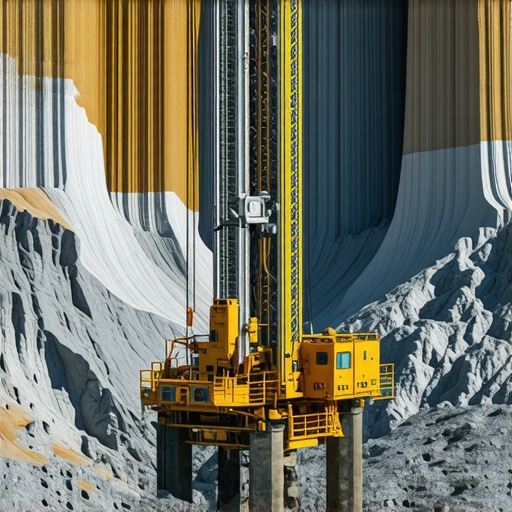
Deploying sophisticated sensor arrays that monitor parameters like torsion, tension, vibration, and real-time rock response equips operators with multidimensional data feeds. These insights enable immediate corrective actions, such as adjusting drilling speed or incorporating dynamic stabilizers, to counteract emerging deviations. Advanced data fusion algorithms synthesize these streams, providing a comprehensive situational awareness that surpasses conventional monitoring techniques.
Harnessing Machine Learning for Predictive Drilling Mastery
Machine learning algorithms, trained on extensive datasets encompassing geological conditions, equipment responses, and deviation histories, now serve as vital tools for anticipatory action. By recognizing subtle patterns indicating imminent deviation, these models inform preemptive adjustments, ultimately conserving time and resources. Integration of such AI-driven systems with automation platforms is setting a new standard for precision in challenging rock settings, pushing the boundaries of what’s achievable in borehole trajectory fidelity.
Industry Resource Spotlight: Geomechanical Data Synthesis for Optimized Drilling
For practitioners keen on refining their approach, consulting specialized literature, such as the comprehensive analyses published by the American Society of Civil Engineers’ Ground Engineering Journal, provides valuable insights into advanced data integration and predictive modeling. Engaging with these resources, along with industry symposiums, fosters the adoption of innovative practices that address the nuances of complex geological challenges.
If you’re aiming to elevate your drilling projects, consider adopting integrated geomechanical modeling coupled with adaptive control systems. Demonstrating leadership in this domain not only enhances operational outcomes but also sets a new benchmark within the industry—empowering professionals to conquer even the most formidable rock environments.
Expert Insights & Advanced Considerations
Emphasize Real-Time Data Integration
Integrating high-resolution sensors and real-time data analytics empowers drill operators to adapt instantaneously to geological anomalies, thus maintaining borehole trajectory with enhanced accuracy. This proactive approach minimizes deviations caused by heterogeneous rock properties.
Leverage Adaptive Drilling Technologies
Employing adaptive systems such as rotary steerable tools and dynamic mud management allows for precise control over wellbore paths, especially in complex formations. These innovations drastically reduce the reliance on pre-set trajectories alone.
Prioritize Ground Stabilization Uniquely Tailored to Site Conditions
Implementing nano-engineered grout mixes or microbial-induced calcite precipitation (MICP) customized for specific geotechnical profiles can significantly enhance soil cohesion. These techniques mitigate lateral shifts and ensure borehole stability amid challenging substrates.
Utilize Multi-Component Sensor Networks for Holistic Monitoring
Deploying arrays capturing torsion, tension, vibration, and geomechanical responses fosters a comprehensive understanding of borehole dynamics. Immediate corrective action guided by fused data streams prevents deviation before it compromises drilling objectives.
Adopt Machine Learning for Predictive Stability
Training AI models on extensive geological and operational data enables anticipation of potential deviations. Predictive insights inform preemptive adjustments, reducing costly correction measures and enhancing overall project efficiency.
Curated Expert Resources
- Society of Petroleum Engineers (SPE) Technical Articles: Offers cutting-edge research on real-time drilling analytics and adaptive technology integration.
- Journal of Geotechnical and Geoenvironmental Engineering: Features comprehensive studies on innovative ground stabilization methods like MICP and nano-grout applications.
- NASA’s Geospatial Data Resources: Provides advanced geospatial imaging and geomechanical modeling tools applicable for subterranean assessments.
- Industry Conferences and Workshops: Events such as the International Geothermal Conference facilitate knowledge exchange on adaptive drilling and soil stabilization.
Thoughtful Reflection on Borehole Mastery in Rock Challenges
Achieving unmatched precision in borehole drilling within complex rock formations in 2026 hinges on the seamless fusion of real-time data, adaptive technologies, and innovative stabilization methods. These strategies prompt us to rethink conventional workflows and embrace a future where predictive analytics and site-specific ground improvements set new industry standards. Engaging with these insights strengthens our capacity to navigate challenging terrains effectively. We invite your expert perspectives, case studies, or questions—share your experiences or explore further resources to contribute to the evolving collective knowledge of borehole excellence.