Stop Borehole Collapse with These 3 Soil Stabilizers in 2026
Mastering Soil Stabilization: The Crucial Step in Safe and Efficient Trenching Operations
In the realm of underground excavation, the stability of subsurface soils remains a pivotal factor dictating project safety, timeline adherence, and cost efficiency. As trenching and vacuum excavation methods gain prominence for their minimally invasive and safe profiles, understanding the nuances of soil stabilization becomes paramount. Advanced soil stabilization not only mitigates risks such as borehole collapse but also enhances the precision of utility mapping and the longevity of underground infrastructures.
The Evolving Soil Dynamics and their Impact on Borehole Integrity
Each soil type presents unique challenges—clays, silts, sands, and rocky substrates demand tailored stabilization strategies. For instance, clayey soils are susceptible to expansion and contraction, increasing collapse risk during excavation. Recognizing these behaviors allows engineers to preemptively select suitable stabilizers and techniques, ensuring borehole integrity throughout and post-operation.
Emerging Soil Stabilizers in 2026: A Deep Dive into Effectiveness and Sustainability
Recent advancements have introduced innovative stabilizers such as bio-based polymers and environmentally friendly geopolymers, which offer robust physical properties while adhering to sustainability standards. These materials are designed to perform under diverse environmental conditions, including saturated or frozen soils, and can be integrated seamlessly with hydrovac systems to prevent utility strikes or soil caving.
Integrating Soil Stabilization with Vacuum Excavation for Optimal Outcomes
The synergy between soil stabilizers and vacuum excavation techniques, such as hydrovac, exemplifies a shift towards proactive risk mitigation. Implementing stabilizers prior to excavation enhances soil cohesion, reduces inrushes, and minimizes utility damage—crucial in urban environments where precision and safety are non-negotiable. For a comprehensive overview, see the detailed benefits of hydrovac vacuum excavation and its role in safe underground works (Hydrovac Vacuum Excavation Benefits).
What Are the Most Cost-Effective Soil Stabilization Strategies for High-Risk Soil Conditions?
Field experience indicates that combining chemical stabilizers with mechanical reinforcement—such as grouting or soil nails—can significantly reduce overhead costs and project delays. These hybrid approaches are especially valuable in highly variable soil conditions like coastal zones or urban centers with mixed soil profiles, often encountered in infrastructure upgrades or utility new installs.
Building a Future-Proof Underground Infrastructure: The Role of Soil Stabilization Technologies
Investing in advanced soil stabilization techniques contributes to the longevity of underground assets and reduces maintenance costs. As projects increasingly incorporate real-time monitoring sensors and predictive analytics, soil stabilization remains a cornerstone in the quest for resilient, safe, and cost-effective trenching solutions.
Can Current Soil Stabilization Methods Keep Pace with Increasing Soil Variability in Urban Environments?
This question underscores the importance of continuous research and development. Field trials and case studies suggest a positive trajectory, especially as new materials emerge that adapt to climate change-induced soil alterations and urban traffic loads.
Engaging with latest research and innovations—like those discussed in recent industry white papers—can elevate practitioners’ expertise and project success rates. To explore more about cutting-edge soil stabilization in trenching, consult the comprehensive guide on safe underground infrastructure (Safe Underground Infrastructure Guide).
For professionals eager to share insights or seek tailored advice, contributing to community discussions or consulting with specialized geotechnical engineers is highly recommended.
Leveraging nanotechnology for soil stabilization: Is this the future of underground safety?
Recent breakthroughs in nanotechnology have opened new horizons for soil stabilization, enabling the development of ultra-fine, environmentally friendly particles that enhance soil cohesion at a molecular level. These innovations promise to improve the longevity and safety of underground utilities, especially in challenging environments such as saturated or frozen soils. Integration of nanomaterials with hydrovac systems can lead to more precise and resilient subsurface operations, reducing utility strikes and ground collapse incidents. For detailed insights into advanced stabilization materials, industry reports highlight how nanomaterials outperform conventional stabilizers in durability and environmental impact (Safe Underground Infrastructure).
Adaptive strategies for unpredictable soil behavior amidst climate change
Climate change contributes to increased soil variability—rising water tables, unexpected freeze-thaw cycles, and shifting moisture levels demand adaptive stabilization techniques. Real-time monitoring sensors embedded within soil provide ongoing data, allowing engineers to dynamically adjust stabilization efforts and prevent unforeseen ground movements. This proactive approach ensures that underground infrastructure remains stable despite environmental uncertainties. Implementing modular stabilization systems that can be tailored on-site offers an agile response to these evolving conditions, ultimately minimizing project delays and cost overruns.
Can predictive analytics revolutionize trenching safety in complex subterranean environments?
This pressing question emphasizes the transformative potential of integrating big data and machine learning into soil stabilization and excavation planning. Predictive analytics can identify risk-prone zones before breaking ground, optimizing resource allocation and safety protocols. For example, advanced modeling can simulate soil responses to various stabilization techniques under different climatic scenarios, guiding decision-making processes. As industry leaders adopt these technologies, the precision and safety of underground work are set to reach unprecedented levels. To stay ahead, practitioners should explore how AI-driven models can enhance field strategies, such as in utility mapping or borehole stability assessments.
Sharing experiences or seeking expert collaborations can accelerate the adoption of these innovative approaches. Engage with the community or consult specialized geotechnical engineers to harness the full potential of predictive tools in underground infrastructure projects.
Harnessing Nanotechnology to Reinforce Subsurface Stability
The advent of nanomaterials in geotechnical applications marks a revolutionary leap in soil stabilization techniques. By manipulating particles at the molecular level, engineers can create ultra-fine, environmentally benign stabilizers that significantly enhance soil cohesion and load-bearing capacity. These nanostructured substances can adapt to fluctuating moisture levels and temperature variations, making them ideal for challenging environments such as saturated or frozen soils.
Implementing nanotechnology not only improves the durability of underground structures but also reduces environmental impacts associated with conventional stabilization agents. For example, silica-based nanomaterials can create strong bonds within soil matrices, preventing erosion and collapse during trenching operations. As research progresses, innovative delivery systems—like nanocapsules—are being developed to ensure precise application and minimal disruption to surrounding ecosystems.
Questioning the Limits: How Will Climatic Shifts Shape Soil Stabilization Protocols?
Urban planners and geotechnical engineers face an increasingly unpredictable underground landscape due to climate change. Rising water tables, intense freeze-thaw cycles, and unexpected droughts demand dynamic stabilization techniques capable of adapting in real-time. Sensor-integrated modular systems now enable the continuous monitoring of soil moisture, stress levels, and temperature, providing actionable data that informs on-the-fly adjustments.
Such adaptive strategies are essential for maintaining the integrity of underground utilities and avoiding costly failures. Moreover, incorporating predictive modeling with historical climatic data can forecast future soil behavior, allowing for tailored stabilization interventions that preempt ground movement. The integration of these technologies is reshaping the core principles of geotechnical risk management, prompting industry-wide shifts toward resilience-focused practices.
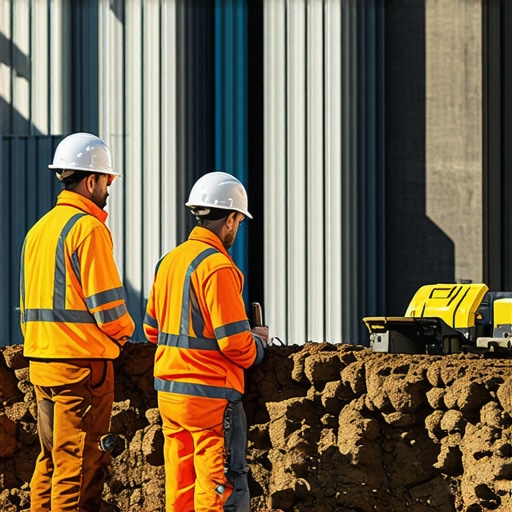
Visual depiction of nanoscale soil particles forming a cohesive matrix, illustrating nanotechnology-based stabilization at the molecular level.
Predictions and Precautions: The Future Role of Data Analytics in Underground Safety
Big data analytics and machine learning are poised to transform subterranean risk assessment profoundly. By analyzing vast datasets from soil sensors, historical borehole performance, and climatic trends, predictive models can identify zones with elevated instability risk before excavation commences. This proactive approach enables precise planning, reduces unforeseen delays, and enhances safety protocols.
For instance, AI-driven simulations can predict how specific stabilization techniques will perform under varying environmental influences, guiding decision-makers toward the most effective solutions. As these technologies mature, their integration into daily operational workflows will become standard practice, fostering a new era of intelligent, risk-aware underground construction. Engaging with interdisciplinary research and investing in sensor infrastructure are vital steps toward capitalizing on these advancements, ultimately ensuring safer, more sustainable soil stabilization practices.
Innovative Soil Stabilization Methods Transforming Underground Excavation
As trenching projects evolve amidst increasingly challenging subsurface conditions, the necessity for advanced soil stabilization approaches becomes more apparent. Cutting-edge materials like bio-inspired polymers and nanomaterials are redefining practices by offering enhanced cohesion and environmental compatibility, enabling precise borehole maintenance even in saturated or frozen soils.
What revolutionary stabilization solutions are optimized for unpredictable soil behaviors?
Recent research highlights the efficacy of nano-engineered stabilizers and eco-friendly geopolymers that adapt dynamically to moisture fluctuations and temperature variances. These innovations facilitate seamless integration with hydrovac systems, drastically reducing utility strikes and ground collapses. For comprehensive insights into such technologies, consult the detailed analyses published by the International Society of Geotechnical Engineers.

Integrating Smart Monitoring with Soil Stabilization for Proactive Risks Management
Embedding IoT sensors within stabilized soil matrices enables real-time monitoring of moisture, stress, and temperature parameters. This integration supports adaptive stabilization strategies, allowing engineers to make informed adjustments on-site, preempting potential failures before they manifest. Such proactive measures are essential for urban projects where the margin for error is minimal and safety is paramount.
How can predictive analytics optimize soil stabilization in dynamic environments?
Advanced machine learning models analyze continual data influx, forecast ground movement risks, and recommend bespoke stabilization interventions. By simulating various failure scenarios, these tools empower decision-makers to select solutions that maximize safety and longevity. Engaging with industry-specific case studies enhances understanding and application of these powerful analytical techniques.
Expert Suggestions to Elevate Soil Stabilization in Trenching
Innovation at the Molecular Level Unlocks New Durability
Integrating nanomaterials in soil stabilization dramatically enhances bond strength and resilience, opening doors to safer, more sustainable underground work environments.
Real-Time Data Empowers Adaptive Ground Management
Embedding IoT sensors within stabilization systems provides continuous feedback, allowing engineers to proactively adjust techniques amid shifting soil conditions and climate patterns.
Hybrid Techniques Optimize Cost and Performance
Combining chemical stabilizers with mechanical reinforcement not only reduces overall expenses but also creates customized solutions for complex soil profiles found in urban developments.
Climate-Responsive Strategies Minimize Unexpected Failures
Utilizing predictive analytics based on climatic data enables the preemptive modification of stabilization protocols, vital for maintaining highway and utility corridor integrity.
Collaborative Research Accelerates Industry Progress
Active engagement with leading geotechnical research institutions fosters innovation, ensuring soil stabilization methods evolve in step with emerging construction challenges.