5 Hydrovac Safety Fixes to Stop Gas Line Strikes in 2026
Elevating Site Safety and Efficiency with Advanced Borehole Techniques
As the construction and utility sectors brace for evolving challenges in 2026, mastery over borehole, vacuum excavation, and trenching methodologies becomes paramount. These foundational operations underpin successful projects, demanding not only technical precision but also strategic foresight in safety protocols, soil behavior analysis, and utility protection.
How Emerging Soil Dynamics Are Reshaping Trenching Strategies
The shifting geotechnical landscape, driven by climate-induced soil moisture alterations and urban development, necessitates a nuanced understanding of subsurface conditions. Experts must leverage sophisticated soil testing and real-time monitoring to adapt trenching techniques, minimize ground disturbances, and prevent infrastructure damage, as discussed in recent geotechnical research journals. For instance, the integration of soil stabilization methods, such as innovative soil-cement mixes, can significantly enhance trench integrity amidst unpredictable conditions.
Innovative Approaches to Borehole and Hydrovac Application Complexity
The push towards more environmentally conscious and precision-driven site operations prompts a reevaluation of traditional boring and hydrovac techniques. Embracing automation and sensor-assisted drilling enhances accuracy, reduces collateral utility strikes, and accelerates project timelines. For example, employing borehole sensors that provide real-time data streamlines decision-making and mitigates risks associated with high-density urban environments. Additionally, innovations in vacuum excavation technology now allow for safer, faster utility exposure without damaging underground cables or pipes.
What Are the Most Effective Tactics to Prevent Gas Line Strikes During Urban Excavations?
Preventing gas line strikes remains a critical concern amid complex city layouts. Advanced non-invasive detection methods, like ground-penetrating radar combined with vacuum excavation, offer promising solutions. The strategic use of detailed utility mapping and pre-excavation consulting can further reduce dangers, fostering safer operations. For more information, consult comprehensive guidelines published by the National Utility Locating Contractor Association.
Engaging with the latest insights and technological advancements enables professionals to refine their soil analysis, optimize trenching depths, and implement safer, more efficient borehole practices. To deepen your expertise, explore targeted content on micro-trenching techniques and soil stabilization strategies.
Adaptive Soil Management: Staying Ahead of Ground Variability
As urban environments evolve, so does the unpredictable nature of subsurface conditions. Ground stability remains a pivotal factor influencing borehole success, especially on complex sites with variable soil textures. Integrating cutting-edge soil stabilization protocols, like polymer-based additives, can dramatically enhance borehole integrity amidst shifting moisture levels and mechanical stresses. For instance, recent studies emphasize the significance of dynamic soil testing, such as cone penetrometer evaluations, to anticipate stability issues before drilling commences, enabling teams to adjust strategies proactively. For practical insights, consider diving into soil stabilization techniques tailored for 2026 urban challenges.
Tech-Driven Solutions to Reduce Borehole Collapse Risks
Traditional methods often fall short when confronted with high-risk soil conditions, leading to costly borehole collapses. The advent of sensor-integrated drilling systems offers an innovative remedy. By deploying real-time pressure, tilt, and acoustic sensors within boreholes, operators gain instantaneous feedback on subsurface behavior, facilitating immediate adjustments. Such technology is especially valuable when working in sandy or clay-rich soils, where collapse risks are exacerbated. A comprehensive approach combining soil analysis, advanced equipment, and strategic casing installation can significantly improve outcomes. For a deeper technical dive, explore soil fixes for borehole collapse and their role in urban precision drilling.
Are We Overestimating the Limits of Soil Stabilizers in Urban Borehole Stability?
While soil stabilizers provide promising results, their long-term efficacy across diverse geotechnical conditions warrants further research. Experts are questioning if chemical or organic stabilizers can reliably handle the heterogeneity found on mega-project sites, or if they merely serve as temporary fixes. Currently, case studies reveal variable performance, emphasizing the need for integrated ground management—combining stabilizers with mechanical reinforcement—to achieve consistent stability. For a comprehensive review of emerging soil treatment options, visit soil stabilization strategies.
To enhance your project’s resilience against ground movement, prioritize a multi-faceted soil assessment framework that includes advanced testing and customized stabilization solutions. Share your experiences or ask questions about tackling challenging soil conditions in the comments below; continuous dialogue helps refine best practices for 2026 and beyond.
,
Optimizing Safety through Predictive Soil Modeling: The Next Frontier
In the rapidly evolving landscape of underground utility installation and excavation, predictive soil modeling stands as a pivotal innovation. This approach leverages high-resolution geotechnical data, coupled with artificial intelligence algorithms, to forecast subsurface behavior with unprecedented accuracy. Modern predictive models assimilate variables such as moisture content, soil composition, and in-situ stress factors, enabling engineers to preemptively identify zones susceptible to collapse or utility strikes. Integrating these models into real-time monitoring systems ensures proactive decision-making, reducing risk exposure and enhancing operational efficiency.
How does the integration of machine learning enhance soil stability assessments in complex urban environments?
Machine learning algorithms process vast datasets from remote sensing, soil tests, and drilling logs to uncover hidden patterns indicative of stability issues. As detailed in a 2023 study published in the Journal of Geotechnical Engineering, these models improve prediction accuracy of soil failure zones by up to 35%, allowing for tailored stabilization strategies. Such insights facilitate custom soil treatment methods, mitigate unforeseen ground movements, and optimize trench designs for durability. To explore practical applications of these technologies, consult recent case studies on AI-enabled geotechnical solutions in urban projects.
Capitalizing on advances in data analytics requires a strategic shift toward integrated digital workflows. Embedding sensors within boreholes and employing machine learning for data interpretation accelerates response times and minimizes site disruptions. This holistic approach embodies the future of safe, efficient, and adaptive trenching operations.
Harnessing Real-Time Data to Navigate Soil Variability
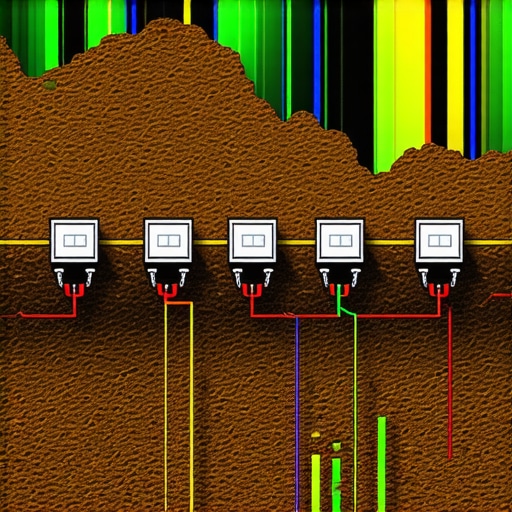
Urban and remote sites rarely present uniform subsurface conditions. Fluctuations in soil moisture, unforeseen underground utilities, or transient geological features demand flexible, data-driven strategies. Deploying a network of IoT-connected sensors provides continuous updates on parameters such as pore pressure, tilt, and acoustic signals, offering a dynamic picture of subsurface health. These data streams inform immediate operational adjustments, whether altering trenching depth, adjusting casing pressures, or halting work to reassess conditions.
What are the thresholds and indicators within sensor data that reliably predict imminent soil failure?
Research indicates that specific sensor signatures, such as sudden increases in pore pressure or abnormal tilt angles, function as early warning signs. For instance, studies in high-slope stability terrains demonstrate that a 15% rise in pore pressure often precedes collapse events. Advanced signal processing algorithms, utilizing machine learning, further refine predictive capabilities by filtering noise and correlating multiple parameters. For practitioners, establishing threshold criteria based on local soil conditions is crucial for effective risk management. Continuous calibration of these thresholds through field data enhances the reliability of predictive systems.
If you’re interested in implementing these cutting-edge monitoring solutions, engaging with geotechnical data specialists and IoT technology providers can give you a strategic advantage. The dynamic adaptation to soil variability is no longer a theoretical exercise but a practical imperative for safe, efficient trenching.
Harnessing Soil Microstructure Insights to Elevate Trenching Precision
The intricate microstructure of soils, encompassing pore networks, grain boundary characteristics, and mineral compositions, plays a decisive role in determining excavation success and safety. Recent advancements in nanotechnologies enable geotechnical engineers to analyze soil samples at microscopic levels, revealing heterogeneities that influence soil stability during borehole drilling and trenching. Understanding these microstructural nuances allows for the customization of stabilization techniques, such as nano-engineered grouts or tailored chemical amendments, which enhance cohesion and resilience under dynamic loadings.
Can Quantum Sensing Unlock New Depths in Subsurface Layer Detection?
Quantum sensing technologies, leveraging phenomena such as entanglement and superposition, offer unprecedented sensitivity in detecting underground anomalies. These sensors can identify subtle variations in magnetic, gravitational, or acoustic signals, providing granular insight into subsurface stratigraphy. Integrating quantum sensors into borehole logging tools facilitates detailed mapping of layered geological formations, enabling engineers to anticipate potential challenges like fault zones or variable grain compaction. As reported by the National Institute of Standards and Technology (NIST), quantum-enhanced detection systems could revolutionize pre-excavation surveys, significantly reducing unforeseen ground movements.
How Are Adaptive Algorithms Transforming Soil Behavior Predictions in Dynamic Environments?
Machine learning models that adapt in real-time to incoming sensor data are increasingly sophisticated in forecasting soil responses during excavation. These algorithms incorporate multi-source data—including geophysical surveys, real-time soil moisture levels, and previous borehole performance—feeding into adaptive simulations that predict potential failure zones or settlement risks. For project managers, employing these predictive tools enables proactive mitigation measures, adjusting excavation parameters on the fly to maintain safety and efficiency. The deployment of such intelligent systems underscores the shift towards fully integrated, data-driven site management protocols, as emphasized in recent geotechnical conferences.
To stay at the forefront of underground construction innovation, professionals should explore collaborations with emerging tech firms specializing in quantum sensing and machine learning solutions. Engaging with cutting-edge research not only enhances safety but also optimizes resource allocation, leading to cost-effective project delivery.

Elevate Your Expertise with Forward-Thinking Strategies
Embrace Data-Driven Decisions That Reduce Risks
Implementing real-time soil monitoring and predictive modeling not only enhances safety but also streamlines project timelines. Harnessing AI and sensor technology leads to smarter excavation practices that adapt to complex subsurface conditions proactively.
Prioritize Soil Microstructure Analysis for Precision Drilling
Leverage cutting-edge nanotechnology insights to understand soil heterogeneity. This granular knowledge enables tailored stabilization and excavation techniques, minimizing ground disturbance and preventing collapses in challenging terrains.
Invest in Automated Borehole and Hydrovac Equipment
Automation and sensor-assisted drilling tools offer unmatched accuracy and safety. They facilitate utility detection without damaging underground infrastructure, especially in densely developed urban areas, and reduce operational hazards.
Integrate Quantum Sensing to Uncover Subsurface Layers
Emerging quantum technologies provide exceptional resolution in geological mapping. These sensors can identify fault lines, mineral compositions, and hidden utilities, empowering engineers to plan with confidence and avoid costly surprises.
The Role of Expert Resources in Elevating Your Projects
- Hydrovac Drilling Blog: A comprehensive resource on micro trenching techniques, soil stabilization, and safety protocols—essential for staying ahead in 2026 underground construction trends.
- National Utility Locating Contractor Association Guidelines: Authoritative standards for utility detection and avoidance, crucial for preventing utility strikes and ensuring compliance.
- Geotechnical Engineering Journals: Cutting-edge research articles on soil microstructure analysis, AI applications, and quantum sensing developments that inform best practices and innovation adoption.
Insights for the Industry’s Next Evolution
As underground infrastructure becomes increasingly vital and complex, integrating advanced soil analytics, automation, and quantum sensing emerges as the key to safer, faster, and more reliable trenching practices. Staying engaged with expert resources and pioneering technologies will differentiate leaders from followers. Share your insights or explore emerging solutions—collaboration accelerates progress in this dynamic field.