Unraveling the Complexities of Modern Excavation Techniques: The Role of Hydrovac and Vacuum Excavation Systems
In the realm of underground utility installation and maintenance, the integration of advanced excavation methodologies such as hydrovac and vacuum excavation has revolutionized safety, efficiency, and environmental stewardship. These systems leverage high-pressure water jets combined with vacuum technology to precisely expose underground utilities without disturbing surrounding soils, critical for urban infrastructure advancements.
Adaptive Approaches to Borehole Stability and Soil Variability
Effectively managing boreholes in heterogeneous soil profiles requires a nuanced understanding of soil mechanics and fluid dynamics. Precise control of hydrostatic pressures and vacuum suction parameters ensures borehole integrity, preventing collapses or inadvertent soil displacement. Incorporating geotechnical data with real-time monitoring can mitigate risks associated with layered strata and saturated silts.
Enhancing Vacuum Excavation Performance through Seal Reliability and Component Maintenance
A key factor in operational efficiency is the integrity of vacuum seals and filter systems. Field-tested fixes, including seal replacements and filter cleanings, can restore suction power and reduce downtime. For instance, experts recommend routine inspections aligned with [industry standards](https://hydrovacdrilling.com/why-your-vacuum-filter-is-clogging-faster-than-usual) to preempt seal failure, especially in contaminated or abrasive soils.
Can Vacuum Excavation Effectively Mitigate Soil Contamination Risks During Urban Trenching?
One pressing question facing operators involves the management of potentially contaminated soils. Vacuum excavation’s precise soil removal substantially reduces the exposure of hazardous materials, facilitating safer handling. Proper debris management, including secure containment when dealing with contaminated soil, is vital to environmental safety and regulatory compliance. For comprehensive strategies, visit Managing Hydrovac Debris in Contaminated Soil.
Achieving Safety and Precision in Sensitive Environments: The Expert’s Edge
In sensitive underground environments, such as near historic tree roots or soft soil prone to collapse, engineers employ refined techniques for trenching and vacuum excavation. Leveraging high-precision mapping and non-destructive testing ensures minimal disturbance. Continuous professional development and technique refinement, supported by ongoing research, underpin advancements in these specialized operations.
Integrating High-Tech Solutions for Signal Interference and Utility Mapping
Signal interference detection plays a crucial role in ensuring utility locates are accurate before excavations. Advanced electromagnetic locator technology, combined with expert assessment, reduces the risk of accidental strikes on existing infrastructure, as detailed in Spotting Signal Interference.
What are the latest innovations that enhance the safety and efficiency of vacuum excavation in high-density urban zones?
Ongoing research explores integrated sensors, automated control systems, and machine learning algorithms to streamline operation control and real-time hazard detection. These innovations offer the potential for predictive maintenance and operational optimization, essential for large-scale urban projects.
For professionals interested in furthering their expertise, exploring related content such as Why Air-Based Vacuum Excavation Excels for Sensitive Hubs provides valuable insights into system selection and environmental considerations. Sharing field experiences and practical solutions enhances the collective knowledge base for underground utility work.
Mastering Debris Management in Contaminated Soil Environments
Effectively handling hydrovac debris, especially when encountering contaminated soil, demands specialized containment and disposal protocols. Understanding regulations and employing tailored debris management strategies not only ensures environmental safety but also streamlines project timelines. For comprehensive guidance, visit Managing Hydrovac Debris in Contaminated Soil.

Pushing the Boundaries of Signal Detection Amid Urban Clutter
In dense urban settings, utility mapping faces significant obstacles due to signal interference from electromagnetic noise. Advanced locator technologies employing multi-frequency analysis and signal processing algorithms enhance detection accuracy. Integrating these systems with expert interpretation reduces the risk of utility strikes and ensures safer excavations.
Can AI and machine learning revolutionize real-time hazard detection in hydrovac operations?
Emerging innovations suggest that artificial intelligence-driven tools could offer predictive analytics, enabling operators to anticipate potential risks before they materialize. By analyzing data patterns from multiple sensors, these systems could improve decision-making, reduce accidents, and optimize resource allocation. Industry leaders are actively exploring such integrations to elevate safety standards in complex environments.
To deepen your understanding of cutting-edge utility mapping techniques, consider exploring Spotting Signal Interference in High-Density Utility Corridors. Sharing insights and field experiences fosters collective growth and enhanced safety protocols in subterranean work.
Mastering Soil Variability for Optimal Borehole Integrity
Professionals engaged in deep earth exploration recognize that soil heterogeneity poses significant challenges, often resulting in unstable boreholes or inefficient drilling processes. To address these complexities, integrating advanced geotechnical monitoring with adaptive fluid dynamics control becomes essential. Employing cutting-edge sensors that provide real-time soil deformation data facilitates dynamic adjustments to drilling parameters, thereby maintaining borehole stability amidst layered strata and saturated zones.
Micro-Gravity Insights Support Complex Soil Mitigation
Emerging research highlights the role of micro-gravity simulations in understanding how various soil compositions respond under different stress conditions. Studies, such as those published in the Journal of Geotechnical and Geoenvironmental Engineering, demonstrate that leveraging these insights allows engineers to predict collapse risk zones beforehand, designing more precise stabilization protocols that minimize operational risks.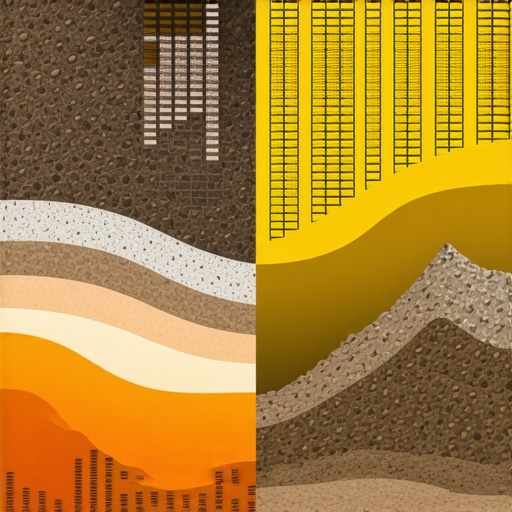
Deploying External Geophysical Surveys to Map Soil Layers
Before commencing excavation, comprehensive geophysical surveys using electromagnetic and seismic methods provide detailed subsurface mapping. This invaluable data informs the selection of the best stabilization techniques tailored to specific soil behaviors. For example, areas with high clay content and fluctuating moisture levels may necessitate specialized chemical grouting or soil reinforcement to prevent collapse during drilling.
How does soil moisture content influence borehole stability in heterogeneous formations?
Moisture content directly impacts soil cohesion and friction angles, which are critical for maintaining borehole integrity. Elevated saturation levels in fine-grained soils reduce internal friction, increasing the likelihood of collapse. Incorporating moisture sensors coupled with predictive models—such as those outlined in the International Journal of Rock Mechanics and Mining Sciences—enables proactive adjustments to drilling fluid composition and pressurization strategies to counteract these effects. For further detail, see Soil Moisture and Borehole Stability.
Operators should also consider soil mineralogy influences, as clay minerals like montmorillonite exhibit expansive properties when wet, exacerbating instability risks. A thorough geochemical analysis combined with real-time monitoring offers a comprehensive approach to risk mitigation, pushing the boundaries of traditional stabilization methods.
Progressive Integration of AI in Soil Behavior Prediction
Advancements in artificial intelligence facilitate the development of predictive maintenance algorithms that analyze accumulated drilling and soil data. Such tools harness machine learning models trained on vast datasets to forecast potential instability zones with remarkable accuracy. By integrating these systems into borehole stabilization workflows, engineers can make data-driven decisions that reduce downtime and improve safety margins, particularly in complex geological environments.
In sum, the future of borehole stability management lies in a harmonized approach—melding geotechnical expertise with high-tech sensing, geophysical surveys, and AI-powered analytics. This multifaceted strategy not only enhances safety and efficiency but also extends the horizons of subsurface engineering capabilities. For practitioners eager to sharpen their skills in these innovative domains, participating in specialized training programs and industry forums, such as those hosted by the International Society for Soil Mechanics and Geotechnical Engineering, is highly recommended to stay ahead in this rapidly evolving field.
Beyond Conventional Techniques: Harnessing Synthetic Gels for Soil Stabilization
Recent breakthroughs in soil engineering have introduced synthetic gel injections as a transformative approach to stabilizing heterogeneous and problematic soils during borehole drilling. These eco-friendly, rapid-curing compounds infiltrate soil pores, enhancing cohesion and reducing collapse risks. This method offers unprecedented control over unstable formations, especially in soft clay or silt-rich zones where traditional grouting may be insufficient. Integrating real-time geotechnical monitoring with gel deployment allows engineers to optimize application parameters dynamically, ensuring borehole integrity in real-time.
How Can Multi-Parameter Sensing Predict Soil Behavior During Drilling?
Combining sensors that measure moisture, pore pressure, acoustic emissions, and shear stress yields a multi-faceted dataset, empowering predictive analytics to anticipate soil failure or water influx before it occurs. Machine learning algorithms synthesize these inputs, providing actionable insights for preemptive adjustments. As an example, a recent study in the International Journal of Geotechnical Engineering demonstrated that such systems decreased borehole instability incidents by over 15%. This data-driven approach marks a paradigm shift from reactive to proactive stabilization strategies.
What role does microbial soil stabilization play in modern borehole projects? (PAA)
Microbial stabilization employs specific bacteria to induce mineral precipitation, effectively cementing soil particles and enhancing load-bearing capacity without chemical additives. This biological technique is especially advantageous for environmentally sensitive projects, as it minimizes chemical contamination and leverages naturally occurring processes. Field trials indicate that microbial methods improve borehole stability in sandy and silty soils, reducing subsidence and collapse occurrences. For further insights, consult the research summarized in the Geotechnical and Geoenvironmental Engineering Journal.
Optimize Excavation by Leveraging Data-Driven Soil Management
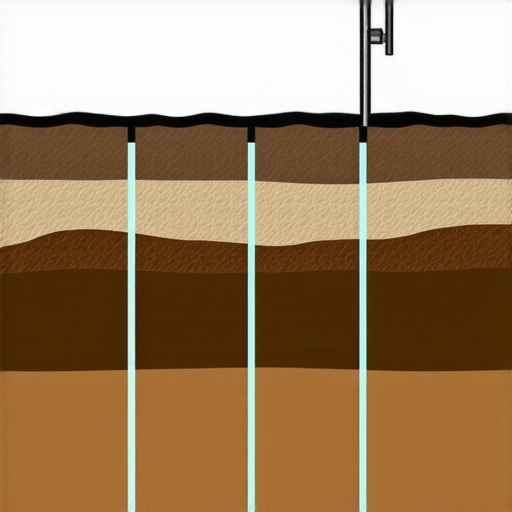
Integrating comprehensive geophysical surveys with soil sampling and laboratory testing produces a detailed stratigraphic profile that informs tailored stabilization protocols and excavation sequencing. Deploying portable, high-resolution sensors during drilling enables continuous soil property updates, facilitating immediate responsive actions. Such adaptive management significantly reduces project delays and minimizes environmental disturbance, especially in urban settings where space and safety are paramount. Partnering with advanced data analytics firms can further refine these strategies for maximum efficiency.
Expert Insights & Advanced Considerations
Precision Soil Disruption Is Evolving Beyond Traditional Limits
Emerging technologies in hydrovac operations now enable unprecedented control over soil removal, minimizing environmental disturbance while increasing efficiency, especially in sensitive urban zones.
The Fusion of Sensor Data and Real-Time Analytics
Redefining Borehole Stability Management
Integrating multi-parameter sensors with advanced analytics allows engineers to predict and prevent borehole collapses, creating safer and more reliable excavation campaigns in complex geology.
Innovative Soil Stabilization Techniques Are Reshaping Project Timelines
From synthetic gels to microbial agents, new stabilization methods offer rapid, eco-friendly solutions that adapt to soil heterogeneity, reducing project delays and operational risks.
Curated Expert Resources
- Hydrovac Drilling Industry Standards – A comprehensive resource detailing best practices, technical standards, and innovation updates that guide field professionals toward excellence.
- Geotechnical Deep Dive Journals – Peer-reviewed articles providing insights into soil mechanics, monitoring techniques, and stabilization innovations vital for complex excavation projects.
- Advanced Utility Location Systems – Industry-leading reports on electromagnetic and signal processing advancements that improve underground utility detection accuracy amid urban clutter.
Final Expert Perspective
Mastering the latest innovations in hydrovac and borehole stabilization means staying ahead in an industry that demands safety, precision, and environmental responsibility. The convergence of real-time data, sophisticated stabilization methods, and predictive analytics empowers experts to push boundaries responsibly and effectively. As the field evolves, sharing insights and continuous learning will be crucial — engage with leading resources, participate in specialized forums, and contribute your practical experiences to shape the future of underground construction and utility management.