The Hidden Complexity of Wet Clay in Hydro-vacuum Drilling Operations
In the realm of underground utility installation and soil investigation, hydro-vacuum excavation has become an indispensable technique due to its precision, safety, and minimal ground disturbance. However, experts often confront unforeseen obstacles posed by specific soil conditions, particularly wet clay. Understanding the nuanced interactions between soil properties and vacuum excavation technology is essential for effective project planning and execution.
Why Wet Clay Defies Ground Radar and Impedes Borehole Progress
Soil moisture content profoundly influences subsurface detection methods such as ground-penetrating radar (GPR). Wet clay, characterized by its high water saturation and low permeability, creates a challenging environment for electromagnetic signal transmission. This soil’s increased dielectric constant absorbs and scatters GPR waves, leading to weak or distorted signals, which hampers accurate subsurface mapping.See more on GPR limitations in moist soils
How does moisture influence the physical stability of boreholes in clay-rich soils?
Moisture-rich clay tends to swell when saturated and shrink upon drying, creating a dynamic, unstable environment that complicates trench stability and borehole integrity. The plasticity of clay soils results in irregular movement, which can cause borehole wall collapses and hinder the progress of hydro-vacuum excavation equipment. This instability underscores the necessity for specialized techniques, such as chemical soil stabilizers or re-compaction methods, tailored to clay’s unique behavior.
The Role of Soil Composition Analysis in Predicting Excavation Difficulties
Accurate soil characterization prior to excavation enables operators to anticipate issues presented by wet clay. Advanced geotechnical investigations, including soil sampling and in-situ testing, inform the selection of appropriate excavation parameters and support strategies for mitigating risks of soil collapse or equipment clogging. Employing comprehensive site assessment practices aligns with industry standards outlined in authoritative sources like the Ultimate Guide to Borehole Drilling.
Strategies for Effective Hydro-vacuum Excavation in Moist Clays
Overcoming moisture-related challenges involves a combination of targeted approach adjustments. Techniques include increasing vacuum strength, utilizing chemical stabilizers to reduce soil plasticity, and employing flexible drilling components that accommodate soil movement. Additionally, continuous monitoring of soil behavior during excavation helps to adjust tactics in real-time, maintaining safety and efficiency.
What innovations in vacuum technology or soil stabilization are upcoming for challenging clay environments?
The industry is witnessing advancements such as high-capacity vacuum systems designed for high-moisture soils and water-resistant trench shoring solutions. Research into eco-friendly soil stabilizers and real-time soil moisture sensors aims to enhance the predictability and safety of hydro-vacuum operations in complex clay settings.
To refine expertise and adapt to soil variability, professionals should engage with ongoing industry forums and share insights gained from field applications. Collaborating with geotechnical specialists and investing in emerging monitoring technologies can significantly elevate project success rates.
For further insights into soil interaction with vacuum excavation, consult specialized resources like the Comprehensive Guide to Vacuum Excavators.
Adaptive Approaches to Managing Moisture Variability in Clay Soils
One of the foremost challenges when operating in moist clay terrains is managing the unpredictable fluctuations in moisture content during excavation. This variability can lead to sudden shifts in soil stability, making consistent operation difficult. Implementing real-time moisture monitoring using high-precision sensors (see soil moisture sensors) allows operators to dynamically adjust vacuum pressure and stabilization techniques, ensuring safety and efficiency across different moisture levels.
Reinforcing Borehole Stability in Saturated Clays
To bolster borehole and trench integrity amidst high water saturation, advanced chemical stabilization methods are gaining prominence. The application of eco-friendly, swelling-resistant polymers forms a protective film around the borehole walls, mitigating collapse risks. Moreover, deploying flexible casing systems that adapt to soil movement can significantly reduce downtime and material wastage. These innovations symbolize the industry’s shift toward smarter, adaptable solutions that address the inherent plasticity of wet clay.
Innovative Equipment and Techniques Shaping the Future
Emerging technologies such as high-capacity vacuum systems engineered for moisture-laden soils are revolutionizing the field. These systems generate increased suction power, effectively handling saturated soils without clogging or losing efficiency. Additionally, integrating soil stabilizers with real-time monitoring tools empowers crews to make data-driven decisions during critical phases, enhancing safety protocols and operational precision. The ongoing development of these tools underscores the importance of external sources like the mapping of underground utilities to prevent accidents and optimize project timelines.
Can emerging eco-friendly stabilization methods outperform traditional chemical solutions in high-moisture clay environments?
As sustainability becomes a central concern, researchers are exploring biodegradable and non-toxic soil stabilizers that can effectively manage moisture without environmental repercussions. Field trials indicate promising results, with some products offering comparable or superior stabilization performance to conventional chemicals. Continued innovation in this arena is poised to transform urban excavation practices, reducing ecological footprints while maintaining operational excellence.
To deepen your understanding of the latest in soil stabilization and vacuum technology, consider engaging with industry webinars or visiting the comprehensive guide to vacuum excavation. Sharing insights and lessons learned from diverse soil conditions undoubtedly enriches professional expertise and fosters safer, more reliable projects ahead.
Harnessing Real-Time Data to Counteract Clay’s Unpredictable Behavior
Effective hydro-vacuum excavation in moist clay demands more than traditional pre-operation assessments. Integrating real-time soil moisture sensors and dynamic monitoring systems enables crews to adapt swiftly to soil variability, reducing risks of wall collapse and equipment clogging. These advanced sensory technologies provide continuous feedback, allowing operators to modify vacuum intensities, employ soil stabilizers proactively, and optimize excavation parameters on the fly. Embracing such integrated systems not only enhances safety but also boosts productivity by minimizing unforeseen delays and material wastage.
Revolutionizing Soil Stabilization with Eco-Friendly Innovations
The industry’s pivot toward sustainable solutions is redefining soil stabilization methods. Emerging biodegradable polymers and plant-based stabilizers demonstrate comparable performance to conventional chemical agents, with the added benefit of environmental compatibility. These eco-friendly alternatives form resilient films around soil particles, curbing swelling and shrinking tendencies characteristic of wet clay. Successful implementation requires meticulous titration and site-specific evaluation, underscoring the necessity for close collaboration between geotechnical experts and project managers. As research progresses, such innovations could become standard practice, drastically reducing ecological footprints in urban excavation projects.
Overcoming Equipment Limitations Through Design Innovation
Traditional hydro-vacuum equipment may falter under high moisture loads due to clogging, insufficient suction power, or material wear. Recent advancements focus on designing high-capacity, water-resistant vacuum systems equipped with self-cleaning mechanisms and wear-resistant components. Modular configurations facilitate customization based on soil conditions, ensuring peak performance across diverse environments. Furthermore, flexible hose and nozzle technologies allow for better maneuverability, accommodating irregular borehole geometries induced by wet clay’s plasticity. Investing in such innovative equipment significantly mitigates downtime, elevates safety protocols, and extends operational lifespan in challenging terrains.
What role do adaptive technology and automation play in future-proofing hydro-vacuum operations in complex clay environments?
Automation and smart technology integration are transformative in addressing the inherent unpredictability of moist clay soils. Autonomous monitoring drones, AI-driven data analysis, and robotic excavation tools can identify soil instability in real time, predict potential failures, and execute corrective measures without human intervention. For instance, AI algorithms analyzing sensor data can adjust vacuum parameters automatically, optimizing extraction while safeguarding equipment. Such adaptive systems not only improve safety and precision but also set the foundation for fully autonomous excavation operations in high-risk environments. As these technologies mature, they promise a leap forward in managing complex soil challenges — pushing the boundaries of what is feasible in underground utility installation and geotechnical investigation.
By staying engaged with cutting-edge developments such as these, industry professionals can significantly enhance their project outcomes in saturated clay conditions. For a deeper dive into adaptive and automated soil management systems, consider consulting specialized industry publications and participating in expert forums dedicated to soil engineering and vacuum excavation advancements.
Harnessing Cutting-Edge Technologies to Tackle Moisture-Induced Soil Instability
Recent innovations in sensor technology and automation are reshaping hydro-vacuum excavation practices, especially in challenging moist clay environments. Intelligent systems equipped with high-precision real-time moisture monitoring can dynamically adjust vacuum parameters, reducing risks associated with soil collapse and equipment clogging. This integration enhances operational safety and precision, paving the way for safer urban underground utility work.
Why Precise Soil Composition Data Can Make or Break Your Project Outcomes
In-depth geotechnical assessments, including comprehensive soil sampling, resistivity testing, and advanced imaging techniques, are essential for predicting excavation hurdles in clay-rich terrains. Integrating these insights into project planning allows for tailored stabilization techniques and equipment selection. Notably, leveraging authoritative studies like the detailed geotechnical analysis guidelines from the United States Geological Survey can elevate the credibility and effectiveness of pre-excavation evaluations.
How can specialists tailor vacuum and stabilization methods based on specific clay moisture profiles?
Expertise lies in customizing stabilization protocols—such as selecting optimal chemical stabilizers or adjusting vacuum intensity—aligned with soil moisture variability. Employing adaptive feedback mechanisms, supported by predictive modeling, enables practitioners to preemptively mitigate instability risks, thus ensuring smoother excavation processes and reduced environmental impact.
Emerging Eco-Friendly Stabilizers Promise Sustainable Solutions
The push toward environmental responsibility has spurred research into biodegradable and non-toxic soil stabilizers. These eco-friendly agents, derived from plant extracts or naturally occurring polymers, effectively reduce plasticity and swelling in wet clay without introducing harmful chemicals. Adoption of such solutions requires rigorous field testing and often benefits from collaborative efforts between geotechnical experts and material scientists.
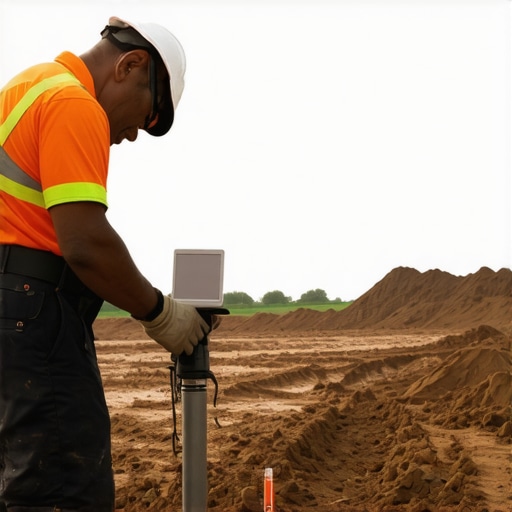
Optimizing Equipment Design for High-Moisture Clays
Innovative equipment features, including self-cleaning vacuum nozzles and modular systems capable of handling high water content, are increasingly vital. Materials resistant to corrosion and wear prolong component lifespan, while flexible hose configurations improve maneuverability around irregular, unstable boreholes. Investment in these advancements minimizes downtime and enhances safety during moisture-intensive excavations.
The Future of Autonomous Control in Complex Soil Landscapes
Automation promises a transformative impact on hydro-vacuum operations, with autonomous robots and AI-powered sensors offering real-time adjustments and hazard detection. These systems can interpret complex soil behavior patterns, predict potential failures, and intervene proactively—dictating a new paradigm in excavation safety and precision. For instance, autonomous soil mapping drones combined with geotechnical analytics could revolutionize site assessment workflows.
Are smart, adaptive systems poised to redefine hydro-vacuum excavation standards in problematic clay zones?
Emerging AI and robotics technologies stand to vastly improve responsiveness and safety, enabling operators to navigate even the most unpredictable moist clay conditions efficiently. As research continues, these innovations will likely become integral components within comprehensive soil management solutions, substantially elevating project reliability and environmental compliance. Engage with industry-leading seminars and technological expos to stay ahead of this technological curve and harness these advancements for your projects.
Expert Insights & Advanced Considerations
Innovate with Real-Time Monitoring Systems
In complex moist clay environments, integrating state-of-the-art real-time soil moisture sensors can drastically improve excavation outcomes by enabling immediate adjustments to vacuum pressure and stabilization techniques, thereby reducing risks and enhancing efficiency.
Prioritize Adaptive Equipment Design
Investing in advanced, modular vacuum systems equipped with self-cleaning mechanisms and corrosion-resistant components allows operators to maintain high performance levels in high-moisture soils, minimizing downtime and operational hazards.
Leverage Sustainable Stabilization Techniques
Emerging eco-friendly soil stabilizers derived from biodegradable polymers or plant-based compounds not only provide effective moisture control but also align with environmental standards, offering sustainable alternatives to traditional chemicals.
Develop Predictive Geotechnical Models
Employing sophisticated geotechnical modeling tools enables professionals to anticipate soil behavior more accurately, tailor excavation strategies accordingly, and preemptively address instability issues arising from high water saturation in clay-rich soils.
Embrace Automation and AI for Complex Soil Management
The integration of AI-driven automation in hydro-vacuum operations facilitates dynamic adjustments to excavation parameters based on continuous data feeds, significantly improving safety and precision in challenging moist clay scenarios.
Curated Expert Resources
- Hydrovac Innovation Reports: Regularly published insights on the latest advancements in vacuum technology and soil stabilization methodologies, invaluable for staying at the forefront of industry developments.
- Geotechnical Engineering Journals: Peer-reviewed articles providing deep dives into soil behaviors, testing standards, and modeling techniques specific to wet clay and similar challenging soils.
- Environmental Safety Guidelines: Documents from authoritative bodies detailing eco-friendly stabilization products and environmentally sustainable excavation practices.
- Industry Webinars and Conferences: Interactive platforms where experts share case studies, emerging techniques, and discuss real-world solutions for complex soil conditions, fostering continuous professional growth.
- Technical Manuals on Vacuum Equipment: Comprehensive guides on designing, maintaining, and troubleshooting advanced hydro-vacuum systems optimized for high-moisture soils, ensuring operational resilience.
Final Expert Perspective
Addressing the challenges posed by wet clay in hydro-vacuum drilling demands a multifaceted approach rooted in expert insights and innovative solutions. By emphasizing adaptive technologies, sustainable stabilization methods, and predictive geotechnical practices, professionals can navigate even the most unpredictable soil conditions with confidence. Embracing these advanced strategies not only enhances project safety and efficiency but also positions industry leaders at the cutting edge of geotechnical excellence. Engage actively with ongoing industry innovations, contribute your field experiences, and explore authoritative resources—your expertise drives progress in tackling the intricate behaviors of challenging soils like saturated clay.