Vacuum Excavation & Trenching: Top Solutions for Safe Site Prep
Mastering the Art of Vacuum Excavation and Trenching for Safer Construction Sites
In the realm of modern construction and infrastructure development, the precision and safety of excavation methods are paramount. Vacuum excavation and trenching stand out as innovative solutions that not only enhance operational efficiency but also significantly mitigate risks associated with underground utility strikes. Leveraging expert insights and cutting-edge technology, industry professionals are now implementing best practices that redefine standard procedures, ensuring project success and worker safety.
How Do Advanced Vacuum Excavation Strategies Elevate Site Safety?
Advanced vacuum excavation techniques employ high-powered hydrovac systems that utilize pressurized water and vacuum suction to carefully expose underground utilities. This method reduces the likelihood of accidental utility strikes, which are a leading cause of accidents on construction sites. By integrating GPS-guided systems and real-time soil analysis, operators can achieve unprecedented accuracy, further reducing the potential for damage and delays. For instance, hydrovac solutions are increasingly being adopted for their ability to perform precise boreholes without disrupting surrounding soil structures.
What Are the Limitations of Traditional Trenching Methods in Complex Environments?
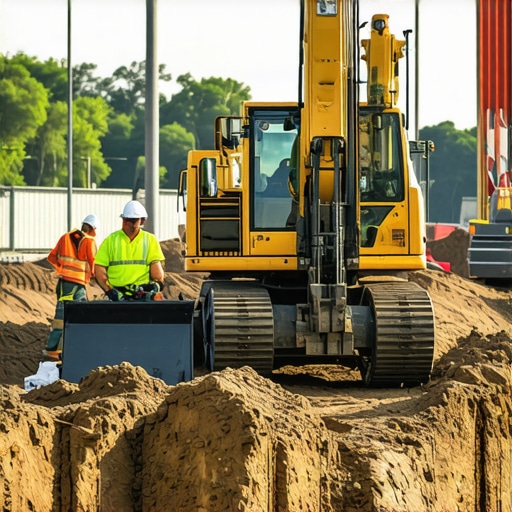
Traditional trenching often involves mechanical excavation with heavy machinery, which can be disruptive and dangerous, especially in congested urban settings. These methods pose higher risks of utility damage, soil instability, and environmental impact. Moreover, manual trenching is labor-intensive and less precise, making it unsuitable for projects requiring high accuracy or working near sensitive infrastructure. As a result, the industry is shifting towards more refined, minimally invasive trenching techniques that prioritize safety and reliability.
How Can Experts Mitigate the Risks of Subsurface Utility Interference?
Preventing utility interference requires a comprehensive approach that combines detailed subsurface investigations, advanced imaging technology, and meticulous planning. High-resolution ground-penetrating radar (GPR) and electromagnetic surveys are instrumental in mapping underground utilities before excavation. Additionally, adopting vacuum excavation as a primary method allows for non-destructive exposure, enabling real-time verification of utility locations. Engaging with utility owners and adhering to national safety standards, such as those outlined by the American Society of Civil Engineers, further minimizes risk.
For those seeking to deepen their understanding of reliable site prep, visiting this resource provides comprehensive insights into innovative borehole and hydrovac strategies.
In the pursuit of safer, more efficient construction practices, professionals are encouraged to explore specialized content on effective trenching vacuum techniques and contribute their own expertise to industry discussions, fostering a community committed to excellence in underground site preparation.
Innovating Beyond Basic Vacuum Excavation Tactics
While traditional vacuum excavation methods have significantly improved safety and precision on construction sites, the industry continues to evolve with innovative approaches that push the boundaries of efficiency and reliability. Technologies such as 3D subsurface mapping and real-time soil analysis are now becoming integral to modern site prep, enabling operators to anticipate potential hazards before they occur. These advancements not only reduce the risk of utility strikes but also optimize workflow, minimizing delays and costs. For detailed insights into how these techniques are revolutionizing underground work, visit this resource.
Overcoming Myths About Trenching Safety
Many believe that traditional trenching methods are inherently unsafe or outdated, yet this misconception ignores recent technological improvements. Modern trenching solutions leverage vacuum-assisted techniques that significantly decrease ground disturbance and environmental impact. These methods challenge the notion that safer equipment compromises speed or productivity. Instead, they demonstrate that with proper planning and execution, trenching can be both fast and safe. Curious about how to implement these innovative trenching strategies? Explore effective trenching vacuum techniques.
What Are the Next-Generation Tools That Will Transform Underground Safety?
Emerging tools like autonomous excavation robots and AI-powered soil sensors are poised to redefine industry standards. These technologies enable real-time decision-making, drastically reducing human error and enhancing safety margins. For example, autonomous systems can operate in hazardous environments without risking worker safety, while AI analytics can predict soil instability, prompting preemptive actions. As the industry adopts these innovations, safety will become more proactive rather than reactive, leading to fewer incidents and more efficient project completion. To stay ahead, professionals should continuously explore new solutions and best practices, including the latest in innovative vacuum excavation strategies.
Share your experiences or ask questions in the comments – your insights could help others navigate this rapidly changing landscape of underground safety.
Harnessing Digital Twins for Precision and Safety in Excavation
One of the most transformative innovations in underground excavation is the integration of digital twin technology. By creating a real-time, virtual replica of the subsurface environment, engineers can simulate excavation activities with unprecedented accuracy. This approach leverages detailed soil data, utility maps, and real-time sensor inputs to predict potential hazards before physical work begins. The use of digital twins reduces the risk of utility strikes, minimizes environmental impact, and streamlines project planning. According to a recent report by the NASA Jet Propulsion Laboratory, digital twins have become instrumental in complex engineering projects, enhancing safety protocols and operational efficiency.
How Do Digital Twins Minimize Utility Damage During Excavation?
Digital twins enable a dynamic, visual interface where operators can monitor subsurface conditions in real time. By simulating different excavation scenarios, potential utility conflicts can be identified early, allowing for strategic adjustments. This proactive approach ensures that excavation does not compromise existing infrastructure, significantly reducing costly delays and hazardous incidents. As this technology matures, its integration with AI-driven predictive analytics will further enhance decision-making capabilities, making underground work safer and more efficient.
Emerging Role of AI and Machine Learning in Soil Characterization
The complexity of subsurface conditions demands advanced analytical tools. AI and machine learning algorithms are now being deployed to interpret vast datasets from soil sensors, borehole logs, and geophysical surveys. These systems can classify soil types, detect anomalies, and predict soil behavior under excavation loads with high precision. For example, a recent study published in Geotechnique highlights how machine learning models improved soil stability assessments, enabling preemptive measures to prevent collapses or utility damages. Integrating these insights into the planning phase ensures safer excavation practices and reduces unforeseen complications.
What Challenges Remain in Implementing AI-Driven Soil Analysis?
Despite promising developments, the widespread adoption of AI in soil characterization faces hurdles such as data quality, model interpretability, and high implementation costs. Ensuring the accuracy of sensor data and developing models that can generalize across diverse geological settings require ongoing research. Moreover, training personnel to operate these sophisticated systems is essential for maximizing their benefits. Collaborations between geotechnical engineers, data scientists, and industry stakeholders are critical to overcoming these barriers and unlocking the full potential of AI-powered site safety solutions.
Innovating with Autonomous Excavation Robots for Hazardous Environments
The future of underground safety is also shaped by autonomous excavation systems designed to operate in environments too dangerous for human workers. Equipped with advanced sensors, machine vision, and real-time data processing, these robots can perform precise digging, utility detection, and hazard assessment without risking lives. A recent pilot project by Robotics Industry Association demonstrated how autonomous machines reduced excavation time by 30% while maintaining impeccable safety standards. This technology not only enhances safety but also improves productivity, especially in contaminated or unstable sites.
If you are interested in exploring these groundbreaking innovations further, consider engaging with industry forums, attending specialized conferences, or subscribing to leading geotechnical journals. Staying informed about these advancements ensures your projects leverage the safest, most efficient excavation techniques available today and in the future.
The Future of Subsurface Mapping and Its Impact on Safety Protocols
Advanced subsurface mapping techniques, including 3D geophysical imaging and machine learning-enhanced soil analysis, are transforming how engineers visualize and interpret underground environments. These innovations enable the creation of highly detailed digital twins, providing real-time insights that preempt potential hazards. Such precision reduces utility strikes and environmental disturbances, elevating safety standards across complex projects. For example, integrating high-resolution seismic surveys with AI analytics allows for dynamic hazard prediction, facilitating proactive decision-making.
What Are the Hidden Benefits of Vacuum Excavation Beyond Utility Protection?
While the primary advantage of vacuum excavation is utility protection, its secondary benefits include soil stabilization and environmental preservation. The gentle, non-destructive nature of hydrovac methods minimizes ground disturbance, reducing the risk of soil collapse or contamination. This approach also diminishes dust and debris release, aligning with stringent environmental regulations. Moreover, vacuum excavation expedites project timelines, providing a safer, cleaner, and more efficient workflow that benefits all stakeholders involved.
How Do AI and Robotics Push the Envelope in Hazardous Site Management?
Artificial intelligence and autonomous robotic systems are pioneering new frontiers in underground safety management. These systems utilize sensor arrays and machine vision to perform hazard detection, utility location, and excavation tasks with minimal human intervention. Autonomous robots excel in environments with high risk of soil instability, chemical contamination, or structural hazards, significantly reducing worker exposure. For instance, AI algorithms analyze sensor data to identify early signs of soil liquefaction, prompting preemptive measures that prevent catastrophic failures.
< >
>
What Strategies Empower Precision in Complex Urban Environments?
In densely populated urban settings, precision becomes paramount to avoid service disruptions and ensure safety. Combining real-time data from ground-penetrating radar, drone surveys, and GIS mapping offers a multi-layered approach to site assessment. This integrated strategy enhances accuracy for trenching and utility exposure, allowing for minimal disruption to existing infrastructure. Implementing modular, portable vacuum systems further enhances flexibility and control, enabling rapid adaptation to evolving site conditions and reducing the risk of accidental utility damage.
Why Are Standard Safety Measures Insufficient in Modern Excavation?
Traditional safety protocols often rely on outdated risk assessment models that fail to account for complex subsurface interactions. Today’s multifaceted underground environments demand dynamic, data-driven safety frameworks. Incorporating sensor networks, real-time monitoring, and predictive analytics shifts safety from reactive to proactive. This evolution empowers project managers to anticipate hazards, allocate resources efficiently, and implement adaptive controls, ultimately fostering a safer excavation ecosystem that proactively mitigates risks before they materialize.
What Role Will Digital Twins Play in Future Infrastructure Development?
Digital twins stand at the forefront of innovative underground safety solutions, offering immersive simulations of subsurface conditions. These virtual replicas enable testing of excavation strategies, utility placements, and hazard scenarios without physical risks. As sensor technology advances, digital twins will integrate continuously updated data, providing a living model that adapts to real-world changes. This capability facilitates precision planning, reduces unforeseen complications, and accelerates project timelines, setting new benchmarks for safety and efficiency in underground construction.
How Can Industry Leaders Foster a Culture of Innovation and Safety?
Leadership in underground safety necessitates a commitment to continuous learning, cross-disciplinary collaboration, and investment in emerging technologies. Establishing partnerships with research institutions, participating in industry forums, and supporting certification programs ensure teams stay abreast of technological advancements. Promoting a safety-first mindset, coupled with a willingness to adopt disruptive solutions like AI-driven analytics and autonomous systems, cultivates an environment where innovation directly translates into safer, more efficient projects. To stay at the cutting edge, professionals should regularly review authoritative resources such as the Geological Society of America, which provides extensive insights into subsurface science and safety best practices.
Expert Strategies Drive Progress in Subsurface Safety
Prioritize Data-Driven Planning for Utility Protection
Implementing comprehensive subsurface investigations using high-resolution ground-penetrating radar (GPR) and electromagnetic surveys enables precise mapping of underground utilities, significantly reducing the risk of accidental strikes and service disruptions. Integrating these data sources with digital twin models allows for dynamic scenario testing and proactive decision-making, setting new standards for safe excavation practices.
Leverage Cutting-Edge Technologies to Minimize Risks
Adopting AI-powered soil sensors and autonomous excavation robots enhances accuracy and safety in complex environments, especially where traditional methods fall short. These tools facilitate real-time hazard detection and precise utility exposure, transforming how industry professionals approach underground work.
Adopt Integrated, Multi-Layered Site Assessment
Combining drone surveys, GIS mapping, and portable vacuum systems creates a comprehensive view of the work area, enabling meticulous planning and execution. This layered approach ensures minimal disruption and maximum safety, even in densely built urban zones.
Embrace Continuous Innovation for Industry Leadership
Fostering a culture of innovation involves ongoing education, collaboration with research institutions, and investment in emerging technologies like AI analytics and digital twins. Such commitment positions organizations at the forefront of underground safety advancements, ensuring long-term project success.
Curated Resources for Deepening Expertise
- Hydrovac Drilling Resources: Offers in-depth insights into hydrovac technology, best practices, and safety standards essential for reliable site prep.
- American Society of Civil Engineers: Provides industry standards, safety guidelines, and innovative research for underground construction professionals.
- Geotechnical Journals: Features peer-reviewed studies on soil analysis, AI applications, and emerging excavation methods.
- NASA Jet Propulsion Laboratory: Pioneering use of digital twin technology for infrastructure safety and project optimization.
Reflecting on the Future of Excavation Safety
The integration of expert insights, advanced technology, and strategic planning transforms vacuum excavation and trenching into more than just operational tasks—they become pillars of safety and efficiency. Staying ahead requires embracing innovation, continuously exploring authoritative resources, and fostering a proactive safety culture. Engage with industry thought leaders, share your experiences, and contribute to shaping the future of underground infrastructure safety—because in this field, progress is made through knowledge and collaboration.