Ensuring Sensor Integrity in the Age of Underground Infrastructure Development
As urban environments evolve into interconnected smart cities, the subterranean landscape becomes a complex network of utilities, sensors, and communication lines. Modern trenching and hydrovac techniques enhance efficiency but pose significant risks to sensitive embedded systems. Protecting smart city sensors during underground repairs requires an expert understanding of soil behavior, cutting-edge excavation technologies, and rigorous safety protocols.
Semantic Insights into Soil-Utility Interactions and Sensor Vulnerability
Unearthing the interactions between soil types, moisture levels, and utility corridors is critical. For instance, saturated clay soils can cause ground movement that jeopardizes sensor mounts. Integrating soil stabilization techniques and conductive grounding strategies minimizes interference. Moreover, high-precision vacuum excavation methods, such as hydro- and air-knife systems, reduce ground disturbance, safeguarding delicate instrumentation.
Implementing Intelligent Ground Penetrating Techniques to Safeguard Critical Infrastructure
Ground-penetrating radar (GPR) exhibits limitations in wet or saline soils; advanced electromagnetic mapping compensates for this, offering real-time asset localization without physical contact. Strategic use of non-invasive detection aligns with industry standards documented by the IEEE (Institute of Electrical and Electronics Engineers) in their white papers on underground utility safety. This approach minimizes accidental disruptions to sensors that monitor traffic flow, environmental conditions, and structural health.
Expert-Level Considerations in Trenching and Vacuum Excavation Safety
Applying vacuum excavation with controlled pressure settings ensures minimal soil upheaval around sensor arrays. Moreover, custom trench shoring and ground stabilization are vital. Typical pitfalls include insufficient buffer zones, which increase the risk of sensor damage from vibrations or debris ingress. As shown by case studies in the field, a coordinated strategy involving precise mapping, soil analysis, and adaptive excavation techniques significantly reduces operational risks.
Addressing the Complexity of Borehole Alignment and Soil Composition
Misaligned boreholes can cause lateral stress on embedded sensors, leading to faulty data. Deploying borehole alignment tools combined with soil velocity profiling enhances accuracy during installation. Additionally, choosing borehole drilling strategies adapted to soil stratification—such as rotary or auger methods—ensures minimal disturbance to existing sensor networks. Detailed planning and simulation are crucial before commencing excavations.
What Innovations Exist to Further Minimize Magnetic Interference Near Sensitive Sensors During Excavation?
Emerging solutions like magnetic shielding materials and adaptive electromagnetic compensation systems are under research. These innovations aim to protect magnetically sensitive components during high-impact processes.
For recent field applications and advanced trenching techniques, see our comprehensive guide on mastering vacuum excavation. As the urban landscape becomes denser, collaboration between utility specialists, soil scientists, and cybersecurity experts will define the next wave of underground safety protocols.
If you’re interested in cutting-edge approaches to underground utility protection, explore our future innovations or contribute your strategies to the community of professionals shaping resilient urban infrastructure.
Elevating Soil Condition Assessments for Precise Sensor Preservation
Before commencing any trenching or vacuum excavation, conducting comprehensive soil analyses is paramount. Technologies such as cone penetrometers and in-situ resistivity measurements provide detailed insights into soil stratification, moisture content, and stability. Integrating these data into planning phases enables engineers to tailor excavation parameters that minimize soil disturbance and protect sensitive sensors, aligning with best practices outlined in industry standards by the American Society of Civil Engineers (ASCE). < >
>
Strategic Use of Non-Invasive Detection to Safeguard Embedded Systems
While traditional ground-penetrating methods are invaluable, they often face limitations in complex urban environments. Employing advanced electromagnetic surveys, including passive magnetic and radio frequency identification (RFID) techniques, enhances the accuracy of utility localization without physical contact. These methods reduce the risk of inadvertent damage to sensors, especially when combined with detailed digital twin models of underground infrastructure. For an in-depth review of these technologies, see the comprehensive guide on vacuum excavation advancements.
Innovative Materials and Techniques for Magnetic Shielding Near Critical Infrastructure
Recent developments in magnetic shielding materials, such as mu-metal alloys, offer unprecedented levels of protection for sensitive sensors during excavation operations. When integrated into site planning, these materials can significantly reduce electromagnetic interference (EMI), ensuring data integrity. Such innovations are pivotal in safeguarding underground sensors that monitor environmental conditions or structural health. Comparing traditional shielding methods with emerging composite materials reveals a clear trajectory toward more efficient and adaptable solutions.
Integrating Real-Time Data Analytics to Optimize Excavation Safety
The incorporation of real-time data analytics, powered by IoT sensors embedded within the soil and infrastructure, enhances decision-making during trenching activities. Continuous monitoring of soil vibration levels, moisture content, and sensor status enables immediate adjustments, minimizing risk. This dynamic approach aligns with industry standards set by organizations like the National Institute of Standards and Technology (NIST), which advocate for predictive analytics in infrastructure safety. Leveraging such technology transforms excavation sites from static operations into intelligent, responsive environments.
How Can Adaptive Boring Strategies Mitigate Mechanical Stress on Embedded Systems?
Implementing adaptive borehole drilling techniques, such as variable-speed rotary or auger methods, allows operators to respond to real-time soil feedback, reducing lateral stress and vibration. By customizing drilling parameters based on soil compaction and stratification data, these strategies prevent sensor misalignment and damage. Additionally, the deployment of sensor-guided borehole alignment tools enhances precision, ensuring that physical disturbances remain within safe thresholds. This tailored approach exemplifies the synergy between technological sophistication and practical application in underground utility protection.
Learning from Case Studies: Successful Sensor Preservation in Urban Trenching
Analysis of recent case studies, like the 2022 citywide infrastructure upgrade in San Francisco, underscores the importance of meticulous planning, interdisciplinary collaboration, and advanced technology deployment. In this project, integrating electromagnetic mapping with soil stabilization and real-time analytics led to zero sensor damages despite dense subterranean networks. Key lessons include the necessity of pre-construction digital twins, proactive risk assessment, and stakeholder coordination. These insights serve as benchmarks for future urban excavation endeavors.
What Role Do Machine Learning Algorithms Play in Predicting and Preventing Sensor Damage?
Machine learning models trained on historical excavation data can forecast areas of heightened risk and suggest preemptive measures. By analyzing variables such as soil properties, excavation parameters, and sensor behavior, these algorithms enable predictive maintenance and real-time hazard detection. The implementation of artificial intelligence (AI) thus transforms underground safety protocols from reactive to proactive, aligning with the latest standards advocated by the IEEE Institute’s technical committees. Embracing this technological frontier promises to revolutionize underground utility management.
Stay engaged with industry pioneers by exploring the latest research on computational models and sensor protection—your participation advances the collective knowledge needed to safeguard critical urban infrastructure in increasingly complex subterranean environments.
,
Harnessing Drone-Assisted Soil Mapping for Enhanced Utility Protection
Implementing aerial drone surveys equipped with LiDAR technology offers unprecedented resolution in mapping subterranean utility corridors. By producing detailed three-dimensional models of soil strata and existing infrastructure, engineers can preemptively identify potential conflict zones. Incorporating this data into GIS platforms ensures precise planning, minimizing ground disturbance during trenching operations.
The Hidden Impact of Soil Microstructure on Sensor Longevity
Beyond traditional soil analyses, recent research emphasizes the influence of microstructural properties—such as pore connectivity and mineral composition—on the stability of embedded sensors. Tiny variations in these factors can induce localized vibration amplification or corrosion, compromising data integrity. Employing nano-indentation techniques and micro-CT imaging enables a granular understanding of soil behavior, informing better protective measures.
What Innovations Are Revolutionizing Electromagnetic Compatibility in Trench Environments?
Emerging solutions focus on adaptive electromagnetic shielding materials that dynamically respond to environmental EMI fluctuations. Materials embedded with phase-changing composites or active noise-canceling layers can attenuate interference without obstructing signal pathways. These innovations are critical in densely packed urban settings where electromagnetic congestion poses a persistent threat to sensor reliability.
How Does Real-Time Soil Condition Monitoring Influence Excavation Decisions at an Expert Level?
Integrating IoT-based micro-sensors within the soil matrix provides continuous feedback on parameters like moisture, shear strength, and compaction. Advanced analytics process this data to optimize excavation parameters — adjusting pressure, speed, or direction instantaneously. Such proactive management reduces risks of soil collapse, sensor misalignment, and accidental utility damage, aligning with the best practices outlined by the Federal Highway Administration’s geotechnical standards.
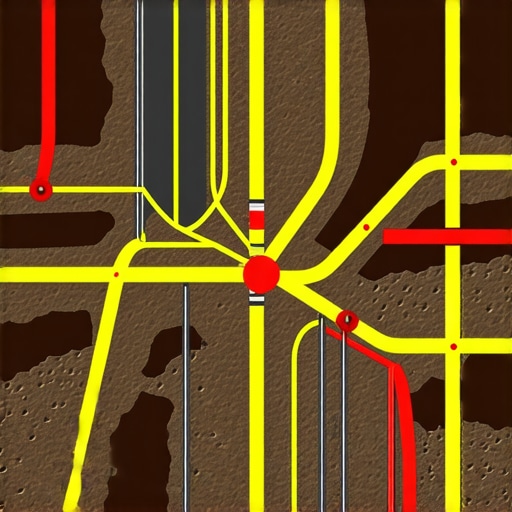
Visual representation of IoT soil sensors providing real-time data during trenching operations.
Adaptive Borehole Geometries for Stress Reduction on Subsurface Assets
Utilizing variable geometry drill bits and modifiable drilling trajectories allows for tailored borehole designs that accommodate soil anisotropy. By adjusting borehole curvature based on real-time feedback, operators can mitigate lateral stresses that might displace or damage critical sensors. Computational modeling of soil-structure interaction informs these adaptations, enhancing overall safety margins.
Innovative Materials Offering Resilient Shielding Against Magnetic and Mechanical Hazards
Next-generation composite materials incorporating nanostructured layers demonstrate exceptional resistance to magnetic flux penetration while maintaining mechanical flexibility. These materials can be configured into portable shields or integrated into trench linings, providing localized protection without hindering signal transmission. Continuous research published in journals like “Materials Science & Engineering” underscores the potential of such materials in underground infrastructure contexts.
Embedding AI for Predictive Excavation Risk Management
Machine learning algorithms trained on extensive datasets of soil behavior, historical excavation outcomes, and sensor health metrics facilitate predictive modeling of potential failure points. These AI models recommend optimal excavation sequences, identify high-risk zones, and trigger automated safety protocols. This level of advanced analytics aligns with standards promoted by the Institute of Electrical and Electronics Engineers (IEEE) for resilient smart city infrastructure.
Integrating Digital Twins for Superior Underground Infrastructure Oversight
The deployment of digital twin technology—replicating the physical underground environment in a virtual model—enables comprehensive simulation of excavation scenarios. Engineers can perform risk assessments, visualize potential sensor impacts, and test mitigation strategies in a risk-free digital space. This approach fosters proactive decision-making and aligns with industry standards outlined by the Building Information Modeling (BIM) community.
Expert Insights & Advanced Considerations
Prioritize Soil Microstructure Analysis
Understanding the microstructural properties of soil can drastically influence sensor preservation. Employing nano-indentation and micro-CT imaging helps predict localized vibrations and corrosion risks, enabling tailored protective measures.
Leverage Adaptive Boring Technologies
Utilizing variable-geometry drill bits and real-time soil feedback optimizes borehole integrity. Such adaptive strategies minimize lateral stresses on sensors, reducing misalignment and damage.
Innovate with Electromagnetic Shielding
Next-generation composite materials with active EMI mitigation components offer enhanced protection for sensitive sensors. Integrating these into site planning reduces electromagnetic interference during excavation.
Implement Real-Time Data Analytics
Embedding IoT sensors within soil matrices provides continuous monitoring, allowing immediate adjustments during trenching. This proactive approach diminishes risks associated with vibrations, moisture fluctuations, and debris ingress.
Design Strategic Digital Twins
Creating virtual replicas of underground environments facilitates comprehensive simulation and planning. Digital twins enable engineers to evaluate potential sensor impacts, thereby refining excavation strategies beforehand.