The Complex Dynamics of Soil Erosion and Contamination in Modern Excavation Techniques
In the realm of underground utility installation and environmental protection, the integration of high-precision hydro excavation—commonly known ashydrovac—has revolutionized site operations. This technique’s capacity to minimize soil disturbance while facilitating safe, efficient trenching and boreholing has made it a preferred choice for experts aiming to prevent contamination runoff from excavated sites.
Understanding the underlying soil mechanics and water flow behaviors involved in vacuum excavation elucidates why contamination control remains critical. Soil composition, moisture levels, and the proximity to groundwater sources influence runoff potential. Consequently, implementing sophisticated spill containment and runoff diversion systems becomes essential in extending the integrity of environmental safeguards.
Innovative Approaches to Hydrovac Fluid Management and Site Stabilization
One advanced method involves dynamic slurry management, where controlled fluid application adjusts in real-time based on soil load and moisture content, reducing excess water runoff. Additionally, employing flexible trench shoring and advanced seepage barriers can prevent soil erosion and limit contaminated runoff migration. The strategic use of biodegradable flow barriers further enhances eco-friendly site management, aligning with sustainability standards set by agencies such as the EPA.
The Role of Precision Equipment in Minimizing Environmental Impact
Modern vacuum excavation equipment integrates cutting-edge sensor technology to monitor ground stress and soil integrity continuously. Such precision allows operators to adapt digging parameters instantaneously, significantly reducing inadvertent soil disturbance that often leads to runoff issues. When combined with dust suppression techniques and stabilized bedding materials, these innovations serve as a comprehensive defense against environmental contamination.
Addressing Complex Questions of Site Safety and Compliance
How can field operators balance the need for rapid excavation with the strict mandates of environmental protection? This question underscores the importance of meticulous planning and real-time data analytics in the execution of excavations near sensitive ecological zones. Deploying comprehensive site-specific containment protocols, including temporary sediment basins and sediment curtains, proves vital in ensuring compliance with local environmental regulations.
For in-depth insights on optimizing vacuum excavation processes with environmental safeguards, consult the detailed guide available at Mastering Vacuum Excavation.
Future Perspectives: Incorporating Eco-Conscious Practices in Excavation Methodologies
The evolution of excavation technology points towards a future where environmentally integrated systems automatically adjust operations to soil and water conditions, effectively preventing runoff contamination. Adoption of real-time monitoring systems coupled with predictive analytics will become standard in ensuring site safety and compliance without compromising operational efficiency.
Professionals are encouraged to continuously share insights and field experiences through platforms like industry forums, fostering innovation and refinement of best practices for contamination prevention.
Leveraging Technology to Prevent Soil Disturbance During Excavation
In the evolving landscape of underground utility work, the integration of advanced sensor systems within hydrovac equipment marks a significant breakthrough. These sensors continuously monitor ground conditions, soil stability, and moisture levels, enabling operators to adjust their techniques proactively and avoid inadvertent disturbance that can lead to erosion and contamination. Such real-time data utilization exemplifies the transition from reactive to proactive site management, aligning with industry standards and environmental best practices.
Implementing Eco-Friendly Soil Stabilization Methods
Innovative stabilization approaches, such as polymer-based soil binders and geosynthetic reinforcements, are gaining popularity among professionals seeking sustainable solutions. These methods not only reinforce trench walls but also mitigate erosion risks, especially in complex terrains. Combining these techniques with biodegradable flow barriers and controlled water management results in a comprehensive safeguard system that reduces runoff contaminants while maintaining excavation efficiency.
Can Automated Systems Truly Replace Human Judgment in Sensitive Excavation Areas?
This question strikes at the core of modern excavator operation. While automation and sensor-guided systems enhance precision, the nuanced decision-making required in unpredictable soil conditions still depends heavily on skilled operators. The consensus among experts suggests that a hybrid approach—particularly in environmentally sensitive zones—serves best. Such integration ensures environmental safeguards are met without sacrificing project speed or safety. For deeper insights into this evolving dynamic, refer to the comprehensive strategies outlined at Ultimate Guide to Borehole Drilling.
If you’re interested in how emerging tech can further reduce environmental impact, consider discussing your experiences in professional forums or subscribing to industry updates for the latest innovations.
Unlocking Precision in Borehole Drilling to Protect Our Water Sources
As industries push for deeper and more complex borehole installations, the challenge lies in optimizing methods that not only meet project specifications but also prioritize environmental sustainability. Advances in directional drilling and real-time geotechnical assessments now enable us to meticulously navigate heterogeneous soil strata, minimizing disruption to surrounding ecosystems.
Utilizing high-definition sonar imaging combined with autonomous sensor arrays allows for precise mapping of underground conditions prior to core sampling. This level of data fidelity significantly reduces unforeseen collisions with aquifers or contamination pathways, ultimately safeguarding groundwater purity. According to the United States Geological Survey, maintaining aquifer integrity during drilling operations is paramount to long-term water resource management.
Why does borehole trajectory control matter for environmental health?
Optimal trajectory planning ensures that boreholes avoid intersecting with sensitive ecological zones or existing underground utilities, preventing inadvertent contamination or infrastructure damage. Implementing modular drilling assemblies equipped with adaptive steering mechanisms allows operators to respond dynamically to real-time geotechnical feedback, refining the bore path with sub-centimeter accuracy.
For instance, integrating machine learning algorithms that analyze continuous sensor inputs can predict soil behavior shifts, prompting on-the-fly trajectory adjustments. Such innovations exemplify the convergence of traditional drilling practices with cutting-edge AI, enabling more responsible exploration that aligns with ecological preservation standards.
Innovative Lubrication Techniques to Enhance Borehole Sustainability
Traditional drilling fluids often contribute to soil and water contamination if not managed properly. Recent developments in biodegradable, environmentally friendly lubricants and foams are transforming this aspect of borehole operations. These eco-effective solutions provide the necessary reduction of friction and heat, ensuring operational efficiency without introducing persistent pollutants into the environment.
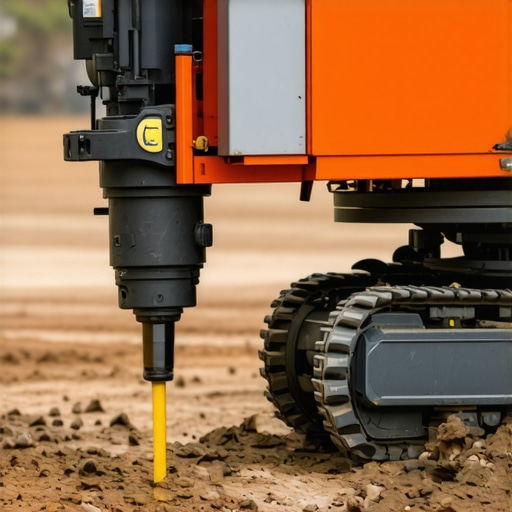
Incorporating these alternatives alongside closed-loop fluid recycling systems minimizes waste and prevents groundwater infiltration of hazardous substances. Moreover, tracing the lifecycle of drilling agents through comprehensive sustainability audits allows operators to make informed choices aligned with globally recognized environmental standards, such as ISO 14001.
Emerging Questions in Borehole Integrity and Long-Term Monitoring
How can continuous monitoring technologies forecast and prevent borehole failures before they compromise environmental safety? This question addresses a critical component of sustainable drilling practices. Deploying fiber optic sensing along the borehole casing enables the detection of micro-stresses and temperature fluctuations indicative of potential breaches or corrosion.
These insights, combined with predictive analytics, facilitate proactive maintenance schedules, reducing risks of contaminant leakage. Experts suggest that integrating data from multiple sensor modalities—vibrational, chemical, and structural—forms a comprehensive early warning system that enhances borehole longevity and environmental stewardship.
For professionals aiming to elevate their practices, exploring the latest developments in fiber optic sensor technology and data integration platforms offers valuable pathways to improve site safety and sustainability.
Balancing Efficiency and Ecological Responsibility in Rock Excavation Techniques
Techniques like micro-blasting and chemical rock breaking are evolving to meet the dual demands of rapid excavation and minimal ecological disturbance. The refined application of controlled energy inputs ensures targeted fracturing, reducing collateral damage to sensitive habitats and soil layers.
Recent studies published in the Environmental Geosciences Journal highlight the potential of minimally invasive rock excavation methods. These approaches often incorporate remote sensing technologies and robotic-assisted operations, enabling precise interventions within complex terrains while preserving environmental integrity.
Future research aims to develop smarter control algorithms that adapt dynamically to geological feedback, optimizing energy use and further reducing ecological footprints. It’s vital for industry stakeholders to stay abreast of such innovations through specialized conferences and training programs, ensuring responsible growth in underground construction.
Harnessing Innovations: Beyond Traditional Soil Stabilization Strategies
Emerging technologies in soil treatment now incorporate nanomaterials and bioengineering to enhance soil cohesion and permeability control during excavation. For instance, nano-engineered stabilizers offer targeted reinforcement, reducing erosion risk and containment breaches. These advancements provide a proactive safeguard, especially in sensitive ecological zones where soil integrity is paramount.
How does Microbial Biotechnology Transform Contamination Prevention?
p>Recent studies reveal that introducing specific microbial consortia can degrade hydrocarbons and other pollutants in situ, creating bio-barriers that prevent underground water contamination during excavation. Collaborations between microbiologists and geotechnical engineers are leading to bio-remediation strategies embedded within excavation workflows, enabling real-time environmental safeguarding.
According to a comprehensive report by the Environmental Biotechnology Journal, the efficacy of bio-barriers surpasses conventional chemical liners in both sustainability and longevity, opening avenues for eco-conscious excavation practices.
Innovative Monitoring Systems that Predict Soil and Water Dynamics
Integrating fiber optic distributed sensing with AI algorithms allows operators to forecast soil displacement and water flow changes before they manifest as hazards. This predictive capacity facilitates adaptive planning, minimizing unforeseen contamination events and soil destabilization. Advanced monitoring regimes also include drone-based aerial surveys coupled with subterranean sensors, providing comprehensive spatial coverage and data richness.
Engaging with these technologies requires a deep understanding of geotechnical signal processing and environmental data analytics, underscoring the importance of multidisciplinary expertise.
Adopting Eco-Friendly Drilling Fluids to Protect Water Resources
New biodegradable, non-toxic drilling fluids—composed of plant-based polymers and mineral additives—are reducing the ecological footprint of borehole projects. When combined with closed-loop recycling systems, these fluids prevent groundwater contamination and facilitate compliance with stringent environmental standards such as ISO 14001.
p>Implementing these green solutions demands a commitment to lifecycle assessment and real-time fluid quality monitoring, aligning operational efficiency with environmental responsibility.
Advanced Soil and Water Contamination Barriers to Seal Beneath the Surface
Multilayer composite barriers utilizing nanocomposite membranes exhibit exceptional durability and impermeability, effectively isolating potentially contaminated soils. When integrated with geo-synthetic fabrics and natural clay liners, these barriers create redundancies that mitigate breach risks, even in dynamic underground conditions.

Adoption of these sophisticated barriers necessitates precise installation techniques, comprehensive site assessment, and ongoing integrity testing to ensure long-term protection of aquifers and surrounding ecosystems.
Is Automation the Key to Zero-Contamination Excavation Zones?
Automated robotic systems equipped with multispectral sensors and AI-driven decision algorithms are increasingly capable of executing delicate excavation tasks near critical habitats. While human oversight remains vital, these systems reduce inadvertent soil disturbance and water intrusion, aligning with the principles of precision ecology.
However, experts caution that hybrid models—which blend automation with expert human input—offer the most resilient approach. Building mastery across these domains involves continuous skill development and embracing interdisciplinary innovation.
For professionals committed to environmental stewardship, integrating these smart excavation systems represents a strategic step forward, ensuring future-proof sustainability.
Deepening Borehole Integrity via Smart Material Engineering
The next frontier in borehole sustainability involves utilizing shape-memory alloys and self-healing sealing compounds. These materials respond dynamically to subsurface micro-stresses, restoring structural integrity autonomously and preventing contamination breaches. Their deployment demands a rigorous understanding of material science fused with geotechnical design principles.
Furthermore, real-time data collected through embedded sensors can trigger activation of these smart materials, creating a responsive containment environment that adapts to geological shifts, thus safeguarding groundwater resources.
What Role Do AI-Enhanced Drilling Protocols Play in Environmental Preservation?
Machine learning models trained on extensive geotechnical datasets enable drill operators to anticipate and respond proactively to subterranean anomalies. These protocols optimize drilling trajectories and fluid parameters, reducing the likelihood of accidental aquifer disruption and cross-contamination.
Implementing such AI systems requires a paradigm shift—moving from reactive to anticipatory excavation planning—ultimately elevating the standards of environmental care in subterranean projects.
Engage with industry pioneers to explore how AI integration can revolutionize your site management procedures and elevate your operational standards towards ecological excellence.
Expert Insights & Advanced Considerations
Embracing Real-Time Data Analytics
Integrating advanced sensor technology with adaptive control systems allows operators to anticipate soil instability and prevent runoff contamination proactively, transforming traditional excavation practices into predictive management processes.
Prioritizing Eco-Conscious Material Use
Adoption of biodegradable and bioengineered materials for slurry management and soil stabilization not only meets stringent environmental standards but also enhances long-term site sustainability, setting new industry benchmarks.
Leveraging Artificial Intelligence for Site Planning
Utilizing AI-driven terrain and soil analysis optimizes drill paths and water management strategies, reducing ecological disruption and improving operational precision in complex underground environments.
Adopting Modular, Smart Equipment
Smart, modular hydrovac units equipped with integrated sensors facilitate rapid adaptation to unseen underground conditions, minimizing soil disturbance and enhancing environmental protection measures.
Expanding Cross-Disciplinary Collaboration
Fostering partnerships between geotechnical experts, microbiologists, and environmental engineers results in innovative solutions like bio-remediation barriers, reinforcing safety and ecological integrity during excavation.
Curated Expert Resources
- US Environmental Protection Agency (EPA) Guidelines: Offers comprehensive standards and best practices for spill containment and runoff management, vital for compliance and environmental stewardship.
- International Society for Soil Mechanics and Geotechnical Engineering: Provides cutting-edge research on soil behavior and stabilization techniques applicable to environmentally sensitive excavations.
- Journal of Hazardous Materials: Features peer-reviewed studies on biodegradable materials and innovative bio-remediation methods to mitigate site contamination risks.
- Hydrovac Industry Technical Manuals: Detail advanced equipment features and sensor integrations that enhance precision and environmental safety during excavation.
- Environmental Technology Network: Connects professionals sharing latest innovations in eco-friendly excavation practices and monitoring technologies.
Final Expert Perspective
Harnessing emerging technologies and environmentally conscious practices is reshaping the landscape of hydrovac operations, where soil and water safety are paramount. Rather than relying solely on traditional methods, industry leaders now champion predictive analytics, smart equipment, and sustainable materials to prevent contamination and soil disturbance effectively. Engaging with these innovations ensures not just regulatory compliance but also a commitment to ecological responsibility, positioning your projects at the forefront of sustainable excavation. Explore these strategies further, share your own insights, and join the conversation that shapes the future of environmentally sensitive underground work.