Mastering Soil Behavior: The Cornerstone of Safe Urban Trenching Operations
Effective trenching in urban environments demands a nuanced understanding of localized soil characteristics and their impact on project safety and efficiency. Hydrovac excavation, leveraging vacuum and high-pressure water systems, offers a sophisticated method that minimizes soil disturbance, thus preserving soil stability. This approach is vital when managing hazardous soil runoff, especially in congested cityscapes where traditional mechanical excavation can pose risks to underground utilities and surface structures.
Leveraging Hydrovac for Precision and Soil Preservation
Hydrovac technology employs controlled high-pressure water jets coupled with powerful vacuum systems, enabling precision excavation around sensitive underground infrastructures. By utilizing this technique, operators can reduce soil collapse risks, prevent trench wall sloughing, and mitigate the environmental impact of excavation runoff. Integrating real-time soil analysis into hydraulic parameters allows for adaptive adjustments, enhancing safety and excavation quality in complex urban settings.
Addressing the Complexities of Subsurface Variability
Urban soils often exhibit heterogeneity, from loose sands to compacted clay layers, which complicates trench stability. Advanced soil profiling techniques, including geophysical surveys and sensor integration, inform the optimal application of hydrovac systems. For example, tailored water pressure settings for different soil strata can prevent unintended soil liquefaction or excessive vibrations that jeopardize nearby structures, aligning with the insights provided by the science behind hydrovac technology.
How can urban trenching projects effectively adapt to unpredictable soil conditions while maintaining environmental compliance?
To address this challenge, engineers and operators must combine detailed subsurface investigations with flexible hydrovac protocols, including variable water pressures and slurry management strategies. Continuous monitoring and data analytics enable proactive adjustments, ensuring soil stability and minimizing runoff. This layered approach underscores the importance of expertise and technological integration in modern trenching practices.
For professionals seeking to deepen their understanding, exploring advanced vacuum excavation techniques and safety practices is essential. Consider consulting comprehensive resources such as the mastering vacuum excavation guide to refine operational strategies.
Engaging with expert forums and sharing field experiences can further enhance soil management tactics, leading to safer, more sustainable urban excavations. Remember, successful trenching hinges on a synergy between sophisticated technology application and intricately developed soil management expertise.
Empowering Your Toolbox with Robotic Soil Assessment
One of the most cutting-edge advancements in urban trenching involves deploying robotic sensors for in-situ soil analysis. These autonomous devices can navigate complex underground environments, providing real-time data on soil consistency, moisture content, and contamination levels. Integrating this data into hydrovac operations allows for dynamic adjustment of water pressure and slurry management, significantly reducing risks of soil liquefaction or trench wall collapse. As detailed in recent research, leveraging robotic soil assessment tools enhances accuracy, safety, and efficiency in unpredictable subsurface conditions.
Adapting Techniques to Soil Behavior: Beyond One-Size-Fits-All
Assuming uniform soil conditions across an entire project site is a common pitfall that can lead to unforeseen complications. Instead, adopting a stratified approach—where specific methods are tailored to each soil layer—can dramatically improve outcomes. For instance, loose sandy soils may require reduced water pressures and additional shoring, whereas compacted clay layers benefit from higher-pressure water jets for effective excavation. Incorporating predictive modeling based on geotechnical data helps operators preemptively select optimal parameters, aligning with best practices in soil stabilization and safety.
Is there a practical framework to rapidly adapt hydrovac techniques to highly variable urban soils without sacrificing safety or efficiency?
Developing an adaptive operational framework necessitates real-time monitoring combined with pre-emptive scenario planning. Implementing sensor networks that continuously feed data into decision-support systems enables quick, informed adjustments—essential in environments with unpredictable soil heterogeneity. Moreover, integrating machine learning algorithms trained on historical data can forecast soil responses, guiding pressure settings and slurry ratios proactively. For professionals committed to elevating their trenching effectiveness, exploring resources like the comprehensive guide on vacuum excavator applications offers valuable insights into adaptive technology use.
Share your experiences and questions about managing complex soil conditions in urban projects—community knowledge accelerates innovation and safety in this challenging field. To stay updated on the latest methodologies, consider subscribing to industry-specific forums and publications dedicated to advanced trenching practices.
Revolutionize Your Soil Stabilization: Innovative Approaches Transforming Urban Trenching
In the rapidly evolving landscape of urban excavation, traditional soil stabilization methods often fall short amid complex subsurface conditions. Advanced techniques, such as chemical grouting combined with real-time geotechnical monitoring, provide a multi-layered defense against soil collapse, ensuring safety and efficiency. By integrating geosynthetics, including geogrids and soil nails, engineers can enhance trench wall reinforcement, accommodating heterogeneous soil textures and mitigating subsidence risks in dense city environments.
Harnessing Digital Twins for Predictive Soil Behavior Modeling
The advent of digital twin technology offers unprecedented simulation capabilities that mirror the physical trenching environment. Through high-fidelity modeling, project teams can predict soil responses under varying operational parameters, such as water pressure fluctuations and equipment-induced vibrations. Incorporating detailed geotechnical data into these models enables preemptive adjustments, reducing unforeseen failures. As outlined in recent research published in Construction and Building Materials, deploying digital twins accelerates decision-making processes and enhances adaptive response strategies, thereby elevating safety standards.
Can Machine Learning Algorithms Revolutionize Soil Condition Forecasting During Urban Excavation?
Absolutely. Machine learning (ML) models trained on extensive datasets—from soil properties to climatic factors—offer powerful predictive insights. By analyzing patterns within this data, ML algorithms can forecast potential soil liquefaction zones, optimal water jet pressures, and slurry management tactics. This predictive capability allows for tailored interventions that minimize environmental impact and prevent utility damage. For practitioners eager to leverage ML, exploring resources such as the geotechnical AI predictive modeling guide can provide valuable guidance for integration into existing workflows.
Furthermore, fostering interdisciplinary collaboration between geotechnical engineers and data scientists can accelerate innovation, leading to more resilient urban trenching solutions. These collaborations not only improve safety but also optimize resource utilization, making urban excavation a smarter, more sustainable process.
Emerging Materials and Their Role in Soil Reinforcement
Recent developments in soil reinforcement materials, such as biodegradable geosynthetic binders and phase-change materials, are paving the way for environmentally conscious trenching practices. These materials can adapt to changing subsurface conditions, offering temporary stabilization during construction and degrading safely afterward. Incorporating such innovations requires a nuanced understanding of material behavior and its interaction with diverse soil types, demanding ongoing research and field validation.
Designing Adaptive Excavation Protocols for Unpredictable Subsurface Dynamics
Flexibility in operational protocols is paramount when confronting highly variable urban soils. Real-time sensor feedback, combined with intelligent control systems, allows for dynamic adjustment of water pressure, jet angles, and slurry disposal methods. For example, deploying robotic sensors capable of navigating narrow trench confines delivers continuous data streams that inform immediate parameter tuning. This responsiveness minimizes soil disturbance and maximizes operational safety, exemplifying a proactive approach rooted in technological synergy.
What Are Proven Frameworks for Rapidly Revising Hydrovac Operations in the Face of Unexpected Soil Variability?
Implementing modular operational frameworks—supported by comprehensive training and decision-support tools—enables quick adjustments to hydrovac procedures. Incorporating scenario-based training sessions ensures teams are prepared for emergent conditions. Additionally, adopting an iterative data collection process, where field data feeds into machine learning models, fosters a learning environment that enhances future adaptability. To advance your strategic planning, consulting resources like the comprehensive urban trenching methods publication offers valuable insights into practical adaptive techniques.
Revolutionizing Soil Stabilization Strategies for Urban Trenching
Recent advancements in chemical grouting and the deployment of geosynthetic reinforcements such as geogrids and soil nails have transformed how engineers approach the challenge of stabilizing heterogeneous soils. These layered innovations create resilient trench walls capable of withstanding dynamic subsurface forces, significantly reducing the risk of subsidence and failure during excavation in dense urban environments. Integrating these techniques requires a nuanced understanding of local soil chemistry and real-time environmental data, demanding a sophisticated application of geotechnical principles alongside cutting-edge technology.
Digital Twins: A Game Changer for Predictive Subsurface Modeling
The advent of digital twin technology introduces a paradigm shift, empowering project teams to simulate physical trenching environments with high fidelity. This virtual replication incorporates comprehensive geotechnical data, enabling preoperative scenario planning that accounts for unpredictable soil behaviors such as liquefaction or collapse under variable water pressures. Utilizing these models facilitates proactive decision-making, minimizing unexpected delays and enhancing safety standards, as supported by emerging research in Advanced Construction Technologies.
How Can Machine Learning Anticipate Soil Responses in Urban Excavations?
Machine learning algorithms, trained on extensive datasets—including soil properties, moisture levels, and historical weather patterns—offer predictive analytics that inform operational adjustments in real time. These models can forecast zones of instability, optimal water jet pressures, and slurry flow rates, allowing operators to adapt dynamically during trenching activities. Exploring resources like the geotechnical AI predictive modeling guide can deepen understanding of these transformative applications.
What Role Do Emerging Materials Play in Reinforcing Uneven Soil Structures?
Innovative materials such as biodegradable geosynthetics and phase-change substances are emerging as environmentally sustainable options for temporary stabilization. These materials can respond adaptively to shifting soil conditions, providing stabilization during critical construction phases and safely degrading afterward. Their application necessitates detailed knowledge of soil-material interactions and ongoing in-situ performance testing to ensure efficacy and environmental compatibility, aligning with latest geotechnical material research.
Designing Responsive Excavation Protocols for Varied Subsurface Realities
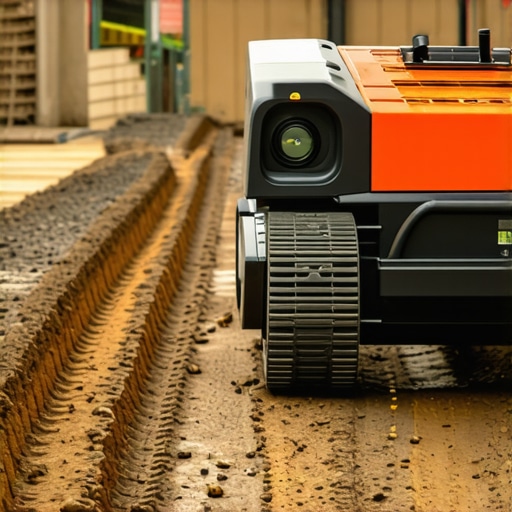
Adopting a modular, sensor-driven approach allows for rapid adjustments to hydrovac parameters, accommodating diverse soil textures and moisture conditions. Robotic sensors capable of navigating confined trench spaces provide continuous data streams that inform real-time modifications, ensuring minimal soil disturbance. This proactive strategy requires integrating sensor networks with sophisticated control systems, exemplifying the move towards fully autonomous, adaptive excavation environments, especially in complex urban terrains.
How Can Innovative Frameworks Facilitate Suspension of Fixed Protocols in Favor of Flexibility During Urban Trenching?
Developing adaptable operational models involves implementing modular decision-support systems, continuous staff training on emergent technologies, and scenario-based planning. Sensor feedback and machine learning enhance these frameworks, enabling teams to swiftly revise procedures in response to unexpected soil behaviors. Engaging with comprehensive guides such as the urban trenching techniques resource provides valuable insights into developing resilient protocols for unpredictable subsurface conditions. Share your experiences to foster collective expertise, and stay updated through industry forums dedicated to advanced trenching methodologies.
Expert Insights Transforming Modern Trenching Practices
Embrace Adaptive Technologies for Unpredictable Soil Conditions
Utilizing real-time data analytics and sensor networks allows urban engineers to dynamically adjust excavation parameters, minimizing risks associated with heterogeneous soils. This proactive approach enhances safety and operational efficiency amidst complex subsurface environments.
Prioritize Stratified Soil Analysis to Optimize Excavation Strategies
By conducting detailed geotechnical profiling and layering assessments, professionals can tailor hydrovac techniques—such as pressure variations and slurry management—to specific soil types, reducing collapse risks and environmental impact.
Leverage Robotics for Precise and Safe Soil Evaluation
Deploying robotic sensors for underground soil characterization offers immediate, accurate insights into moisture content and stability, enabling field teams to make informed, rapid decisions that uphold safety standards and project timelines.
Apply Advanced Materials for Sustainable Reinforcement
Innovations like biodegradable geosynthetics and phase-change materials contribute to eco-friendly stabilization solutions, adapting to shifting subsurface dynamics while supporting environmental responsibility.
Curated Resources for Industry Leaders
- Mastering Vacuum Excavation Guide: A comprehensive resource offering expert strategies for safe and efficient trenching using hydrovac technology.
- Science Behind Hydrovac Technology: Delve into the technical foundations and safety impacts of hydrovac systems that revolutionize urban excavation.
- Advanced Geotechnical Monitoring Techniques: Explore state-of-the-art methods for underground soil assessment enhancing decision-making accuracy.
Elevate Your Soil Management Approach
Integrating sophisticated technology and innovative materials into trenching projects is no longer optional—it’s essential for safety, efficiency, and sustainability. As experts continue to refine these practices, engaging with authoritative resources and real-world case studies will propel your projects to new levels of excellence. For ongoing insights and professional interactions, consider contributing your experiences or seeking guidance through industry-specific forums—collaborative knowledge remains the backbone of progress in this complex field.