Ensuring Trenching Safety and Stability in Soft Ground Through Advanced Vacuum Excavation Techniques
In the realm of excavating utilities and constructing substructures, trenching in soft, unstable soils presents persistent challenges that demand expert-level solutions. The integration of hydro-vac and vacuum excavation technology elevates trenching precision and safety standards, redefining traditional practices with innovative approaches rooted in soil mechanics and fluid dynamics.
What Are the Key Challenges in Stabilizing Sinking Trench Boxes on Loosened Soils?
Soft ground, particularly in wet or peat-rich environments, predisposes trench boxes to undesirable sinking and collapse. Factors such as soil pore water pressure, stratification, and ground moisture content influence stability. Utilizing a combination of low-impact hydro-vac excavation and strategic soil dewatering techniques enables engineers to manage these variables effectively, maintaining trench wall integrity and preventing dangerous cave-ins.
Expert assessments suggest that deploying vacuum excavation allows for the precise removal of unsuitable soil layers—especially cohesive clays or silts—without risking ground vibrations that could exacerbate instability. This precision facilitates controlled backfilling and compaction, essential for sustaining trench safety throughout construction phases.
Innovative Strategies for Minimizing Trench Wall Collapse Risks
Traditional shoring methods often fall short in complex, soft soil scenarios, where ground conditions vary unpredictably. An advanced approach involves real-time soil monitoring integrated with soil stabilization techniques such as chemical grouting or installation of geo-synthetics, coupled with continuous vacuum-assisted soil extraction. These methods create a stable interface, reducing lateral soil movement and maintaining trench walls.
Furthermore, optimizing trench geometry based on soil strain analysis—supported by soil stability models outlined in recent geotechnical research—can significantly mitigate collapse probabilities. For instance, sloped or stepped trench profiles distribute stresses more evenly, complemented by vacuum excavation that prevents excessive soil disturbance.
Can Technological Innovation Fully Replace Traditional Shoring in Dynamic Soil Conditions?
This question resonates within expert forums, emphasizing the potential of emerging equipment and techniques to supplement or even replace traditional shoring in certain contexts. For example, innovations like automated soil reinforcement systems and adaptive vacuum systems demonstrate promise but require thorough validation against high-trust benchmarks. Consultation of authoritative sources, such as the latest publications in the Geotechnical Journal, offers insight into these evolving methodologies.
In corporate applications, embracing such innovations necessitates rigorous risk assessment and ongoing training. Engaging with industry leaders through platforms like professional forums enhances understanding and adoption of best practices.
Interested professionals are encouraged to explore comprehensive guides on vacuum excavation safety and trenching strategies, which provide detailed case studies and operational tips [see this resource]. Your experience and insights can further elevate the standards of excavation safety and efficiency—consider sharing your expertise in upcoming industry symposiums or technical seminars.
Revolutionizing Soil Stabilization: The Future of Vacuum Excavation in Trench Safety
As infrastructure projects become increasingly complex, the approach to maintaining trench integrity in challenging soil conditions evolves. Cutting-edge developments in vacuum excavation technology now enable us to achieve unprecedented precision and safety, particularly in environments characterized by loose, high-water tables, or organic-rich soils. These innovations not only enhance operational efficiency but also significantly reduce risks associated with trench wall collapses and utility damages.
Is the integration of real-time geotechnical data into vacuum excavation systems transforming trench stability management?
Indeed, the convergence of sensor technology with vacuum excavation tools ushers in a new era of proactive soil management. By deploying embedded sensors that monitor parameters like pore pressure, soil moisture, and lateral stress, operators can receive instant feedback and adjust excavation parameters dynamically. This real-time data enables targeted soil removal and precise support installation, fostering safer trench environments. Such practices align with the latest research found in geotechnical journals, which emphasize the importance of adaptive systems for dynamic soils (Geotechnical Journal).
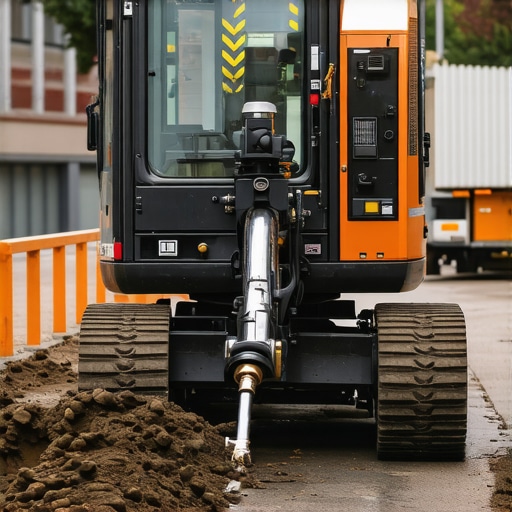
Moreover, combining vacuum excavation with geo-synthetic reinforcement materials creates a composite system that resists soil movement and fluid infiltration. This dual approach enhances soil stability by mechanically reinforcing trench walls while controlling groundwater migration. When paired with innovative shoring techniques and soil grouting, these methods exemplify a holistic strategy for deep, stable trenches—particularly critical in urban environments where surface disruption must be minimized.
Adapting to Changing Soil Dynamics with Precision Excavation Tools
Traditional methods often fall short when faced with rapidly shifting soil conditions, prompting a shift toward predictive and adaptive excavation practices. Modern equipment equipped with automatic soil analysis modules can anticipate potential instability zones, enabling preemptive adjustments. For example, adjusting vacuum pressure or employing targeted soil stabilization pre- or post-excavation can mitigate future issues.
Another frontier is integrating machine learning algorithms that analyze historical and real-time data to forecast soil behavior trends. These systems can alert operators to imminent risks of collapse or utility contact, fostering a highly responsive excavation environment. Industries are now investing in developing such intelligent systems, which are documented extensively in recent technological advances reports (Hydrovac Innovations: The Future of Precise Borehole Drilling in 2025).
Advanced vacuum excavation becomes even more vital when working in sensitive habitats or historical sites, where disturbance must be minimal. Adapting excavation techniques with innovative soil removal methods not only preserves site integrity but also aligns with environmental regulations and community expectations, especially in densely populated urban landscapes.
For professionals aiming to deepen their understanding, exploring comprehensive guides on vacuum excavation safety and soil stabilization—such as those detailed in expert tips for safe and efficient trenching—is invaluable. Sharing such knowledge in industry forums and seminars fosters a collective push toward safer, smarter excavation practice.
Elevating Trench Stability with Integrated Soil Monitoring and Dynamic Support Systems
Advancements in soil monitoring technologies now empower excavation professionals to proactively address potential failures before they manifest. Embedding sensors that track pore water pressure, soil deformation, and shear stress within trench walls enables real-time data collection, which feeds into adaptive control systems governing vacuum excavation parameters. This symbiosis between sensor networks and excavation machinery fosters a predictive environment where interventions—such as targeted soil reinforcement or preemptive dewatering—are executed precisely when and where needed, dramatically reducing collapse risks. For example, a recent study published in the Geotechnical Journal highlights how integrating sensor feedback into automated excavation systems enhances trench safety in soft, water-saturated soils.
Furthermore, coupling these insights with soil stabilization techniques—like chemical grouting or geosynthetics—strengthens the trench wall interface, minimizing lateral movement. Implementing such a multifaceted approach requires expertise in soil mechanics, fluid dynamics, and automation control engineering, exemplifying the interdisciplinary nature of modern excavation management. If you’re interested in pioneering such integrated solutions, engaging with industry collaborations and pilot projects offers invaluable practical insights.
What role does soil heterogeneity play in customizing vacuum excavation strategies for optimal safety?
In heterogeneous soil conditions, the variability in stratification and moisture content demands tailored approaches rather than generic solutions. Advanced geotechnical modeling allows engineers to map subsurface complexities meticulously, informing customized vacuum excavation protocols. By adjusting parameters such as vacuum intensity, excavation speed, and soil support techniques based on localized soil properties, operators can optimize safety and efficiency. Implementing adaptive strategies reduces unnecessary soil disturbance, preserves trench wall stability, and minimizes utility damage risks.
For instance, in layered soils with abrupt changes from sandy to clayey strata, switching between low-force vacuum extraction and targeted soil stabilization can prevent unexpected collapses. High-fidelity soil models, possibly enhanced with machine learning algorithms that analyze prior excavation data, enable continuous strategy refinement. To deepen your understanding of these sophisticated methodologies, consult recent publications like the 2024 issue of the Geotechnical Journal.
Looking forward, embracing these customized, data-driven excavation techniques not only enhances safety but also improves resource efficiency—an essential consideration as urban infrastructure projects grow more complex and environmentally conscious. Engaging with thought leaders via professional forums such as industry discussions helps keep practitioners at the forefront of innovation. As technological integrations become more ubiquitous, comprehensive training programs are crucial to ensure that operators effectively leverage these sophisticated systems.
To further refine your expertise, exploring detailed case studies and operational manuals—available through trusted industry resources—provides practical insights into implementing adaptive vacuum excavation in diverse soil landscapes. Sharing and exchanging knowledge within professional communities fosters collective growth, ultimately leading to safer, more resilient trenching practices tailored to nuanced geological challenges. Stay tuned as emerging tools and techniques continue to revolutionize the landscape of subterranean construction and utility installation strategies.
Advancing Soil Stability with Sensor-Integrated Excavation Tools
Incorporating cutting-edge sensor technology into vacuum excavation equipment marks a pivotal shift towards preemptive trench safety management. Embedded sensors monitoring pore water pressure, soil deformation, and shear stress enable real-time data collection, fostering a proactive environment for maintaining trench integrity. These sensors, interconnected with automated control systems, facilitate instant adjustments to excavation parameters, minimizing the risk of wall collapse and utility contact. For example, studies published in the Geotechnical Journal highlight how sensor feedback loops enhance operational responsiveness in dynamic soils.
How Do Integrated Soil Monitors Transform Deep Trench Operations?
By providing continuous feedback, integrated soil monitors empower engineers to implement adaptive support measures—such as targeted soil reinforcement or controlled dewatering—before stability issues escalate. This seamless energy exchange between monitoring systems and excavation tools ensures precision intervention, significantly reducing safety hazards. Advanced data analytics further enable trend prediction, allowing teams to anticipate shifts in soil behavior, especially in heterogeneous or waterlogged strata. Consulting resources like the latest geotechnical standards from the GeoEngineer Association offers invaluable guidelines for deploying these technologies effectively.
Redefining Soil Support with Adaptive Stabilization Techniques
Traditional shoring methods often struggle in complex soil environments, where heterogeneity and moisture variations are prevalent. To counter this, integrating soil stabilization methods—such as chemical grouting, geo-synthetics, and dynamic soil reinforcement—plays a significant role alongside vacuum excavation. These techniques create resilient trench walls capable of withstanding lateral forces while maintaining minimal surface disturbance, crucial in urban or environmentally sensitive zones.
Recent advancements emphasize the synergy between real-time soil monitoring and stabilization strategies, allowing for targeted intervention based on live data. For instance, utilizing rapid-curing grouts in zones exhibiting increased pore pressure can avert potential collapses. Geotechnical research, detailed in articles from the Geotechnical Journal, supports such integrated approaches, underscoring their efficacy in high-risk scenarios.
Are Automated Soil Reinforcement Systems the Future of Trench Safety?
This query stimulates discussion among excavation experts, highlighting emerging automated systems capable of dynamically adjusting reinforcement measures in response to sensor inputs. These systems promise to evolve beyond reactive solutions into predictive safety frameworks, where mechanical supports are preemptively optimized, reducing manual intervention and response times. The ongoing development of intelligent control algorithms—exemplified in recent pilot projects—underscores their potential to revolutionize safety protocols.
Engaging with professional societies like the Hydrovac Industry Forum can provide insights into implementation challenges and success stories, fostering collective progression. For practitioners eager to deepen expertise, examining comprehensive operational manuals and case studies—accessible through industry resource hubs—can catalyze proficiency in deploying these innovative solutions effectively.
Interested professionals should consider contributing to ongoing research efforts or pilot programs, as collaboration accelerates technological adoption and refinement. Your expertise can influence safety standards, promote sustainable practices, and enhance overall trenching outcomes in complex geotechnical environments.
Expert Insights Elevating Trenching Safety
Harness Soil Monitoring to Prevent Collapse
Integrating advanced sensor systems that track real-time soil parameters enables proactive adjustments during excavation, dramatically improving trench safety and reducing risk of failure.
Embrace Adaptive Soil Stabilization Techniques
Employing tailored stabilization methods, such as targeted chemical grouting or geo-synthetics, enhances trench wall resilience, especially in heterogeneous or waterlogged soils.
Leverage Machine Learning for Soil Behavior Prediction
Deploying AI-driven analytics on excavation data helps anticipate soil shifts, allowing operators to modify procedures preemptively and safeguard against future collapses.
Optimize Vacuum Excavation in Complex Ground Conditions
Refining excavation parameters based on continuous soil feedback ensures minimal disturbance, maintaining trench integrity even in challenging environments.
Prioritize Sustainable Soil Management for Urban Projects
Integrating eco-friendly stabilization and monitoring promotes safe, efficient trenching that aligns with environmental regulations and community standards.
Curated Resources for Groundbreaking Practice
- Geotechnical Journal: Provides peer-reviewed research on soil mechanics and innovative stabilization techniques.
- Hydrovac Industry Forums: Offers industry-leading discussions on safety innovations and technological integration.
- Expert Case Study Repositories: Showcases successful applications of adaptive trenching in diverse soil conditions.
- Regulatory Standards from Geotechnical Associations: Ensures practices meet safety and environmental compliance.
- Advanced Sensor Technology Manufacturers: Supplies cutting-edge tools for real-time soil monitoring and automated control systems.
Refined Perspective on Next-Level Trenching
Incorporating soil monitoring and adaptive stabilization in trenching operations signifies a transformative shift towards safer, more sustainable excavation. As vacuum excavation techniques evolve, their integration with intelligent systems defines the future for tackling complex soil challenges. Professionals committed to excellence should actively seek out these innovations, sharing insights to shape industry standards and elevate safety protocols across projects. Deepening your expertise today ensures you’re prepared for the demanding soil dynamics of tomorrow’s infrastructure development.