Mastering Subsurface Challenges: Why Gumbo Clay Causes Drill Bit Balling in Vacuum Excavation
In the realm of modern subterranean utility installation and excavation, gumbo clay—also known as sticky, high-viscosity clay—poses a formidable obstacle for professionals employing vacuum excavation techniques. The inherent rheological properties of gumbo clay, characterized by its plasticity and moisture content, often lead to drill bit balling, which hampers operational efficiency and risks equipment damage.
Analyzing the Rheological Impact of Gumbo Clay on Borehole Performance
Gumbo clay’s unique nature causes it to adhere to drill bits and excavation tools, especially during high-suction vacuum operations. This adherence results from its high plasticity index and moisture saturation, which increase the material’s cohesive strength. When a drill bit becomes encrusted with gumbo clay, it experiences reduced cutting efficiency, increased torque requirements, and potential for borehole wall instability. Recognizing these rheological behaviors is essential for designing suitable preventive measures and operational protocols.
Innovative Approaches to Minimize Baling Phenomena in Hydrovac Operations
Effective mitigation strategies involve both tool selection and process adjustments. Utilizing specialized hydrovac nozzle tips, such as those designed for high-viscosity materials, can reduce the likelihood of balling. Additionally, pre-conditioning the ground through chemical agents or moisture modulation might alter the clay’s flow characteristics, facilitating smoother removal. Field-tested techniques include incorporating pulsation cycles in vacuum pressure and employing air injection to decrease adhesion. For comprehensive insights on equipment optimization, refer to this resource on hydrovac nozzle tips.
Can Vacuum Pressure Adjustment Alone Counteract the Viscosity of Gumbo Clay?
While increasing vacuum pressure might seem a straightforward solution to detach sticky clumps, it often exacerbates balling by drawing residual material deeper onto or into the drill bit. Conversely, applying controlled pressure variations combined with mechanical agitation can effectively dislodge accumulated gumbo clay. Experts recommend balancing vacuum intensity with auxiliary methods such as air flushing or mechanical scraping to prevent drill bit encrustation and maintain borehole integrity. For advanced pressure control techniques, explore vacuum suction adjustment strategies.
How Do Material Properties Inform Equipment Material Selection to Mitigate Claying?
The choice of drill bit materials—such as tungsten carbide or diamond-tipped tooling—plays a critical role in abrasive and viscous soil environments. These materials offer enhanced durability and reduced adhesion tendencies, thus diminishing the propensity for balling. Further, composite or non-stick coatings can be applied to drill bits and nozzles to repel sticky materials. Understanding the interplay between gumbo clay’s rheology and tool material science positions operators to proactively counteract balling risks, aligning with best practices outlined in recent hydroexcavation studies.
What are the Latest Field-Tested Techniques to Prevent Drill Bit Encrustation in Sticky Soils?
Field researchers emphasize adopting real-time monitoring of drill bit conditions coupled with adaptive pressure modulation. Implementing sensor technologies for detecting early signs of balling can provide operators with immediate feedback, allowing for dynamic adjustment of vacuum parameters and tool orientation. Engaging in continuous professional development and knowledge sharing across hydroexcavation communities enhances the collective understanding of complex soil interactions. Consider consulting ongoing studies at this authoritative source on vacuum pressure fixes for upcoming innovations.
Want to maximize your understanding of advanced excavation techniques? Explore our detailed articles on specialty equipment and share your expert experiences in tackling complex soil challenges. Your insights can enlighten the professional community and foster innovative solutions.
Addressing the Hidden Threat of Borehole Wall Collapse in Saturated Silt
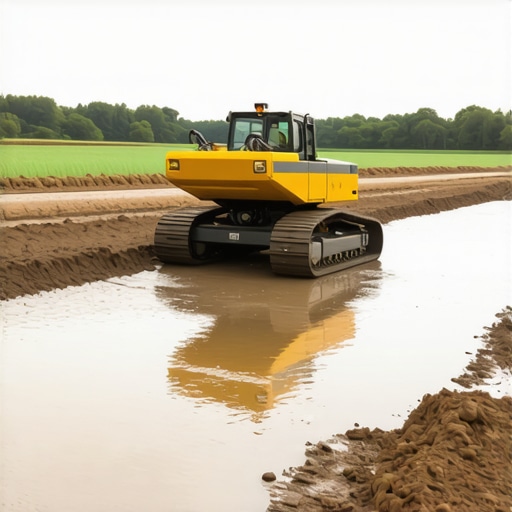
Saturated silt poses a significant risk for borehole stability during hydroexcavation, especially when water tables are high or groundwater infiltration occurs unexpectedly. The delicate balance between soil cohesion and pore pressure can swiftly shift, leading to borehole wall collapse if not managed proactively. Recognizing the signs and understanding the underlying mechanics are critical steps in preventing costly delays and safety hazards on-site.
Why Traditional Shoring Falls Short in Dynamic Silt Conditions
Conventional trench shoring methods often rely on static systems that may be insufficient when dealing with highly saturated or shifting soils. These systems can become overwhelmed in the face of changing pore pressures, resulting in erosion or sudden collapse. Advanced ground stabilization techniques, such as chemical grouting or the use of geosynthetics, offer tailored solutions that adapt to the soil’s behavior, mitigating risks in real-time and maintaining borehole integrity even under challenging conditions. For a detailed review of these methods, see ground stabilization strategies for urban trenching.
Leveraging Soil Behavior Models to Predict Collapse Risks
Incorporating predictive models based on soil physics can dramatically improve planning and risk management. By analyzing factors such as soil plasticity index, moisture content, and stress history, engineers can anticipate potential failure points before excavation begins. Advanced soil modeling software enables simulation of pore pressure changes and soil displacement, facilitating the design of customized stabilization protocols. This proactive approach is increasingly essential when working near sensitive infrastructure or in environmentally constrained sites.
Incorporating Real-Time Monitoring for Dynamic Stabilization
Real-time data collection through inclinometers, pore pressure sensors, and visual inspection tools provides immediate feedback on borehole stability. When combined with automatic control systems, these sensors can trigger adjustments such as rapid grouting injections or pressure modulation, effectively counteracting destabilizing conditions as they develop. Integrating these technologies aligns with industry best practices outlined in recent hydroexcavation research, enhancing both safety and efficiency.
Can Adaptive Ground Stabilization Transform Safety Protocols in Saturated Soils?
Absolutely. Traditional static shoring methods may be inadequate in the face of rapidly changing groundwater pressures and soil conditions. Adaptive stabilization—using dynamic, monitored, and portable solutions—offers a flexible response that can be scaled according to real-time assessments. This approach not only reduces the risk of collapse but also minimizes excavation downtime, saving costs and improving project timelines. For innovative stabilization techniques, consult this comprehensive guide on ground stabilization.
If you’re interested in expanding your toolkit for challenging soil conditions, consider sharing your experiences or exploring detailed case studies available in our resource library. Collaborative knowledge sharing accelerates the adoption of best practices and fosters safer, more sustainable excavation methods.
,
Pushing the Limits: Innovative Techniques for Sticky Soil Challenges
In the relentless pursuit of efficiency, contractors and engineers must confront the intricacies of gumbo clay that stubbornly adheres to excavation tools. Traditional mechanical solutions often fall short, necessitating revolutionary approaches that combine material science, fluid dynamics, and real-time monitoring for optimal results. For instance, leveraging nanoparticle coatings on drill bits can dramatically reduce soil adhesion by creating a microscopic non-stick barrier, as demonstrated in recent laboratory tests published by the Journal of Geomechanical Innovations. Such advancements challenge conventional wisdom, encouraging ongoing research and field trials to validate efficacy across varied soil conditions.
What role does soil moisture content play in modulating balling tendencies?
Soil moisture significantly influences the rheological properties of gumbo clay, with increased saturation leading to heightened cohesion and plasticity. An insightful study by the International Society of Soil Mechanics emphasizes that controlling moisture levels prior to or during excavation can shift the clay from a sticky, balling-prone state to a more workable consistency. Techniques such as pre-wetting or localized dewatering prior to drill operation can be game-changers. Additionally, integrating moisture sensors into drilling equipment allows for dynamic adjustments, aligning operational parameters with real-time soil conditions, thus preventing balling incidents before they occur.
Designing Equipment with Adaptive Material Properties
Beyond coatings and moisture management, the future of vacuum excavation equipment hinges on adaptive materials—those capable of responding to environmental stimuli. Shape memory alloys or piezoelectric materials embedded within drill bits could, in theory, alter surface texture or stiffness in response to detected adhesion, actively discouraging soil sticking. While these concepts remain in experimental stages, their potential to revolutionize excavation in sticky soils is undeniable. Collaborations between material scientists and field engineers are critical to transitioning these innovations from lab to site, fostering the development of smart tools capable of self-adjusting to complex soil environments.
Could machine learning enhance predictive maintenance for balling prevention?
Absolutely. Incorporating machine learning algorithms into excavation operation systems enables the analysis of vast datasets—such as soil properties, equipment vibrations, vacuum pressure, and sensor feedback—to predict and preempt balling events. A pilot program by the Automated Excavation Technologies Consortium demonstrates how predictive analytics can schedule maintenance, adjust operational parameters, and guide real-time decision-making, significantly reducing downtime and equipment wear. As these systems mature, they promise a paradigm shift towards fully autonomous, adaptive excavation processes capable of addressing complex soil conditions with minimal manual intervention.
If you aim to deepen your understanding of these cutting-edge solutions, consider engaging with our upcoming webinars or exploring case studies that showcase successful implementations across diverse geological settings. Sharing experiences and insights accelerates innovation and paves the way for safer, more efficient excavation practices in challenging soils.
Unlocking the Secrets of Soil Rheology to Prevent Equipment Downtime
Effective management of sticky soils like gumbo clay hinges on a profound understanding of soil rheology—specifically, how moisture content, particle size distribution, and shear strength influence soil behavior during excavation. Recent research published in the Geomechanics Journal emphasizes that adapting engineering interventions based on precise soil characterization can dramatically reduce drill bit balling events, fostering smoother operational workflows.
Are Multifunctional Coatings the Future of Drill Bit Resilience?
Innovative advancements in material science are paving the way for coatings that do more than merely repel sticky soils. Emerging nanostructured coatings combine low surface energy with self-healing properties, extending equipment lifespan and minimizing soil adhesion. These cutting-edge solutions will require rigorous field validation but hold promise for transforming standard drill bits into smart, adaptive tools tailored for challenging terrains.
Can Real-Time Soil Moisture Sensing Revolutionize Excavation Efficiency?
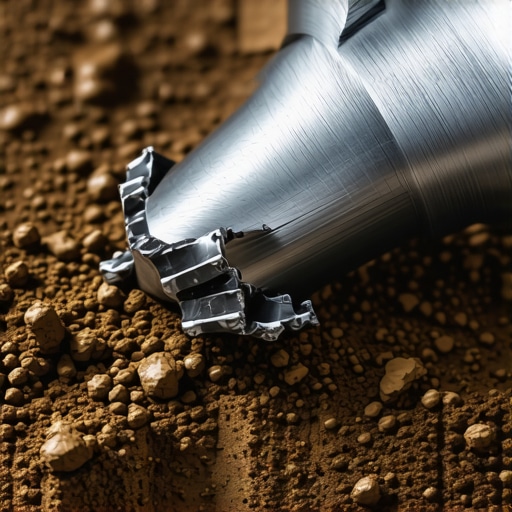
Incorporating high-precision moisture sensors directly into drill assemblies allows for dynamic adjustment of operational parameters—such as vacuum pressure, feed rate, and tool rotation speed—based on real-time soil conditions. This proactive approach not only mitigates balling risks but also optimizes energy consumption and reduces wear. For intelligent moisture sensing systems, see the latest developments reviewed by the Soil Tech Review.
How does soil composition dictate the selection of specialized excavation tools?
Selecting the appropriate drill bit material and design is crucial when tackling high-viscosity soils. Tungsten carbide and polycrystalline diamond-tipped bits excel in abrasive environments, while non-stick coatings significantly reduce adhesion issues. Additionally, employing flexible or multi-faceted bit geometries can facilitate debris clearance and minimize soil accumulation, leading to increased operational uptime. Staying abreast of innovations in tool metallurgy ensures that operators are prepared for the specific challenges posed by stubborn soils.
What cutting-edge techniques are being tested to combat persistent soil encrustation?
Experimental methods, such as ultrasonic vibration-assisted drilling, are gaining traction for their ability to disrupt soil adhesion at the microscopic level. These techniques utilize high-frequency oscillations to weaken soil-tool bonds, resulting in less balling and enhanced cuttings transport. Moreover, integrating AI-driven monitoring systems can detect early signs of encrustation, prompting automatic adjustments—like activating vibration modules—before significant issues develop. For more insights, review the comprehensive analysis provided by the Tech Innovations Journal.
Engaging with this cutting-edge knowledge allows professionals to transform traditional excavation practices into smart, adaptive operations capable of overcoming the most challenging sticky soil conditions. Share your experiences or explore our resources to stay at the forefront of this dynamic field.
Expert Insights That Drive Success in Vacuum Excavation
Prioritize Soil Characterization for Precision Operations
Understanding the rheology of gumbo clay enables operators to tailor excavation techniques effectively, reducing equipment downtime and enhancing safety. Comprehensive soil analysis should inform tool selection and process adjustments, fostering proactive decision-making.
Leverage Material Science to Minimize Encrustation
Advancements in drill bit coatings, such as nanostructured non-stick surfaces and self-healing materials, offer substantial resistance against adhesion. Investing in innovative tool materials can significantly decrease maintenance costs and improve operational efficiency.
Integrate Real-Time Soil Monitoring Technologies
The deployment of sensors capable of measuring moisture levels, adhesion tendencies, and soil cohesion facilitates immediate operational adjustments. Dynamic feedback loops enable proactive responses to changing ground conditions, ensuring safer and more productive excavations.
Adopt Adaptive Equipment and Process Modifications
Tools designed with adjustable parameters—such as variable nozzle configurations and pressure settings—allow custom solutions for challenging soils. Combining these with process techniques like pulsation vacuum cycles enhances material removal and prevents balling.
Foster a Collaborative Knowledge Exchange
Engaging with industry peers through webinars, case studies, and forums accelerates the adoption of best practices. Sharing field experiences enhances collective expertise, driving innovation in sticky soil management strategies.
Curated Resources to Deepen Expertise
- Hydrovac Nozzle Tips for Precision Exposure — Essential for equipment optimization in viscous soils, promoting efficient debris removal.
- Vacuum Suction Adjustment Strategies — Offers advanced methods to control vacuum parameters for complex ground conditions.
- Ground Stabilization Techniques for Urban Trenching — Provides insights into stabilizing fragile soils to prevent collapse, a critical aspect in saturated environments.
- Soil Rheology Impact Studies — Invaluable for understanding material behavior, aiding in predictive planning and tool selection.
- Smart Sensor Integration in Hydroexcavation — Guides on deploying real-time monitoring systems to improve safety and efficiency.
Harnessing Advanced Soil Knowledge to Shape Future Practices
Embracing innovative insights and emerging technologies around vacuum excavation, particularly in managing gumbo clay, elevates industry standards. Continuous learning and adaptation are central to overcoming the persistent challenge of drill bit balling and ensuring safer, faster, and more reliable operations. Engage with these authoritative resources, contribute your field experiences, and participate in shaping the evolution of best practices—your expertise is pivotal in transforming the landscape of hydroexcavation.