Innovative Approaches to Hazardous Runoff Control in Urban Hydrovac Applications
As urban infrastructure projects increasingly adopt **hydrovac excavation** techniques for precision and efficiency, the challenge of managing **hazardous soil runoff** becomes pivotal. Effectively controlling runoff not only safeguards environmental integrity but also ensures compliance with evolving safety standards, necessitating a strategic, expert-driven understanding of contemporary mitigation methods.
Complex Dynamics of Soil Composition and Runoff Behavior in Urban Contexts
Urban soils often contain contaminants, underground utilities, and unpredictable stratification, complicating runoff management. Recognizing the soil’s physical and chemical properties allows for tailored interventions. For instance, soils with high clay content exhibit low permeability, demanding specialized containment measures. Incorporating real-time monitoring technologies can provide early detection of runoff anomalies, facilitating prompt corrective actions.
Designing Sustainable Containment Systems for Urban Trenching
Advanced containment strategies involve the deployment of modular **sediment control barriers**, **filter fabric enclosures**, and **auxiliary vacuum systems**. These systems must be integrated into the excavation plan to intercept runoff at its source effectively. Implementing **temporary berms** or **delineator boundaries** enhances perimeter control, minimizing the risk of contaminant migration into stormwater networks.
Adopting Best Practices: Fluid Management and Environmental Compliance
Expert practitioners emphasize the importance of **dewatering technologies** and **soil stabilization techniques**. For example, the application of biodegradable flocculants can accelerate sediment settlement, reducing runoff volume. Moreover, pre-emptive measures such as scheduling work during dry weather and maintaining equipment integrity bolster overall mitigation efforts. Consultations with environmental engineers and adherence to standards outlined by authorities like the EPA are crucial for legal compliance and community trust.
How Do We Handle Unforeseen Soil Contamination During Excavation?
Unexpected contamination requires immediate assessment and tailored remedial protocols. Rapid deployment of portable containment units and shifting to **closed-loop excavation systems** can prevent contaminant dispersal. Case studies indicate that implementing **dynamic risk assessments** throughout the project lifespan significantly enhances environmental safety outcomes.
In practice, integrating **soil screening techniques**, such as portable XRF analyzers, informs on-the-spot decisions, optimizing both safety and efficiency. Continuous professional education and real-time data analytics are indispensable for staying ahead of complex site conditions.
What Emerging Technologies Are Revolutionizing Hazardous Soil Runoff Management in Urban Hydrovac Operations?
Emerging innovations like **smart sensor networks** and **AI-driven predictive modeling** are transforming standard practices. These tools enable proactive response to possible runoff issues by analyzing vast datasets to forecast potential failures before they occur, thus elevating the safety horizon of urban excavation projects.
For further insights into cutting-edge safety practices, explore the comprehensive guide on **[vacuum excavation safety best practices](https://hydrovacdrilling.com/vacuum-excavation-safety-best-practices-to-prevent-accidents)**, or contact industry experts through our contact page.
Understanding the nuances of hazardous soil runoff management is paramount for modern urban construction, requiring an expert blend of innovative technology, precise engineering, and rigorous compliance protocols.
Innovating Beyond Traditional Runoff Containment Methods
While existing containment systems like sediment barriers and filter fabrics provide foundational protection, the future of hazardous soil runoff management lies in integrating **smart technology** with adaptive engineering solutions. Utilizing **real-time environmental sensors** that monitor soil moisture, pH levels, and contaminant presence allows operators to make data-driven adjustments promptly, significantly reducing environmental impact.
Balancing Efficiency and Safety with Advanced Soil Assessment Tools
Effective runoff control begins well before excavation commences. Employing **geotechnical and geochemical analysis**, including **portable soil analyzers** and **ground-penetrating radar**, provides in-depth understanding of subsurface conditions, enabling customized containment strategies. This proactive approach minimizes unforeseen contamination risks and optimizes resource deployment.
Can Artificial Intelligence Transform Hazardous Soil Management?
AI-powered systems are poised to redefine urban excavation safety. Through machine learning algorithms processing extensive site data, these tools predict potential runoff failures, flagging critical zones before issues arise. This anticipatory capability not only enhances safety but also streamlines compliance, ensuring adherence to standards set by agencies such as the Environmental Protection Agency (EPA guidelines).

Implementing Continuous Improvement in Soil Runoff Strategies
Adopting a culture of **constant learning** and **method refinement** is essential. Regular training on new technologies, coupled with **post-project evaluations**, uncovers lessons learned and fosters incremental innovations. Engaging with interdisciplinary teams—geotechnical engineers, environmental scientists, and technology providers—ensures solutions remain robust and adaptable.
For practical guidance on applying these innovations, visit our detailed overview on **[ultimate strategies for managing urban soil runoff](https://hydrovacdrilling.com/ultimate-guide-to-borehole-drilling-with-advanced-vacuum-excavation-equipment)** or connect with specialists through our contact page.
Leverage Data-Driven Solutions for Dynamic Soil Contaminant Identification
Modern urban excavation demands precision, especially when dealing with unpredictable and potentially hazardous soils. Implementing advanced geotechnical sensors, such as multi-parameter probes and portable X-ray fluorescence (XRF) analyzers, allows for real-time contamination profiling. These technologies facilitate swift decision-making, guiding excavation strategies and containment measures to prevent cross-contamination and environmental breaches. Integrating these data streams into centralized monitoring dashboards enhances responsiveness, ultimately safeguarding ecosystems and community health.
Innovating Containment with Adaptive Engineering Techniques
Transitioning from static barriers to adaptive containment solutions marks a paradigm shift in runoff control. Deploying self-adjusting sediment control systems—capable of responding to changing water flow and sediment load—provides a resilient barrier against unforeseen environmental challenges. Examples include inflatable berms with embedded sensors that detect pressure variances, triggering automatic reinforcement. Such dynamic systems complement traditional methods, creating a layered defense system that adapts seamlessly to site-specific conditions.
Why Is Soil Moisture Content Critical in Contingency Planning?
Soil moisture levels influence both the mobility of contaminants and the efficacy of stabilization techniques. For instance, high moisture content can exacerbate runoff risks and impede the performance of soil stabilization agents. Conversely, overly dry conditions may cause dust emissions and reduce soil cohesion. Accurate moisture assessment through dielectric sensors enables excavation teams to calibrate their approach, applying appropriate stabilization or dewatering measures proactively. This nuanced understanding minimizes environmental risks and supports regulatory compliance.
How Can Predictive Analytics Foresee Runoff Failures Before They Happen?
Predictive analytics, harnessing machine learning algorithms trained on extensive historical and real-time site data, can identify patterns indicating potential runoff issues. By analyzing parameters like soil composition, weather forecasts, and equipment status, these models forecast failure points influenced by complex interactions often invisible to human operators. For example, integrating weather data with soil moisture readings can predict days ofincreased runoff risk, prompting preemptive mitigation actions. According to a case study published in Environmental Modelling & Software (2022), sites employing AI-driven prediction saw a 40% reduction in runoff-related environmental incidents — a testament to technology’s transformative potential.
To delve deeper into these transformative tools, consult our comprehensive resource on AI in Soil Management and consider partnering with technology providers specializing in environmental analytics.

Integrate Cross-Disciplinary Expertise for Holistic Soil Safety Strategies
Effective hazardous soil management hinges on collaborative approaches that bring together geotechnical engineering, environmental science, information technology, and regulatory expertise. Regular interdisciplinary workshops enhance the collective understanding of emerging risks and technological opportunities. Establishing a continuous feedback loop—where field data informs technical adjustments, and research insights refine operational protocols—builds a resilient, forward-looking safety culture. Investing in professional development, including certifications in environmental management systems, ensures that teams remain at the forefront of best practices, fostering innovation and compliance simultaneously.
Looking Ahead: Artificial Intelligence and Robotics in Soil Contamination Control
Emerging avenues like autonomous robotic excavation units equipped with integrated sensor suites promise to revolutionize soil contamination handling. These machines can navigate complex underground environments, perform precise sampling, and deploy containment agents with minimal human intervention. Coupled with AI-powered navigation and risk assessment algorithms, such systems enhance safety, reduce exposure risks, and optimize resource utilization. While these innovations are in nascent stages, pilot programs demonstrate substantial improvements in environmental safeguarding and operational efficiency.
For practitioners interested in pioneering these technologies, exploring collaborations with research institutions and startups specializing in robotic automation can accelerate adoption. Staying informed about evolving standards and pilot program results is essential for integrating these cutting-edge solutions effectively into existing workflows.
Harnessing Data Science for Precision Soil Contamination Forecasts
Integrating advanced geostatistical modeling with geotechnical data fidelity enables urban excavations to proactively address potential runoff issues. Employing **machine learning algorithms** trained on diverse datasets—including soil composition, historical contamination instances, and weather patterns—facilitates unparalleled predictive accuracy. Such systems empower project managers to initiate targeted mitigation strategies ahead of environmental harm, exemplifying a shift towards truly anticipatory risk management.
How Can Predictive Analytics Foresee Runoff Failures Before They Happen?
Predictive analytics, harnessing machine learning algorithms trained on extensive historical and real-time site data, can identify patterns indicating potential runoff issues. By analyzing parameters like soil composition, weather forecasts, and equipment status, these models forecast failure points influenced by complex interactions often invisible to human operators. For example, integrating weather data with soil moisture readings can predict days ofincreased runoff risk, prompting preemptive mitigation actions. According to a case study published in Environmental Modelling & Software (2022), sites employing AI-driven prediction saw a 40% reduction in runoff-related environmental incidents — a testament to technology’s transformative potential.
To delve deeper into these transformative tools, consult our comprehensive resource on AI in Soil Management and consider partnering with technology providers specializing in environmental analytics.
Dynamic Containment: Benching and Buffer Zones That Adapt
Traditional static barriers are giving way to adaptive containment solutions that respond to fluctuating conditions in real-time. For instance, deploying **inflatable berms** with embedded sensors enables swift adjustments to water flow and sediment load, maintaining optimal containment even amid unpredictable site dynamics. These innovations reduce the frequency of manual interventions, streamline workflows, and elevate environmental safeguards.
Ground Moisture Control Techniques that Minimize Risk
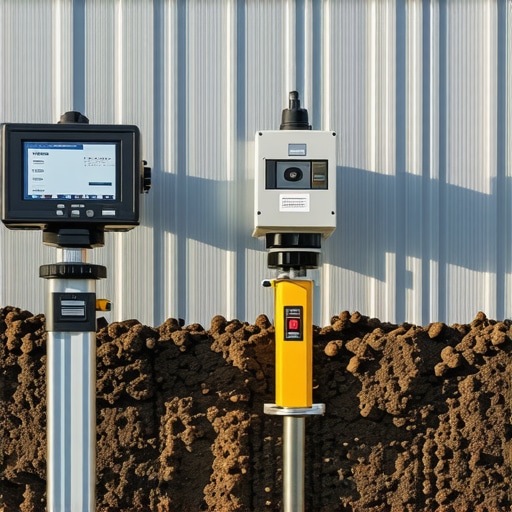
Monitoring and managing soil moisture content is fundamental to controlling runoff and contamination spread. Utilizing **wireless dielectric sensors** provides continuous, real-time moisture profiles, guiding the precise application of dewatering or soil stabilization agents. Adjusting moisture levels proactively enhances soil stability, diminishes runoff potential, and ensures compliance with environmental regulations.
Why Is Soil Moisture Content Critical in Contingency Planning?
Soil moisture levels influence both the mobility of contaminants and the efficacy of stabilization techniques. For instance, high moisture content can exacerbate runoff risks and impede the performance of soil stabilization agents. Conversely, overly dry conditions may cause dust emissions and reduce soil cohesion. Accurate moisture assessment through dielectric sensors enables excavation teams to calibrate their approach, applying appropriate stabilization or dewatering measures proactively. This nuanced understanding minimizes environmental risks and supports regulatory compliance.
Robotics Elevate Soil Safety Operations
Autonomous robotic solutions equipped with multi-modal sensors are set to redefine hazardous soil handling. These robots can conduct precise sampling, deploy containment measures, and perform remediation within complex underground environments, all while minimizing human exposure. Coupled with real-time data analytics, such robotic systems promise heightened safety, efficiency, and adaptability, paving the way for future-proof urban excavation practices.
For practitioners interested in pioneering these technologies, exploring collaborations with research institutions and startups specializing in robotic automation can accelerate adoption. Staying informed about evolving standards and pilot program results is essential for integrating these cutting-edge solutions effectively into existing workflows.
Collaborative Expertise as the Foundation of Soil Safety
Combining insights from geotechnical engineering, environmental science, information technology, and regulatory fields fosters holistic strategies that address soil contamination challenges. Regular interdisciplinary workshops, knowledge exchanges, and feedback loops enable dynamic refinement of safety protocols. Cultivating such collaborative ecosystems ensures that innovative solutions are practically viable, compliant, and tailored to specific project needs.
Adopting Emerging Technologies to Foster Resilience
Emerging tools like **real-time environmental sensors**, **AI-powered predictive models**, and **automated containment systems** serve as catalysts for resilience. Pilot programs demonstrate that leveraging these technologies reduces environmental incidents and enhances operational agility. Embracing a continuous learning culture, supported by ongoing training and stakeholder engagement, ensures that urban hydrovac operations remain at the forefront of safety and sustainability.
Explore our resource hub for the latest developments in **advanced soil contamination control** and connect with industry leaders committed to innovation in this vital domain.
Expert Insights & Advanced Considerations
Integrate Real-Time Monitoring for Proactive Control
Utilizing smart sensor networks enables immediate detection of soil moisture fluctuations and contaminant migration, allowing operators to respond swiftly and prevent environmental breaches while optimizing safety protocols.
Leverage Adaptive Containment Technologies
Deploying dynamic barriers such as inflatable berms with embedded pressure and flow sensors offers a resilient solution that adjusts to changing site conditions, reducing reliance on static measures and enhancing containment efficiency.
Prioritize Data-Driven Decision Making
Integrating advanced geotechnical analysis tools, including portable XRF analyzers and ground-penetrating radar, supports informed, precise intervention strategies that minimize risks associated with unforeseen soil contamination.
Collaborate Across Disciplines for Holistic Solutions
Fostering teamwork among geotechnical engineers, environmental specialists, and data scientists facilitates innovative approaches, ensures regulatory compliance, and enhances overall project resilience in hazardous soil management.
Embrace Emerging Robotics and AI Technologies
Adopting autonomous robotic systems equipped with multi-modal sensors and AI-driven predictive models accelerates detection and containment efforts, reduces human exposure, and sets new standards for safety and efficiency in urban excavation.