Efficient Borehole & Vacuum Excavation Methods for Precise Infrastructure
Unlocking the Potential of Advanced Borehole and Vacuum Excavation Methods for Infrastructure Excellence
In the realm of underground infrastructure development, precision and safety are paramount. Modern excavation techniques, particularly borehole and vacuum excavation, have evolved into sophisticated tools that enable engineers and contractors to achieve unparalleled accuracy while minimizing risks. This article explores the cutting-edge methodologies that define the future of underground construction, emphasizing their strategic application and integration into complex projects.
Why Conventional Excavation Falls Short in Modern Infrastructure Demands
Traditional excavation methods often struggle with issues such as soil disturbance, damage to existing utilities, and limited precision. These limitations necessitate innovative approaches that leverage technological advancements. For instance, the integration of real-time imaging and GPS-guided systems enhances control and reduces the incidence of accidents. As highlighted in recent industry reports, adopting these advanced techniques significantly improves safety outcomes and project efficiency.
Innovative Borehole Techniques: From Precision Drilling to Soil Sampling
Advanced borehole methods, such as rotary core drilling combined with geophysical surveys, facilitate detailed subsurface analysis essential for infrastructure planning. These techniques allow for precise soil characterization, aiding in the design of foundations and utility conduits. Furthermore, innovations like dual-wall boreholes improve stability and reduce environmental impact, aligning with sustainable construction practices.
Vacuum Excavation: The Gold Standard for Safe Site Access
Vacuum excavation has become a cornerstone of safe underground utility work. Its ability to accurately locate and expose utilities with minimal soil disturbance makes it indispensable in urban environments. The integration of hydro-vac technology, which combines water jetting with vacuum extraction, exemplifies the industry’s move toward safer, more efficient site preps. For an in-depth review of these techniques, see the comprehensive guide on hydrovac and borehole techniques.
What Are the Key Challenges in Implementing These Advanced Methods?
Despite their advantages, deploying these sophisticated techniques requires significant expertise and investment. Challenges include equipment costs, operator training, and integrating new systems with existing project workflows. Moreover, the accuracy of these methods depends heavily on proper calibration and real-time data interpretation, which underscores the importance of experienced personnel.
How Can Industry Professionals Overcome the Learning Curve in Advanced Vacuum and Borehole Techniques?
Addressing this question involves fostering ongoing training programs, utilizing simulation tools, and engaging with industry experts who have proven success in complex projects. Collaborations with specialized equipment manufacturers can also facilitate smoother adoption and customization of technology solutions.
For further insights into optimizing underground safety, explore our detailed discussion on borehole trenching techniques.
By embracing these advanced excavation methodologies, infrastructure projects can achieve higher standards of safety, precision, and sustainability. The ongoing evolution of vacuum and borehole technologies promises new horizons for underground construction excellence—an imperative for future-ready infrastructure development.
Interested in expanding your expertise? Contribute your insights or explore related articles on trenching techniques for safer sites.
Revolutionizing Underground Construction with Cutting-Edge Techniques
As the demand for safer, more precise underground infrastructure development escalates, industry experts are turning to innovative borehole and vacuum excavation methods that push the boundaries of traditional practices. These advancements are not only enhancing accuracy but also reducing environmental impact, aligning with sustainable construction goals. For example, integrating real-time data analytics with automated drilling systems allows for dynamic adjustments during excavation, ensuring optimal results. To explore these innovations further, see detailed insights on streamlined hydrovac trenching techniques.
Challenging Assumptions: Is More Technology Always Better?
While embracing technological sophistication offers undeniable benefits, it prompts an important question: can an over-reliance on automation and digital tools compromise hands-on expertise? Experts caution that without proper calibration and human oversight, even the most advanced systems may produce inaccuracies or overlook subtle site conditions. Therefore, a balanced approach—combining AI-driven systems with seasoned operator intuition—is essential for ensuring precision and safety. For comprehensive strategies on integrating these systems effectively, consult streamlined hydrovac trenching for safer site prep.
Frameworks for Success: Implementing a Continuous Improvement Model
Adopting an iterative, data-driven framework can significantly improve the deployment of advanced excavation techniques. This involves regular training updates, feedback loops from on-site personnel, and partnerships with technology providers. By fostering a culture of continuous learning and adaptation, companies can stay ahead of industry standards. Moreover, leveraging external expertise—such as consulting with organizations recognized for their innovative approaches—can accelerate learning curves. As highlighted by industry leaders, strategic collaboration is critical for harnessing the full potential of these technologies (top borehole vacuum excavation strategies).
Harnessing the Power of Automated Data Integration in Borehole and Vacuum Excavation
As the industry advances, integrating automated data collection systems with borehole and vacuum excavation processes becomes a game-changer. These systems utilize sophisticated sensors and IoT (Internet of Things) technologies to provide real-time feedback on soil conditions, utility locations, and equipment performance. Such integration not only enhances precision but also significantly reduces human error, leading to safer and more efficient operations. According to a study by the American Society of Civil Engineers (ASCE), projects implementing IoT-enabled excavation methods experienced a 30% reduction in project delays and safety incidents (ASCE Publications).
What Are the Challenges of Integrating IoT with Excavation Technologies?
Despite its benefits, the integration of IoT into excavation workflows faces hurdles such as cybersecurity risks, data management complexities, and the need for specialized skill sets. Ensuring secure data transmission and storage is paramount, especially given the sensitive nature of utility maps and site plans. Furthermore, developing interoperable systems that communicate seamlessly with existing construction management platforms requires careful planning and expert collaboration.
To overcome these challenges, industry leaders advocate for standardized protocols and investment in staff training focused on digital literacy and cybersecurity awareness. Embracing these innovations paves the way for predictive analytics that can forewarn of potential issues before they manifest, optimizing project timelines and safety protocols.
Innovative Methodologies: Combining Geophysical Surveys with AI-Enhanced Drilling
Emerging techniques such as AI-driven geophysical surveys are transforming subsurface investigations. These surveys leverage machine learning algorithms to interpret complex data sets, providing highly detailed images of underground conditions. When combined with precision drilling tools, this approach enables contractors to plan boreholes with unprecedented accuracy, minimizing environmental disturbance and utility strikes.
Recent research published in the Journal of Construction Engineering and Management highlights that AI-enhanced geophysical surveys can reduce drilling errors by up to 40%, leading to substantial cost savings and project safety improvements (ASCE Journal of Construction Engineering and Management).
How Can AI Improve the Reliability of Subsurface Data in Complex Urban Settings?
AI algorithms can synthesize data from multiple sources, including seismic, electromagnetic, and resistivity surveys, to generate comprehensive 3D models of underground utilities and soil profiles. This multi-modal analysis helps identify anomalies and potential conflicts before drilling begins, reducing the risk of utility damage or environmental impact. Moreover, AI-driven predictive models can assist in planning future maintenance and monitoring, ensuring long-term infrastructure integrity.
If you are interested in deploying these sophisticated techniques, consider partnering with technology providers specializing in geospatial AI solutions tailored for construction applications. Engaging with industry forums and ongoing training programs will also keep your teams at the forefront of innovation.
Future Perspectives: The Role of Robotics and Autonomous Systems in Excavation
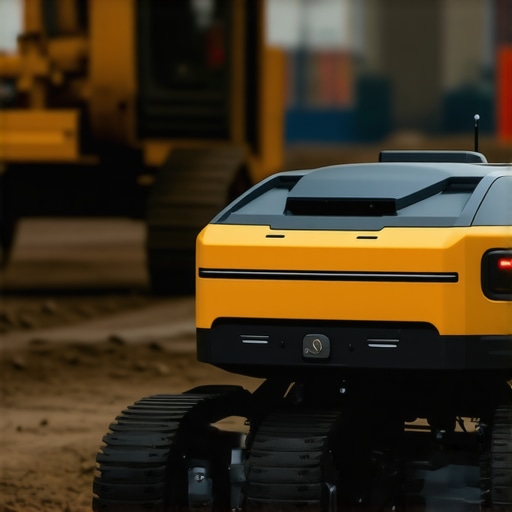
Looking ahead, the integration of robotics and autonomous systems promises to revolutionize underground excavation. Autonomous drilling rigs equipped with advanced sensors and navigation algorithms can operate with minimal human oversight, executing complex tasks with high precision in challenging environments. These systems are particularly valuable for confined urban spaces or hazardous conditions where human presence is risky.
A recent report by McKinsey & Company emphasizes that the adoption of robotic excavation solutions could increase productivity by up to 50% and drastically improve safety standards (McKinsey Industry Insights).
To fully realize the potential of these innovations, it is crucial for industry stakeholders to invest in research, develop robust safety protocols, and foster interdisciplinary collaboration among engineers, data scientists, and roboticists. Such concerted efforts will ensure the successful deployment of autonomous excavation technologies that complement human expertise and elevate infrastructure development to new heights.
Harnessing Cutting-Edge Drilling Technologies for Sustainable Urban Development
As urban landscapes expand vertically and horizontally, the necessity for innovative underground excavation methods intensifies. Advanced borehole techniques, such as horizontal directional drilling (HDD) integrated with real-time geospatial analytics, enable engineers to navigate complex subsurface conditions with unprecedented precision. These methodologies not only reduce surface disruption but also optimize utility installation and maintenance, aligning with sustainable development goals.
Synergizing AI and Geophysical Data for Predictive Subsurface Modeling
The convergence of artificial intelligence and geophysical surveys has revolutionized subsurface exploration. Machine learning algorithms analyze seismic, electromagnetic, and resistivity data to construct high-resolution 3D models, predicting potential utility conflicts and soil instability before drilling commences. This proactive approach minimizes project delays and environmental impacts, setting new standards for underground safety and efficiency. For detailed methodologies, consult ASCE’s Journal of Construction Engineering and Management.
What Are the Limitations of Autonomous Excavation Systems in Urban Environments?
Despite promising advancements, autonomous excavation systems face challenges such as navigating unpredictable urban terrains, maintaining real-time adaptability, and integrating seamlessly with existing infrastructure. Sensor accuracy and system redundancy are critical factors influencing operational reliability. Furthermore, regulatory frameworks and safety protocols must evolve concurrently to support widespread adoption. Industry stakeholders should consider pilot programs that evaluate these systems under controlled conditions, fostering iterative improvements and regulatory compliance.
How Can Industry Leaders Facilitate the Transition to Autonomous and AI-Driven Excavation?
Facilitating this transition requires a multi-faceted strategy: investing in workforce training, establishing interdisciplinary collaborations, and engaging regulators early in the development process. Emphasizing data security and system interoperability ensures resilient operations. Additionally, participating in industry consortia and pilot projects accelerates knowledge sharing and technological refinement. Engaging with platforms such as McKinsey’s Engineering Resources can provide valuable insights into best practices.
Leveraging Blockchain for Enhanced Data Integrity in Excavation Projects
Blockchain technology offers a promising avenue for ensuring the integrity and traceability of subsurface data, contractual agreements, and audit trails. Implementing decentralized ledgers can enhance transparency among stakeholders, reduce disputes, and streamline project documentation. This approach aligns with the increasing digitalization of construction workflows and provides a secure foundation for sharing sensitive geotechnical information across multidisciplinary teams.
Integrating Sustainability Metrics into Excavation Planning
Incorporating environmental impact assessments and sustainability metrics into excavation planning is essential for modern infrastructure projects. Lifecycle analysis of materials and emissions, soil disturbance minimization, and water management strategies should be embedded into project workflows. Advanced modeling tools can simulate environmental scenarios, guiding decision-makers toward eco-friendly practices that meet regulatory standards and community expectations.
< }
}
Expert Insights & Advanced Considerations
1. Embrace Integrative Technologies
Leveraging real-time geospatial analytics combined with AI-driven drilling systems enhances precision and reduces environmental impact, setting new standards in underground construction safety and efficiency.
2. Prioritize Workforce Skill Development
Continuous training in digital literacy, system calibration, and safety protocols is essential to maximize the benefits of advanced borehole and vacuum excavation methods and mitigate operational risks.
3. Foster Industry Collaboration
Partnerships with equipment manufacturers, technology providers, and regulatory bodies facilitate smoother adoption of innovative techniques, ensuring compliance and operational excellence.
4. Incorporate Sustainability Metrics
Embedding environmental impact assessments and lifecycle analyses into project planning promotes sustainable practices, aligning infrastructure development with ecological responsibility.
5. Invest in Autonomous and IoT Technologies
Adopting robotics, autonomous systems, and IoT-enabled sensors can significantly boost productivity, safety, and predictive maintenance capabilities in underground excavation projects.
Curated Expert Resources
- ASCE Journal of Construction Engineering and Management: Offers cutting-edge research on geophysical surveys, AI integration, and subsurface modeling techniques, vital for advancing excavation technologies.
- McKinsey & Company Industry Insights: Provides strategic insights into robotic automation, autonomous systems, and industry best practices for future-ready infrastructure projects.
- Hydrovac and Borehole Techniques Guide: An authoritative resource detailing practical applications, safety protocols, and innovative methodologies in vacuum and borehole excavation.
Final Expert Perspective
In the pursuit of infrastructure excellence, integrating advanced borehole and vacuum excavation techniques with emerging automation and analytics tools represents the pinnacle of modern underground construction. These expert-driven innovations not only enhance safety and precision but also foster sustainable development, ensuring resilient infrastructure for the future. Engaging with authoritative resources and fostering industry collaborations are essential steps for professionals aiming to lead in this transformative field. We invite you to share your insights, explore related expertise, and contribute to the ongoing evolution of underground construction excellence.