5 Borehole Sampling Fixes for 2026 Environmental Audits
Enhancing Subsurface Integrity: The Strategic Integration of Borehole and Vacuum Excavation Methods for 2026 Environmental Compliance
As environmental standards become increasingly stringent, professionals engaged in underground infrastructure development must leverage advanced excavation techniques to ensure compliance and operational efficiency. The convergence of borehole activities, vacuum excavation, and trenching strategies is pivotal in executing precise, safe, and environmentally responsible projects in preparation for 2026 audits. A sophisticated understanding of these methodologies enables experts to mitigate risks associated with utility damages, soil instability, and underground asset misidentification.
Synergizing Borehole Techniques with High-Resolution Soil Testing for Worst-Case Scenario Preparedness
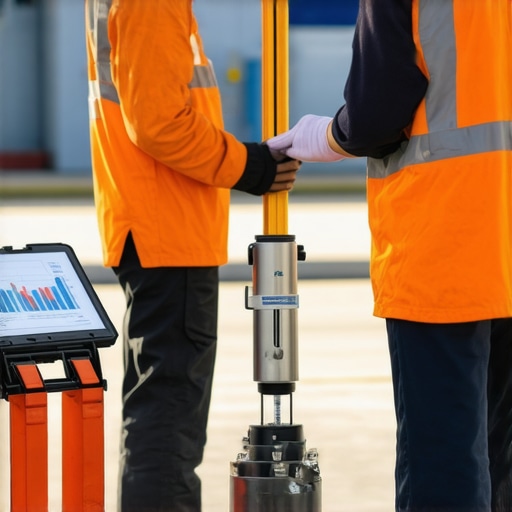
Effective borehole drilling, when paired with comprehensive soil testing, not only assures subsurface stability but also informs critical decisions regarding soil behavior under various environmental conditions. Experts employ high-precision borehole drilling, integrating geotechnical investigations like cone penetration testing (CPT), to preemptively identify soil liquefaction zones and mitigate potential collapse risks. Recent advancements highlight the importance of adaptive drilling rigs capable of adjusting to challenging subsoil compositions, ensuring borehole integrity and project reliability. For more insights, refer to this authoritative soil testing guide.
Innovations in Vacuum Excavation that Minimize Utility Line Strikes During Trenching Operations
The evolution of hydrovac technology offers unparalleled control during trenching, significantly reducing the likelihood of damaging underground utilities. Integrating real-time utility mapping with vacuum excavation not only accelerates project timelines but also ensures compliance with safety protocols mandated in 2026 environmental audits. Deploying AI-assisted detection systems and 3D underground imaging enhances situational awareness, reinforcing the necessity of adopting these innovations in complex urban settings. Explore effective strategies at hydrovac safety techniques.
How Can Trenching Practices be Reimagined to Prevent Soil Collapse and Enhance Efficiency?
Modern trenching methodologies emphasize precision and soil stability, especially when dealing with saturated or cohesive soils susceptible to collapse. Implementing controlled excavation sequences, advanced shoring systems, and continuous soil monitoring are essential for safeguarding worker safety and ensuring environmental compliance. The adoption of trenchless technologies and modular shoring enhances both safety profiles and project productivity, aligning with best practices for 2026 landscape management.
What are the latest developments in trenching equipment that allow for safe excavation in variable soil conditions, and how can these be integrated into existing workflows?
Contemporary trenching equipment now features adaptive controls and sensor technology capable of responding to soil feedback in real time. Integrating these tools into existing operations requires training and procedural adjustments but results in higher accuracy and reduced risk. Industry experts suggest a phased adoption approach, focusing first on high-risk environments, supported by continuous monitoring and data analytics. To refine your trenching operations, explore strategic guidance at trenching best practices.
If you’re involved in underground infrastructure, sharing your insights and experiences can greatly contribute to collective knowledge. Consider engaging with industry forums or publishing case studies that demonstrate the successful integration of these advanced techniques.
For authoritative industry standards and evolving best practices, consult this comprehensive guide on safe underground work.
Elevating Excavation Safety with Cutting-Edge Technologies
As the landscape of underground work evolves, integrating innovative technologies into borehole and vacuum excavation practices becomes essential. The advent of 3D underground imaging and AI-assisted utility detection has transformed traditional methods, enabling precise localization of underground assets and reducing the risk of utility strikes. These advancements not only streamline operations but also reinforce compliance with upcoming environmental and safety standards set for 2026, emphasizing the importance of adopting next-generation tools in urban and rural projects alike.
Strategic Soil Management for Enhanced Stability and Sustainability
Understanding soil behavior remains at the forefront of effective excavation. Incorporating real-time soil moisture monitoring and adaptive boring techniques allows engineers to tailor methods to specific ground conditions, minimizing soil disruption and preventing collapses. For instance, employing soil stabilization treatments alongside borehole drilling can enhance structural integrity, especially in challenging terrains prone to liquefaction or erosion. Continuous learning from recent case studies underscores the value of proactive soil management, which aligns with the directives detailed in soil testing best practices for future projects.
Can We Rethink Trenching to Work Smarter, Not Harder?
Traditional trenching is often labor-intensive and prone to soil instability issues, particularly in complex geological settings. Emerging trenchless technologies, such as pipe bursting and microtunneling, offer promising alternatives that mitigate soil disturbance and reduce project timelines. By embracing these methods, contractors can navigate sensitive environments more responsibly, ensuring compliance with new regulations for 2026. Additionally, integrating sensor-based monitoring systems during trenching operations enhances soil health assessment, enabling real-time adjustments to excavation parameters. For practical insights, visit trenching innovation strategies.
Engagement from industry professionals, sharing success stories or challenges faced in implementing these techniques, can drive collective progress. Consider commenting below or participating in forums dedicated to underground infrastructure innovations.
To stay ahead of regulatory changes and technological shifts, consult comprehensive resources such as the ultimate guide on safe subsurface operations.
Harnessing Autonomous Technologies to Revolutionize Subsurface Exploration
As the quest for precision in underground construction advances, autonomous drilling rigs and robotic excavation systems are emerging as game-changers. These innovations leverage machine learning algorithms and sensor fusion to navigate complex substrates with minimal human intervention, drastically reducing errors and operational costs. For example, autonomous borehole drilling units equipped with adaptive control systems can adjust to unpredictable soil conditions, maintaining optimal alignment and depth accuracy. Such capabilities not only enhance safety and efficiency but also align with the stringent expectations of environmental compliance slated for 2026. The integration of AI-driven analytics further refines predictive maintenance schedules, ensuring equipment reliability in demanding terrains.
The Critical Role of Environmental Impact Assessments in Modern Excavation Planning
In the context of increasingly rigorous environmental standards, comprehensive impact assessments serve as vital tools for pre-project planning. Advanced models now incorporate microclimate data, soil chemistry variations, and hydrological factors to predict potential ecological disturbances. These models facilitate the formulation of mitigation strategies that are both effective and compliant with regulations. Institutions such as the Environmental Protection Agency (EPA) emphasize that thorough assessments reduce unforeseen environmental liabilities, fostering community trust and project sustainability. Engaging multidisciplinary teams—including ecologists, geotechnical engineers, and local stakeholders—ensures that assessment findings translate into actionable, environmentally responsible excavation practices.
What nuanced considerations determine the choice between trenchless and traditional trenching methods?
Deciding between trenchless technologies like pipe bursting, directional drilling, or traditional open-cut trenching hinges on a matrix of factors. Key among these are soil stability, subsurface utility density, environmental sensitivity, and project duration constraints. Trenchless methods excel in densely populated urban settings where surface disruption must be minimized, whereas conventional trenching may be favored in scenarios requiring access to heavily compacted or fractured soils for extensive installations. Cost-benefit analyses reveal that while trenchless operations may involve higher upfront investments, they often yield significant long-term savings by reducing restoration and compliance costs. An informed choice requires integrating geotechnical reports with risk assessments and project timelines—parameters that environmental agencies increasingly scrutinize during approval processes.
How can stakeholders integrate cutting-edge survey data into existing project workflows for maximum effect?
The infusion of high-resolution LiDAR scans, ground-penetrating radar (GPR), and 3D subsurface imaging into project design streams enables stakeholders to preemptively identify geological anomalies. Embedding these datasets into Geographic Information Systems (GIS) facilitates dynamic modeling of potential excavation challenges, guiding strategic decision-making. To maximize utility, teams should adopt interoperable software platforms that enable seamless data sharing between survey teams, engineers, and environmental consultants. Training personnel in the latest data interpretation techniques ensures that insights translate into practical action, ultimately reducing surprises during excavation phases and fostering compliance adherence. Notably, integrating these advanced survey methods into project planning aligns with the evolving regulatory landscape, which favors data-driven, transparent methodologies.
For industry leaders eager to push the boundaries of traditional excavation, engaging with interdisciplinary experts and technological innovators is crucial. Participating in workshops or forums dedicated to emerging subsurface exploration tools can provide competitive advantages, ensuring projects do not just meet, but exceed, 2026 environmental standards.
Deploying Adaptive Borehole Technologies for Dynamic Soil Conditions
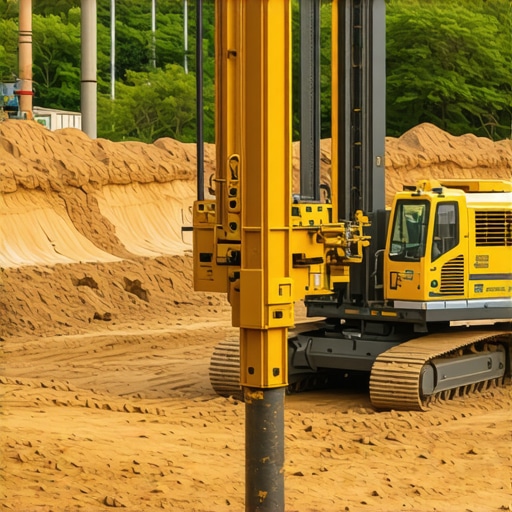
In the realm of deep subsurface investigations, the implementation of adaptive borehole drilling systems equipped with real-time geotechnical sensors is transforming how engineers respond to unpredictable soil variability. These intelligent rigs leverage machine learning algorithms to adjust drilling parameters instantaneously, optimizing borehole stability and minimizing environmental disturbance. Through proactive soil characterization, project teams can preemptively address liquefaction zones or unstable strata, elevating safety standards and ensuring regulatory adherence in the lead-up to 2026 mandates.
What are the cutting-edge adaptations in borehole rigs that enhance resilience against complex geological puzzles?
Recent innovations include modularized drill heads with sensor arrays capable of detecting anomalies at millimeter precision. Coupled with data analytics platforms, these tools enable predictive adjustments that reduce downtime and prevent borehole collapse. Industry reports from the International Journal of Geotechnical Engineering detail how such systems have markedly improved project outcomes in challenging terrains.
Harnessing AI-Driven Utility Mapping for Urban Trench Planning
In densely populated zones, the integration of artificial intelligence with ground-penetrating radar (GPR) has unlocked unprecedented levels of underground utility detection accuracy. AI algorithms interpret GPR data in real time, creating comprehensive 3D utility maps that inform trench alignment and depth, drastically reducing accidental utility strikes. This synergy not only expedites project timelines but upholds the strict environmental and safety standards expected by regulatory bodies in 2026.
How can AI-augmented GPR systems redefine trench design workflows in congested environments?
By providing dynamic utility localization, AI-enhanced GPR allows trench planners to pivot rapidly during excavation, avoiding high-risk zones and minimizing surface disruption. Integrating these insights into digital twin models fosters scenario analysis and proactive risk mitigation. Leading contractors are adopting such technologies to gain a competitive edge, as highlighted in the detailed case studies by Urban Infrastructure Review.
Innovations in Soil Stabilization to Prevent Collapse in Challenging Substrates
Soil stabilization techniques, employing chemical and biological agents, are evolving to provide environmentally friendly and durable solutions. Particularly in saturated or cohesive soils prone to failure, rapid-setting polymer injections and bio-mediated stabilization foster ground integrity without extensive excavation. These methods align with the sustainability goals and low-impact practices emphasized in forthcoming 2026 environmental guidelines.
Which emerging stabilization methods are shaping resilient underground infrastructure in sensitive ecosystems?
Innovations like enzymatic soil binders and microbial-induced carbonate precipitation (MICP) are gaining prominence. They offer in-situ treatment options with minimal ecological footprint, crucial for projects in wetlands or protected habitats. Reports from the Ecological Engineering Society provide comprehensive analysis on their efficacy and environmental compatibility.
Rethinking Trenchless Tunneling for Sustainable Urban Expansion
The evolution of trenchless tunneling methods, such as microtunneling and pipe jacking, is redefining urban infrastructure development. These techniques enable crossings beneath existing structures with minimal surface impact, essential for compliance with urban environmental standards and aesthetic considerations for 2026.
Emerging innovations include hybrid tunneling machines equipped with real-time geological sensors and remote operation capabilities. Such systems facilitate rapid adjustments during construction, enhancing safety and operational efficiency. The strategic application of these technologies is extensively documented in recent industry whitepapers, including those by the Tunneling Technologies Journal.
Why are hybrid tunneling systems considered the future of urban underground expansion?
Their adaptability to variable geological conditions, coupled with reduced environmental footprint, positions hybrid systems as a sustainable alternative to traditional methods. As urban areas grapple with space constraints and stringent environmental policies, such innovations will be instrumental in shaping resilient cityscapes in the coming years.
If you aim to stay at the forefront of underground work innovation, engaging with technological think tanks and participating in specialized training programs can unlock new potential in your project workflows. Further, integrating cutting-edge survey and stabilization data enhances decision-making precision, paving the way toward truly sustainable and compliant subterranean construction practices in the approaching decade.
Expert Insights & Advanced Considerations
Prioritize Adaptive Technologies for Variable Soils
Implementing drilling rigs equipped with real-time geotechnical sensors enables ground conditions to be addressed proactively, reducing risks of borehole failure and ensuring regulatory compliance. This dynamic approach maximizes both safety and efficiency in complex terrains.
Leverage AI Integrations for Precise Utility Localization
Utilizing artificial intelligence with ground-penetrating radar enhances underground utility detection, allowing planners to develop optimal trenching strategies and prevent costly utility strikes—crucial in urban, congested environments aiming for 2026 standards.
Focus on Sustainability through Soil Stabilization Innovations
Emerging environmentally friendly soil stabilization methods, such as microbial-induced carbonate precipitation, provide durable ground integrity solutions in sensitive ecosystems, aligning with long-term sustainable development goals and new environmental regulations.
Adopt Trenchless Techniques to Minimize Disruption
Advanced trenchless solutions like microtunneling and pipe jacking facilitate underground crossings with minimal surface impact, vital for urban expansion projects committed to reducing environmental footprints by 2026.
Integrate Autonomous Equipment for Elevated Precision
Autonomous drilling and robotic excavation systems, driven by machine learning, offer unprecedented accuracy and safety, enabling underground infrastructure projects to meet the stringent standards anticipated in 2026.
Curated Expert Resources
- Hydrovac Excavation: The Ultimate Guide to Safe Underground Work—This comprehensive resource consolidates best practices and emerging techniques essential for modern underground construction, highlighting safety and efficiency innovations.
- Soil Testing Innovations for Foundation Stability—Offering insights into the latest geotechnical methods, this guide assists professionals in preemptively addressing subsurface challenges and meeting upcoming environmental standards.
- AI and Utility Mapping in Urban Environments—This resource details cutting-edge AI applications enhancing underground utility detection, vital for risk mitigation and project planning in densely populated areas.
Final Expert Perspective
Mastering underground construction in 2026 demands a convergence of adaptive technologies, intelligent surveying, eco-conscious stabilization, and autonomous systems. By deeply understanding these advanced insights, professionals can elevate their operational standards, ensuring projects are resilient, compliant, and future-ready. Engagement with industry leaders and continuous learning remain the cornerstone of ongoing excellence—connect with peers, participate in forums, and explore authoritative resources to stay at the forefront of subterranean innovation.
I found the section on adaptive borehole technologies particularly compelling. In my recent projects, we’ve started integrating real-time geotechnical sensors with our drilling rigs, and the difference in ground stability compared to traditional methods is remarkable. This kind of innovation not only enhances safety but also significantly reduces project delays caused by unforeseen soil conditions.
However, I wonder about the cost implications for smaller firms aiming to adopt these advanced systems. Have others here managed to implement such technology effectively without exorbitant expenses? And what strategies might help in scaling these innovations for broader industry adoption? Sharing practical experiences could really help drive the industry forward in meeting the rigorous standards set for 2026.