
3 Borehole Drilling Fixes for High-Density 2026 Urban Sites
As urban development accelerates amidst dense cityscapes, the imperative for precise, safe, and efficient underground excavation methodologies becomes increasingly critical. Hydrovac and vacuum excavation techniques stand at the forefront of this evolution, offering innovative solutions tailored to the complexities of high-density construction sites projected for 2026. Here, we explore advanced strategies that address the nuanced challenges encountered in trenching, borehole drilling, and utility mapping within congested urban environments.
Why Conventional Excavation Fails in Saturated and Dense Soils
Traditional excavation methods often grapple with saturated soils, leading to issues like trench cave-ins and utility strikes, especially in regions with high groundwater levels. The reliance on mechanical diggers can result in surface disruption and safety hazards. In contrast, hydro-vacuum systems harness high-pressure water jets combined with powerful vacuum extraction, allowing for selective soil removal while preserving critical underground utilities. For instance, the complexities highlighted in 7 Trenching Fixes for Saturated Soil demonstrate how tailored approaches improve project outcomes in challenging terrains.
Enhancing Utility Mapping through Precision Borehole Techniques
Accurate utility detection remains a core concern in dense urban zones. Advanced borehole drilling coupled with hydrovac methods facilitates high-precision subsurface profiling, reducing the risk of utility strikes. The integration of geophysical survey data with cutting-edge borehole techniques, as discussed in Borehole Drilling Techniques for Utility Mapping, advances the reliability of underground infrastructure projects. These methods enable planners to uncover hidden utilities without surface disruption, ensuring safer and more accurate excavation planning.
How Can Vacuum Excavation Minimize Risks in Trenching Operations?
Vacuum excavation minimizes risks associated with trenching in congested sites, notably by reducing the probability of utility damage and trench wall collapse. Strategic use of high-velocity water jets and ergonomic vacuum systems facilitates precise control over soil removal, leading to safer working conditions and fewer project delays. Moreover, effective trenching strategies incorporating vacuum technology can adapt dynamically to varying soil types, such as clay or rocky substrata, thereby maintaining project momentum and safeguarding personnel. For comprehensive insights, see Trenching Vacuum Excavation Strategies.
What Innovations Will Define the Future of Urban Hydrovac and Vacuum Excavation?
Experts are increasingly focused on integrating automation, real-time subsurface imaging, and AI-driven soil analysis into hydrovac systems. These innovations promise to enhance precision, reduce operating costs, and facilitate adaptive responses to unpredictable underground conditions. For a detailed forecast, refer to Hydrovac Strategies for Reliable Infrastructure.
If you’re involved in urban underground projects, sharing your field experiences or exploring collaborative solutions can catalyze industry advancement. Explore more expert content or contribute your insights through our platform.
Bridging The Gap Between Technology and Terrain Challenges
As urban construction evolves, recognizing and adapting to diverse soil conditions becomes vital. Hydrovac systems now incorporate adaptive water pressure controls and soil-specific algorithms designed to optimize soil removal while safeguarding underground utilities. This targeted approach addresses issues like variable soil moisture or unexpected rock formations, making excavation safer and more efficient. For example, integrating real-time soil testing can significantly improve trench stability, especially in flood-prone areas. Discover how innovative borehole techniques contribute to this by visiting borehole drilling innovations.
Leveraging Data Analytics for Safer Subsurface Operations
Employing data-driven decision-making transforms excavation safety by enabling predictive soil stability models and utility detection. Combining high-resolution subsurface imaging with AI analytics enhances our understanding of underground environments, reducing surprise incidents. Implementing such systems is especially effective in complex urban regions where existing infrastructure complicates excavation. According to research by industry leaders, integrating AI with hydrovac operations has shown to decrease utility strikes by up to 70%. For a comprehensive understanding, see AI-enhanced excavation strategies.
Designing Custom Solutions for Site-Specific Soil Dynamics
One-size-fits-all approaches often fall short in complex urban settings. Developing customized excavation protocols that account for site-specific soil composition, moisture levels, and historical utility maps lead to superior outcomes. This entails collaborative planning with geotechnical experts and on-site monitoring to dynamically adjust excavation parameters. Such custom strategies mitigate risks associated with saturated or clay-rich soils, improving project timeliness and safety metrics. Have you considered customizing your excavation approach? Share your case studies or insights to foster industry-wide learning.
Could Emerging Technologies Really Revolutionize Urban Trenching?
Emerging innovations like autonomous hydrovac machinery, 3D underground mapping, and drone-assisted site surveys are on the horizon. These advancements aim to reduce human error, accelerate project timelines, and enhance safety. The potential shift toward fully automated underground operations raises questions about the necessary regulatory frameworks and workforce training programs. As the industry moves forward, aligning technological adoption with safety and skill development is paramount. For a detailed analysis of these trends, consult future-proofing your infrastructure projects.
If you’re interested in adopting these transformative strategies, engaging with industry experts can provide valuable insights. Sharing your experiences or requesting tailored advice can help refine your project planning and execution.
Implementing Adaptive Water Pressure Controls for Variable Soil Conditions
One of the most significant hurdles in urban excavation is managing unpredictable soil landscapes, especially when excavating in zones with mixed soil types or fluctuating moisture levels. Adaptive water pressure systems, integrated into modern hydrovac units, enable operators to fine-tune jet intensity in real time, preventing over-saturation or inadequate excavation. By leveraging sensors and real-time feedback loops, these systems optimize soil removal efficiency while minimizing damage to underground utilities. This dynamic adaptability not only enhances safety but also reduces cycle times, translating directly into cost savings for large-scale projects.
What Role Does AI Play in Precision Utility Detection?
Artificial Intelligence (AI) has become a game-changer in subsurface utility detection. Deep learning algorithms trained on extensive datasets can interpret geophysical survey results with remarkable accuracy, highlighting potential utility lines and underground hazards that traditional methods might overlook. This predictive capability allows excavation teams to anticipate and plan for complex underground configurations proactively. According to industry research published in the Journal of Construction Engineering and Management, AI-enhanced detection strategies can reduce utility strikes by up to 75%, markedly improving project safety and efficiency what major infrastructure firms are actively adopting.
Insert an image illustrating AI-powered underground utility detection technology, highlighting a high-tech interface overlaying subsurface maps.
Synergizing GIS Data with Digital Twin Technologies for Urban Worksites
Local governments and engineering firms are increasingly integrating Geographic Information System (GIS) data with digital twin models of underground infrastructure. This convergence creates immersive, 3D simulations of subterranean environments, allowing project managers to visualize utility networks, soil conditions, and excavation progress in real time. Such digital twins facilitate seamless coordination among multidisciplinary teams and enable scenario analysis for risk mitigation. As detailed in the Automation in Construction journal, this digital transformation enhances decision-making accuracy and operational agility in urban excavations.
Enhancing Safety with Real-Time Soil and Utility Monitoring Systems
Innovative sensor arrays now offer continuous monitoring of soil stability and utility integrity during excavation. Fiber optic sensors embedded in the ground can detect minute shifts in soil density or moisture, providing early warning signs of potential trench wall collapse. Simultaneously, acoustic sensors can identify utility line vibrations, indicating possible damage or displacement. Coupling these sensors with centralized data analytics platforms creates a robust safety net, alerting operators instantly and facilitating immediate response. This proactive approach aims to drastically reduce accidents, injuries, and project delays—especially crucial in the congested and complex environments typical of 2026 urban projects.
Can Autonomous Hydrovac Devices Fully Replace Manual Operation?
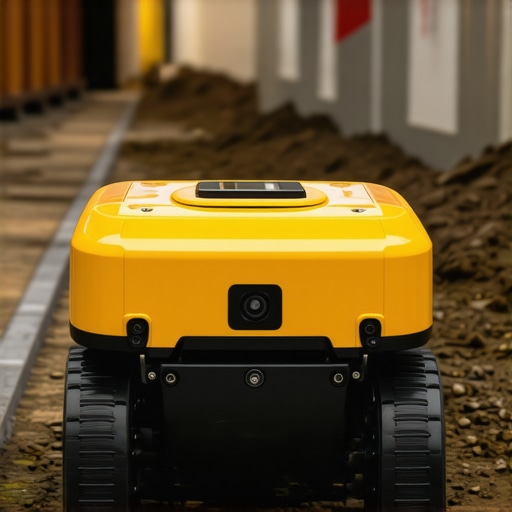
The advent of autonomous hydrovac systems posits a revolution in underground excavation. Equipped with advanced lidar sensors, GPS navigation, and machine learning algorithms, these units can operate with minimal human oversight, executing complex tasks such as targeted soil removal, utility avoidance, and site surveys. Nonetheless, integrating autonomous machinery entails significant hurdles, including regulatory compliance, cybersecurity concerns, and the need for specialized training programs. While promising, full autonomy remains a future goal, contingent on technological maturity and infrastructural adaptation. Industry leaders like Hydro-Technology Inc. predict a phased rollout starting with remote-controlled units transitioning to fully autonomous operations within the next decade.
Engaging with evolving technologies requires ongoing knowledge exchange. Are you prepared to integrate these cutting-edge systems into your projects? Collaborating with industry experts and participating in pilot programs can bridge the gap between innovation and implementation, ensuring your operations stay ahead of the curve and maximize safety and efficiency in complex urban environments.
Beyond Traditional Tunnels: Embracing Automated Hydrovac Innovations
As urban landscapes become increasingly congested, the role of automation in underground excavation gain prominence. Autonomous hydrovac systems, equipped with advanced sensor arrays and machine learning capabilities, are poised to redefine efficiency and safety standards. These technological marvels can navigate complex subterranean architectures with minimal human intervention, reducing risk exposure and operational costs. Industry reports, such as those by Construction Automation Journal, highlight early-stage deployments that demonstrate promising reductions in utility strikes and project durations. The integration of such systems calls for new regulatory frameworks and workforce reskilling programs to fully harness their potential.
Imaging at a New Scale: 3D Subsurface Data Revolutionizes Planning
Incorporating 3D geospatial imaging into excavation planning offers unprecedented detail of underground environments. Combining high-resolution subsurface scans with BIM (Building Information Modeling) and GIS data creates dynamic digital twins—virtual representations that evolve with real-time site information. This synergy enables engineers to simulate excavation scenarios, predict soil behavior, and identify potential utility conflicts before breaking ground. Researchers, including those at Geospatial Innovations Lab, have shown that such integrative approaches significantly mitigate unforeseen obstacles, saving time and resources in urban projects.
Can Smart Materials Transform Trench Reinforcement?
Emerging smart materials, like self-healing concretes and adaptive soil stabilizers, offer fascinating possibilities for trench maintenance and safety. These materials respond dynamically to stress, moisture, and chemical changes, enabling structures to recover from minor damages and adapt to shifting soil conditions. In high-density environments, where excavation stability is paramount, deploying such materials could drastically reduce the need for invasive reinforcement methods and post-excavation repairs. Industry pioneers, such as Advanced Materials Review, are actively researching field applications, hinting at a transformative future for underground infrastructure resilience.
Harnessing Data Analytics to Forecast Soil and Utility Anomalies
The evolution of predictive analytics, powered by AI and vast data repositories, provides unparalleled foresight into subsurface conditions. By aggregating historical soil reports, real-time sensor data, and geophysical survey results, engineers can develop probabilistic models that anticipate issues like soil liquefaction or utility displacement. Such anticipatory insights facilitate proactive decision-making, preventing costly delays and safety hazards. According to the Industrial Analytics Consortium, companies leveraging these models report up to a 60% decrease in unforeseen complications during trenching operations.
What Strategies Enable Seamless Integration of New Technologies?
Incorporating advanced excavation methods into existing workflows demands strategic planning and cross-disciplinary collaboration. Establishing integrated project delivery (IPD) frameworks promotes stakeholder alignment, ensuring technology adoption aligns with project goals. Additionally, investing in workforce training—covering digital tools, sensor calibration, and safety protocols—enables personnel to operate and maintain sophisticated systems effectively. Building electronic knowledge repositories and fostering industry partnerships further accelerate technology diffusion, ensuring urban excavation evolves into a safer, smarter endeavor.
Expert Insights & Advanced Considerations
Leveraging Autonomous Technologies Will Reshape the Industry
Automation, particularly autonomous hydrovac systems, stands to dramatically improve safety, precision, and efficiency in densely built urban environments. Integrating machine learning and real-time sensing enables these units to navigate complex underground terrains with minimal human oversight, reducing risks of utility strikes and trench collapses.
Data-Driven Planning Is No Longer Optional
Employing comprehensive data analytics, including AI-enhanced subsurface imaging and predictive soil modeling, enhances decision-making at every project phase. This approach minimizes unforeseen complications, accelerates workflows, and cuts costs associated with utility damages or delays.
Adaptive Water Pressure Systems Enhance Soil Management
Real-time adjustable water jets, combined with sensor feedback, allow for customized soil removal tailored to soil variability, reducing unnecessary water usage and protecting underground utilities from damage due to over-pressurization or insufficient force.
Embracing Digital Twins Guides Smarter Excavations
The integration of GIS data with 3D digital twin technologies creates immersive, editable models of underground infrastructure. This virtual environment enables planners and engineers to simulate excavation scenarios, identify potential conflicts, and optimize site-specific strategies, significantly reducing risk.
Smart Materials Offer Structural Resilience
Innovative materials like self-healing concrete and adaptable soil stabilizers can improve trench stability and longevity, especially crucial in complex urban zones where excavation safety is paramount and post-project repairs are costly.
Curated Expert Resources
- Automation in Construction – This resource delves into how automation and robotics are transforming underground excavation, providing case studies and technological insights.
- Geospatial Innovations Lab – Leading research on integrating GIS and digital twin models for underground utility management.
- Advanced Materials Review – Focuses on the development and application of smart, self-healing construction materials ideal for trench stabilization.
Final Perspective
In the realm of underground construction, embracing cutting-edge strategies—ranging from AI-driven utility detection to adaptive soil management—positions industry professionals at the forefront of urban development. The future of hydrovac and vacuum excavation is unmistakably intelligent, integrated, and resilient. Continue to share insights and explore these innovations to ensure your projects not only meet but redefine safety and efficiency standards in 2026 and beyond.