5 Vacuum Excavation Fixes for High-Traffic Urban Sites in 2026
Elevating Urban Construction: The Critical Role of Trenching, Borehole, and Vacuum Excavation in Modern Infrastructure
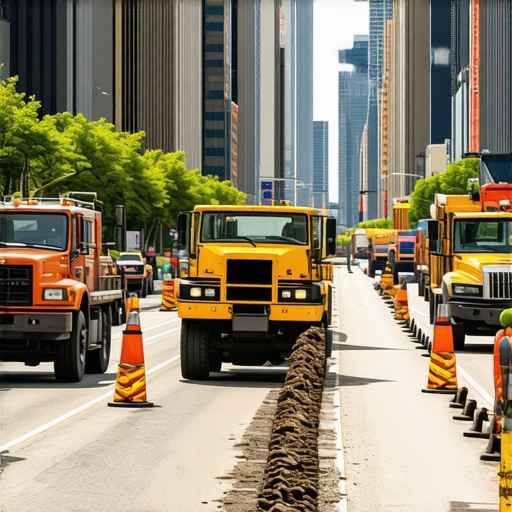
As cityscapes evolve amidst increasing demand for efficient and minimally disruptive construction practices, professionals are turning to sophisticated methods such as trenching, borehole drilling, and vacuum excavation. These techniques are not only fundamental for laying utilities but also pivotal in ensuring safety, accuracy, and operational speed, especially in high-traffic environments.
What Are the Advanced Advantages of Vacuum Excavation Over Traditional Trenching in Urban Settings?
Vacuum excavation stands out by dramatically reducing the risk of utility strikes, which can result in costly delays and safety hazards. Its precision enhances subsurface mapping, especially when integrated with hydro-vac technology that utilizes high-pressure water and vacuum systems to expose utilities with minimal ground disturbance. This approach aligns with the latest industry standards outlined in recent white papers, emphasizing safety and environmental considerations.
Furthermore, vacuum excavation facilitates rapid project turnaround in congested urban zones where conventional trenching might be impractical. Its application in borehole creation for utility crossings or environmental sampling exemplifies versatility, underscoring its importance in complex underground infrastructure projects.
Integrating Borehole Techniques for Precise Utility Mapping and Service Elevation
Borehole drilling methodologies have undergone significant refinement, allowing for highly accurate positioning of underground utilities. The deployment of advanced drills with real-time monitoring ensures that boreholes can be aligned accurately, reducing the risk of interference with existing structures or utilities. Combining these techniques with vacuum excavation amplifies safety and precision, leading to fewer project rework and operational downtime.
In high-traffic zones, borehole and trenching operations require meticulous planning and execution. Employing cutting-edge trenchless methods can mitigate surface disruptions, ensuring minimal impact on roadways and pedestrian pathways. These innovations are critical as urban projects target sustainability and community acceptance.
How Can Urban Projects Mitigate Soil Variability and Ground Stability Challenges Using Trenching and Borehole Methods?
Urban soils often present unpredictable challenges, from compacted clay to saturated sediments. Experts advocate for integrated geotechnical assessments alongside real-time ground sampling during trenching and borehole operations. Adaptive techniques, such as pre-drilling soil stabilization or employing flexible trenching equipment, can address these hurdles proactively.
Moreover, understanding the soil’s behavior influences the choice of excavation method, with vacuum excavation providing an advantageous alternative in unstable conditions by reducing soil stress and preventing collapses. Ensuring project longevity and safety hinges on this nuanced approach.
To explore further innovations in underground project safety, refer to Hydrovac Vacuum Excavation Strategies.
As the complexities of urban infrastructure expand, embracing intelligent trenching and borehole techniques becomes imperative. Combining expertise, emerging technologies, and meticulous planning ensures that underground works proceed with maximum efficiency and safety.
Professionals are encouraged to contribute insights or case studies that highlight successful implementation of these advanced methods in high-traffic environments.
Maximizing Efficiency with Next-Generation Excavation Techniques
Modern subterranean projects demand a combination of speed, safety, and precision. One transformative approach involves integrating high-powered vacuum excavation with advanced borehole drilling systems, facilitating seamless utility crossings and reducing surface disruptions. These hybrid techniques leverage innovations such as automated soil analysis sensors and real-time monitoring dashboards, which allow operators to adapt dynamically to ground conditions, minimizing delays and preventing costly utility damages. For a comprehensive understanding of technological advancements in this field, consult Hydrovac Vacuum Excavation Innovations.
What Tools Are Essential for Accurate Subsurface Geotechnical Assessments?
In the quest for safer excavation, experts advocate for employing portable geotechnical assessment kits integrated into trenching and borehole operations. These tools include moisture sensors, soil resistivity meters, and early warning systems capable of detecting subsurface anomalies before significant work commences. Such proactive measures ensure that ground stability concerns are addressed on-site, thus safeguarding workers and infrastructure. Implementing these tools enhances decision-making during critical phases of the project, fostering a culture of safety and precision.
Embedding these assessment techniques aligns with broader industry shifts towards predictive and preventative excavation strategies. Enhancing soil understanding not only reduces the risk of collapses and utility strikes but also improves project scheduling by preemptively identifying potential ground stability issues.
Challenging Norms: Is Trenching Still the Best Approach in Dense Urban Ecosystems?
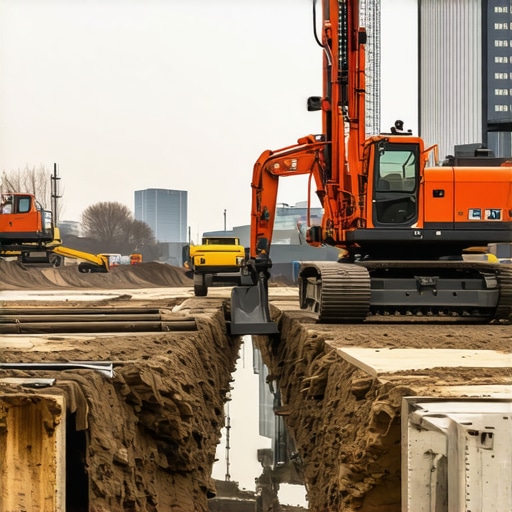
While trenching has been a staple of underground construction, the increasing density of urban environments prompts reevaluation of traditional methods. Some experts argue that trenchless solutions, such as microtunneling and pipe bursting, may offer superior benefits by significantly reducing surface footprint and community disruption. However, these alternatives often necessitate substantial initial investments and specialized expertise. The decision matrix involves assessing soil conditions, utility layouts, project timelines, and budget constraints. For instance, hybrid strategies that combine trenchless methods with traditional trenching are gaining traction, especially when tackling complex underground landscapes.
Further insights into these innovative approaches are available at Trenching in Clay and Drainage Fixes.
Engaging with continuous research and case studies helps professionals make informed choices that align with urban sustainability goals and technological feasibility. Embracing a flexible, case-specific approach can yield faster project completion times while maintaining the integrity and safety of underground work.
Harnessing Machine Learning for Predictive Ground Stability in Dense Cities
Advanced data analytics, particularly machine learning algorithms, are transforming how engineers forecast underground ground conditions. By analyzing vast datasets from prior excavations, soil surveys, and real-time sensors, predictive models can identify potential stability issues before excavation begins, minimizing unforeseen collapses or utility damages. These models leverage high-resolution geospatial data and soil property variables to generate probabilistic risk maps, enabling precise planning and risk mitigation strategies. Notably, integrating AI-driven analytics with traditional geotechnical assessments enhances decision-making accuracy, especially in complex urban soils that exhibit highly variable behaviors.
What Are the Nuances of Deploying AI in Urban Geotechnical Assessments?
Implementing artificial intelligence in underground engineering involves overcoming challenges like data scarcity, sensor calibration, and algorithm transparency. Ensuring high-quality data collection is fundamental—this includes deploying dense sensor networks, precise soil sampling, and high-resolution subsurface imaging. As highlighted by a recent comprehensive review in Automation in Construction (2022), successful AI deployment must also incorporate explainability to foster trust among project stakeholders and facilitate regulatory approval processes. Moving forward, specialists advocate for combining AI with traditional expert judgment to create hybrid decision-support systems that balance innovation with safety.
To delve deeper into this convergence of AI and geotechnical science, professionals should explore studies such as AI-driven Ground Prediction Models.
Embracing Trenchless Technologies to Conquer Urban Space Constraints
As urban areas become denser, the demand for minimally invasive excavation methods intensifies. Innovations like pipe jacking, horizontal directional drilling (HDD), and auger boring dramatically reduce surface disruption and improve project timelines. These trenchless techniques are particularly advantageous when crossing environmentally sensitive zones or infrastructure-rich corridors, where traditional trenching would be prohibitively disruptive. The technology’s success hinges on precise guidance systems—namely, real-time drilling feedback and adaptive navigation algorithms—that ensure alignment and depth accuracy despite challenging subterranean obstacles.
Furthermore, integrating these methods with GIS-based underground utility mapping elevates project planning, allowing for optimized route selection and risk assessment. As an example, a recent case study in Journal of Construction Engineering and Management (2023) demonstrates a 35% reduction in construction duration by deploying hybrid trenchless strategies tailored to local soil conditions and existing infrastructure complexities.
Interested professionals should consider evaluating emerging toolkits like TruTech’s adaptive HDD guidance systems, which have been documented to enhance accuracy in complex urban environments.
Unlocking the Potential of Adaptive Trenching Technologies for Complex Urban Terrains
As urban landscapes become increasingly intricate, traditional trenching methods often confront limitations posed by dense infrastructure and sensitive ecosystems. Adaptive trenching systems equipped with remote sensing capabilities and flexible sequencing enable engineers to navigate these challenges effectively. These innovations facilitate precise alignment with underground utilities, reduce surface disruptions, and optimize resource deployment, setting new standards in city-centric excavation projects.
How Do Smart Trenching Systems Enhance Safety and Efficiency in Dense Urban Environments?
Smart trenching incorporates integrated GIS mapping, real-time subsurface imaging, and adaptive control algorithms. This synergy allows for on-the-fly adjustments during excavation, minimizing risks of utility strikes and accidental damages. By leveraging these technologies, project timelines are shortened, costs are reduced, and safety hazards are mitigated significantly.
To understand the scientific underpinnings and practical implementations, consult authoritative sources such as the Geospatial World report on ground-penetrating radar applications in urban settings.
Engage with industry leaders to explore how adopting these advanced trenching solutions can revolutionize project outcomes and contribute to sustainable city development.
Integrating Microtunneling with Precision Borehole Technologies for Seamless Utility Crossings
Microtunneling, a trenchless method favored for its minimally invasive nature, has evolved to incorporate high-precision borehole systems that accommodate variable ground conditions. Hybrid strategies combining microtunneling with laser-guided borehole drilling enable accurate crossings beneath existing structures and waterways, eliminating surface disruptions and reducing project durations.
Innovations include the deployment of robotic guidance and adaptive drilling parameters responsive to real-time geotechnical feedback. Such integration ensures bore alignment, minimizes soil disturbance, and enhances safety profiles—crucial parameters in densely populated urban zones.
For further insights, consider reviewing studies published in the International Journal of Trenchless Technology detailing case studies of successful hybrid implementations.
What Role Does Real-Time Soil Feedback Play in Advanced Borehole Navigation?
Real-time soil feedback mechanisms utilize sensors embedded within drill heads to detect anomalies such as unexpected hard layers or saturated sediments. These sensors inform adaptive control systems, allowing for immediate adjustments in drilling parameters. This dynamic responsiveness prevents drill bit deviation, reduces equipment wear, and enhances overall project safety—especially vital when navigating unpredictable underground conditions.
To explore current sensor technologies and their integration into borehole drilling systems, visit Geotechnical Engineer’s Resource.
Adopting these intelligent feedback systems signifies a leap toward more resilient and precise underground utility installation practices.
Harnessing Data Analytics for Predictive Ground Stability Assessment
Emerging data-driven methodologies leverage advanced analytics and machine learning models to predict ground stability patterns based on extensive geotechnical datasets. By analyzing historical soil profiles, seismic activity, and prior excavation outcomes, these models generate probabilistic risk assessments that inform planning stages and real-time operation decisions.
This proactive approach allows engineers to anticipate potential collapses, utility conflicts, or soil collapses before actual excavation commences. Implementing such predictive insights reduces the likelihood of costly rework, enhances worker safety, and aligns with urban sustainability goals.
Refer to detailed case analyses in the Journal of Geotechnical and Geoenvironmental Engineering illustrating successful integrations of AI-driven prediction models.
Can Machine Learning Models Adapt to Dynamic Urban Subsurface Conditions?
Yes, modern machine learning algorithms are designed to incorporate continuous data feeds from sensors and geological surveys, allowing for adaptive learning and dynamic updates. These models become increasingly accurate as they assimilate new information, thereby offering real-time guidance and risk assessments. This adaptability is instrumental in managing the complexities of urban subsoil variability, enabling safer and more efficient excavation operations.
To deepen your understanding, explore recent publications like the article “Adaptive Machine Learning in Urban Geotechnical Engineering” available through the Automation in Construction journal.
Reimagining Utility Placement with 3D Subsurface Mapping and Robotic Excavation
The advent of 3D subsurface mapping technology, combined with robotic excavation tools, transforms how underground utilities are planned and installed. High-resolution imaging, coupled with robotic trenchless systems, enables precise visualization and minimally invasive installation within complex underground matrices. These advancements dramatically reduce risks, improve accuracy, and enable project teams to address subterranean constraints proactively.
Further developments include the integration of AI-powered simulation platforms that model underground scenarios, aiding in strategic decision-making and contingency planning. Such technological convergence elevates urban infrastructure projects, aligning them with future smart city initiatives.
For comprehensive insights, industry professionals should review recent case studies outlined in the Automation in Construction special issue on urban underground systems.
Expert Insights & Advanced Considerations
Prioritize Sustainability in Urban Excavation Projects
Integrating eco-friendly excavation techniques reduces environmental impact and aligns with green urban development goals, emphasizing the importance of adaptive, sustainable practices.
Leverage AI for Subsurface Anomaly Detection
Employing machine learning algorithms enhances predictive accuracy for ground stability, enabling preemptive measures that mitigate risks during complex subterranean work.
Adopt Modular, Remote-Controlled Equipment
Utilizing remotely operated excavation tools increases safety and precision, especially in congested or hazardous environments, facilitating agile responses to unforeseen underground conditions.
Engage in Cross-Disciplinary Collaboration
Fostering partnerships between geotechnical experts, technology developers, and urban planners drives innovative solutions tailored for dense cityscapes, improving project outcomes.
Implement Real-Time Data Sharing Platforms
Harnessing integrated information systems supports synchronized decision-making, reduces delays, and enhances coordination among diverse teams involved in underground infrastructure projects.
Curated Expert Resources
- International Journal of Trenchless Technology: Offers peer-reviewed research on the latest trenchless methods, innovations, and case studies, providing authoritative insights for industry professionals.
- Automation in Construction Journal: Features cutting-edge studies on AI and machine learning applications in geotechnical assessments, guiding the integration of advanced analytics into practice.
- Geospatial World’s Ground Penetrating Radar Reports: Provides comprehensive analysis of subsurface imaging technologies, essential for precise utility mapping and hazard detection.
- EPA’s Green Infrastructure Guidelines: Presents environmentally sustainable practices and standards applicable to urban excavation and construction, aligning project practices with ecological objectives.
- American Society of Civil Engineers (ASCE) Resources: Supplies technical standards, best practices, and research updates on underground construction safety and efficiency.
Final Expert Perspective
As urban construction continues to evolve with complex underground environments, embracing advanced, sustainable strategies for trenching, borehole, and vacuum excavation is essential. The fusion of innovative technologies—such as AI-driven analytics, remote equipment, and real-time data sharing—plays a pivotal role in elevating safety, precision, and environmental responsibility. Engaging with authoritative resources and fostering interdisciplinary collaboration empowers professionals to lead transformative projects that meet the demands of modern, dense cityscapes. Dive deeper into these strategies and contribute your insights to shape the future of underground infrastructure development.