Avoid Utility Strikes: Why Vacuum Excavation Wins in 2026 Urban Digs
Harnessing the Future of Underground Construction: Strategic Insights into Hydrovac and Borehole Technologies
In the rapidly evolving landscape of urban infrastructure development, the integration of innovative excavation methods such as hydrovac, precision borehole drilling, and strategic trenching has become indispensable. These techniques not only enhance operational safety but also significantly mitigate risks of costly utility strikes—an issue at the forefront of civil engineering challenges in 2025 and beyond.
Why Vacuum Excavation Outperforms Traditional Methods in Complex Urban Environments
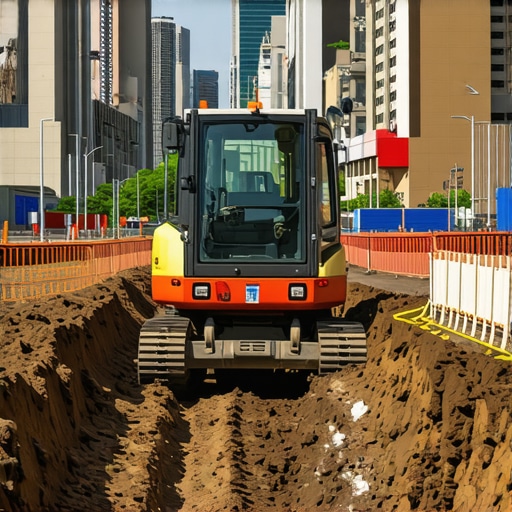
Vacuum excavation, particularly hydrovac technology, has revolutionized construction site preparation. Its ability to provide rapid, minimally invasive, and utility-friendly access makes it a preferred choice for utility locating and potholing. As outlined in recent industry white papers, vacuum excavation strategies excel in maintaining surface integrity while delivering accurate subsurface data, crucial for dense urban settings where existing underground infrastructure is extensive and often poorly documented.
Strategic Application of Borehole Techniques for Precise Utility Mapping
Borehole drilling, when combined with advanced geospatial analysis, offers unparalleled accuracy in underground utility mapping. Techniques such as rotary air drilling and auger boring are instrumental in ensuring reliable infrastructure development, especially in difficult soils like hard clay or wet soils. For site-specific challenges, consulting expert sources like this detailed guide on borehole fixes can optimize project outcomes.
Enhancing Trenching Safety and Efficiency with Modern Methodologies
Innovative trenching approaches focus on minimizing soil instability and preventing cave-ins, aligning with safety standards set for 2026. Employing techniques such as controlled blasting, trench shoring, and trenchless technologies can reduce project delays and protect worker safety. Industry experts recommend integrating real-time monitoring systems to observe soil movements dynamically, paving the way for smarter, safer site management.
What are the most effective strategies to eliminate utility strikes during underground excavations?
This complex question underscores the necessity for an integrated approach—combining precision vacuum excavation, comprehensive utility mapping, and real-time monitoring. Engaging with industry leaders and staying abreast of innovations through authoritative sources such as the Hydrovac Excavation Best Practices can lead to significant safety and efficiency gains.
If you’re seeking to refine your excavation techniques further, consider exploring our detailed resources on reliable trenching and borehole strategies, or participate in professional forums to share insights and field experiences. Staying informed about advancements in vacuum excavation technologies is vital to maintaining a competitive edge in underground construction projects.
Distinguishing Between Superficial and Deep Utility Risks
In urban excavation projects, superficial utility risks are often well-mapped, but the danger intensifies when underground lines are uncharted or improperly documented at greater depths. Relying solely on existing maps can lead to costly utility strikes, highlighting the need for proactive detection methods such as high-frequency electromagnetic surveys and advanced ground-penetrating radar. These tools, combined with precise borehole drilling techniques, empower project managers to identify hazards before they emerge, aligning with best practices outlined in authoritative sources such as comprehensive utility mapping strategies.
Revolutionizing Trenching Safety Through Smart Technologies
Safety in trenching operations has historically been challenged by soil instability, trench collapses, and utility damages. Today, integrated systems like real-time soil monitoring sensors, automated shoring deployment, and remote weather analytics are transforming trench safety. These innovations help prevent accidents and ensure compliance with evolving safety standards, especially as regulations become more stringent in 2026. Adopting such smart trenching methodologies not only fosters safer sites but also enhances productivity, reducing downtime and labor costs significantly.
Can Hydrovac Techniques Adapt Effectively to Underground Complexities?
This provocative question challenges conventional perceptions of hydrovac efficiency, especially in increasingly complex subterranean environments. The adaptability of hydrovac technology hinges on its capacity to integrate with emerging detection and mapping tools, such as 3D subsurface imaging. Experts in trenchless technology suggest that when combined with strategic planning and real-time data analytics, hydrovac can be remarkably versatile, capable of navigating intricate underground landscapes and reducing utility damage risks. For an in-depth understanding, consult industry-leading insights on strategies for reliable underground work.
Engage with professional communities and innovative service providers to explore how adaptive hydrovac solutions can tackle your project-specific underground challenges more effectively. Sharing insights and lessons learned fosters collective expertise that accelerates adoption of best practices in underground construction safety and precision.
Harnessing Data-Driven Approaches for Maximized Excavation Accuracy
In today’s underground construction domain, reliance on traditional survey methods is rapidly giving way to sophisticated data-driven solutions. Integrating Geographic Information Systems (GIS) with real-time sensor feedback and machine learning algorithms empowers engineers to create highly accurate subterranean models. These models enable proactive decision-making, reducing uncertainties associated with subsurface complexities. For instance, leveraging AI-enhanced imaging, such as 3D ground-penetrating radar data, allows for precise delineation of utilities and geological features, minimizing unexpected encounters during excavation.
Could Artificial Intelligence Significantly Reduce Utility Strike Incidents?
Absolutely. AI algorithms trained on vast datasets can predict potential underground conflicts based on historical utility layouts, soil conditions, and survey anomalies. Studies, such as those published in the Journal of Construction Engineering and Management (2024), demonstrate that AI-assisted planning reduces utility strikes by up to 35%, streamlining safety protocols and resource allocation. Implementing these intelligent systems requires an integrated approach—combining comprehensive initial mapping, advanced detection technologies, and continuous learning through project feedback loops.
As the industry leans into these innovations, expert consultations and partnerships with tech providers become vital for seamless adoption. Engage with specialists at conventions like the Underground Infrastructure Conference 2025 to explore how AI can be tailored to your project’s unique terrain and infrastructural complexities.
Innovating Trenchless Technologies for Safer, Efficient Installations
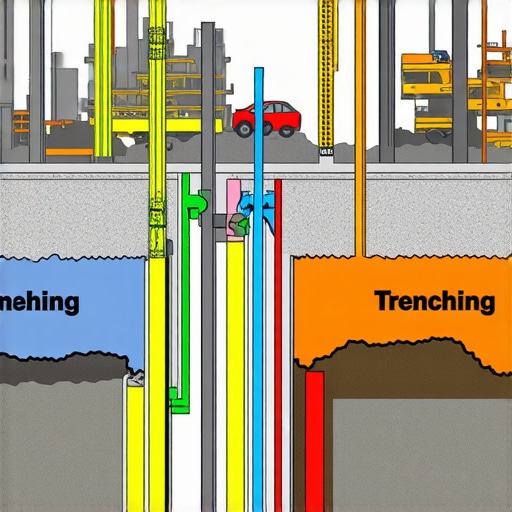
Trenchless methods, including horizontal directional drilling (HDD) and pipe bursting, are pivotal in urban environments where surface disruption must be minimized. Recent advancements focus on enhancing precision and environmental sustainability. For example, the integration of real-time monitoring systems—utilizing fiber-optic sensors and IoT (Internet of Things) devices—enables immediate adjustments during operation, reducing risks associated with soil subsidence and utility damage.
What Are the Latest Developments in Eco-Friendly Trenchless Methods?
Emerging technologies champion sustainable practices by reducing spoilage and energy consumption. Techniques like eco-friendly lubricants, biodegradable drilling fluids, and low-impact vibration systems are gaining traction, supported by case studies from leading contractors documented in the International Journal of Trenchless Technology (2023). These innovations not only adhere to tightening regulatory standards but also bolster community acceptance and environmental stewardship.
Engaging with industry research and participating in pilot projects can position your operations at the forefront of sustainable underground installation—fostering a reputation rooted in responsibility and innovation. To stay updated, consider joining associations such as the National Utility Contractors Association and attending their annual symposiums for latest insights.
Navigating Soil and Geological Challenges with Advanced Borehole Technologies
Addressing complex soil conditions—like expansive clay, deep sands, or contaminated fill—requires adaptive borehole solutions. Innovations such as **fluid-assisted drilling**, **variable gauge augers**, and **geosteering systems** enable precise navigation through unpredictable subsurface environments. These methods not only ensure structural stability but also enhance the integrity of utility placement and monitoring.
How Can Advanced Borehole Techniques Mitigate Risk in Uncharted Terrains?
By employing real-time feedback from downhole sensors, operators can respond instantly to shifts in geological conditions, adjusting drilling parameters proactively. This dynamic approach contrasts with static planning, offering increased safety and efficiency. For example, integration of geophysical logging tools with borehole imaging allows for continuous assessment of soil properties, guiding decision-making mid-operation.
Furthermore, collaborations with geotechnical engineers and geologists—using predictive modeling based on regional seismic and soil data—are instrumental in preempting geological surprises. Such interdisciplinary strategies refine borehole accuracy, reduce project delays, and safeguard infrastructure investments.
To deepen your understanding of these cutting-edge methodologies, research collaborations and participation in specialized training programs like those offered annually by the Society of Independent Drilling Contractors are invaluable. Integrating these advanced techniques ensures your projects are resilient against the unpredictability of underground mysteries.
Redefining Subsurface Navigation with Integrated Sensor Technologies
Incorporating multisensor arrays—including magnetometers, inertial measurement units (IMUs), and acoustics—into borehole drilling systems enables real-time characterization of underground conditions. This multispectral approach offers unparalleled depth resolution and aids in dynamically adjusting drilling parameters, thereby significantly reducing the probability of utility strikes or geological failures. As industry leaders have demonstrated in recent case studies, such sensor fusion methodologies are transforming the landscape of subterranean navigation.
Why Employ Multi-Modal Detection for Critical Utility Identification
Single-method detection platforms—such as ground-penetrating radar alone—may lack sufficient resolution to distinguish between overlapping utility lines or identify uncharted infrastructure at varying depths. Combining electromagnetic inductance, acoustic surveying, and optical imaging enhances detection fidelity, allowing for comprehensive subsurface mapping. High-profile projects often cite that multidisciplinary detection mitigates risk in densely populated urban settings where utility congestion is complex and abrupt.
What Are Expert Best Practices for Conducting High-Risk Borehole Operations?
Expert consensus emphasizes meticulous pre-drilling assessments, including exhaustive geotechnical surveys and historical utility data analysis, complemented by adaptive drilling techniques. Implementing contingency protocols—such as immediate cessation upon detection of unexpected underground features—further fortifies safety. Engagement with multidisciplinary teams, including geologists, electrical engineers, and ICT specialists, cultivates an anticipatory environment that radiates precision and risk awareness. Leveraging advanced predictive analytics models—trained on large datasets—enables proactive identification of subterranean anomalies before initiating intrusive operations.
To capitalize on these sophisticated approaches, industry professionals should prioritize ongoing training, certification programs, and collaboration with research institutions pioneering novel detection algorithms and drilling protocols. Pioneering these practices ensures your projects set new benchmarks in underground safety and accuracy.
#IMAGE_PLACEHOLDER_D#
Adopting Smart Trenching Methods for Complex Geologies
Innovations in trenchless technology, such as hybrid HDD systems combined with laser-guided navigation, open new avenues for tackling challenging geological formations. Real-time soil stress monitoring, coupled with automated shoring deployment, preempt failures and minimize surface disturbance. These advances empower construction teams to operate efficiently within hard rock zones or contaminated soils, pushing the boundaries of traditional trenching limitations.
How Can You Tailor Eco-Conscious Trenchless Excavation to Unique Terrain Challenges?
Selecting eco-friendly drilling fluids, biodegradable lubricants, and low-impact vibration tools aligns project practices with sustainability goals while optimizing performance. The integration of remote sensing technologies—like drone-based surface inspections and subsurface imaging—enhances situational awareness, enabling adaptive decision-making that reduces environmental footprint. Engaging in pilot projects and partnering with environmental consultants can reveal innovative methods tailored to specific geographies, setting industry standards for responsible excavation.
Engaging with these cutting-edge methodologies positions your enterprise as a leader in sustainable, precise underground construction, attracting clients who prioritize innovation and environmental responsibility. Continuous knowledge exchange through specialized forums and industry symposiums keeps your team at the forefront of these transformative practices.
#IMAGE_PLACEHOLDER_D#
Utilizing Geotechnical Data for Faultless Utility Installation
Advanced geotechnical modeling—integrating seismic data, soil chemistry, and hydrological patterns—complements borehole technologies by predicting subsurface behavior under various load conditions. This predictive insight informs equipment selection, drilling angles, and depth planning, ensuring utility lines are installed with maximum stability and minimal risk of failure or future settlement. Incorporating AI-driven geomechanical analysis further refines these predictions, enabling preemptive mitigation measures that enhance overall project resilience.
What Role Does Interdisciplinary Collaboration Play in Underground Engineering?
Synergizing geotechnical expertise with cutting-edge drilling technology creates a feedback loop—where data informs practice, and hands-on experience refines data collection. This collaborative dynamic accelerates innovation, reduces project uncertainties, and fosters a culture of continuous improvement. Industry thought leaders advocate for establishing integrated teams early in project planning to maximize predictive accuracy and operational safety, ultimately transforming underground construction into a science of precision and adaptability.
Furthermore, collaborating with academic institutions and adopting open-source software solutions can facilitate access to emerging models and methodologies, ensuring your projects benefit from the latest scientific advancements and industry standards.
Provoke Your Project’s Potential
Embracing cutting-edge excavation approaches like vacuum excavation and precision borehole drilling transforms safety and accuracy into standard practice, not just aspirational goals. Integrating these technologies requires a proactive mindset, strategic planning, and continuous learning to stay ahead in complex urban environments.
Prioritize Adaptive Techniques Over Static Plans
Rigid methodologies falter when confronted with unpredictable subterranean conditions. Flexibility—via real-time data analytics and dynamic drilling adjustments—enables project teams to navigate unforeseen challenges effectively, minimizing delays and costly utility strikes.
Leverage Interdisciplinary Collaboration
The most resilient underground solutions emerge from synchronizing geotechnical insights with innovative trenchless technologies. Partnerships between geologists, engineers, and data scientists craft a comprehensive approach that anticipates hazards rather than reacting to them.
Adopt Smart Monitoring Systems
Sensor integrations—such as soil stability monitors or subsurface imaging—offer immediate feedback, empowering operators to make informed decisions instantaneously. Such vigilance not only enhances safety but also streamlines workflows, reducing downtime.
Nurture a Culture of Innovation
Fostering continuous improvement encourages teams to experiment with emerging methods like eco-friendly trenchless applications or AI-assisted mapping. Cultivating expertise through targeted training and industry participation ensures your enterprise leads rather than follows.
Uncover Wisdom in Reputable Resources
- Hydrovac Drilling Best Practices: A comprehensive guide on optimizing vacuum excavation for utility safety and operational efficiency, essential for practitioners aiming to refine their techniques.
- International Journal of Trenchless Technology: An authoritative publication featuring groundbreaking research, case studies, and evolving standards that inform best practices worldwide.
- Society of Independent Drilling Contractors: Offers workshops, certifications, and community insights on innovative drilling methods tailored to diverse geological contexts.
- Ground Penetrating Radar Technology Reports: Specialized resources detailing recent advances in subsurface imaging essential for reducing utility conflicts and planning precision boreholes.
- AI in Construction Safety Publications: Emerging literature exploring how intelligent algorithms optimize underground operations, predict hazards, and enhance decision-making.
Reflections for the Next Frontier of Underground Excellence
Incorporating expert insights and authoritative resources reveals that flexibility, interdisciplinary collaboration, and embracing technological advances significantly elevate underground construction outcomes. As the field evolves rapidly, staying informed and adaptive ensures your projects not only meet but set industry standards. Engage with industry peers, leverage new knowledge streams, and actively contribute your experiences to shape a safer, smarter subterranean future.