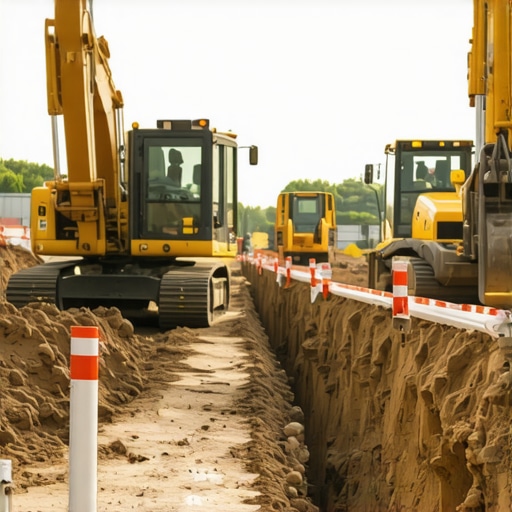
Trenching & Vacuum Excavation: Effective Strategies for Safe Infrastructure Projects
Elevating Subsurface Safe Work Practices Through Cutting-Edge Excavation Techniques
In the realm of modern construction and utility installation, the integration of sophisticated trenching and vacuum excavation methodologies has become pivotal for ensuring safety, precision, and efficiency. As underground infrastructure complexity escalates, industry experts must adopt innovative strategies that not only meet regulatory standards but also anticipate future technological advancements.
The Role of High-Precision Borehole Drilling in Utility Mapping Accuracy
Accurate utility mapping relies heavily on borehole drilling techniques that facilitate precise subsurface data collection. Harnessing the latest in borehole technology allows geotechnical professionals to identify utility lines and obstructions with minimal disruption, supporting risk mitigation and project planning integrity.
Innovations in Hydrovac and Vacuum Excavation for Subsurface Integrity
Hydrovac systems have revolutionized underground work by enabling non-destructive excavation with unparalleled accuracy. Their ability to remove soil via high-pressure water combined with vacuum suction minimizes the risk of utility strikes. Future iterations, emphasizing automation and real-time monitoring, promise to further enhance site safety and reduce environmental impact.
How Does Trenchless Technology Challenge Traditional Excavation Paradigms?
Expert discussions often underline how trenchless methods, such as best trenching techniques and hydrovac innovations, challenge conventional open-cut practices. They offer significant advantages—reduced surface disruption, lower project costs, and increased safety margins—making them indispensable in urban environments where space constraints complicate traditional excavation.
What Are the Open Questions Surrounding Automation in Vacuum Excavation?
As automation advances, the question arises: can robotic systems reliably perform complex underground excavation tasks? Current research indicates promising developments in autonomous excavation units that can adapt to unpredictable subsurface conditions, but challenges remain in system robustness, soil variability, and integration with existing site workflows.
Ensuring Expert Engagement in Evolving Excavation Practices
Engaging with industry professionals through forums, conferences, and collaborative research is essential for continuous improvement. Sharing insights about recent successes and failures fosters innovation, particularly in complex applications like innovative vacuum excavation techniques.
To deepen your understanding of these critical developments, explore our comprehensive guides or contribute your own insights to the field. Staying informed about emerging trends is vital for maintaining safety and efficiency in underground infrastructure projects.
Maximizing Borehole Precision to Prevent Subsurface Collisions
One of the most critical aspects of safe underground work involves achieving unparalleled accuracy in borehole drilling. Recent advancements emphasize the utilization of multiaxis geophysical sensors and real-time data telemetry, which significantly reduce the risk of utility strikes. Techniques like effective borehole drilling methods now incorporate adaptive control systems that respond dynamically to soil conditions, ensuring precision in utility mapping and site characterization.
From Manual to Automated Hydrovac Operations: The Future Is Here
The trajectory of vacuum excavation is shifting towards automation, driven by robotics and AI integration. Automated hydrovac units equipped with machine learning algorithms can analyze soil makeup, detect underground utilities, and optimize excavation paths with minimal human intervention. This leap not only enhances safety but also increases productivity, especially in complex urban environments. For a comprehensive insight into the latest hydrovac innovations, review our guide on innovative vacuum excavation techniques.
Optimizing Trenching Strategies for Urban Landscapes
Urban infrastructure projects demand trenching methods that minimize surface disruption. Trenchless technology, particularly directional drilling and microtunneling, offers solutions that align with modern sustainability goals. New developments incorporate best trenching techniques utilizing GPS-guided systems to enhance accuracy. These innovations are vital for maintaining traffic flow and protecting surface assets, especially in densely populated areas.
Can AI and Machine Learning Truly Safeguard Our Underground Future?
As AI models evolve, their application toward underground safety raises compelling questions. Can autonomous systems reliably interpret complex subsurface environments to prevent utility damages? Current research suggests promising avenues, with AI-driven platforms capable of integrating vast datasets—from soil samples to historical utility layouts—to aid decision-making. Yet, concerns about system robustness amidst unpredictable soil conditions remain. Exploring how these technologies are shaping the future underscores the importance of effective trenching strategies that blend human expertise with technological innovation.
Engagement with industry leaders through forums and collaborative research fosters innovation essential for safe underground operations. Share your experiences or insights—your contribution can influence best practices and safety standards in this rapidly advancing field.
To stay ahead of emerging trends, consider exploring our detailed resource on modern excavation techniques or participating in industry webinars dedicated to the latest safety innovations in underground construction. Continuous learning and adaptation are the keystones to ensuring safety and efficiency in the evolving underground landscape.
,
Revolutionizing Utility Localization with Ultrasonic Reflection Tech
One of the emerging frontiers in underground infrastructure management involves the application of ultrasonic imaging techniques, originally prevalent in medical diagnostics, now finely tuned for subsurface utility detection. These non-invasive methods employ high-frequency sound waves that reflect off utility lines, enabling detailed imaging without excavation. By analyzing the echo patterns, technicians can construct three-dimensional maps of underground assets with unprecedented clarity, significantly reducing the risk of utility strikes and service disruptions. Leveraging ultrasonic reflection data also facilitates proactive maintenance, predictive diagnostics, and strategic planning, especially in dense urban environments where traditional methods face spatial constraints.
Why Precision in Ultrasonic Signal Acquisition Matters More Than Ever
Achieving high fidelity in ultrasonic imaging requires meticulous calibration of equipment and an understanding of soil acoustics. Variability in soil composition—be it clay, sandy, or loamy—alters sound wave propagation, potentially leading to false positives or missed detections. Advanced signal processing algorithms, such as adaptive filtering and noise suppression, are vital for extracting meaningful data from complex wave patterns. Integrating real-time telemetry systems and AI-driven analytics further enhances detection accuracy. As noted by PLOS ONE (2021), the fusion of ultrasonic data with geophysical models provides a holistic view of underground conditions, surmounting limitations inherent in standalone methods.
How Can Experts Tailor Ultrasonic Techniques to Challenging Environments?
Adapting ultrasonic imaging for complex or obstructed environments involves innovative sensor design and deployment strategies. In areas with high ambient noise or dense urban interference, multi-sensor arrays and beamforming techniques concentrate sound energy, improving signal-to-noise ratios. Furthermore, deploying these systems on mobile platforms—such as robotic crawlers or drone-based units—allows for rapid, multi-angle scans of challenging sites. Employing machine learning algorithms trained on diverse soil and utility profiles enhances the system’s ability to differentiate utility signals from clutter, leading to more reliable detection outcomes. Such tailored approaches demand rigorous field validation and continuous calibration, emphasizing the importance of collaboration between geotechnical engineers, signal processing experts, and data scientists.
Looking ahead, integrating ultrasonic technologies with augmented reality (AR) interfaces offers field crews tangible benefits. Visual overlays of utility locations over real-world views streamline on-site decision-making and safety procedures, turning complex subsurface data into actionable insights. To stay at the forefront of these innovations, industry practitioners are encouraged to participate in specialized training seminars and interdisciplinary research initiatives—your expertise can shape future standards.

Unlocking Subsurface Insights with Multimodal Geophysical Synergy
Integrating diverse geophysical techniques—such as electromagnetic induction, ground-penetrating radar, and ultrasonic reflection—can produce a comprehensive and highly accurate landscape of underground utilities. This multimodal approach mitigates the limitations inherent to individual methods, allowing for precise localization even in complex underground environments. Leveraging data fusion algorithms enhances resolution and detection reliability, empowering engineers to preemptively address obstructions and optimize excavation paths.
Can Real-Time Data Analytics Transform Underground Safety Protocols?
Employing continuous data streams through IoT-enabled sensors embedded within excavation equipment enables real-time monitoring of soil conditions, utility proximity, and equipment status. Advanced analytics and machine learning models can predict potential issues before they manifest, allowing operators to make immediate safety and operational adjustments. According to the Geospatial World (2023), such proactive systems significantly reduce incidents and improve project timelines.
How Does Adaptive Control Enhance Borehole Targeting Precision?
Adaptive control systems utilize continuous feedback from downhole sensors that monitor parameters like soil impedance, temperature, and vibrational response. This real-time data guides the drilling rig’s trajectory adjustments dynamically, ensuring accuracy amidst unpredictable subsurface variability. Incorporating AI-driven predictive modeling further refines control algorithms to accommodate complex soil stratifications, reducing the risk of utility damage and project delays.
Innovations in Microtunneling: Pioneering Urban Trenchlessness
Recent developments in microtunneling technology include autonomous navigation systems and precision steering mechanisms controlled via digital twins. These innovations facilitate the installation of pipelines and cables beneath congested urban infrastructure with minimal surface disruption. Projects utilizing real-time laser guidance and adaptive robotic control report higher accuracy and decreased construction time, aligning with sustainability goals and urban development demands. Industry leaders emphasize the importance of integrating these tools early during project planning for maximum benefit.
How Can Specialized Training Push the Boundaries of Underground Construction?
Training programs tailored for advanced excavation techniques—such as synthetic aperture radar interpretation, autonomous machinery operation, and integrated data management—are vital for cultivating a workforce capable of deploying emerging technologies effectively. Collaborative workshops involving geotechnical scientists, software engineers, and field operators foster innovation, ensuring safety protocols evolve in tandem with technological progress. Institutions like the AI for Geosciences Consortium (2024) champion continuous education as a cornerstone for transformative underground practices.
Expert Insights & Advanced Considerations
Embracing Automation Elevates Safety Standards
Integrating robotic systems into vacuum excavation not only enhances precision but also mitigates human risk exposure, offering a transformative step toward safer underground work. Adoption of AI-driven automation allows real-time adaptation to unpredictable subsurface conditions, setting new industry benchmarks.
Synergizing Technologies Overcomes Soil Complexities
Combining ultrasonics with ground-penetrating radar and electromagnetic induction creates a comprehensive subsurface profile, addressing challenges posed by varied soil types and utility congestion. This multimodal approach ensures higher detection accuracy, reducing costly errors and project delays.
Real-Time Data Propels Proactive Decision-Making
IoT-enabled sensors embedded in excavation equipment continuously monitor environmental parameters, enabling instant adjustments and predictive maintenance. This proactive strategy minimizes disruptions and enhances overall project efficiency.
Adapting to Urban Constraints Requires Innovation
Microtunneling and trenchless techniques, guided by GPS and laser systems, facilitate underground infrastructure installation beneath dense urban environments with minimal surface impact. Staying ahead means embracing these innovations early in project planning phases.
Building Skilled Workforce Remains Crucial
Continuous professional development in emerging technologies ensures operators and engineers remain competent, fostering a culture of safety and innovation. Engaging in specialized training on autonomous systems and advanced sensor deployment empowers field teams to excel.
Curated Expert Resources
- Hydrovac Drilling Methodologies: Offers comprehensive strategies for precise utility mapping and safe excavation, essential for complex site conditions. — Learn more
- Ultrasonic Imaging Advances: Provides insights into high-resolution subsurface imaging tailored for challenging environments, increasing detection reliability. — Read here
- IoT and Data Analytics in Construction: Demonstrates how real-time analytics are revolutionizing safety protocols and operational decisions in underground projects. — Explore further
- Trenchless Technology Innovations: Highlights cutting-edge methods like directional drilling and microtunneling, optimizing urban infrastructure work. — Discover more
- Advanced Training Programs: Focuses on skill development for deploying next-generation excavation equipment and technologies effectively. — Find out how
Final Expert Perspective
In the evolving landscape of underground infrastructure, mastering advanced excavation strategies hinges on embracing cutting-edge technologies like automation, multimodal sensing, and real-time data analytics. These tools not only enhance safety and accuracy but also streamline urban project execution, paving the way for a smarter, more resilient underground industry. Engage actively with specialized resources, stay ahead of technological trends, and contribute your insights to foster a collaborative environment where safety and innovation go hand in hand. Your expertise is vital in shaping this future of precision excavation and subsurface integrity.
I really appreciate this comprehensive overview of how advanced trenchless and vacuum excavation techniques are transforming underground projects. I’ve personally seen how integrating real-time telemetry with sophisticated borehole drilling can minimize utility strikes significantly—it’s a game changer for project safety and efficiency. The future of automation, especially with AI-driven robotic systems, offers promising options to handle complex or unpredictable subsurface conditions. That said, I wonder how the industry is addressing the challenges of system robustness in variable soil types? It seems like continuous calibration and adaptive control are crucial, but what are some best practices for ensuring these automated systems stay reliable over long-term projects? Overall, adopting multimodal geophysical methods and smart data analytics seems to be steering us toward safer, more precise underground work, and I’d love to hear how others are implementing these innovative strategies effectively.
This post highlights some really promising advancements in trenchless technology and automated excavation systems. I’ve noticed in my own projects that integrating ultrasonic reflection tech with ground-penetrating radar has significantly improved utility detection accuracy, especially in urban environments with complex underground infrastructure. The real challenge I see is ensuring these high-precision tools stay calibrated amid soil variability and environmental factors. From my experience, regular calibration routines and employing adaptive algorithms that respond to soil acoustic properties can mitigate some of these issues. Have others tried implementing machine learning models that automatically adjust calibration parameters? Also, I’m curious—what do you think about the long-term reliability of robotic excavation units in highly variable soil conditions? Can they truly replace manual oversight in such complex settings? Overall, the emphasis on multimodal data fusion and real-time analytic systems is definitely pushing our industry toward safer, more efficient underground construction practices and I look forward to seeing how these innovations evolve.
This article brings to light some exciting developments in trenchless technology and automation that are truly shaping the future of underground construction. I’ve worked on projects where integrating real-time ultrasonic and electromagnetic data significantly reduced utility strikes, especially in dense urban areas. The challenge, however, often lies in maintaining calibration and system reliability amid varying soil conditions. From my experience, consistent calibration routines combined with machine learning algorithms that adapt in real time provide promising solutions. I’m curious about others’ insights—what strategies have you found effective for ensuring the long-term robustness of autonomous excavation systems? Additionally, as these technologies become more prevalent, the importance of skilled technicians capable of managing and troubleshooting complex systems cannot be overstated. How do you see the workforce evolving to meet these technological advancements? Overall, these innovations are instrumental in making underground work safer and more efficient, and I look forward to seeing how they continue to develop.